





























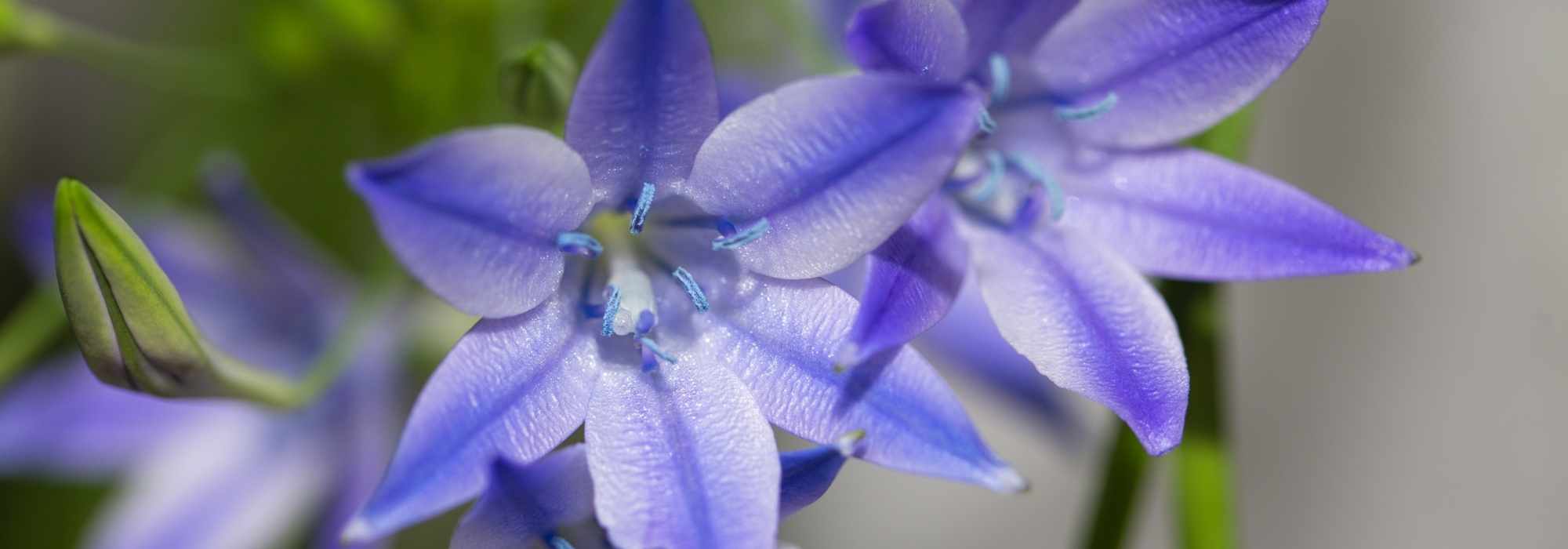
How to combine Triteleias?
Triteleia or Brodiaea? It's the same flower
Contents
Triteleias (or Brodiaeas) produce stunning star-shaped blue, white or pink flowers depending on the variety from June to August. The effect is fabulous when they are planted in masses. By autumn, the plant completely disappears underground, only to reappear the following spring.
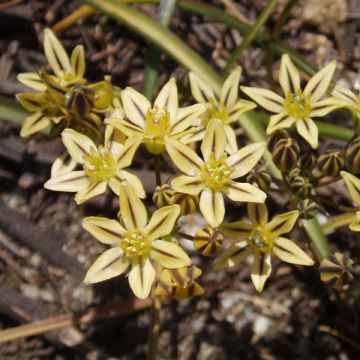
We often think of the Triteleia laxa, the type species and its many resulting varieties, with tones ranging from blue to sometimes double flowers like Triteleia ‘Aquarius’. However, let’s not forget the remarkable Triteleia ixoides with its cream-yellow flowers striped with dark brown.
Triteleias thrive in full sun or partial shade, particularly in the southern part of the country, within a rock garden or in a dry garden, or even in pots if your soil is consistently too heavy.
→ Let’s see how to combine Triteleias in the garden!

A sunny rockery with flowers
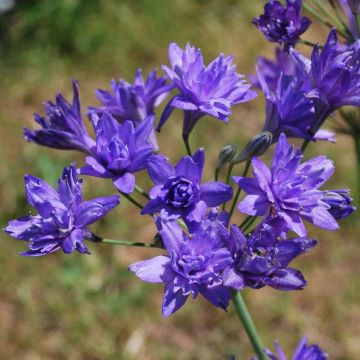
Among the many varieties of triteleias, some certainly stand out. This is the case of Triteleia laxa ‘Aquarius’ with its small, very double, and truly blue flowers, even a midnight blue on the reverse.
To complement such a blue hue, warm tones like yellow or orange are ideal. Some clumps of Origanum vulgare ‘Aureum’, a golden-leaved oregano, will add a soft yellow touch. Meanwhile, some Phlomis fructicosa will soften the overall look with their grey foliage that is soft to the touch, featuring a beautiful bright yellow flowering. Steppe Lilies, Eremurus ‘Pinokkio’, will not only bring warmth but also verticality with their long spikes covered in hundreds of small, star-shaped, copper-orange flowers, with yellow centres and stamens, emerging from a tuft of banded foliage.
To prevent the triteleias (or Brodiéas) from standing alone in their blue hue, you can pair them with salvias in the same tone: Salvia nemorosa ‘Mainacht’. This is a magnificent, very hardy, and particularly floriferous perennial, with beautiful clusters of intense blue-violet flowers in tight spikes appearing from early June and renewing until September.
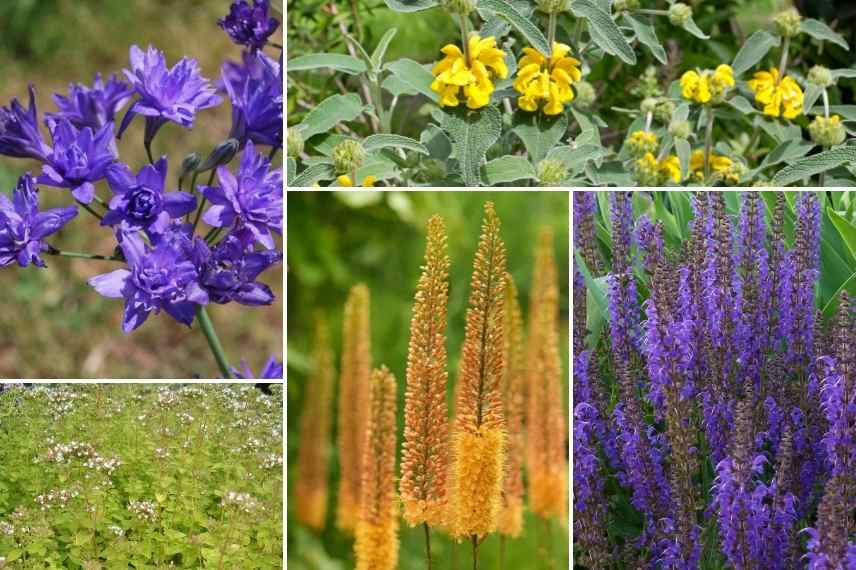
Triteleia laxa, Phlomis fructicosa, Origanum vulgare ‘Aureum’, Eremurus ‘Pinokkio’ and Salvia nemorosa ‘Mainacht’
A dry garden on gravel
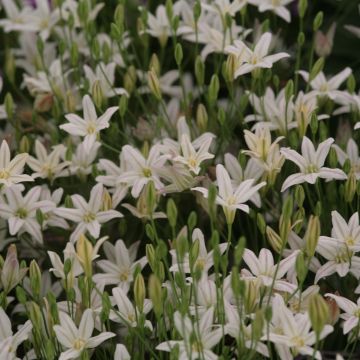
There are also varieties of Triteleia with white flowers, such as Triteleia ‘Silver Queen’, featuring multiple umbels of small, star-shaped white and iridescent flowers with silver reflections. To echo the white of the triteleias, we will plant a few Libertia peregrinans. Sometimes called New Zealand Iris, it is a beautiful perennial that resembles a grass from a distance, distinguished by its astonishing bronze to orange foliage and delicate white summer flowering.
The Eryngium bourgatii (sea holly) are wonderful for enhancing the hues of white flowers, thanks to their foliage that can appear almost white in the sun and their almost metallic blue flowering.
Breaking the often too harsh aspect of mineral gardens, care should be taken to add perennials that are both soft and light. A few clumps of Ballota pseudodictamnus, with fluffy green almond cushions and silver reflections, will bring a touch of softness to the whole. Meanwhile, a sparing use of Stipa tenuifolia, which we will allow to self-seed wherever it pleases, will add a bit of lightness to the dry garden.
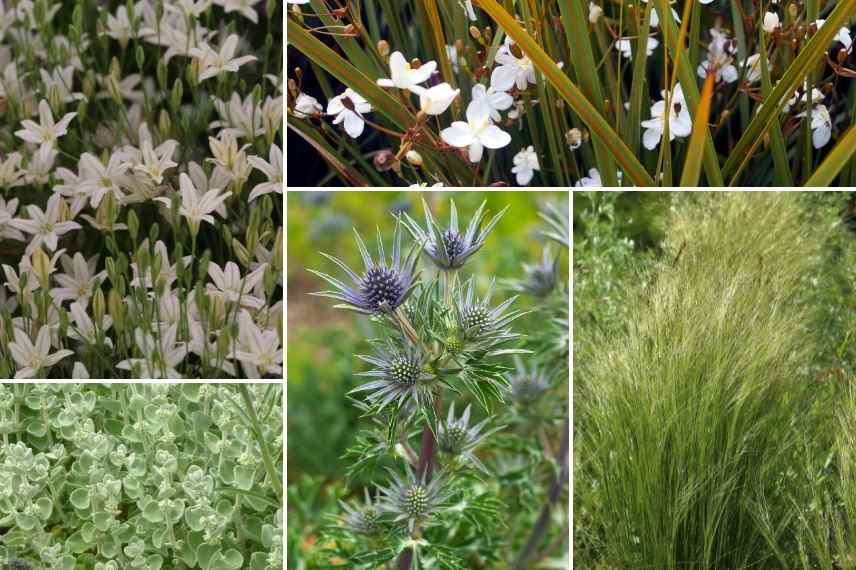
Triteleia ‘Silver Queen’, Libertia peregrinans, Ballota pseudodictamus, Eryngium bourgatii and Stipa tenuifolia
Discover other Triteleia
View all →
Available in 0 sizes
Available in 1 sizes
Available in 1 sizes
Available in 1 sizes
Available in 1 sizes
Available in 1 sizes
Available in 1 sizes
Available in 1 sizes
Available in 1 sizes
Mixed Tritelias
The issue with Triteleias is that the foliage is unsightly during flowering. Therefore, we should try to conceal it with low-growing plants. However, these companion plants must also thrive in the same growing conditions as our Triteleias: sun, very well-drained soil, but cool in summer.
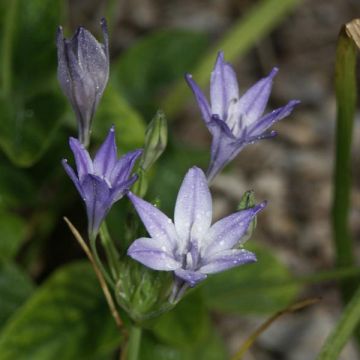
What if we mixed a few different Triteleias?: blues, yellows, and whites striated with blue. For instance, the single Triteleia laxa (the typical species) with violet-blue flowers, Triteleia ‘Rudy’ with its very original blue and white flowers, and Triteleia ixioides ‘Starlight’ with its cream-yellow flowers that will provide contrast to the cool tones of the other two.
To accompany them, let’s stick to yellow and blue tones with a few other perennials. Green-yellow foliage and blue flowers with one or two Gentiana cruciata, which can be a bit temperamental, but also enjoy well-drained and cool soils during flowering. Let’s stay with “blue flowers” with a few Amsonia ‘Blue Ice’ whose star-shaped blue flowers will remind us of those of the Triteleias. The Carex oshimensis ‘Evergold’ remains a reliable choice and will enhance the blue blooms with its green foliage featuring a broad cream stripe. Finally, we will try a groundcover with yellow flowers like Helianthemum ‘Ben Fhada’ which will serve as a backdrop for the flowers of Triteleia.
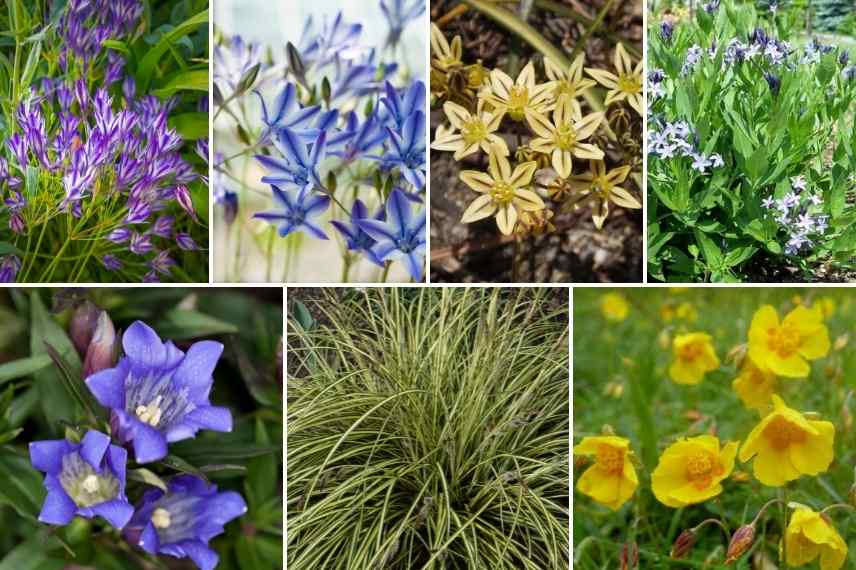
Triteleia laxa, ‘Rudy’ and ‘Starlight’, Amsonia ‘Blue Ice’, Gentiana cruciata, Carex oshimensis ‘Evergold’ and Helianthemum ‘Ben Fhada’
A slightly cooler atmosphere
Triteleias (or Brodiae) thrive in partial shade. To avoid a dull or sad appearance, we will opt for yellow and cream-white tones for the flowers and some foliage. Small clumps of Origanum vulgare ‘Aurea’ with beautiful golden foliage will already enhance the surrounding greenery. The Centranthus ruber ‘Albus’, the garden valerian with white flowers, has the good taste to self-seed naturally without being invasive. The Digitalis lutea will add some verticality to the arrangement with its fine floral spikes adorned with pale yellow to white tubular bilabiate flowers. Still focusing on graphic design and verticality, rows of Sysirinchium striatum will define the boundaries of the bed with their narrow spikes topped with pale yellow star-shaped flowers and foliage reminiscent of an Iris. To finish, the purple foliage, the multitude of yellow flowers, and the gangly appearance of some Lysimachia ciliata ‘Firecracker’ will bring a slightly unruly aspect to the whole.
But what about the Triteleias? Don’t worry, they are on their way! The yellow-flowered Triteleias from Triteleia ixioides ‘Starlight’ will harmonise with the rest. However, a touch of whimsy is often welcome! Bright blue will surely enliven the bed by adding a strong contrast. Be careful not to overdo it: just a few plants of Triteleia laxa (the typical species) will be more than enough. For even more originality and a stronger contrast: why not try the Triteleia ‘Corinna’ with its deep violet-blue flowers?
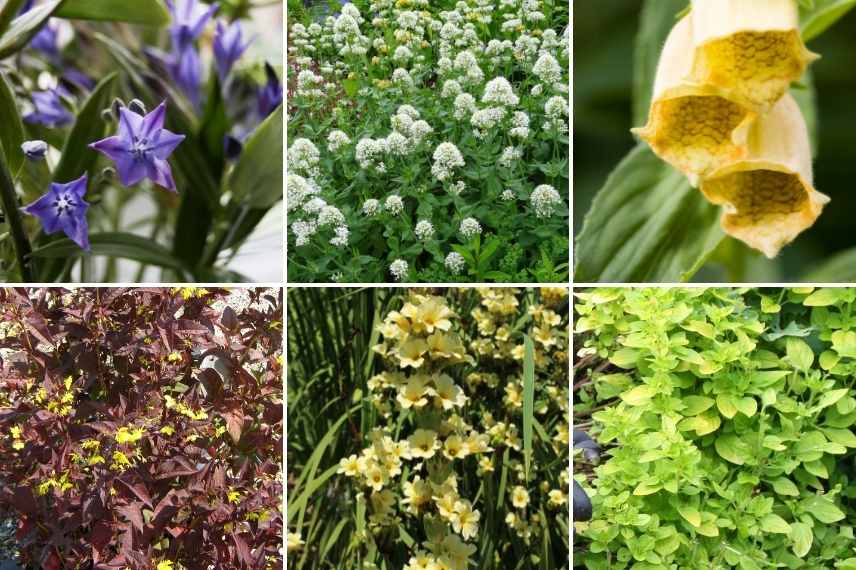 Triteleia laxa, Centranthus ruber ‘Albus’, Digitalis lutea, Lysimachia ciliata ‘Firecracker’, Sysirinchium striatum and Golden Oregano
- Subscribe!
- Contents
Comments