





























Growing Hedychium in pots
Exoticism on the terrace and balcony!
Contents
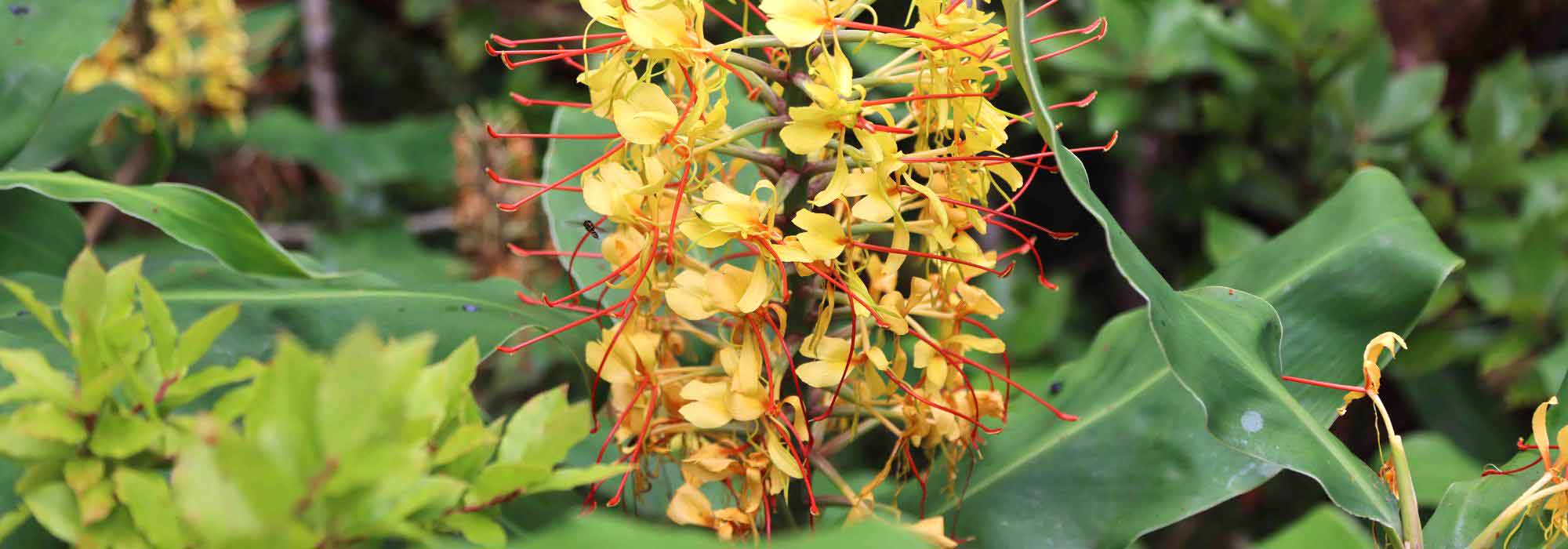
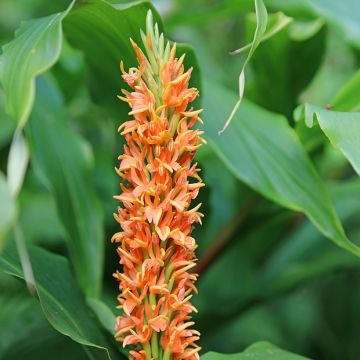
The Hedychium, also known as ornamental ginger or longose, is an exotic and generous rhizomatous perennial, interesting for more than one reason:
- its unique appearance with lush foliage and large spikes of beautiful fragrant flowers
- its brightly coloured inflorescences, ranging from orange-reds to softer cream-yellow hues
- its summer flowering that brightens up the garden or terrace during the warm season
- its low-maintenance nature and ease of cultivation despite its tropical plant appearance
Do these advantages make you want to adopt this beautiful perennial? Then why not grow it in a pot, to showcase it close to the house and enjoy it fully? Choice of varieties, substrate, pot, maintenance… We guide you step by step for planting Hedychium in a pot.

Which variety to choose?
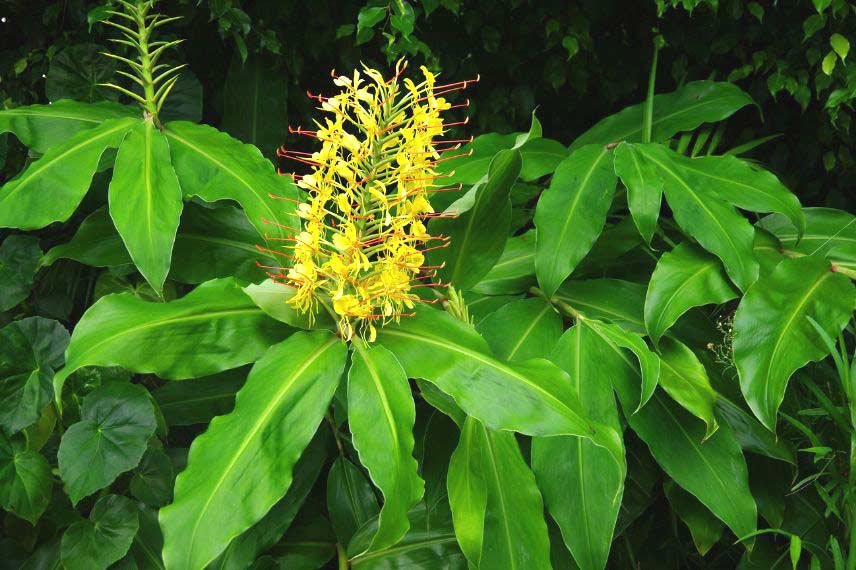
Cousins of ginger and cardamom, the Hedychiums are among those plants that evoke exoticism and a sense of escape. Yet, do not be misled; Longose is an easy perennial, accessible to all gardeners. It is a beautiful plant for terraces or the edges of a water feature.
For pot cultivation, choosing the right variety is important, depending on where you want to place it and the colour that appeals to you the most.
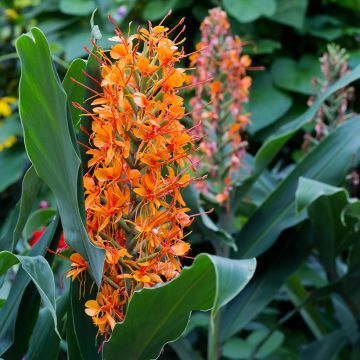
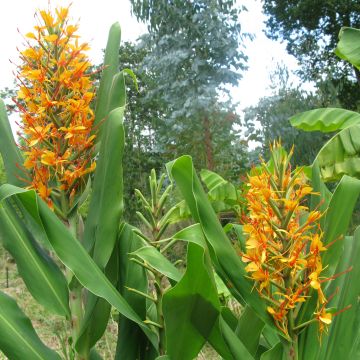
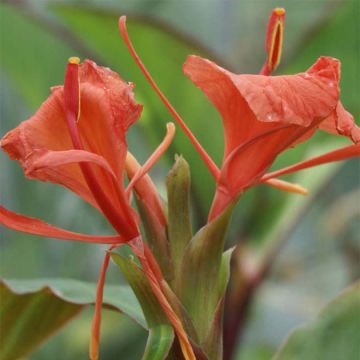
- The Hedychium coccineum ‘Tara’ is one of the hardiest varieties, capable of withstanding temperatures as low as -16°C under a thick protective mulch. It will form an impressive clump, 70 to 90 cm wide, consisting of leafy stems that can reach up to 1.20 m in height.
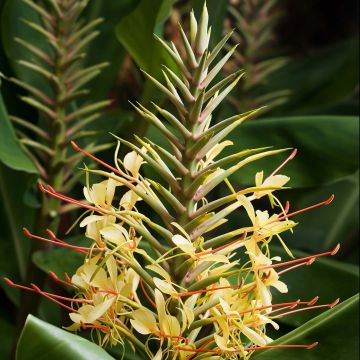
- The Hedychium densiflorum will reach about 1.30 m in height at maturity, spreading laterally over time to form large clumps. This superb rhizomatous perennial forms a dense clump of tall leaves in spring, crowned with tightly packed yellow-orange flowers on beautiful spike-like inflorescences.
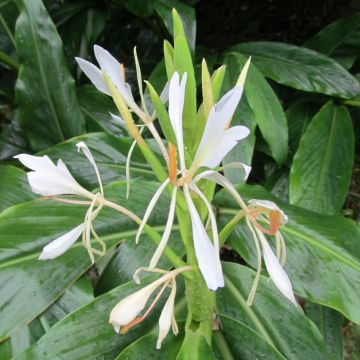
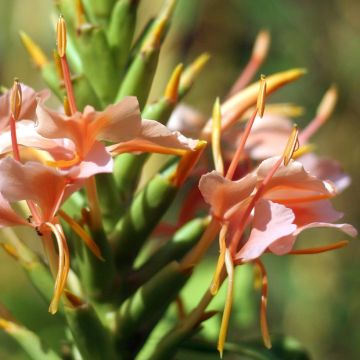
- The Hedychium ellipticum, is one of the most interesting ornamental gingers, both for its high ornamental value and the clove-like fragrance of its flowering. Very decorative with its beautiful leaves reminiscent of banana plants and its arachnoid flowers, white with orange stamens, it will form an upright clump, 70 to 90 cm wide and nearly 1 m tall.
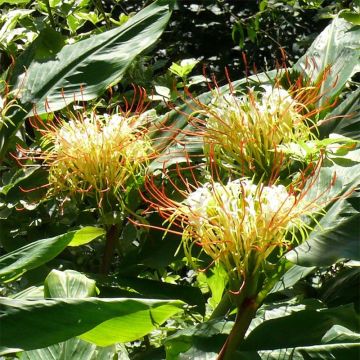
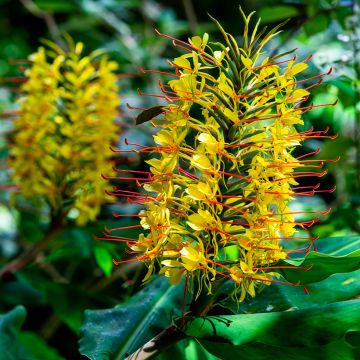
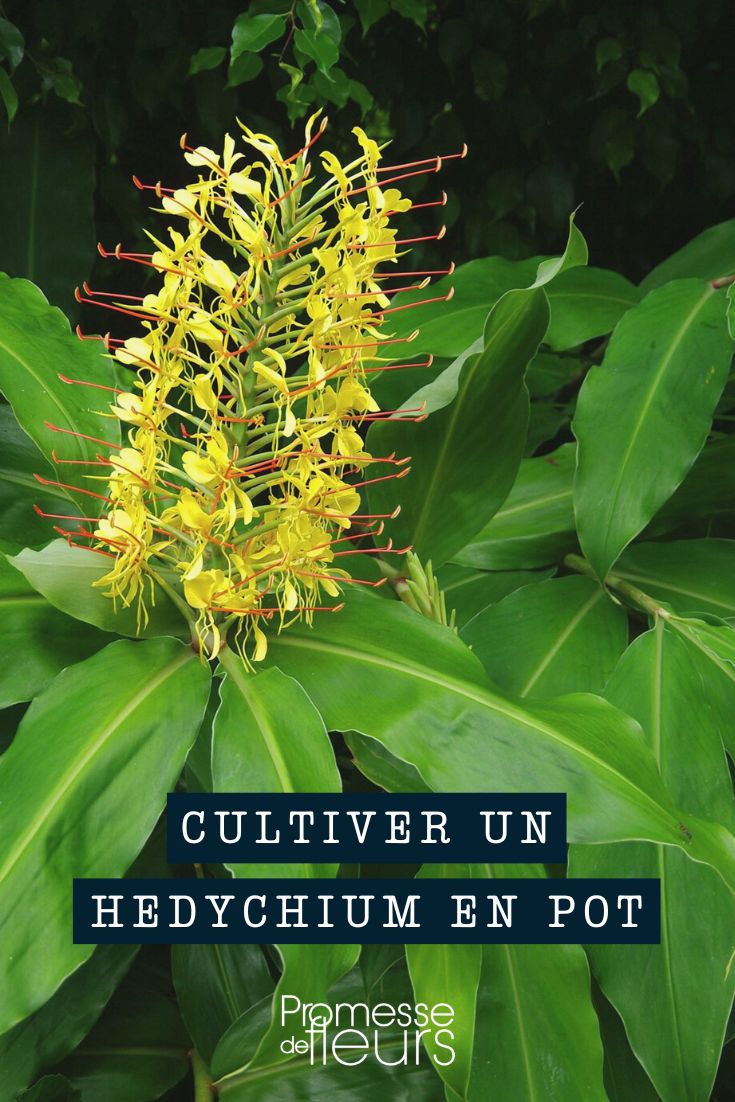
- The Hedychium gardnerianum, sometimes called “Kahili ginger,” is cultivated well beyond its native Himalayas. This lush species enchants gardeners with its exuberant foliage and stunningly fragrant flowering in late summer, taking the form of long upright floral spikes adorned with pale yellow arachnoid flowers, enhanced by long bright red stamens.
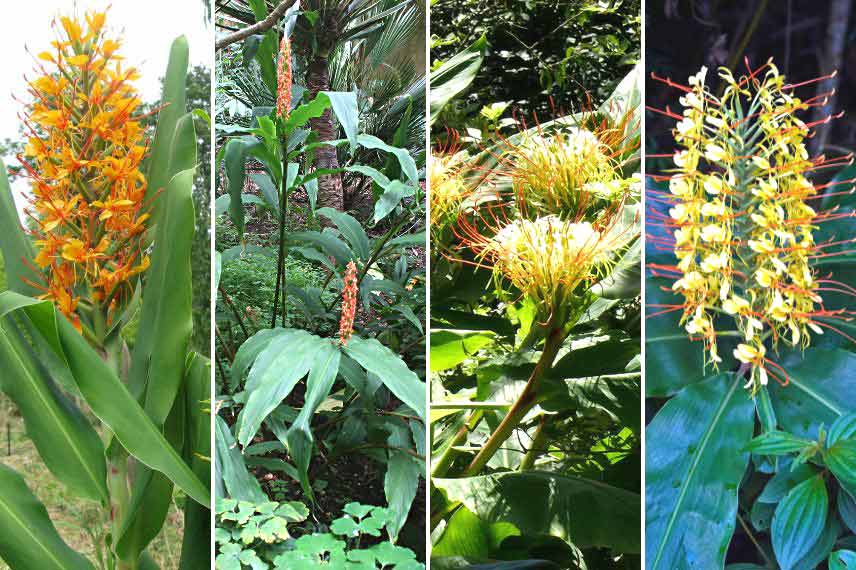
Hedychium coccineum ‘Tara’, Hedychium densiflorum, Hedychium ellipticum and Hedychium gardnerianum
What pot for Hedychium?
Terracotta pots, with their authentic and more eco-friendly appeal, are the ideal containers for ornamental gingers. They can also be glazed or enamelled in lovely shades that will beautifully highlight your Hedychium.
Adjust the size of the pot or container to the size at ripeness of your plant. The root system must be able to develop properly; otherwise, the plant will not be as beautiful as it should be. A minimum of 60 cm in diameter and depth is therefore recommended, as these generous plants require space.
If you prefer to choose a plastic or resin pot for more design or lightweight options—which is understandable for those wishing to place their Hedychium on a balcony in higher floors—remember that these non-porous materials do not allow the substrate and roots to aerate properly.
Discover other Hedychium
View all →
Available in 0 sizes
Available in 1 sizes
Available in 2 sizes
Available in 1 sizes
Available in 1 sizes
Available in 1 sizes
Available in 1 sizes
Available in 1 sizes
Available in 1 sizes
Available in 1 sizes
What substrate for my Hedychium in a pot?
Hedychium is very easy to cultivate, provided it has a substrate that remains cool, even moist in summer. It requires rich soil, ideally a good humus-bearing soil. It is one of the few rootstocks that can tolerate heavy, wet soils in winter, so it can be grown in almost all regions, except high mountain areas. You may choose a potting compost, but ideally, you can create a mixture formed of:
- 3/4 good garden soil
- 1/4 compost or potting soil
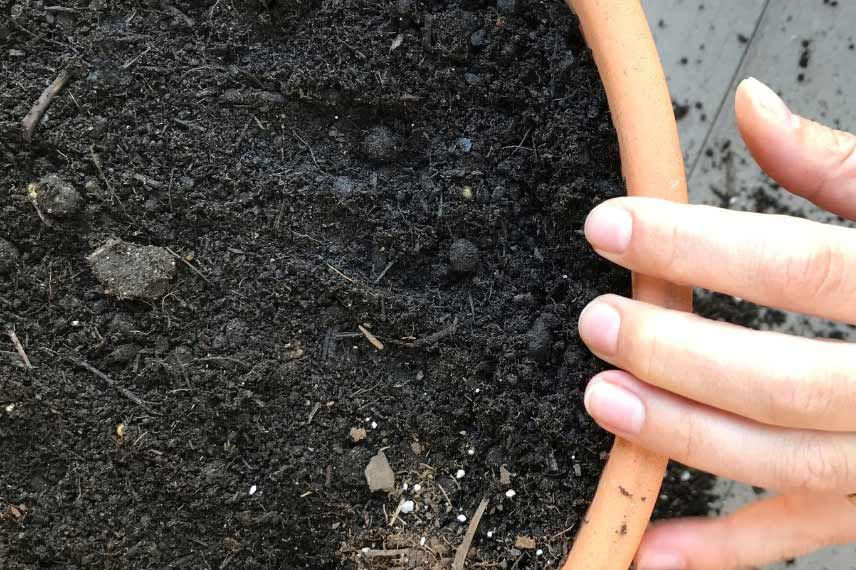 The substrate must be rich and remain cool
Planting Hedychium in a pot
Hedychium come in the form of large, flat rootstocks, somewhat like ginger or garden irises. They are sold as bare roots in spring (from February to April) or marketed in pots for the rest of the year, but they are ideally planted in spring from March-April until June.
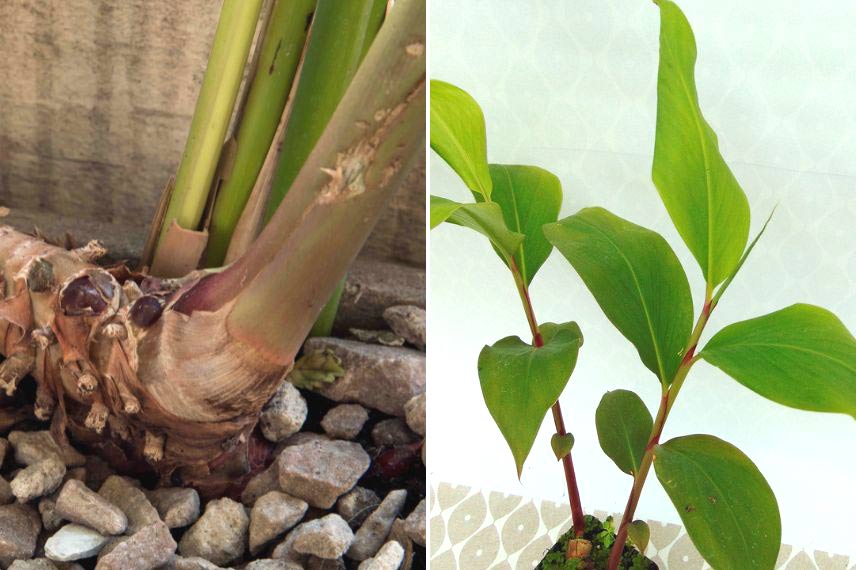
- Partially fill the pot with your substrate. Remember that in winter, you will need to mulch with a good thickness to protect it from frost. So calculate the pot filling while keeping some height available.
- The rootstock of your ornamental ginger should be firm to the touch and have buds. Place it on the substrate so that it can be covered by at least 15 – 20 cm. It doesn’t matter which way it faces; the stems will manage to develop.
- Fill in with the remaining substrate.
- Water… and be patient! The first stems always emerge late: sometimes as early as May, but more often in June. The colder the spring, the longer the rootstock will delay its growth.
- As long as the rootstock is in dormancy, do not water, but once the vegetation starts, water regularly, especially during dry and hot spells.
- Place a mineral mulch or organic mulch on top of the substrate: it will prevent too rapid drying and protect the plant in winter.
Exposure and Location
The keys to successfully growing this exotic plant are: warmth, food, and water! During the beautiful season, place it outdoors on the terrace, balcony, at the entrance of the house, or to punctuate a pathway. Choose a warm, sunny spot, sheltered from strong winds. In partial shade, Hedychium will tend to grow taller.
Watering and caring for potted Hedychium
- Provide an organic fertiliser at the start of the growing season for your ornamental Ginger, then regularly throughout the season according to the product’s recommendations.
- Remove faded flowers during the season.
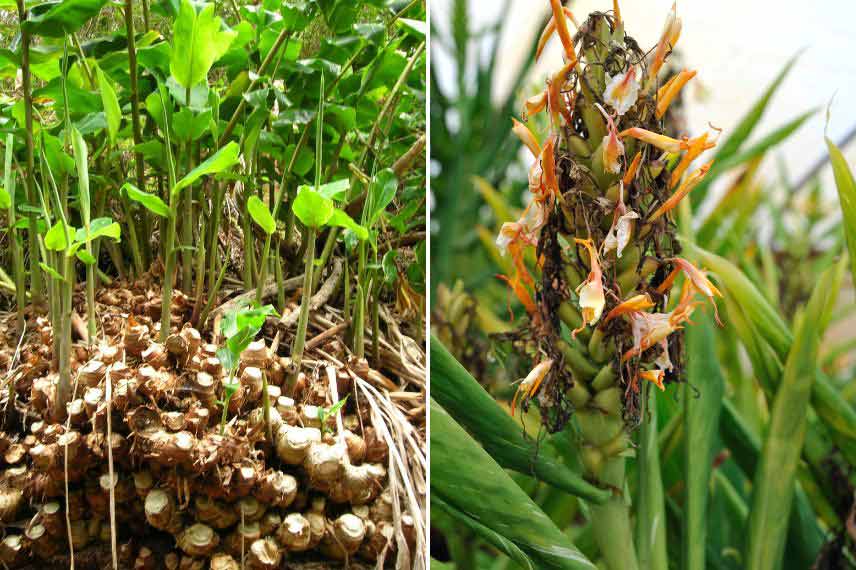
- Hedychiums are hardy in most of our regions, but they become fragile as they age. Over time, the rootstocks rise to the surface and spread to colonise the area. It is therefore advisable to protect the stump at the beginning of winter with a thick layer of straw or fallen leaves at least 20 cm thick. In December, cut the stems to 20 cm above the soil, mulch, and place the cut stems on the stump to prevent the mulch from blowing away. This simple mulching will allow your Hedychium to withstand temperatures dropping to around -15 °C compared to -8 °C without protection.
- You can also winter your Longose. In this case, store it in a frost-free location, in a bright, unheated room during winter. You can also dig up the stump and treat it like cannas.
- Reduce watering in winter, then resume more abundant watering from spring to summer. Ensure it does not lack water during the summer: this is the time of year when it needs it the most.

- Subscribe!
- Contents
Comments