





























Growing Daphne in pots
To scent your balcony or terrace
Contents
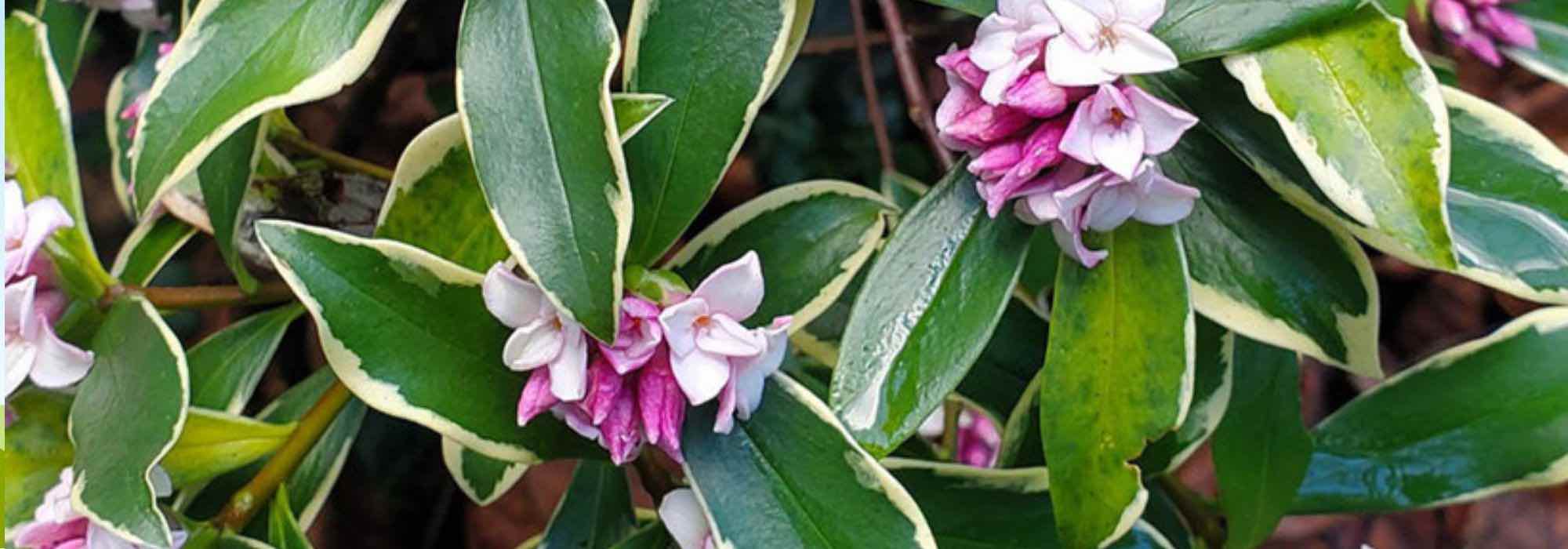
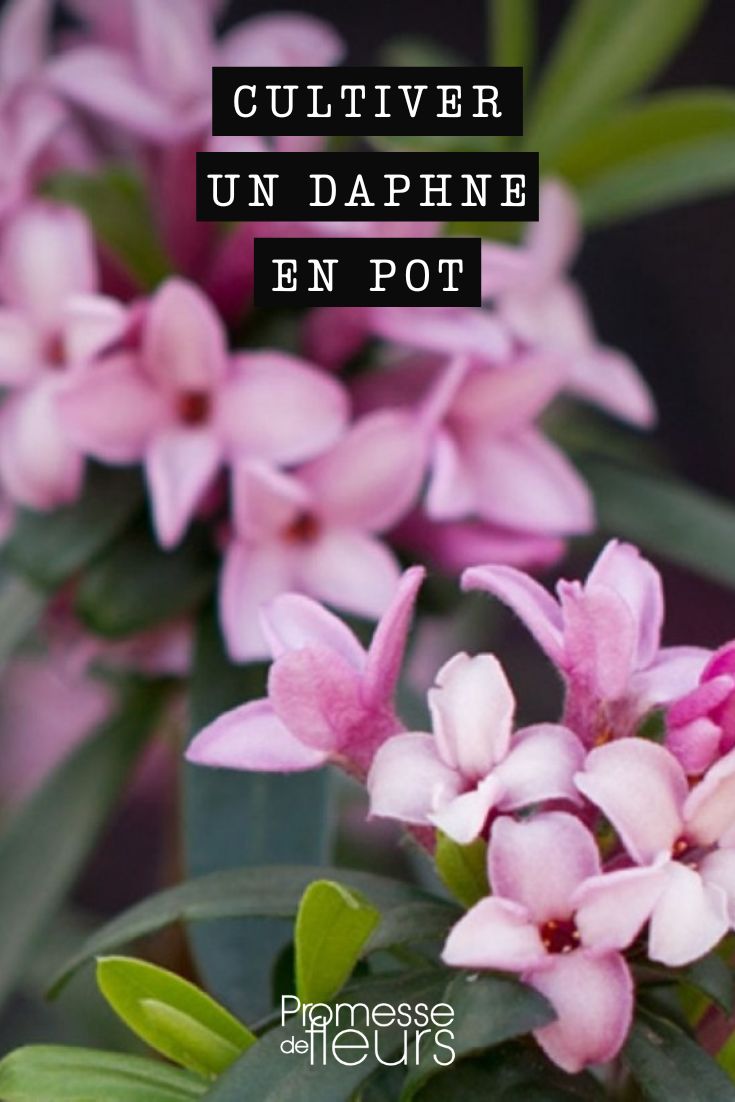
Daphne is a shrub with highly fragrant flowers. With a rather compact size and slow growth, it is well-suited for pot cultivation, allowing you to enjoy its scents on a balcony or terrace. Its foliage can be evergreen, semi-evergreen, or deciduous depending on the species. It is adorned with small star-shaped flowers with four fleshy, pointed, and curved petals, boasting exceptional fragrances. Flowering occurs from February to October, in winter, spring, or summer depending on the varieties. Still relatively underused, this hardy bush deserves to be better known. Very floriferous, it produces flowers in colours ranging from candy pink to white, including purple, yellow, red, and lavender. Discover our tips for growing a Daphne in a pot.
The best varieties of Daphne for pot cultivation
Measuring between 10 and 50 cm for dwarf species and up to 4 metres for tall species, this bush has a rather compact habit, making it suitable for pot cultivation. For pot cultivation, it is advisable to choose smaller varieties, preferably evergreen bushes, such as Daphne alpina, Daphne arbuscula, Daphne jasminea, Daphne petrea.
Among the varieties that are well-suited for pot cultivation, we can mention:
- Daphne cneorum with a prostrate habit, measuring 25 cm high at maturity with a spread of 1.50 metres, offering bright pink, highly fragrant flowers from April to May.
- The Daphne odora ‘Rogal d’or’ or fragrant daphne with winter flowering, from February to March, among the most fragrant and featuring attractive variegated foliage, reaching a height of 80 cm.
- The Daphne x transatlantica Pink Fragrance with a compact, bushy habit that flowers from May to July and from September to October, reaching 80 cm in height.
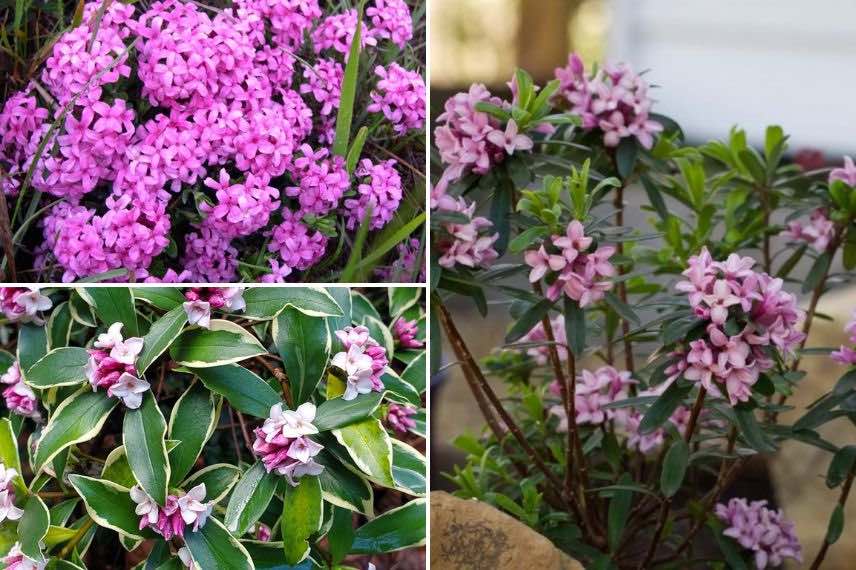
Clockwise: Daphne cneorum, Daphne x transatlantica ‘Pink Fragrance’, Daphne odora ‘Rogald’or’
Read also
Daphne: planting, growing and careSteps to plant a Daphne in a pot
Choice of pot and substrate
- The Pot
You can choose any type of pot, according to your preferences. A terracotta pot remains a more eco-friendly option and allows the plant to benefit from better aeration. Choose a large container to accommodate the Daphne, as this bush does not like to be repotted. Aim for a volume of around thirty litres with a diameter of 30 to 40 cm.
- The Substrate
The Daphne appreciates a rich, fresh, and very well-draining substrate as the bush is sensitive to stagnant moisture.
It can be planted in a mixture of neutral or acid soil, with the addition of heather soil.
Planting and watering
- Planting Period
Daphnes are preferably planted in autumn in regions with a mild winter and in spring in other regions.
- Regions
The Daphne can be grown in any region of France, with a caveat for those subjected to a Mediterranean climate, as it is sensitive to high temperatures. It enjoys mild and humid climates like that of Brittany.
- Exposure
Place the pot in partial shade and out of direct sunlight, in a well-ventilated area where air can circulate. You can position it at the foot of trees, in a spot facing north or north-east, but sheltered from cold draughts.
How to plant step by step?
- Take a large pot of at least 30 to 40 cm in diameter with a volume of around thirty litres
- At the bottom of the pot, which must have drainage holes, place a thick layer of clay balls or gravel to ensure good drainage, as the Daphne does not tolerate stagnant moisture.
- Mix garden soil with potting soil and sand and fill the pot halfway
- Make a hole in the middle of the pot and place the Daphne in it
- Fill in with the remaining mixture of soil and sand
- Firm the soil to avoid air pockets and check that the collar is level with the surface and not buried
- Water generously and place in a partially shaded, airy spot without cold draughts
How to care for your potted Daphne?
Watering and fertilisation
- Grown in a pot, Daphne needs water and requires regular watering, as it does not tolerate drought.
- In summer, allow the soil to dry for at least 24 hours between waterings.
- In winter, it requires less watering. You can water it every three weeks.
- From the second year onwards, you can apply fertiliser or compost by scratching the surface of the substrate, from April to August.
Pruning
- As Daphne has a slow growth, it is not necessary to prune it and severe pruning can be harmful and may cause it to die.
- If necessary, you can cut back any dead stems.
Disease prevention
- Daphne is susceptible to fungal diseases, particularly Phytophthora, which can suddenly destroy it. This fungus can appear in conditions of stagnant moisture and overly frequent watering, with temperatures around 15 to 16 degrees. Rot affects the collar and roots, causing leaf discoloration and drying out. To prevent this disease, avoid excess water in the substrate and ensure good drainage of the pot.
- Daphne is also sensitive to Marssonina daphnes, a virus that can also quickly destroy the bush. The remedy is to spray a fungicide in spring.
Wintering
- Daphne is generally hardy down to -15 degrees.
- If you live in an area with severe frosts or if you are growing a less hardy species, you will need to protect it in winter with a winter cover or bring it into a conservatory to protect it from the cold.
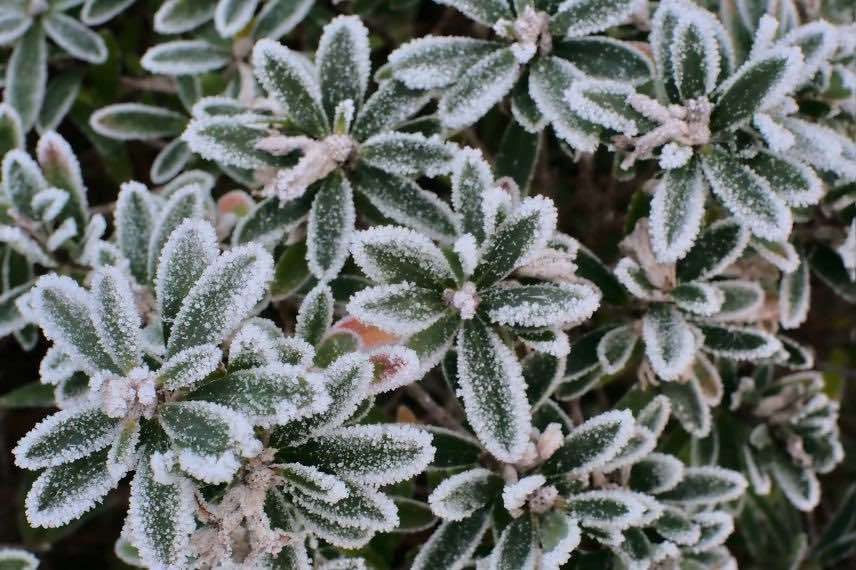
Daphne is quite frost-resistant, down to -15° C
Read also
Daphne: how to care for it?For further reading
Discover:
- our complete range of Daphnes
- our comprehensive guide on growing Daphne
- our tips for caring for Daphne
- Subscribe!
- Contents
Comments