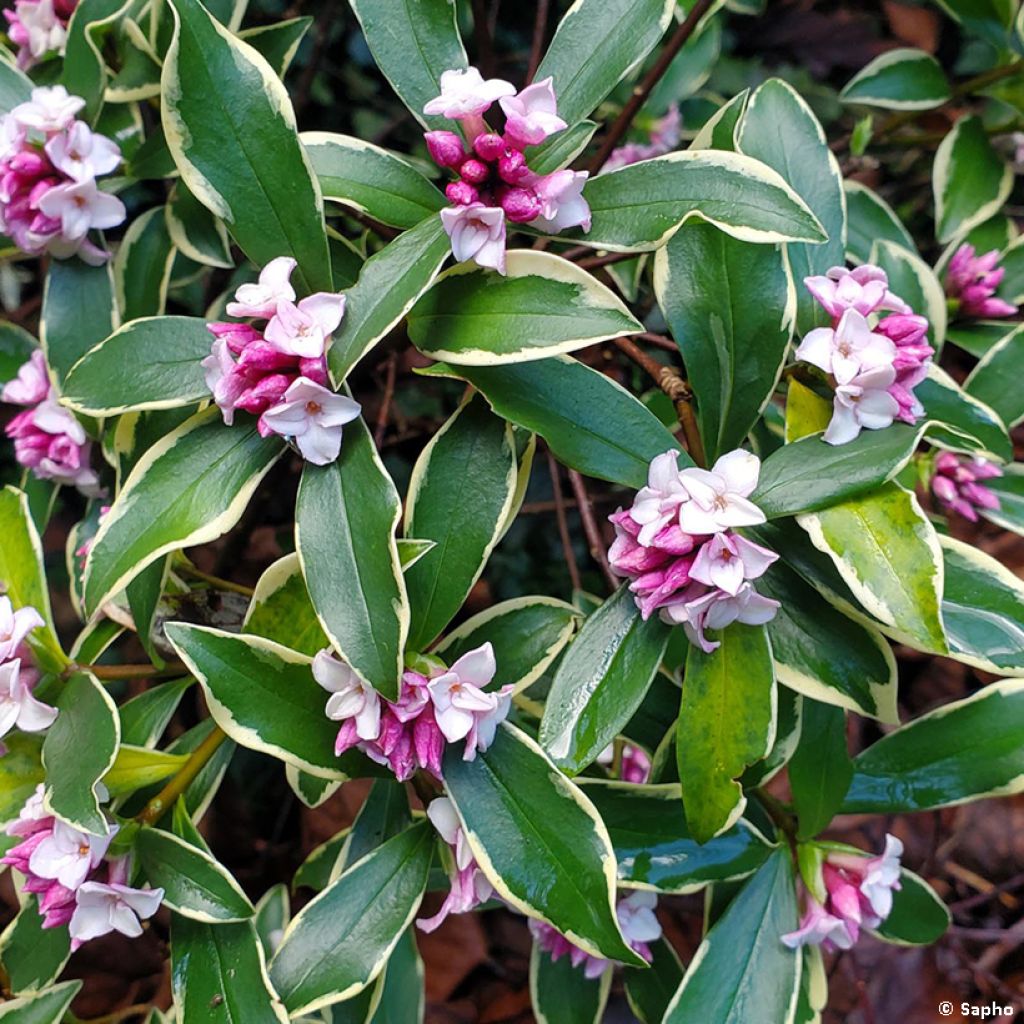
Daphne odora Rogaldor
Daphne odora Rogaldor
Daphne odora Rogald'or
Winter Daphne, Fragrant Daphne
Back-to-school special offer!
Get €10 off for every €50 you spend! And get up to €40 off on a single order.
How does it work?
1. Shop your favourites
Add your favourite plants to your basket. For every €50 you spend (excluding delivery charges, store credit and the plastic-free option), you’ll receive a €10 voucher.
€50 spent = €10 voucher
€100 spent = €20 voucher
€150 spent = €30 voucher
€200 spent = €40 voucher
2. Place your order
Once your basket reaches one of the spending thresholds, place your order. You can even choose your delivery date!
3. Receive your voucher
As soon as your order has been shipped, you’ll receive an email containing your personal voucher code and its value.
4. Use it on your next order
Your voucher is valid for 90 days from the date you receive it. It can be used once only, on a new order worth at least the value of the voucher, excluding delivery charges.
Please note: Vouchers can be combined with other offers, but cannot be split or refunded.
Why not try an alternative variety in stock?
View all →
Available in 3 sizes
Available in 0 sizes
Available in 2 sizes
Available in 2 sizes
Available in 2 sizes
Available in 1 sizes
Available in 1 sizes
Available in 1 sizes
This plant carries a 24 months recovery warranty
More information
We guarantee the quality of our plants for a full growing cycle, and will replace at our expense any plant that fails to recover under normal climatic and planting conditions.
Does this plant fit my garden?
Set up your Plantfit profile →
Description
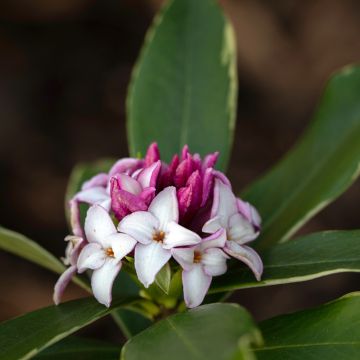
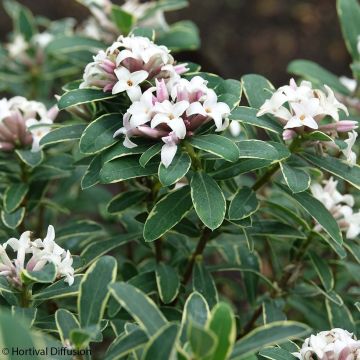
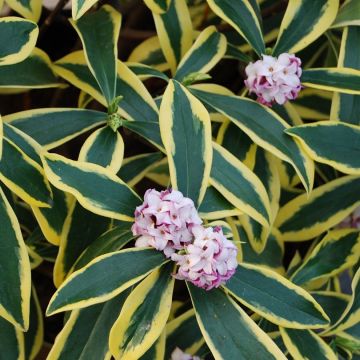
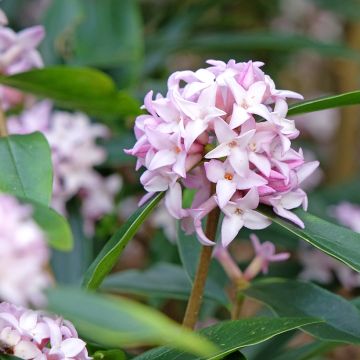
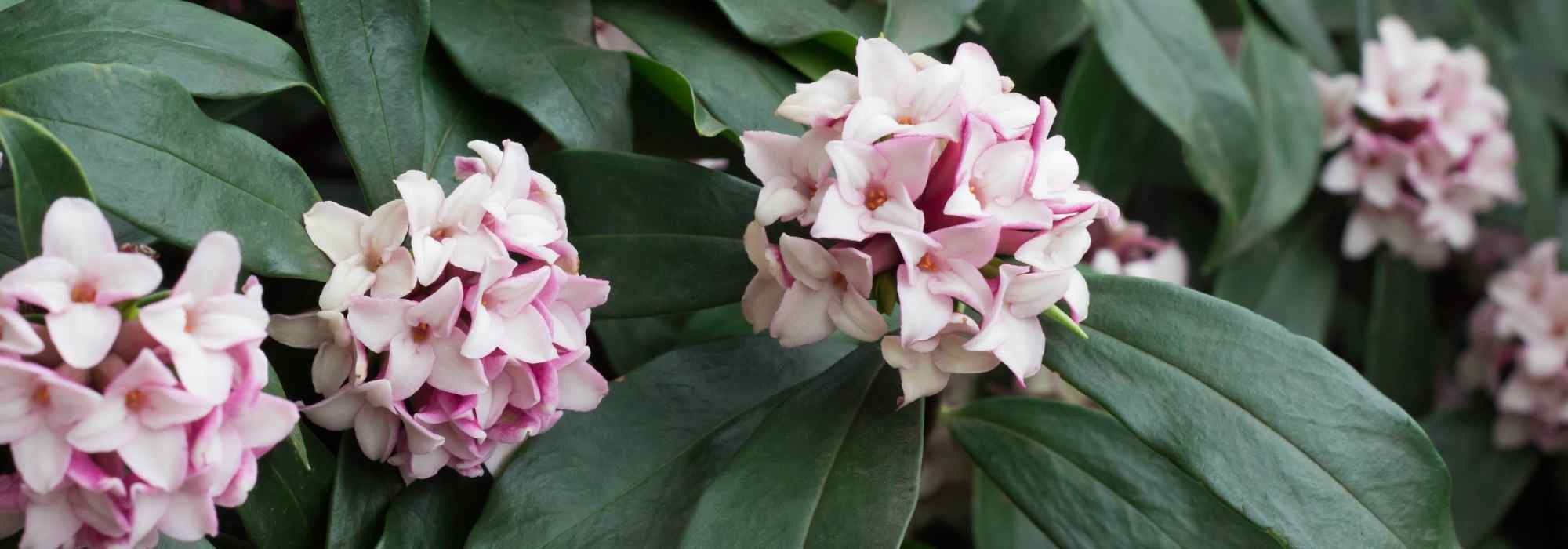
The Daphne odora Rogald'or or fragrant daphne is a shrub whose flowering is among the most fragrant. Appearing during winter, the floral buds grouped in umbels at the end of the branches are very decorative with their deep pink color. They open into small, pale pink flowers with a romantic charm that perfume the air for weeks. The variegated foliage is also remarkable, composed of leaves with a beautiful green color highlighted by a yellow margin. A plant suited for mild climates, moderately hardy, with a compact habit, it is perfect for brightening shaded areas, in cool, neutral to acidic soil.
Daphne is a member of the little-known family Thymelaeaceae, which includes nearly 500 species, including Edgeworthia and Pimelea, with their characteristic terminal flower clusters. There are around fifty species of Daphne, shrubs or shrubby plants native to Europe (the most common being D. mezereum or Mezereon, despite its toxicity), North Africa, and Asia.
Daphne odora is a botanical species native to Japan and China, countries where it has been cultivated for hundreds of years. Its wood, rich in fibers, provides excellent traditional paper pulp. It is also a plant used in Asian pharmacopoeia, a subtle art that requires perfect mastery of dosages, as all parts of the plant are toxic.
Daphne Rogald'or is a horticultural hybrid created by the Polish breeder Przemyslaw Rogalski, also the breeder of the variety Daphne odora Marianni Rogbret (Gold Medal at the professional Innovert Show 2009). It is an improvement of the well-known Daphne odora 'Aureomarginata' appreciated by enthusiasts of the genus.
More compact than its predecessor, it forms a low-growing, slow-growing shrub, about 80 cm (31.5 in) in height and spread at maturity. These characteristics, coupled with moderate hardiness, encourage cultivation in containers in cold regions. It is particularly decorative with its beautiful evergreen foliage. It has lanceolate, narrow, pointed leaves of a superb green color enhanced by a fine, bright yellow margin all around the lamina.
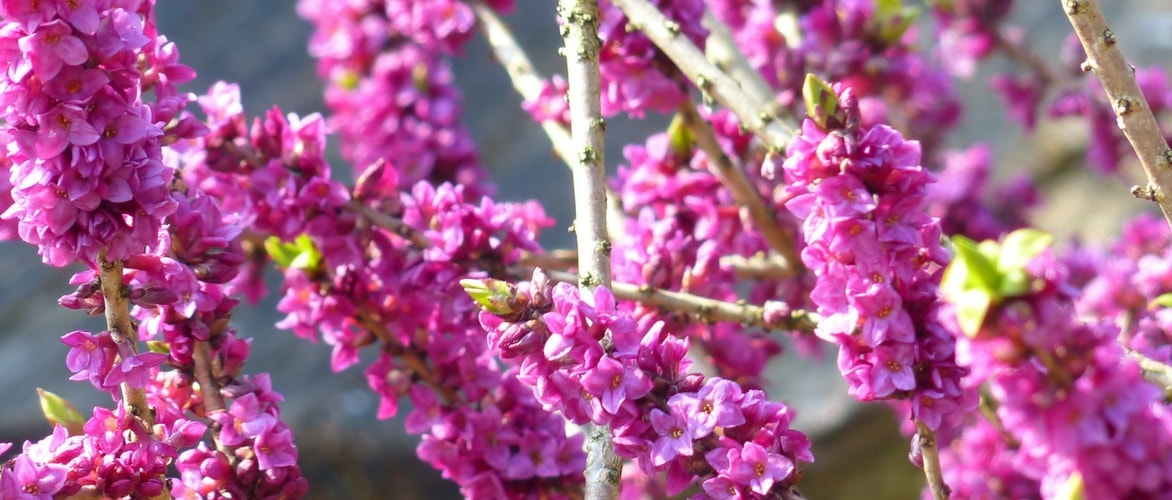
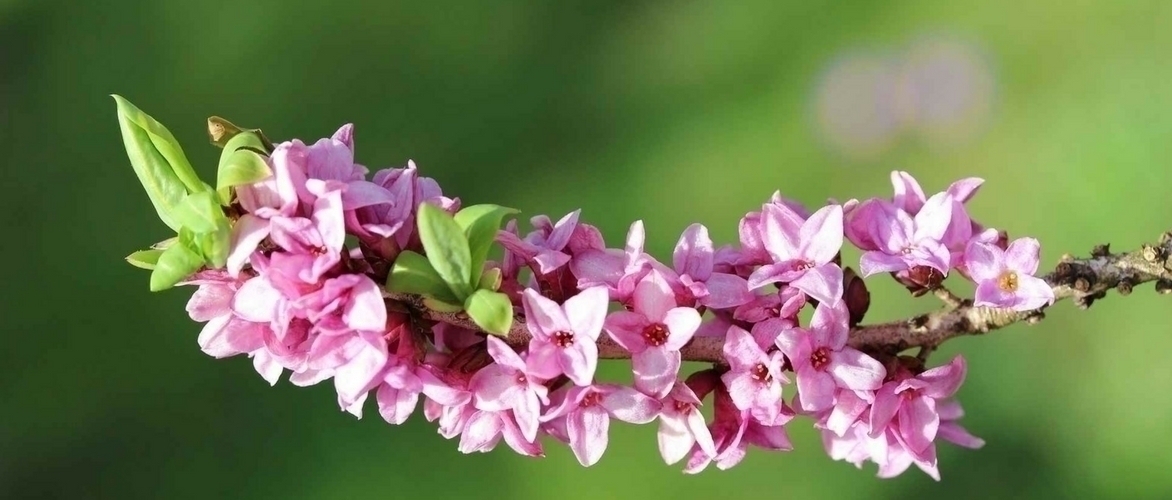
Its slightly irregular, bushy habit gives it a very natural appearance, vaguely reminiscent of certain Rhododendrons with their slightly undulating, sometimes slightly drooping leaves. In winter, the tips of the branches are adorned with umbels, each containing about fifteen to twenty extremely decorative floral buds with their dark pink color, which contrasts beautifully with the foliage. The small flowers (about 1.5 cm (0.6 in)) are single, with 4 slightly pointed petals and a pale pink color that pleasantly coexists with the still closed dark buds. They bloom in February and March, for several weeks, spreading a delightful fragrance that combines carnation and jasmine. This fragrance is particularly welcome early in the season, heralding spring in the most beautiful way.
This shrub has moderate hardiness, up to about -10°C (14 °F) or -12°C (10.4 °F). In cold climates like those in the east, it can be perfectly cultivated in containers and overwintered in an unheated room, garage, or other room with a window.
Whether in the ground or in a container, place this Daphne Rogald'or in a high-traffic area to enjoy its intoxicating scent, in addition to its beautiful foliage. You can also integrate it into a diverse border, alongside other plants that thrive in cool shade. You can create a stunning scene by combining it with a Japanese Maple with red foliage, such as the beautiful Acer palmatum Twomblys Red Sentinel with a columnar habit. A Mountain Laurel such as the variety Ewa will take over the flowering after the Daphne, with its beautiful star-shaped buds opening into fused pink flowers. And for summer, you will find a wide range of Hydrangeas with various shapes and colors to suit your taste.
Note: Daphnes are sometimes temperamental plants, and their cultivation can be delicate if conditions are not suitable. They are best reserved for experienced gardeners.
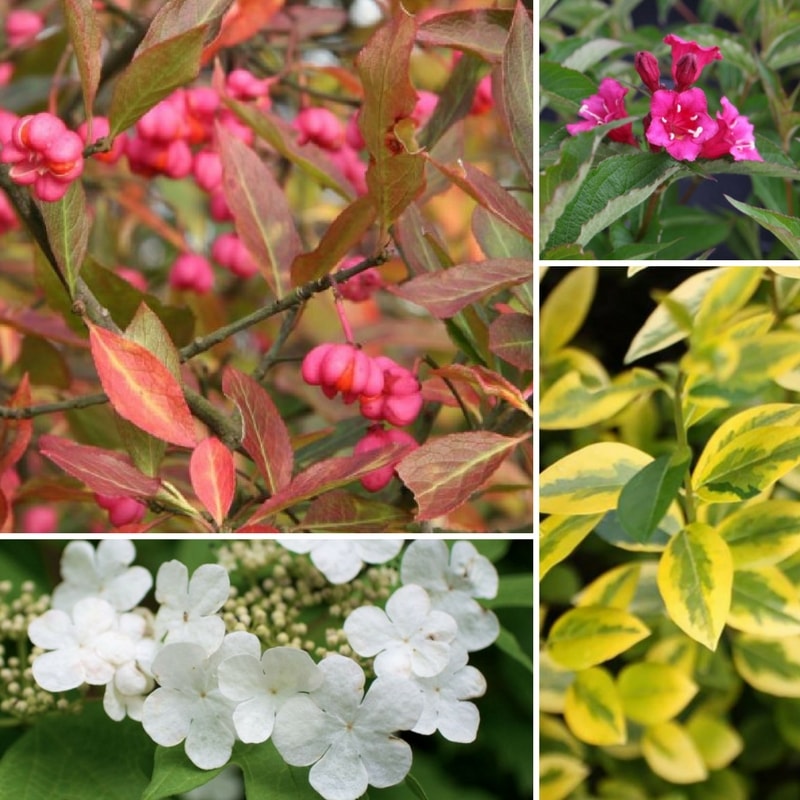
Plant habit
Flowering
Foliage
Safety measures
ingestion
Cette plante est toxique si elle est ingérée volontairement ou involontairement.
Ne la plantez pas là où de jeunes enfants peuvent évoluer, et lavez-vous les mains après l'avoir manipulée.
Pensez à conserver l'étiquette de la plante, à la photographier ou à noter son nom, afin de faciliter le travail des professionnels de santé.
Davantage d'informations sur https://plantes-risque.info
Planting and care
The Daphne odora Rogald'or appreciates a slightly sunny position in the northern zone and a semi-shaded position further south, if possible in a location that is not exposed to spring frosts. Cultivate it in a rather fresh soil, neutral to slightly acidic, without limestone. The Daphne does not like to be transplanted, so choose its final location from the start and do not hesitate to plant a young plant, this way it will adapt more easily to the soil and exposure. Be careful not to damage the root ball during planting to avoid damaging the fragile roots. Soak the root ball for fifteen minutes in a bucket, while you dig a hole about 40 cm (15.7 in) in all directions. Mix slightly acidic planting compost with the existing soil, as well as draining materials (gravel, non-limestone coarse sand) if your soil tends to retain too much water in winter, position the root ball, backfill around it and then water abundantly. Apply compost on the surface every 2 years in spring, this will protect the roots from excessive heat. This Daphne has a rather slow growth and does not require pruning. Wear gloves when handling it, as the sap that comes out of it can irritate the skin.
Planting period
Intended location
Care
Planting & care advice
-
-
-

-

-
-
-
-
This item has not been reviewed yet - be the first to leave a review about it.
Recently viewed products
Haven't found what you were looking for?
Hardiness is the lowest winter temperature a plant can endure without suffering serious damage or even dying. However, hardiness is affected by location (a sheltered area, such as a patio), protection (winter cover) and soil type (hardiness is improved by well-drained soil).
In temperate climates, pruning of spring-flowering shrubs (forsythia, spireas, etc.) should be done just after flowering.
Pruning of summer-flowering shrubs (Indian Lilac, Perovskia, etc.) can be done in winter or spring.
In cold regions as well as with frost-sensitive plants, avoid pruning too early when severe frosts may still occur.
The harvesting period indicated on our website applies to countries and regions in USDA zone 8 (France, England, Ireland, the Netherlands).
In colder areas (Scandinavia, Poland, Austria...) fruit and vegetable harvests are likely to be delayed by 3-4 weeks.
In warmer areas (Italy, Spain, Greece, etc.), harvesting will probably take place earlier, depending on weather conditions.
The sowing periods indicated on our website apply to countries and regions within USDA Zone 8 (France, UK, Ireland, Netherlands).
In colder areas (Scandinavia, Poland, Austria...), delay any outdoor sowing by 3-4 weeks, or sow under glass.
In warmer climes (Italy, Spain, Greece, etc.), bring outdoor sowing forward by a few weeks.
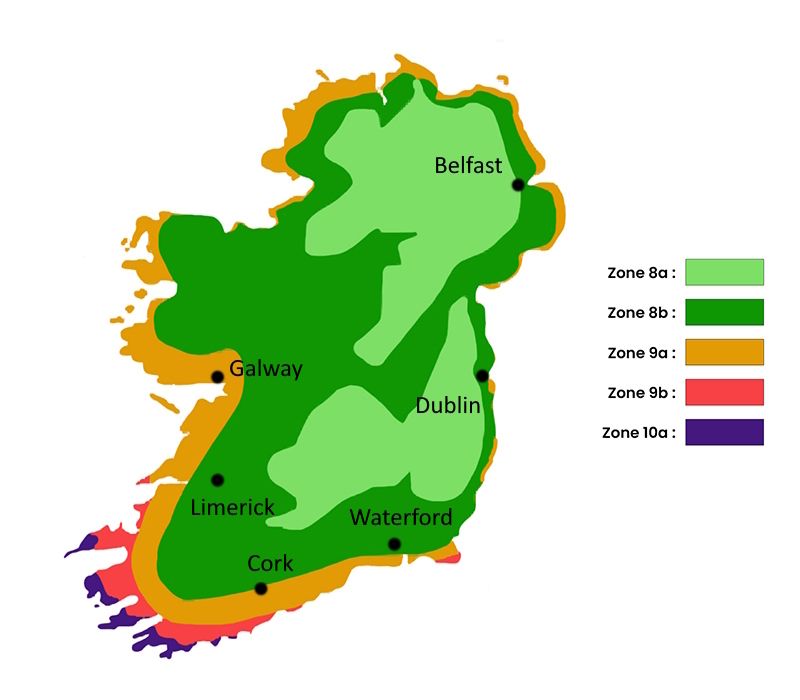
The planting period indicated on our website applies to regions in USDA Zone 9a (East Coast and Midlands: Dublin, Wexford, Waterford, Kilkenny, Portlaoise). It will vary depending on where you live:
- On the west coast and in the north-west (Galway, Limerick, Sligo, Donegal, Westport), delay planting by 1 to 2 weeks in spring and bring it forward by 1 to 2 weeks in autumn compared to the dates given, preferably choosing periods without strong winds.
- In the inland hills and plateaus (Wicklow Mountains, Macgillycuddy’s Reeks, Connemara, Killarney), it is best to plant in spring (April–May) or autumn (September–October), avoiding periods of waterlogged soil in winter and strong winds, which pose the main risk to newly planted trees in these areas.
The flowering period indicated on our website applies to regions in USDA Zone 9a, such as the East Coast and Midlands, including Dublin, Wexford, Waterford, Kilkenny and Portlaoise.
This will vary depending on where you live:
- On the west coast and in the northwest (Galway, Limerick, Sligo, Donegal and Westport), it will be delayed by one to two weeks compared to the given dates, due to stronger Atlantic winds and less spring sunshine.
- In the inland hills and plateaus (the Wicklow Mountains, the Macgillycuddy's Reeks, Connemara and Killarney), flowering will be delayed by two to three weeks. Flowering mainly occurs between May and July, with the limiting factors being less frost and more of the excessive humidity, strong winds and lack of sunshine that are characteristic of these areas.
Shipping country and language
Your country of residence may be:
Your country of residence is:
For a better user experience on our website, you can select:
Your shipping country:
-
 Austria
-
 Belgium
-
 Bosnia & Herzegovina
-
 Bulgaria
-
 Croatia
-
 Cyprus
-
 Czechia
-
 Denmark
-
 Estonia
-
 Finland
-
 France
-
 Germany
-
 Greece
-
 Hungary
-
 Iceland
-
 Ireland
-
 Italy
Italy
-
 Latvia
-
 Liechtenstein
-
 Lithuania
-
 Luxembourg
-
 Malta
Malta
-
 Netherlands
-
 Poland
-
 Portugal
-
 Romania
-
 Serbia
-
 Slovakia
-
 Slovenia
-
 Spain
Spain
-
 Sweden
-
 Switzerland
Language:
-
French
-
 English
-
Spanish
-
Italian
-
German
-
Portuguese
-
Dutch
-
Finnish
My Account
Hello
My wish lists
My cart
Log in / Register
Existing customer?
This form is protected by reCAPTCHA - the Google Privacy Policy and Terms of Service apply.
New customer?
Create an account to track your orders, access our customer service and, if you wish, make the most of our upcoming offers.