





























Go for dark-leaved grasses!
for a garden full of character
Contents
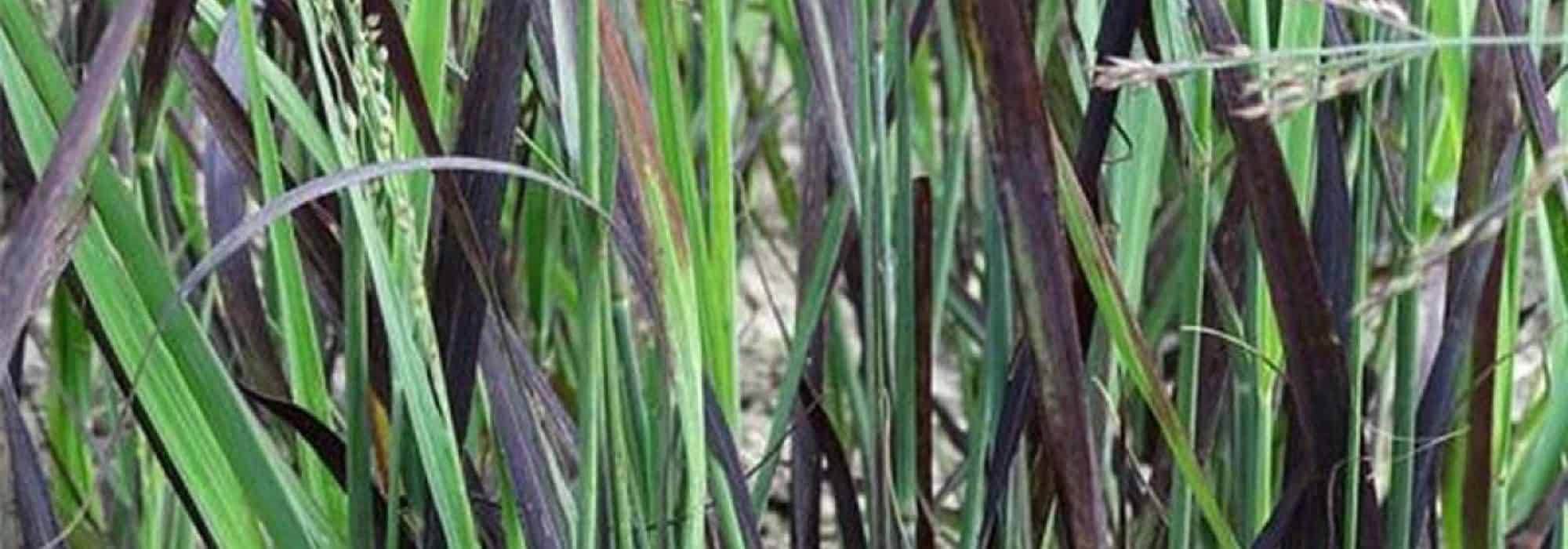
Ornamental grasses with dark foliage add a touch of sophistication and depth to the garden. With hues ranging from purple to near-black, they allow you to create striking contrasts or to enhance a warm, autumn colour palette. Like their lighter sisters, they often combine beauty with ease of cultivation. In this article, discover a selection of dark-leaved ornamental grasses that will turn heads in your borders, beds or pots.

Purple-leaved Chinese fountain grasses: elegance and texture
Pennisetums are valued for their feathery plumes, but some varieties also stand out for their dark foliage. These clump-forming grasses are ideal for adding texture and colour to herbaceous borders.
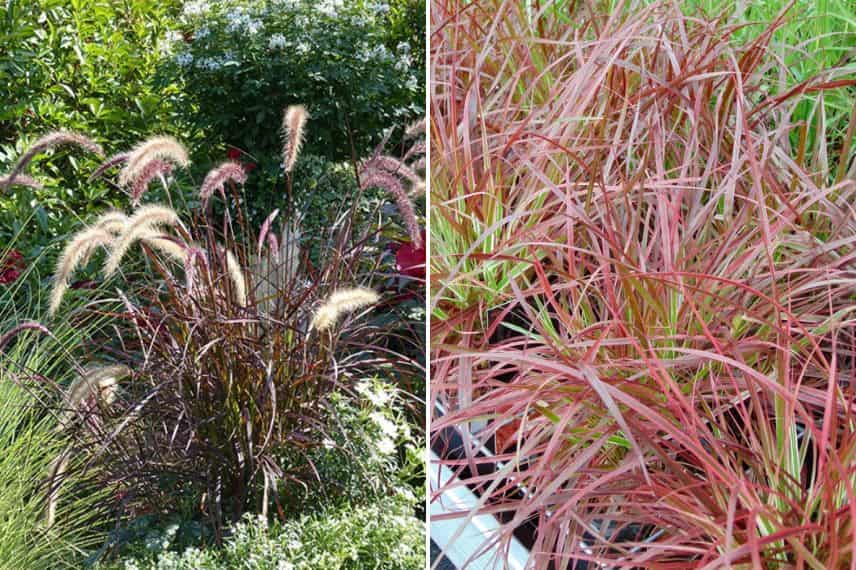
Among the different varieties, the Pennisetum setaceum ‘Rubrum’ is a real jewel with its almost black purple leaves and its pink-feathery plumes. This grass prefers well-drained soil and a sunny exposure in order to bring out its lovely colour. In partial shade, it will lean more towards deep purple.
A little smaller and more striking, the green foliage, striped with red and pink, of Pennisetum setaceum ‘Fireworks’ really stands out in the garden. This foliage gradually turns to deep red-purple at maturity. Its pink flower spikes fade to blond at maturity.
However, unlike the lighter varieties, ‘Rubrum’ and ‘Fireworks’ are more frost-tender (down to -4°C) and will be better suited to regions with a mild climate for planting in the ground. In other regions, they can be grown as annuals or, alternatively, planted in pots to protect from the cold over winter.
Tip: Pair Pennisetums with bright perennials such as the rudbeckias, the asters or the echinaceas for a spectacular effect. In pots, pair them with trailing plants such as the Lysimachia nummularia ‘Aurea’, as well as golden or silvery Heucheras for a striking contrast.
Dark-leaved Andropogon: deep autumnal tones
Big blue stems, or “sand bluestems”, are distinguished by their evolving foliage, displaying vibrant hues as autumn approaches. Elegant and architectural, these grasses are ideal for providing a backdrop in a border or enriching a naturalistic display with their changing colours. They prefer a sunny aspect and tolerate poor, even dry soils, which makes them particularly hardy and adaptable. Once well established, they tolerate frosts down to -20°C.
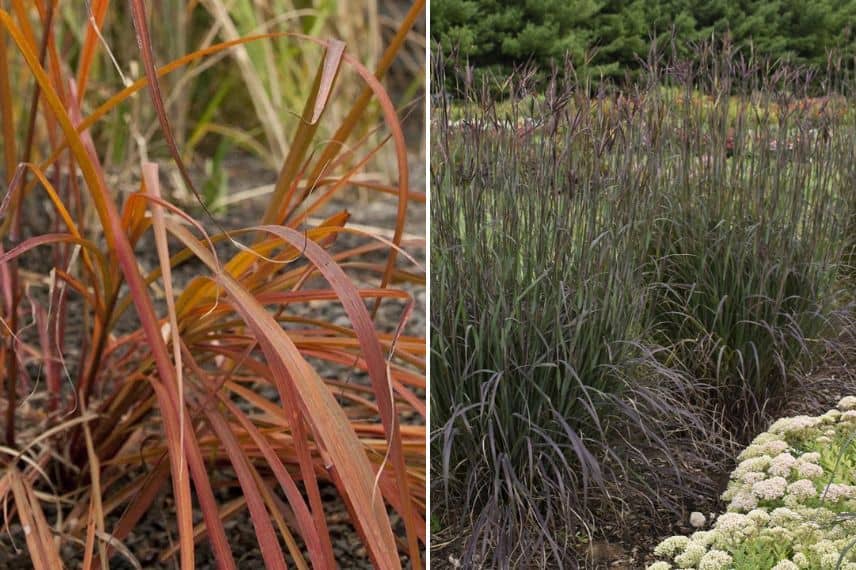
Among notable varieties, Andropogon gerardii ‘Red October’ delights with its green foliage in spring, which gradually turns to a flamboyant red in autumn. Its flowering panicles, slightly tinged with purple, add movement.
Another variety with intense colours is Andropogon gerardii ‘Blackhawks’, whose dark green foliage evolves toward almost black tones in autumn. As tall as ‘Red October’, it reaches about 1.3 metres in height, making it a perfect choice for borders or in pots.
Tip: pair Andropogon with plants in light or golden tones, such as yarrow or the rudbeckias, to create a captivating contrast.
Purple-leaved panicums: elegance and verticality
Panicum virgatum, or erect panic grasses, are robust grasses that provide height and structure to borders. Their foliage, often tinted blue, purple or dark red, adds colour to the garden, especially in autumn.
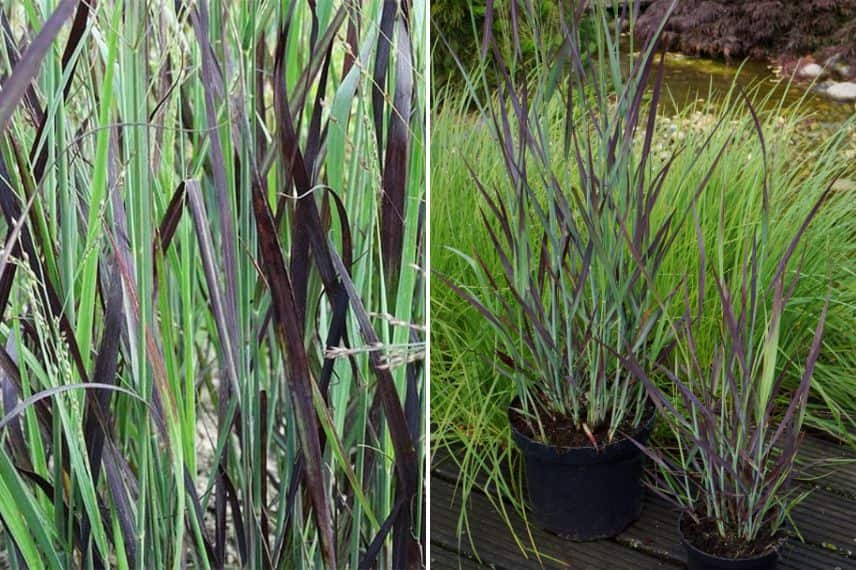
The Panicum virgatum ‘Blue Darkness’ is an excellent choice for lovers of dark foliage. Its blue-green foliage gradually takes on red-purple, almost black, tones in summer, creating a refined and sophisticated effect. It grows to around 90 cm in height, and its airy panicles add a touch of lightness to borders.
Even more compact, the Panicum virgatum ‘Purple Breeze’ offers olive-green foliage that shifts partly to red-purple in summer. Measuring 80 cm in height, this variety is ideal for small gardens or in pots.
Tip: Pair Panicum with perennials with autumn flowering such as asters or Echinacea for vibrant displays. In pots, they pair well with Heucheras bearing metallic tones or lighter grasses, such as Carex elata ‘Aurea’, for a successful contrast.
Read also
Grasses: which variety to choose?Purple sugar cane (Saccharum officinarum 'Violaceum')
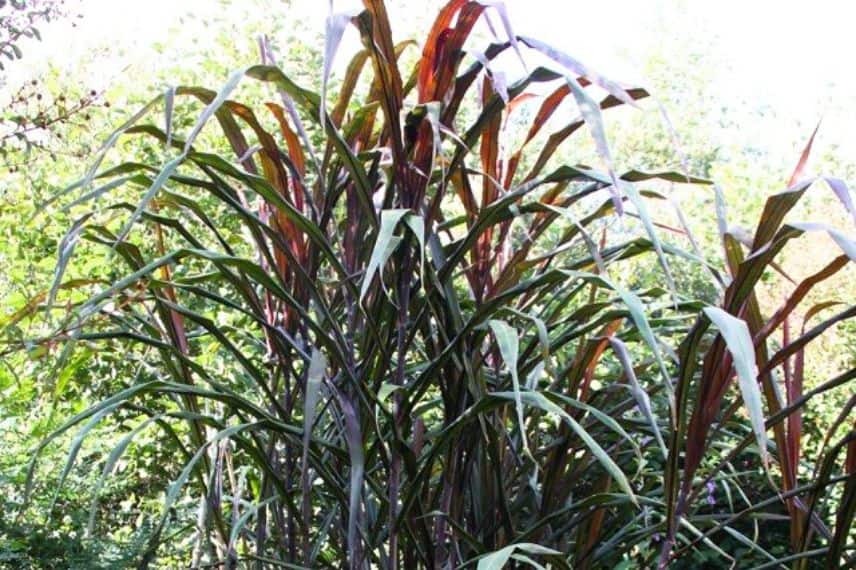
The Saccharum officinarum ‘Violaceum’, or purple sugar cane, is an exotic grass that immediately catches the eye. With its long, deep purple stems and its dark green foliage tinged with purple, it adds a tropical and distinctive dimension to the garden.
This deciduous grass can reach up to 2.5 metres in height in favourable climates, making it perfect for the back of borders or lush gardens. It prefers rich, well-drained soils, as well as a sunny exposure to fully express its colours. However, beware, it is not very hardy (down to -1°C) and will need winter protection in cold-climate regions, either by a thick mulch around its stump, or by growing it in a pot to be overwintered.
Tip: pair the Saccharum with exotic plants such as cannas or banana trees for a tropical ambience.
Ophiopogons: a deep black
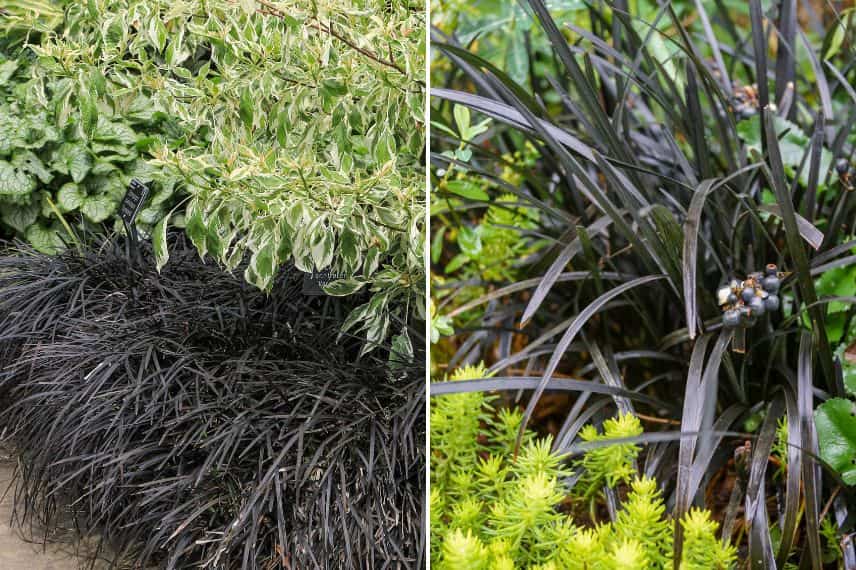
Ophiopogons, though they are often classified among perennials, offer a look reminiscent of grasses with their long, slender leaves. Their evergreen foliage, dark green or black depending on the variety, places them among the essentials to add contrast in a garden. Compact and easy to grow, they integrate well in the ground or in containers. They prefer partial shade and shade, or even sun if the rays are not too intense, in moist, yet well-drained soil. Hardy to -15 °C, they adapt to many situations and can tolerate a short, temporary drought once well established.
Ophiopogon planiscapus ‘Nigrescens’ offers long ebony-black leaves forming a low tuft about 25 cm tall, ideal for borders, rockeries or containers. In summer, it produces small pale pink flowers that give way to decorative bluish-black berries in autumn.
Ophiopogon planiscapus ‘Black Dragon’ is a smaller variety, rarely exceeding 15 cm in height, but it proves more vigorous. Its black foliage and pale mauve flowers make it a perfect groundcover for contemporary, Japanese or container gardens.
Tip: Pair Ophiopogons with plants suited to similar conditions, such as heucheras with gold- or silver-coloured leaves, hostas for their contrasting foliage in shaded areas, or also ferns for a textured and luxuriant effect. For borders in moist soil, also consider alchemillas or brunneras.
- Subscribe!
- Contents
Comments