





























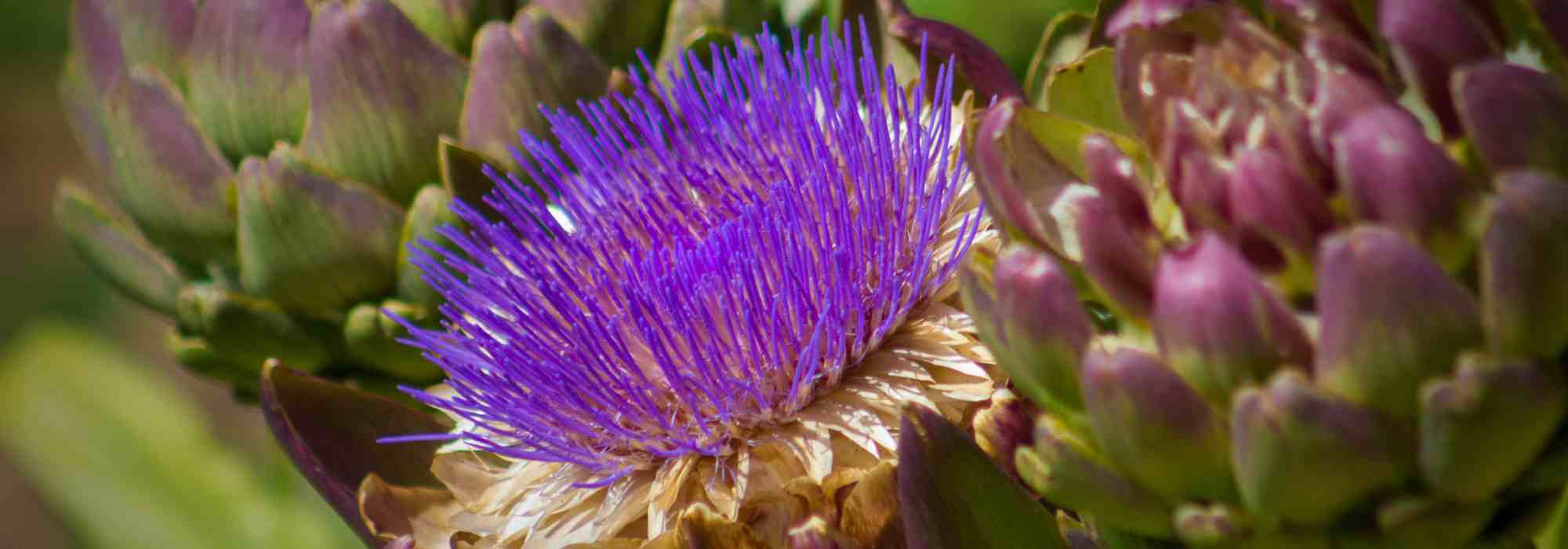
Foodscaping: How to create an edible garden?
For a garden that's a feast for the eyes!
Contents
What if our ornamental garden turned out to be as good as it is beautiful? Many gardeners seeking to eat well are increasingly interested in a garden that combines the art of beauty and edibility. Indeed, there is a vast array of edible plants that can rival traditional ornamental plants. Their flowering, foliage, or colours are matched only by their fruiting, which we relish at just the right moment. Vegetables and culinary flowers can thus join the other beauties within the garden, and this is even truer in a small garden where there isn’t enough space to incorporate a vegetable patch. When charm rhymes with indulgence, and aesthetics and functionality become one, the garden transforms into an even more magical, sustainable place, completely in tune with the times!

What is foodscaping?
Under this somewhat strange English term lies a new trend that is all the rage across the Atlantic. Born from the contraction of food and landscaping, it is the art of integrating edibles among the flowers and bushes in the garden. This new way of designing gardens makes perfect sense in a time when healthy eating is paramount, and self-sufficiency can lead to significant savings. It also brings permaculture into ornamental gardens, moving towards a garden that is more environmentally conscious. By replacing certain ornamental plants with aesthetically pleasing edibles, we can fill the gaps in flower beds, benefiting the soil and reducing weeding. Combining the useful with the pleasant by creating a garden that is as beautiful as it is good, that is the principle of “foodscaping.”
It inevitably reminds us of another much older edible garden, the medieval garden, which was both medicinal, culinary, decorative, and fruity… but designed in a closed and symmetrical, or at least regular, manner. The new edible garden integrates into urban gardens, whether in small or very large spaces!
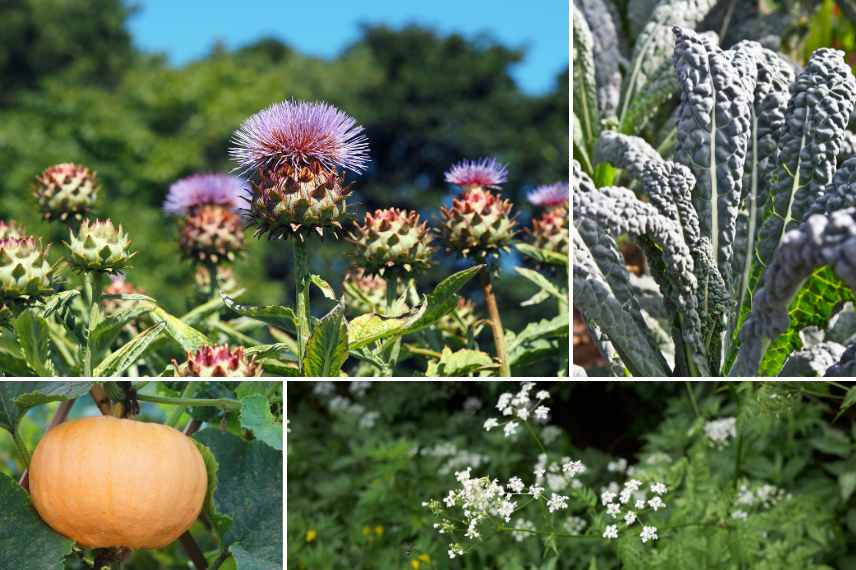
Bringing colour, textures, flowers, and fruits from edible plants: the new edible garden awaits us!
Read also
Edible plants: leaves that can be cookedHow to create edible borders or flower beds?
Instead of confining edible plants together as one would in a vegetable garden, neatly aligned in rows, invest in various spaces of the garden with the most beautiful vegetable plants, small fruits, and climbing plants: by planting them directly alongside perennials and bushes, they gain a new dimension, blend harmoniously, and add a touch of originality.
- Start with simple projects, inserting a few of your favourite fruit trees or beloved vegetables, some easy perennials with lovely flowers, as well as medicinal and aromatic plants, for example.
- In mature gardens, it mainly involves placing plants among those already established and lush, or even creating borders.
- Consider exposure and watering needs: keep in mind that most fruiting edible plants require sunlight to produce sufficient fruit. Place them in the best-exposed flowerbeds. Selected plants for their foliage often appreciate partial shade (except for greyish foliage). Larger plants provide beneficial shade. Plant each in the right spot within a bed or hedge, remembering their watering needs (especially for vegetables), and the draining or rich nature of the soil suited to each: for instance, a common sage will be placed near a Buenos Aires verbena, while a red shiso will sit next to pink to violet or orange dahlias.
- Optimise colour combinations between vegetables or fruits and the flowers and foliage already in place for very successful visual effects: purple aubergines will pair well with yellow flowers and purple foliage, blue-leaved cabbages will contrast with foxgloves and campanulas, and yellow courgette flowers will drape over sunny beds…
- Integrate “focal point” plants, tall or sculptural, in the middle or back of the bed, such as angelica, rhubarb, cardoon, artichoke, fennel and creeping plants to border paths or use as ground cover: sweet potatoes, thyme, oregano…
- Take the opportunity to create good duos of edible and ornamental plants, and achieve winning combinations between companion plants, beneficial for countering diseases and increasing biodiversity. Fruit trees like apple or pear trees should be planted in pairs to ensure cross-pollination.
- Install supports and teepees or obelisks to gain height and accommodate nasturtiums, allow various cucurbits to climb, as well as strawberries or climbing cherry tomatoes: the red, orange, or yellow colours will be prominently displayed in this arrangement.
- Do not underestimate the strong visual impact of trained fruit shapes to provide vertical (or horizontal for forming borders with simple cordons) structure and an elegant geometry that is not to be overlooked. Also look for columnar fruit trees like the ‘Obelus’ pear or ‘Londres’, or standard forms. Take inspiration from cottage gardens and grandmother’s gardens that have long integrated the useful with the pleasant.
- Finally, for certain plants like artichokes or fennel, keep a few plants to flower; they will be even more attractive!
→ Read: How to create a forest garden? for larger spaces. Also, draw inspiration from our colour association sheets!
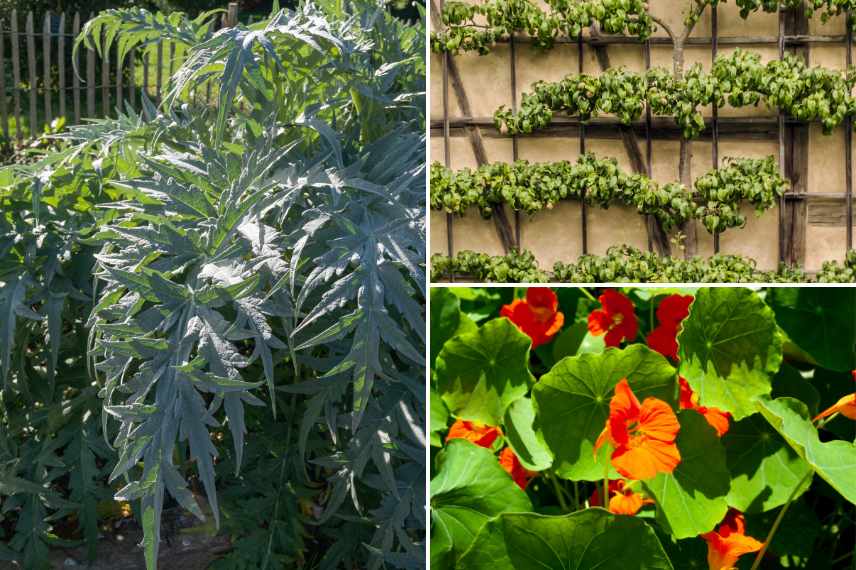 Structural plants like cardoon, trained fruit shapes, creeping or climbing flowers like nasturtiums: they all play a decorative or volumetric role in the garden, in addition to their pantry aspect.
Discover other Vegetable gardens
View all →
Available in 1 sizes
Available in 1 sizes
Available in 1 sizes
Available in 1 sizes

Available in 1 sizes
Available in 1 sizes
Available in 1 sizes
Available in 1 sizes
Available in 1 sizes
What are edible ornamental plants?
A large number of plants serve dual purposes, being both beautiful to look at and delicious to taste, thus offering a wonderful opportunity for foodscaping. Some varieties are often interesting for the colour or variegation of their foliage or for their flowers, even before the fruits make an appearance. We favour the golden, grey, or purple foliage of many leafy vegetables, perennials, or bushes. Here is a non-exhaustive selection to enjoy without moderation, whether sweet or savoury:
- Edible flowers: the essentials include nasturtiums, many salvias, daylilies, etc.
- Perpetual vegetables to rediscover in the kitchen: perennial kales, Daubenton cabbage, wild garlic, onion, and rocambole garlic, the Jerusalem artichoke with its lovely orange flowers, and the hélianthi with roots resembling Jerusalem artichokes…
- Vegetable plants: cardoon, chards with foliage, cabbages, fennel, sweet cicely (Myrrhis odorata), and perhaps a couple of courgette and squash plants… so beautiful in bloom.
- Berries to nibble on: the gooseberry bush (its green striped fruits are stunning in a border) or red currants, blueberries, lovely in bloom and in autumn with their crimson colours, perfect in a border of acidophilous plants, aronias…
- Fruit trees with exquisite spring flowering: Prunus persica ‘Purpurea’, quinces, pears, and apples, columnar ‘Toronto’ greengage, apricots, and peaches, etc…
- Aromatic plants: rather than gathering them in an aromatic square, we invite them among the perennials in summer borders, the lovely blooms of chamomile and anise hyssop, and the purple foliage of common sage (Salvia officinalis ‘Purpurea’) or the grey foliage of ’Elephant Ear’, along with rosemary and oregano, fennel…
- Annuals such as red salads (Wild chicory ‘Red of Treviso’), blonde or red oraches that provide a beautiful colourful display, celtuce or asparagus lettuce for the verticality of its shoots, sweet potato ‘Kaukura’ with almost black leaves, shiso or Chinese basil (Perilla) with purplish-red leaves, curly kales and kale for surprising texture contrasts, etc.
- Climbing plants, particularly useful in small gardens as they take up little ground space: the ‘Cioutat’ vine for its beautifully cut foliage with lovely autumn hues, kiwis with varied foliage and fuzzy fruits, and less common but very ornamental tuberous wisteria with edible tubers.
- Exotic or Mediterranean plants in mild climates: feijoa with its beautiful flowers and fruits that can be used to make delicious jams, the pomegranate equally beautiful in flowers and fruits, the pistachio tree, the almond tree, and the olive tree, and of course lemon and orange trees…
- Large trees or shrubs: to include absolutely when there is space to enjoy their fruits or berries (Amelanchier, strawberry tree, hazelnut, persimmon, etc.)
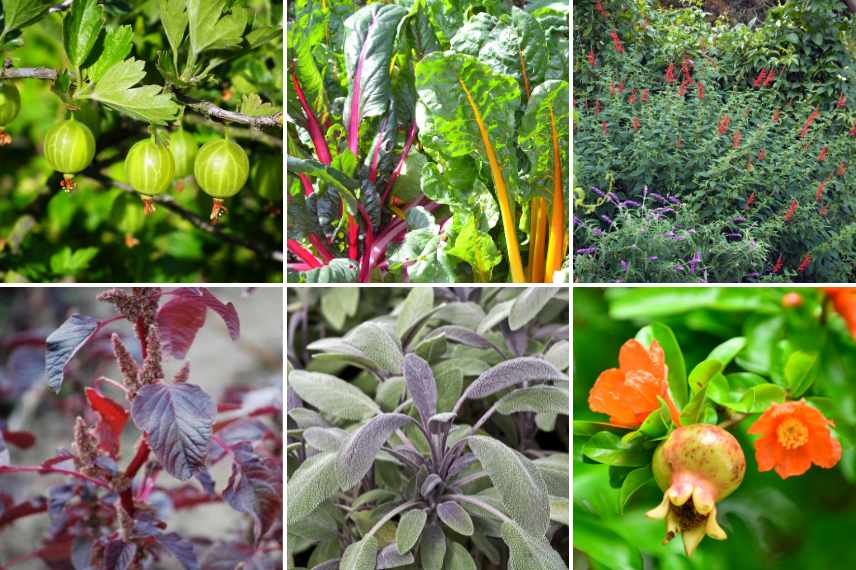
Fruits, flowers, foliage: exploit the charm of each plant in the garden (here gooseberry bush, red and yellow chards, pineapple sage, purple orache, purple common sage, and pomegranate)
→ Read also: How to use nasturtium in cooking?; Hélianthi: how to harvest, store, and cook it?; Growing superfruits is possible!; Grapevine: choosing the right variety, Growing male dogwood for its fruits, Planting a fruit hedge that stands out from the crowd; Growing Japanese Goumi for its edible fruits; Sea buckthorn, an edible fruit with multiple benefits.
Read also
Best edible flowers for the gardenFor further reading
Many recently published works discuss the concept of foodscaping. Here are a few (from French editors) to learn much more about the art of incorporating edible plants into your garden:
- All Beautiful and Edible Plants. Didier Willery, Pascal Garbe. Ed. Ulmer, 2022.
- Edible Landscapes, the New Nourishing Gardens. Evaine Merle. Ed. Ulmer, 2022.
- Forest Gardens, a New Way of Living and Producing. Fabrice Desjours. Ed. de Terran, 2019.
- Cooking Everything in the Garden. Pascal Garbe, Jean-Christophe Verhaegen. Ed. Ulmer, 2023.
- The Cuisine of Trees. Aurélie Valtat. Ed. Ulmer, 2021.
- Perennial Vegetables for a Perpetual Vegetable Garden. Xavier Mathias. Ed. Rustica, 2017.
- Subscribe!
- Contents
Comments