





























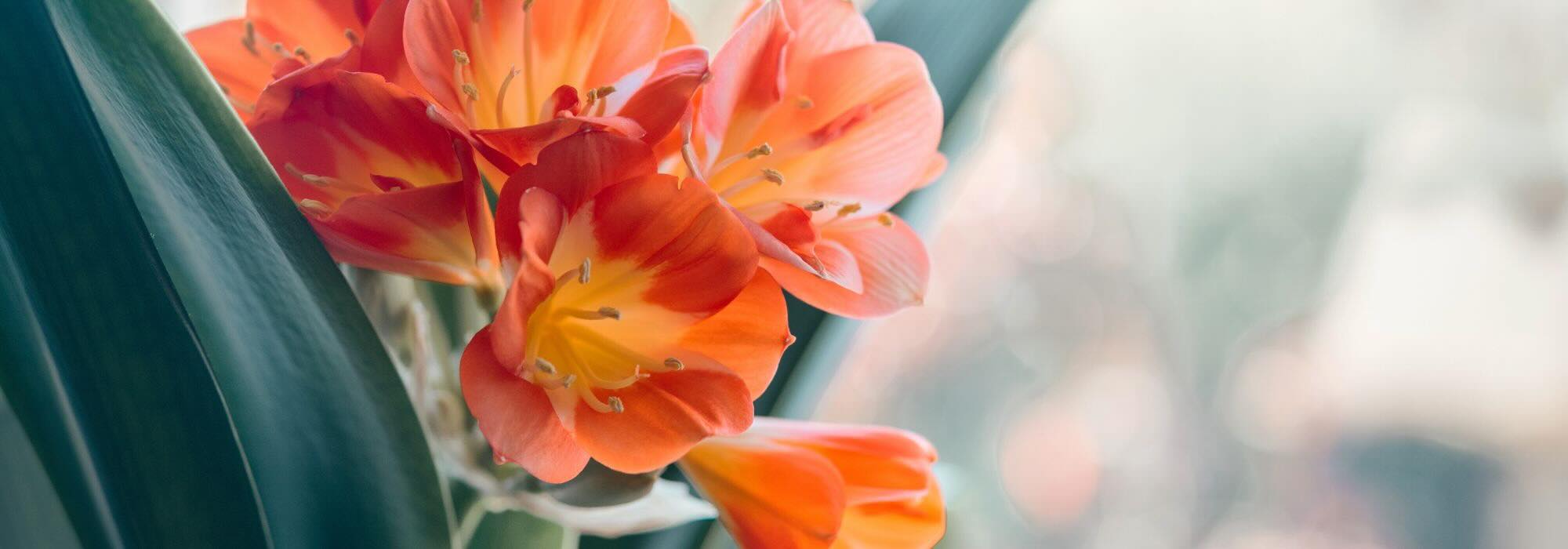
Flowering houseplants: brighten your space with colour
Our selection
Contents
Houseplants don’t just dress our interiors with green foliage. Many varieties also offer delicate, colourful and sometimes scented flowers. These flowering plants add a vibrant, light-filled presence to the space, whatever the season.
However, flowering plants generally require a little more care and attention to realise their full potential. Light conditions, controlled watering, and nutrient supply… all of which influence the quality and duration of their flowering.
In this article, discover a selection of flowering houseplants and practical tips to prolong their flowering and provide them with an indoor living environment suited to your home or flat.

What you need to know before choosing a flowering houseplant
Flowering houseplants bring, in addition to decorative foliage, their vibrant colours, delicate shapes, a touch of life and warmth. However, for them to achieve beautiful flowering indoors, certain conditions must be in place.
Light: a determining factor
Most flowering plants require bright light to develop their flower buds. This does not mean they require direct sun exposure (which can sometimes scorch the leaves), but rather the brightest possible spot near a well-exposed window.
A lack of light is one of the main causes of non-flowering. However, some species are fairly tolerant of light such as orchids, spathiphyllums.
Temperature and humidity: adjusting the microclimate
Each plant has its preferred temperature range. Some tolerate steady warmth, while others require a drop in temperature at night to stimulate their flowering. It is important to keep them away from direct heat sources as well as from cold drafts.
Furthermore, indoor air is sometimes too dry for some plant species, which can compromise flowering. It can be useful to slightly increase the ambient humidity, for example by placing a humidifier nearby or by gently misting the foliage.
Watering: finding the right balance
Flowering plants generally do not like waterlogging. Too frequent watering or poor drainage can lead to root rot and prevent flowering.
It is therefore recommended to check the moisture of the potting mix before every watering : it should have had time to dry slightly on the surface or deeper depending on the species.
Care tailored to flowering
Regular flowering also depends on proper care throughout the year. With a fertiliser specific, rich in potassium and phosphorus, is recommended during the flowering period (about every two to three weeks).
It is also important to remove spent blooms as they appear to encourage the appearance of new inflorescences.
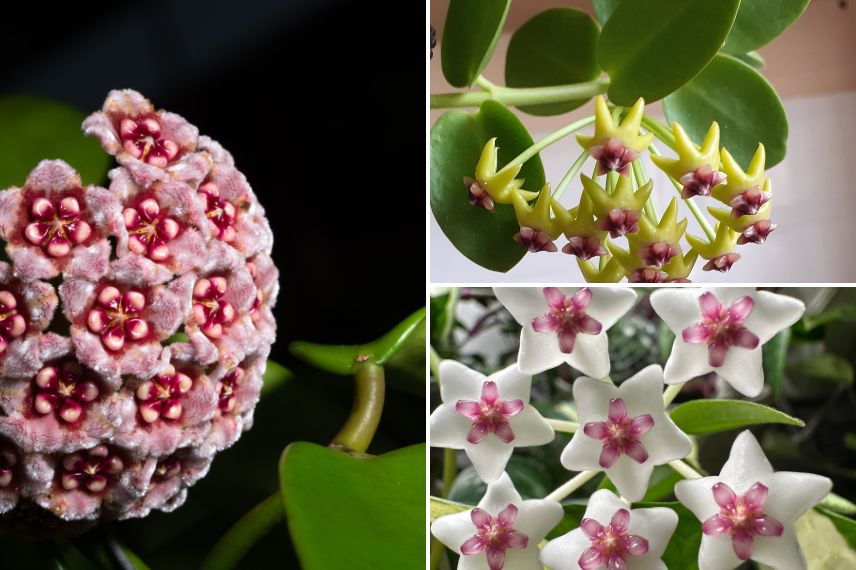
Three types of Hoya flowers: on the left Hoya carnosa, on the top Hoya cumingiana and the ever-faithful Hoya bella
The must-have flowering houseplants
Some indoor plants offer regular or spectacular flowering while remaining relatively easy to grow, provided their essential needs are met. Here is a selection of varieties that are particularly interesting, both for their aesthetics and for their adaptability indoors.
Spathiphyllum
Appreciated for its elegant white flowers and glossy green foliage, Spathiphyllum, or peace lily, is an easy-care plant. It tolerates moderately lit spaces, but its flowering is more abundant in bright indirect light. Its flowering can last for several weeks and recur several times a year if the plant is well cared for.
Phalaenopsis orchid
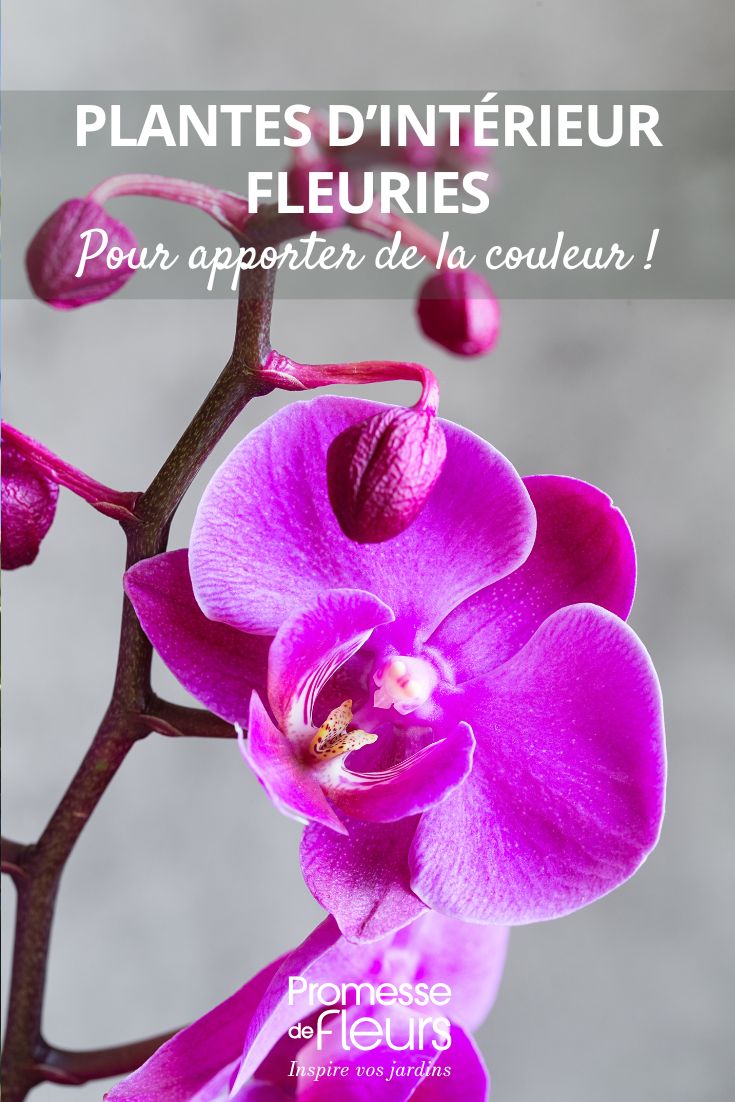
The Phalaenopsis orchid is a very popular indoor flowering plant. It offers long-lasting blooms, sometimes several times a year. It prefers bright light without direct sun and appreciates a certain ambient humidity. Although it is often perceived as delicate due to its delicate and precious blooms, it is, in fact, hardy and durable when watered correctly.
See the Phalaenopsis care article to see it bloom each year.
Hoya
Hoyas are plants with varied and decorative foliage, often climbing or trailing. They mostly produce beautiful porcelain-like flowers in umbels with a sweet fragrance. They enjoy bright light and a little gentle sun to bloom, and are sensitive to overwatering. Their flowering is less frequent than with other species, sometimes difficult to obtain, but spectacular when it occurs. The Hoya bella is the easiest species to grow and the most prolific in flowering, even if it is not the most decorative.
Kalanchoe
A succulent plant with small, vivid flowers (red, pink, yellow, white), kalanchoe is robust and easy to care for. It prefers bright light and tolerates drought well. Ideal for those seeking colourful flowering with minimal maintenance.
Oxalis triangularis
Also known as ‘purple shamrock’, this bulbous plant is distinguished by its purple, butterfly-shaped leaves that open and close with the light. It produces small, delicate pink or white flowers. It goes dormant in winter, a period during which it should be left to rest.
Strelitzia reginae (bird of paradise)
This tropical plant makes a striking statement with its architectural form and its spectacular flowering, in the shape of a colourful bird. Indoors, its flowering is harder to obtain: it requires several years of growth, plenty of light (even full sun), and space, but in warm regions and a sunlit room you can certainly be rewarded with its magnificent flowering.
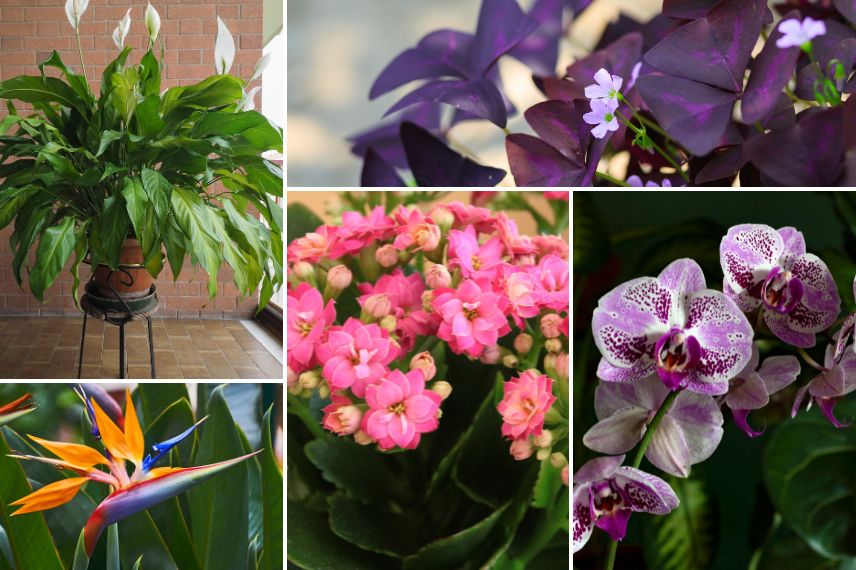
Clockwise from the top left: Spathiphyllum, Oxalis, Phalaenopsis, Kalanchoe, Strelitzia
Indoor flowering plants with more unusual or seasonal flowers.
Some houseplants flower less frequently or are more demanding, but they’re well worth the effort for their originality or spectacular appearance. They’re ideal choices for those with a little more light or time to devote to caring for them.
Hibiscus rosa-sinensis
With its large trumpet-shaped flowers in bright colours, Hibiscus rosa-sinensis brings a real tropical ambience indoors. It requires plenty of light, a warm environment and regular watering. In return, it can flower repeatedly during the warmest months.
Clivia miniata
This hardy plant produces a striking umbel of flowers, usually orange or red, at the end of winter or in early spring. It tolerates indoor conditions well, provided you observe a winter dormancy period in cool and dry conditions, essential to stimulate flowering.
→ Read our article to learn all about Clivia cultivation indoors.
Bromeliads
Bromeliads form a large family of tropical plants, known for their very colourful central inflorescence (red, orange, pink…) and their rosette of thick leaves. They enjoy bright light, but not direct sun, and constant humidity. Their flowering, though often singular (one per plant), can last several months. After flowering, the parent plant dies, but produces shoots at its base that can, in turn, flower. See, for example, our Vriesea category.
Amaryllis
Grown from bulbs in winter, Amaryllis offers a spectacular Christmas flowering with large red, white or pink flowers. It is ideal in a pot and loves bright light. After flowering, it enters dormancy, then may rebloom the following year with proper care.
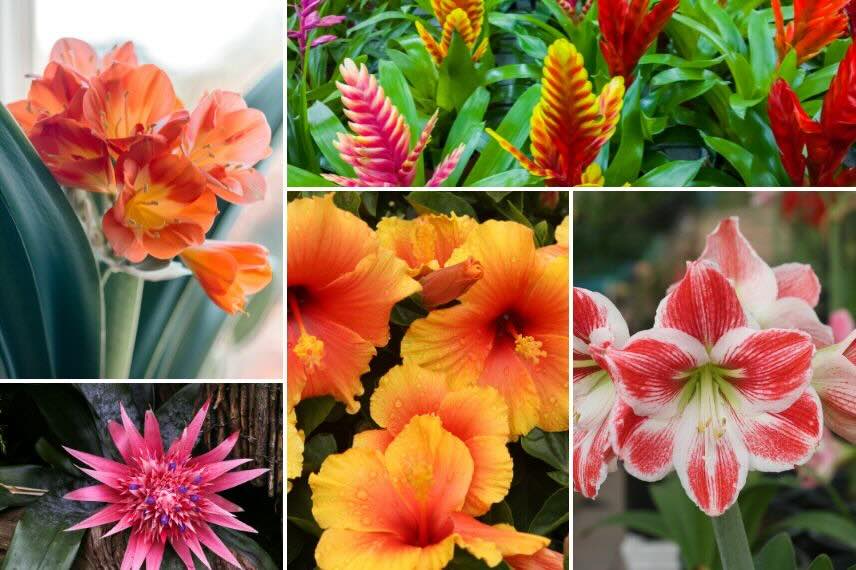
A touch of exotica on this second selection: Clivia miniata, Vriesea, Amaryllis, Hibiscus rosa-sinensis, Aechmea (a bromeliad)
Read also
7 trailing indoor plantsTips to extend flowering and keep plants in good shape
A beautiful flowering does not happen by chance: it is the result of a balance between light, watering, feeding and regular care.
These indoor flowering plants can offer regular or spectacular flowering, provided you properly meet the specific needs of each species.
Moreover, several varieties require a vegetative rest after their flowering period. This is particularly true of Clivia or Amaryllis. This resting phase, marked by reduced watering, the absence of fertiliser, and sometimes cooling, allows the plant to rebuild its reserves and prepare its next flowering. Ignoring this step can slow down, or even prevent, any future flowering.
By understanding and respecting these natural cycles, it becomes possible to enjoy flowering indoor plants in the long term and to renew their flowering year after year.
- Subscribe!
- Contents
Comments