






























Farfugium: how to protect it from the cold and winter it?
Our tips
Contents
The Farfugium is an ornamental plant valued for its lush, spectacular foliage, but it is sensitive to low temperatures. Hardy down to -10°C, its foliage disappears at -7°C. With the right protective measures, such as using mulch or sheltering a pot, you can help your Farfugium survive the winter safely. Discover in this article the essential techniques to protect this beautiful plant and ensure a vigorous recovery in spring.

Farfugium in Winter
Farfugium is a fairly hardy plant, capable of withstanding temperatures as low as -10 to -12° C. Its foliage is somewhat more sensitive. As soon as temperatures reach -7 °C, the leaves tend to disappear. Therefore, it is perfectly normal to see Farfugium lose its lush appearance as winter approaches, but there is no need to worry excessively. The plant simply enters dormancy, a natural mechanism that allows it to survive the winter cold.
Even if its foliage disappears, the plant itself remains alive. The underground part, the stump, stays intact, ready to produce new shoots as soon as the milder temperatures return in spring.
The main goal in winter is to protect the stump, as this is where the plant will resume its growth. Even if the visible part seems compromised, proper winter care ensures that your Farfugium will return vigorous in spring.

The opulent foliage of Farfugium japonicum may suffer from the rigours of winter
Read also
Propagate FarfugiumProtecting a Farfugium planted in the ground
When Farfugium is grown directly in the ground, it is important to protect it well during winter to ensure its survival, especially in regions where temperatures regularly drop below 0°C. Although it can withstand temperatures as low as -10°C, the stump must be protected to avoid any permanent damage.
The best way to protect the stump of Farfugium is to cover the base of the plant with a thick mulch. This mulch will act as an insulating blanket, limiting the effects of frost on the roots and the stump.
Use natural materials such as fallen leaves, straw, pine bark, or even compost. These organic materials provide excellent insulation while slowly decomposing, thus enriching the soil.
For optimal protection, apply a layer of mulch at least 5 to 10 cm thick around the base of the plant. This thickness ensures that the stump is sufficiently protected against prolonged frosts.
The choice of location where you have planted your Farfugium also plays an important role in its winter protection. If you live in an area where winters are harsh, try to plant Farfugium in a sheltered spot in the garden. This could be a place close to a wall or under a tree, which will offer natural protection against cold winds.
Wind increases the sensation of cold and can damage the stump more quickly. A wind-sheltered location is therefore ideal to limit thermal shocks.
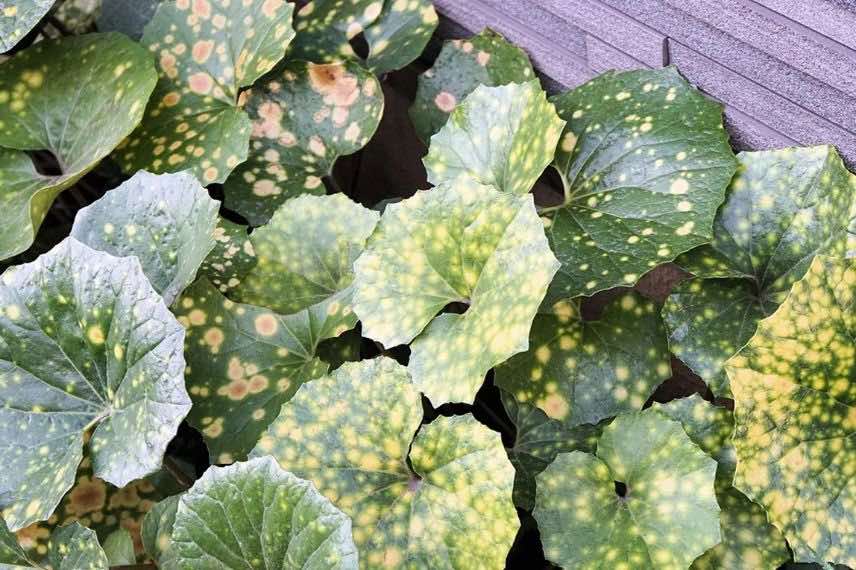
Farfugium can benefit from being close to a wall for protection from wind and cold (here the cultivar ‘Aureomaculatum’)
Protecting a potted Farfugium
If you are growing your Farfugium in a pot, you have the advantage of being able to easily move it to protect it from the harshness of winter. However, this mobility requires some precautions to ensure that the plant safely endures the cold season and can thrive again in spring.
Pot cultivation allows you to move the plant according to climatic conditions. Thus, when temperatures begin to drop significantly, you can shelter the Farfugium to prevent it from suffering too much damage from frost.
One of the best ways to protect a potted Farfugium is to move it to a sheltered but unheated space, such as a cold greenhouse, an unheated conservatory, or even a bright garage. The idea is to protect the plant from frost without placing it in an environment that is too warm, as it needs this dormancy period.
Cold greenhouses or unheated conservatories help maintain a temperature slightly above freezing while providing enough light for the plant to remain healthy. If you choose a garage or shed, ensure there is a minimum of natural light.
It is essential not to place your Farfugium in a heated room (like inside the house) as this would disrupt its natural winter dormancy cycle.
Once the Farfugium is settled in its shelter, it is important to reduce watering. In winter, the plant enters dormancy and its water needs decrease significantly. Overwatering can lead to root rot, especially if temperatures are low.
Water only when the substrate is thoroughly dry, ensuring that no water remains stagnant in the pot’s saucer. Excessive watering in winter can weaken the plant and make the stump more susceptible to diseases.
If your Farfugium’s pot is too heavy to move, we recommend generously mulching, placing an insulating layer under the pot, such as polystyrene, and temporarily covering the aerial parts with a winter fleece during the forecasted frosts.
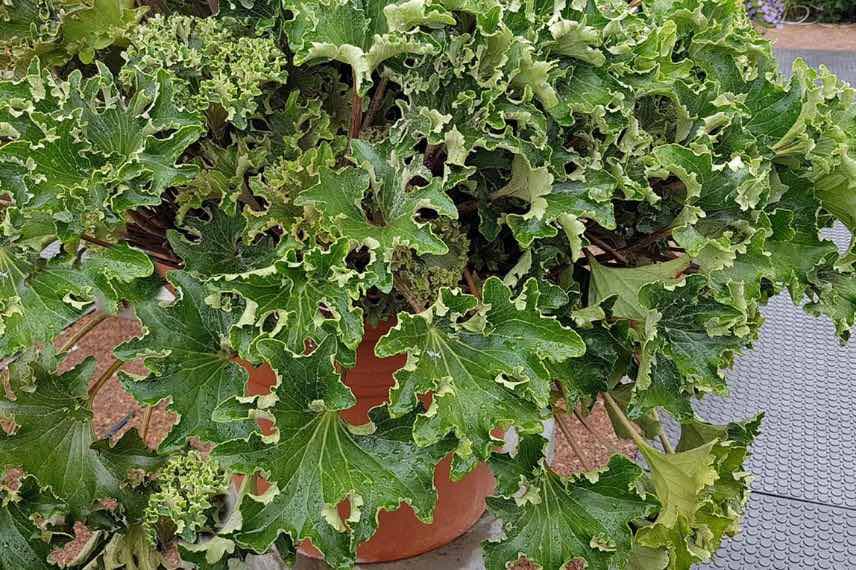
The potted farfugium can be brought indoors in winter to a frost-free and bright shelter
Read also
6 stunning pairing ideas with FarfugiumsMonitor the spring recovery
Once winter has passed and temperatures begin to rise, it’s time to tend to the revival of your Farfugium. Even if the plant seems to have disappeared during winter, its stump has been protected and is ready to produce new shoots. Here are the steps to follow to support your Farfugium’s return to full health.
In spring, check for signs of revival such as small green shoots or emerging buds. If some parts appear damaged, you can gently remove them to make way for the new shoots.
If you have applied a fast-decomposing mulch, you can incorporate it into the soil surrounding your plant. Otherwise, remove some of it to allow the new shoots to develop freely and access light and air.
To encourage the revival of the Farfugium after winter, a few additional care steps may be beneficial:
Once you see new shoots appearing, a supply of well-rotted compost or decomposed horse manure or pellets will be appreciated. Alternatively, you can apply an organic fertiliser or a balanced fertiliser (NPK) in low doses to help the plant regain energy after its dormancy.
The Farfugium prefers a shaded or part-shaded position, without direct sunlight. If your plant was potted indoors, move it outside to a spot sheltered from the midday sun and wind.
Gradually resume more regular watering as the plant comes out of dormancy and growth resumes. Ensure the soil remains slightly moist, without excess water, to avoid water stress.
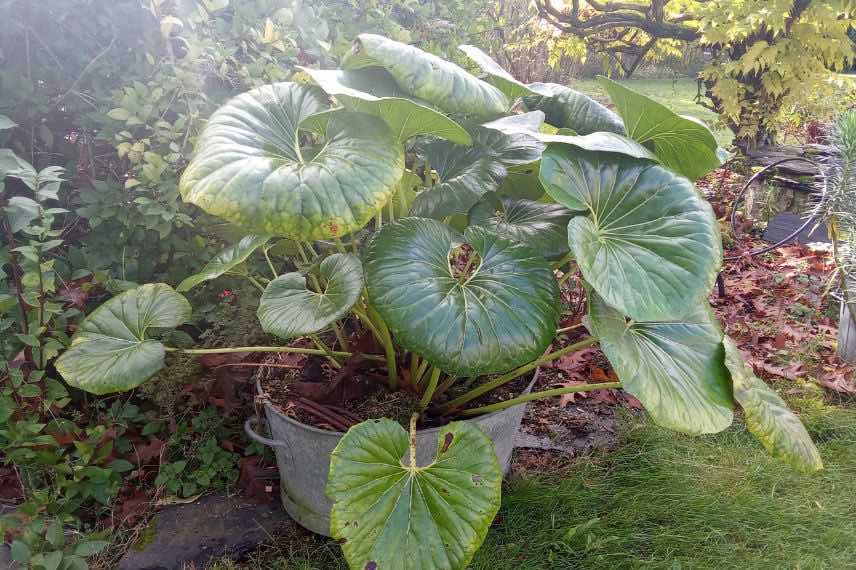
Farfugium japonicum in pot (photo by Gwenaelle Authier)
- Subscribe!
- Contents
Comments