





























Diseases and pests of the quince tree
Identification, prevention and natural treatment
Contents
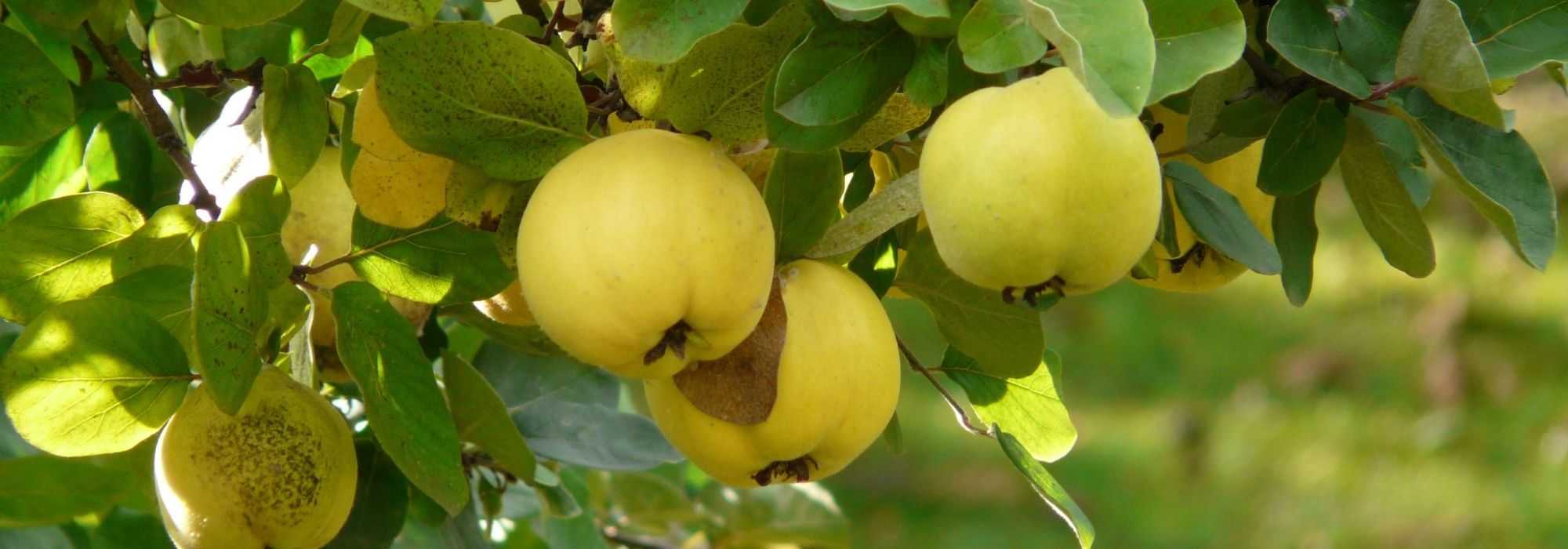
The Quince tree is a small fruit tree that produces fragrant fruits called quinces shaped like large pears. Very hardy, robust, and low-maintenance, it adapts to the climates of most of our regions and grows easily in ordinary soil. Like all fruit trees in the rose family, it can, however, be susceptible to certain diseases and pests.
Discover how to identify, prevent, and treat naturally the most common diseases and pests of the quince tree.
→ Don’t hesitate to consult our complete guide on growing quince trees “Quince tree: planting, pruning, and care”

Scab
Scab is a fungal disease that frequently affects fruit trees, particularly pear and apple trees, and since they belong to the same family, the quince tree is also susceptible to the same diseases. Venturia inaequalis and Venturia pirina are fungi that thrive in humid conditions from the bud burst period. The risk of contamination is particularly high at the time of petal fall.
Identification
Characteristic brown or black spots develop on the buds, leaves, and fruits, which eventually become deformed, crack, and fall prematurely, compromising the harvest.
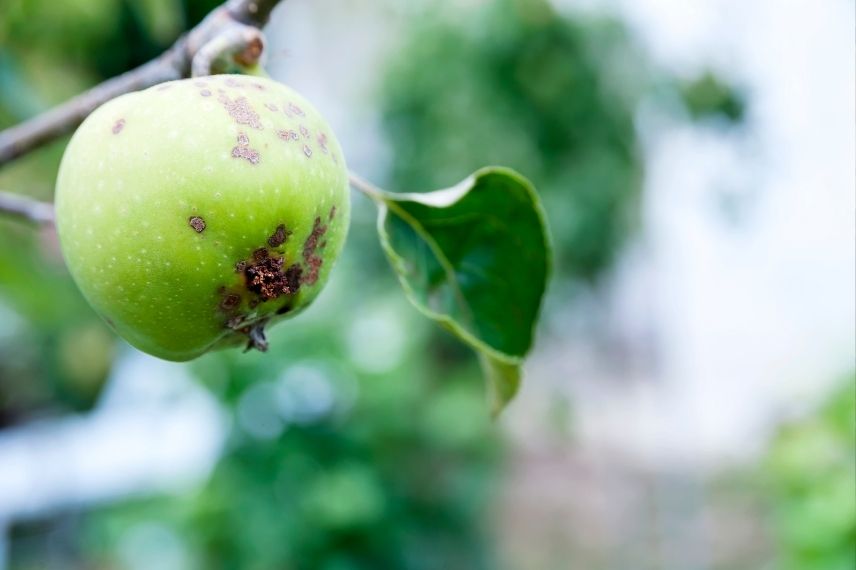
Scab on an apple
Prevention and Natural Treatment
Preventive action is necessary at the bud burst period and after flowering.
- To prevent contamination the following year, in autumn, collect and burn the leaves and contaminated fruits that remain on the tree or have fallen to the ground
- Using a pruning shear that has been disinfected, cut and burn the diseased branches
- In spring, at the time of bud burst (when the buds break), carry out sprays of Bordeaux mixture
- Repeat the treatment during the formation of young quinces, then at leaf fall in autumn
- A decoction of horsetail manure in spring and autumn will also protect your fruit tree from fungal diseases
→ Learn all about scab
Read also
Quince tree: planting, pruning and carePowdery mildew
Powdery mildew or white disease is a very common fungal disease also found in fruit trees. It is caused by a fungus whose development is favoured by warm temperatures and high ambient humidity.
Identification
Powdery mildew is characterised by a greyish-white felt, with a farinose appearance that invades the leaves, buds, and flower buds. Contamination can spread to the entire foliage, causing it to curl. In cases of severe infestation, young fruits may also be affected; they will show whitish spots and become unfit for consumption. All parts of the tree eventually become deformed and dry out.
Prevention
It is better to act at the first signs, as this fungus can be difficult to control once established.
- Prune to maintain well-aerated branches to allow air circulation
- Choose varieties of quince that are less susceptible to the disease
- Remember to water the base regularly during hot periods while avoiding wetting the foliage
- Collect affected parts and burn them to prevent the winter survival of the fungus and its reactivation in spring or summer
Natural Treatment
If powdery mildew is established, it is imperative to remove and burn all affected parts. Regular sprays of horsetail manure or nettle manure every 2 weeks mainly in spring and autumn are particularly recommended to prevent powdery mildew.
→ For more details on powdery mildew or white disease, consult Virginie’s advice sheet.
Discover other Quince trees
View all →
Available in 1 sizes
Available in 1 sizes
Available in 2 sizes
Available in 2 sizes
Available in 1 sizes
Available in 2 sizes
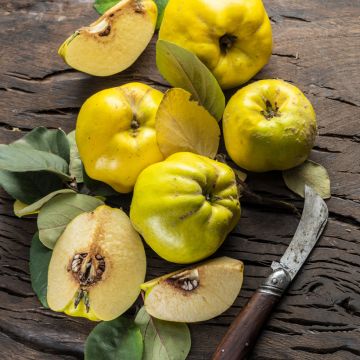
Available in 1 sizes
Available in 1 sizes
Available in 2 sizes
Available in 1 sizes
Moniliosis
Brown rot is another fungal disease commonly found in orchards. It is caused by various species of fungi. The quince tree is affected by Monilia linhartiana which develops during the flowering period in mild and humid weather. It primarily affects fruits damaged by hail or bird beaks. Wind or insects carry the spores that infect the flowers, leaves, and then the fruits by entering through the wound.
Identification
In winter, the fungus is identified by the presence of cankers on the branches. Later in spring, especially during rainy springs, the first attack occurs. The leaves become covered with large brown to reddish-brown patches and emit a characteristic bitter almond smell. The affected flowers dry up and fall. The fruits show brown, circular rot spots and white pustules. They rot quickly, mummify, and hang on the tree without falling.
Prevention
- Remove and burn all mummified fruits and branches covered with cankers to prevent the disease from reappearing the following year
- Protect the fruits from wasps and birds
- Monitor for the appearance of rot on developing fruits
Natural Treatment
- At bud burst on all branches, apply a treatment with Bordeaux mixture
- As a preventive treatment also, from flowering, spray horsetail decoctions and repeat the application several times
→ Brown rot of fruit trees – PREVENTING AND TREATING THIS DISEASE
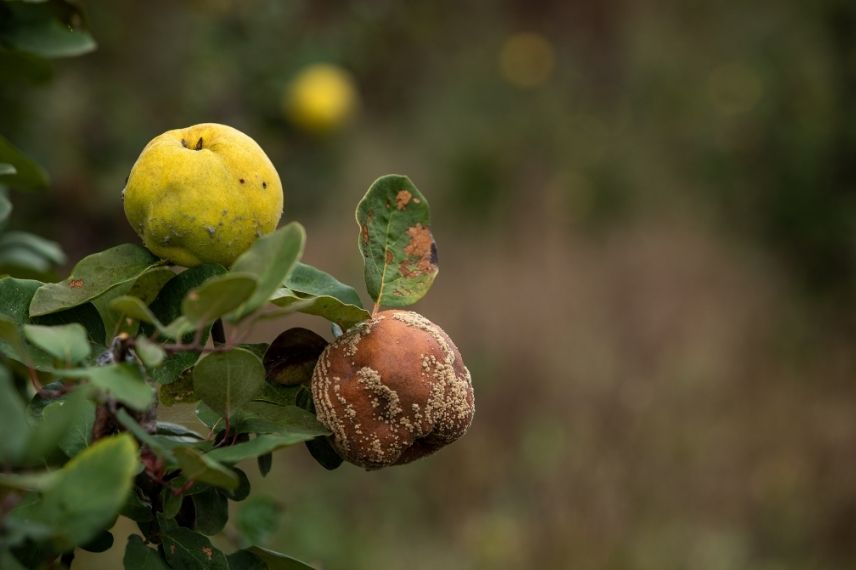
Brown rot
Read also
Aphid: identification and treatmentEntomosporiosis
Entomosporiosis is also a fungal disease that regularly affects the quince tree. It is caused by the fungus Entomosporium maculatum. A humid period in spring or summer promotes its appearance.
Identification
Small round brown spots with characteristic crusts are visible on the leaves. The necrosis spreads across the entire foliage, which turns yellow and eventually falls prematurely. The premature leaf drop weakens the tree. The disease affects the quinces, which become deformed and split.
Prevention
- Do not plant too densely
- Prune the centre of the branches to improve air circulation
- Remove and burn affected leaves and fruits
Natural Treatment
- Spray with Bordeaux mixture in spring during the bud burst period and before flowering
- Repeat the treatment in autumn, during leaf drop
- Preventive treatments with horsetail decoction are also effective
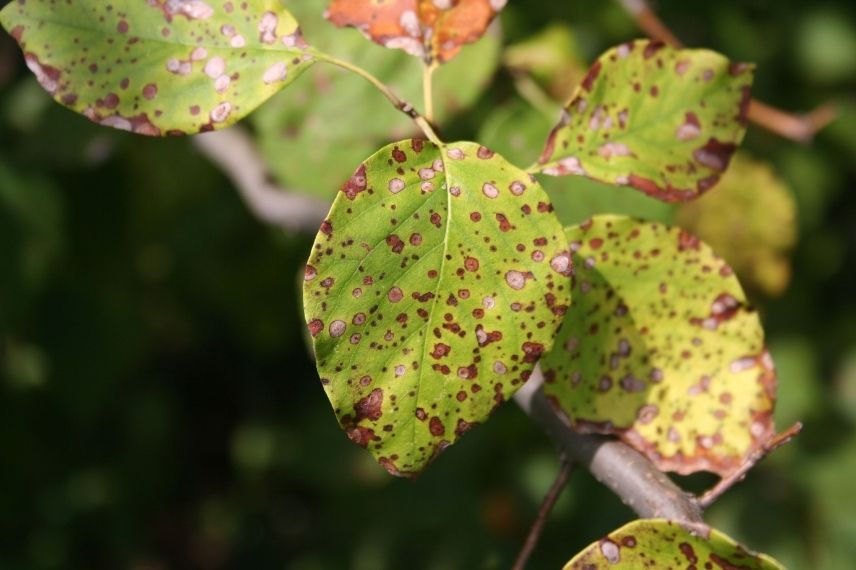 Brown spots with a grey necrotic centre and a dark margin are characteristic of entomosporiosis.
The codling moth
The codling moth is a nocturnal butterfly from the tortricid family, Cydia pomonella, whose larvae cause damage to many pome and stone fruits. It is very difficult to spot as it is active at night and overwinters in a cocoon beneath the bark of trees. The presence of its larvae compromises the formation of young fruits and the harvest.
Identification
In summer, the small larvae of the codling moth create galleries in quinces down to the pips. They signal their presence by spiral galleries visible on the epidermis and by small holes surrounded by necrotic spots that they leave in the fruit, from which brown droppings escape. Affected fruits drop and are unfit for consumption.
Prevention
- At the beginning of spring, place specific pheromone traps on the branches to trap adult moths and hinder reproduction
- Set up sticky traps at mid-June on the trunks to trap the larvae
- Brush the trunks with a thatching brush to remove these overwintering cocoons
- Encourage biodiversity and the establishment of codling moth predators (great tits, bats, earwigs)
- Collect and dispose of infested fruits
Natural Treatment
- Make clay sprays, in the form of calcined kaolinite, to create a mineral barrier that will deter the moth from visiting the quince tree
- Spray a product containing the granulosis virus (Carpovirusine) on the foliage or a treatment based on Bacillus thuringiensis to neutralise the caterpillars
- Apply nettle manure every 15 days in April and May
→ Discover more tips to naturally combat the codling moth in our dedicated sheet.
Aphids
Attacks from two specific species of aphids, green aphids and woolly aphids, are particularly common on the quince tree. A dry and warm climate favours their establishment. They primarily target young shoots, usually in spring. These insects suck the sap and weaken the tree.
Identification
The leaves curl up and eventually dry out completely. The honeydew from the aphid promotes the development of sooty mould, a black fungus visible on the leaves. The woolly aphid can be identified by its cottony colonies that cover the branches, young shoots, and flowers of the tree. In the long term, a decrease in fruit production and a decline in the quince tree can be observed.
Prevention
- Dislodge the aphids by spraying your tree with a hose.
- Encourage biodiversity in the orchard to attract natural and direct predators of aphids (lacewings, hoverflies, ladybirds, birds…)
- Placing a glue band on the trunk helps trap ants that tend to aphid colonies.
- Install trap plants nearby (nasturtiums) to attract natural predators of aphids.
Natural Treatment
In winter, you can also apply a hot lime wash on the trunk or white oil on the entire tree to destroy the eggs that hibernate under the bark and in the buds.
The best solution for combating an aphid attack is to spray tansy decoctions or nettle manure on the infected foliage.
You can also spray a solution of black soap (1L of water for 4 to 5 tablespoons of black soap).
It is also possible to use a natural insecticide based on pyrethrum or a aphid control product based on paraffin oil that works by contact, suffocating the pests.
→ Marion explains “How to combat woolly aphids”
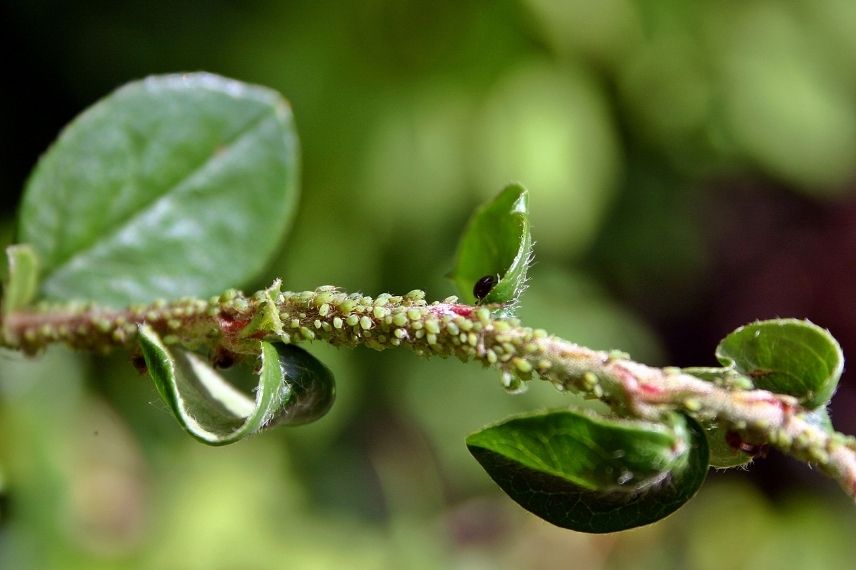 Colony of aphids
The seahorse
The hoplocampe is a small winged insect resembling a fly or a small wasp. It lays its eggs in the blooming flowers of the quince tree. The larvae then burrow into the young quinces to create galleries. In small numbers, hoplocampes contribute to the thinning of fruits; in cases of massive infestation, they jeopardise the harvests. The attack is early and occurs early in the season.
Identification
The young fruits show signs of the galleries created by the larvae, which spoil their appearance. The heart of the fruit is filled with frass. Thus inhabited, they fall prematurely well before their ripeness, usually in June.
Prevention
- Collect and dispose of infested fruits that have fallen to the ground
- In autumn, unearth the larvae that enter dormancy by turning the soil over to a depth of 10 cm
Natural Treatment
- Just before flowering, place white fly traps coated with glue; the insects will confuse them with the white flowers and get trapped
- As soon as they appear, spray repellent plants: spray infusions of tansy or wormwood
- In spring, at the first appearance of pests, spread beneficial nematodes on the soil
- Subscribe!
- Contents
Comments