





























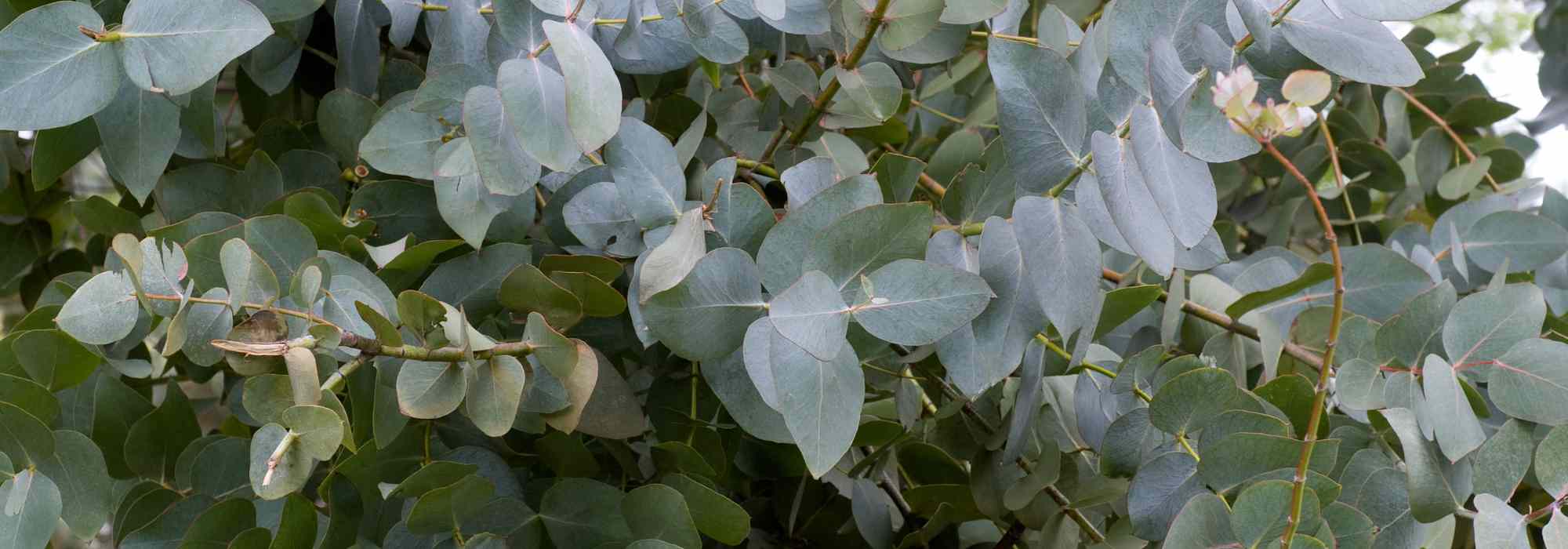
Diseases and pests of Eucalyptus
How to identify and combat Eucalyptus pests?
Contents
Eucalyptus native to Australia and Tasmania is a stunning tree with bluish leaves that is particularly resistant to attacks from pests and diseases. However, some pests have emerged on the European continent, particularly in the south of France. Large-scale plantings in natural settings can thus be decimated. Stained leaves, dry leaves, red or yellow leaves… these can also indicate issues related to poor growing conditions.
So how can you recognise and treat diseases on an eucalyptus? Here are some tips!

The eucalyptus gall
The Eucalyptus gall is caused by the sting of a small wasp: the Ophelimus maskelli. It lays its eggs directly in the leaves of the tree.
Symptoms
Quite characteristic, the leaves swell with a small hole at the centre of each sting, taking on a reddish-brown coloration. The eucalyptus dies quickly in the event of an infestation.
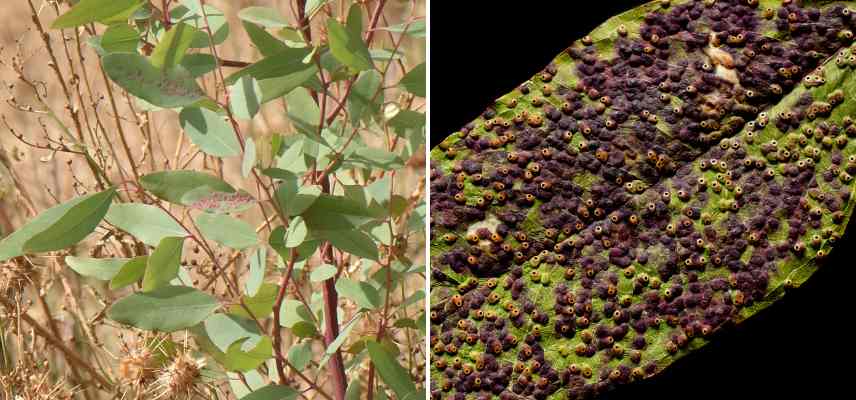
© liesvanrompaey
How to treat?
No effective control methods are currently listed. Research is underway to combat it biologically using the fly Clostocerus chamaleon.
Quickly cut away the contaminated foliage before the tree is fully infested, and dispose of it at a waste facility. As a preventive measure, a preparation based on green clay can be used as a foliar spray.
→ Learn more about plant galls and the use of clay in the garden with Olivier’s expert advice!
Read also
Eucalyptus: planting, pruning and careThe eucalyptus longhorn beetle
The eucalyptus longhorn beetle, Phoracantha semipunctata, is a small wood-boring insect native to Australia that has spread across the globe, currently affecting the south of France (Occitanie and the Mediterranean coast). Measuring between 2 and 3 cm, it is identifiable by its large reddish antennae and its broad ivory to yellow central band on the elytra, and it is most active at night. Its nocturnal activities can be observed from March to October. It lays its eggs in the trunk and branches of weakened, declining, or water-stressed subjects, creating galleries beneath the bark and deep within the wood.
Symptoms
Many species of eucalyptus are affected. It is primarily the trunk of the eucalyptus that is impacted, sometimes the main branches: the larvae feed on living wood, and the galleries they create cause wood dust, attacking the cambium. The tree is doomed to a more or less rapid death.
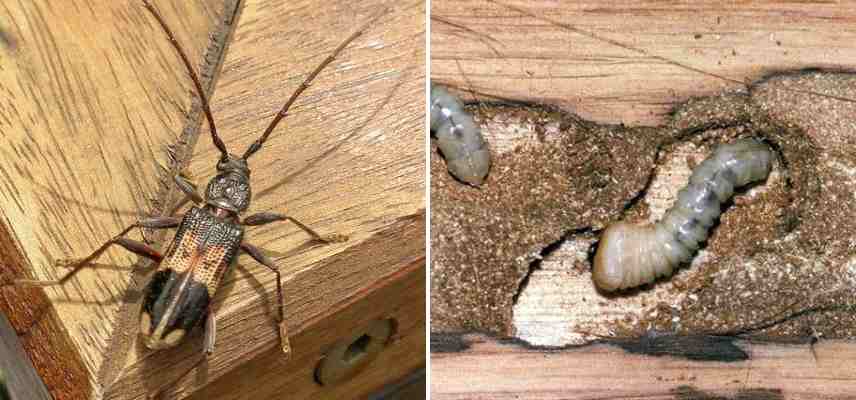
Phoracantha semipunctata (© Donald Hobern). On the right, the larvae in eucalyptus wood (© BO Langström)
How to prevent?
Only good cultural conditions can prevent attacks from the eucalyptus longhorn beetle. Monitor your tree during dry periods, ensuring it avoids any water stress.
Discover other Eucalyptus
View all →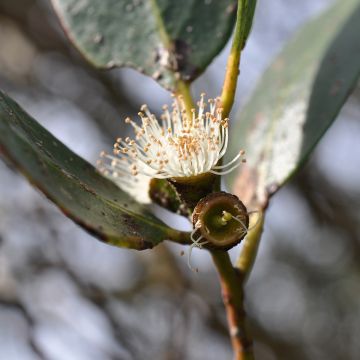
Available in 1 sizes
Available in 1 sizes
Available in 1 sizes
Available in 1 sizes
Available in 1 sizes
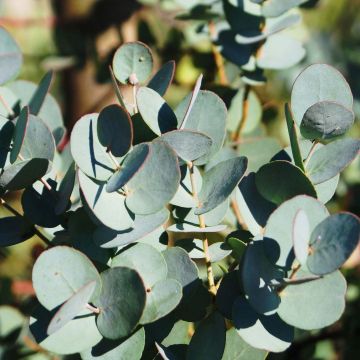
Available in 3 sizes
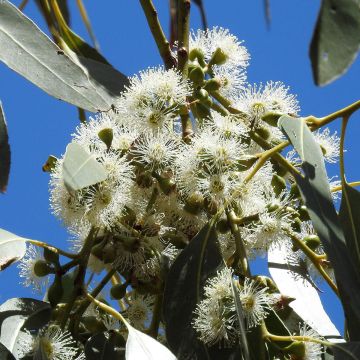
Available in 1 sizes
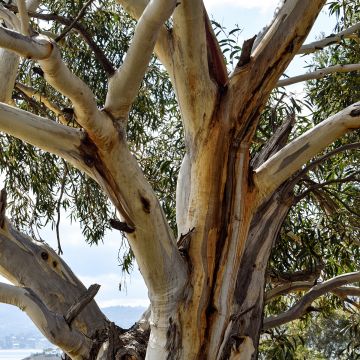
Available in 1 sizes
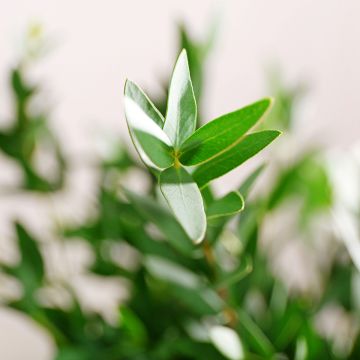
Available in 2 sizes
Available in 1 sizes
The eucalyptus psyllid
Psyllids on Eucalyptus are caused by Ctenarytaina eucalypti, an insect from the Aphalaridae family. It primarily targets young eucalyptus trees. It has been present in France since 1925. Several species of Eucalyptus are affected, notably Eucalyptus globulus (the one prized in floral arrangements for its round leaves) and the silver gum (Eucalyptus cinerea).
Symptoms
The affected organs are the juvenile leaves and young shoots of the branches of species with glaucous leaves, particularly on young specimens: they become covered with white waxy and fibrous filaments. Over time, the leaves become deformed, change colour, curl in on themselves, and may even lead to dieback. The branches also become distorted. Remnants of chrysalis moults can easily be observed on the leaves.
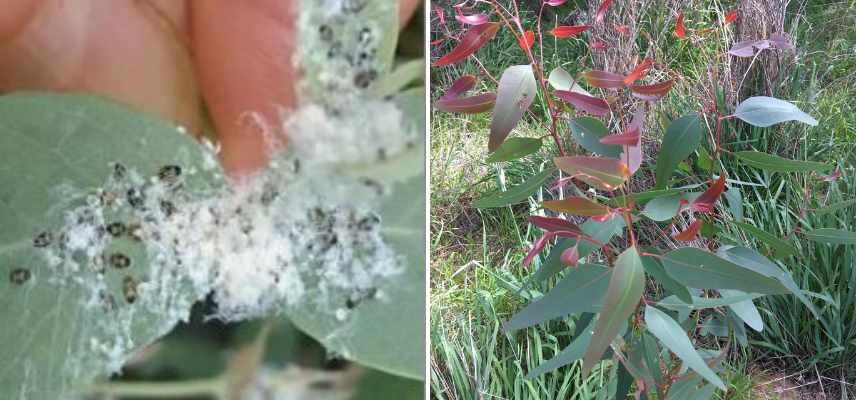
Damage caused by psyllids on eucalyptus foliage (©Astredhor Sud Ouest). It is the young trees that will be primarily affected.
How to treat and prevent?
Regularly inspect your young plantings, checking the young leaves. Prune the affected branches. Beneficial insects such as hoverfly larvae and lacewings have proven effective against eucalyptus psyllids.
→ Learn more about psyllids in our article How to Get Rid of Psyllids? and Biological pest control in the garden and vegetable patch: beneficial insects
Read also
Choosing an eucalyptusThe eucalyptus weevil
The eucalyptus weevil is a Gonipterus scutellatus, a small (8 mm) red to grey or brown defoliating insect. Adults are identifiable by their small hairs covering their bodies. The light yellow larvae leave a trail of faecal matter behind them. They attack a wide range of eucalyptus species.
Symptoms
Young shoots are affected: the entire lamina will gradually be gnawed away by the larvae or nymphs. One may also notice damage along the margins of the leaves becoming dentate, and on the juvenile bark of new branches (due to the adult weevils), as well as the development of epicormic shoots (sprouts from dormant buds). The tree becomes stunted and may even split, losing its apical dominance. However, in France, attacks remain rare and primarily affect the leaves.
N.B.: Eucalyptus cinerea and Eucalyptus gunnii are two common species that are little affected by the weevil in Europe.
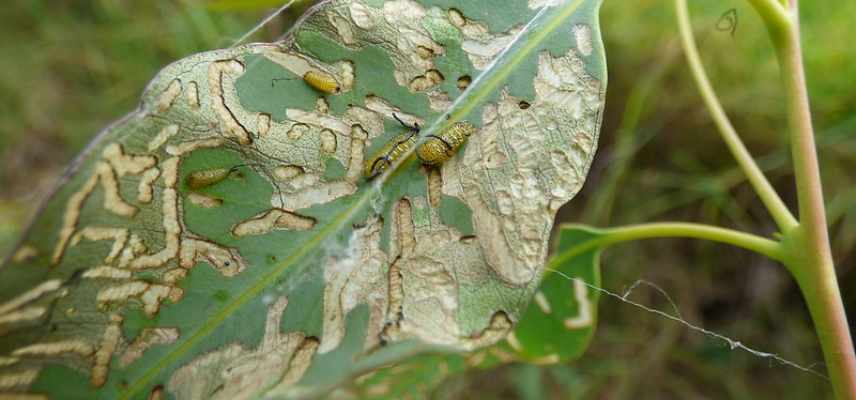
Larvae of Gonipterus scutellatus leaving visible furrows on a young eucalyptus leaf (© Forest and Kim Starr)
How to combat it?
Currently under study and used in Spain and more recently in our region, biological control through the release of Anaphes nitens, a parasitoid, is yielding very good results by parasitising the weevil’s eggs.
Overall, and for all diseases, no chemical treatment should be applied due to the significant pollination by bees with all eucalyptus.
You can collect and remove as many nymphs present in the soil by loosening the soil to a depth of 5-10 cm, in summer or winter, which is the nymph stage of the eucalyptus weevil. Eliminate all affected shoots and leaves to limit damage to the tree.
Parasitic lead
Parasitic lead is a cryptogamic disease, caused by a fungus (the Chondrosterum purpureum) commonly found on certain fruit trees as well as birches and poplars. This fungus typically develops in autumn or winter, or during cold, rainy springs. It is more prevalent in humid, cold regions. It forms folds, resembling imbricate blades, and is grey to pinkish beige in colour.
Symptoms
Eucalyptus leaves turn whitish, with a milky colour or an almost metallic, leaden appearance (hence the name of this disease). The veins become covered with rust-coloured striations. The leaves may also eventually fall off.
How to prevent and combat it?
Cut away the affected wood and dispose of it at a waste disposal site.
For prevention, spray with nettle manure or fertilise the soil with a fertiliser rich in iron. Also, avoid excess nitrogen.
Keeping Eucalyptus healthy
Remember that eucalyptus should be grown in deep, rich, well-drained soil, even if dry, but without excess limestone. Limestone in the soil will cause the foliage to lighten, potentially leading to chlorosis. Use non-limestone water, with rainwater being optimal. A warm situation is also essential, as eucalyptus requires plenty of sunlight. Meeting all these conditions generally helps keep the trees in good health.
It is important to note that for pot planting, eucalyptus, although known for its heat resistance, must be adequately watered (see our article Growing Eucalyptus in a Pot).
- Subscribe!
- Contents
Comments