





























Diseases and pests of blueberries
Identification, prevention and natural solutions for treating blueberries
Contents
Blueberries (Vaccinium corymbosum) are among those small fruiting shrubs that gardeners love in the garden. Cultivated varieties are close relatives of the wild blueberry, which grows in some of our mountain ranges in France. Its fruits are usually round and a lovely blue-violet colour, but can also be pink (‘Pink Lemonade’) or red (cranberry). They have a pleasantly tart-sweet flavour and are regarded as superfruits thanks to their richness in vitamins and antioxidants. The bell-shaped flowering and the autumn-coloured foliage are also among the other assets of these fruiting shrubs.
Easy to grow, blueberries prefer acidic soils rich in organic matter and that stay moist without being waterlogged. Hardy and sturdy, they are plants that are not prone to attacks, but may nevertheless encounter some parasitic pests and diseases.
Let’s look at how to identify, prevent and treat blueberry pests naturally to enjoy bountiful harvests.

Cryptogamic diseases (caused by fungi)
Description and symptoms of rust
The fungi causing rust disease appear in spring, when temperatures start to warm. It is a hot + humid cocktail that favours them, combined with a confined environment. The disease is contagious, as it develops quickly thanks to the spores of the fungi, which can be carried by the wind, by cutting tools, etc.
An infected blueberry bush will have its leaves developing spots, as well as orange or brown pustules on the underside and the stems. The foliage then drops, flowering and fruiting are less abundant, and the plant loses vigor.
For more information: Getting rid of rust disease
Description and symptoms of anthracnose
This disease can infect many garden plants. It is again a fungus here, whose development is favoured by humidity and warmth. It often appears in spring.
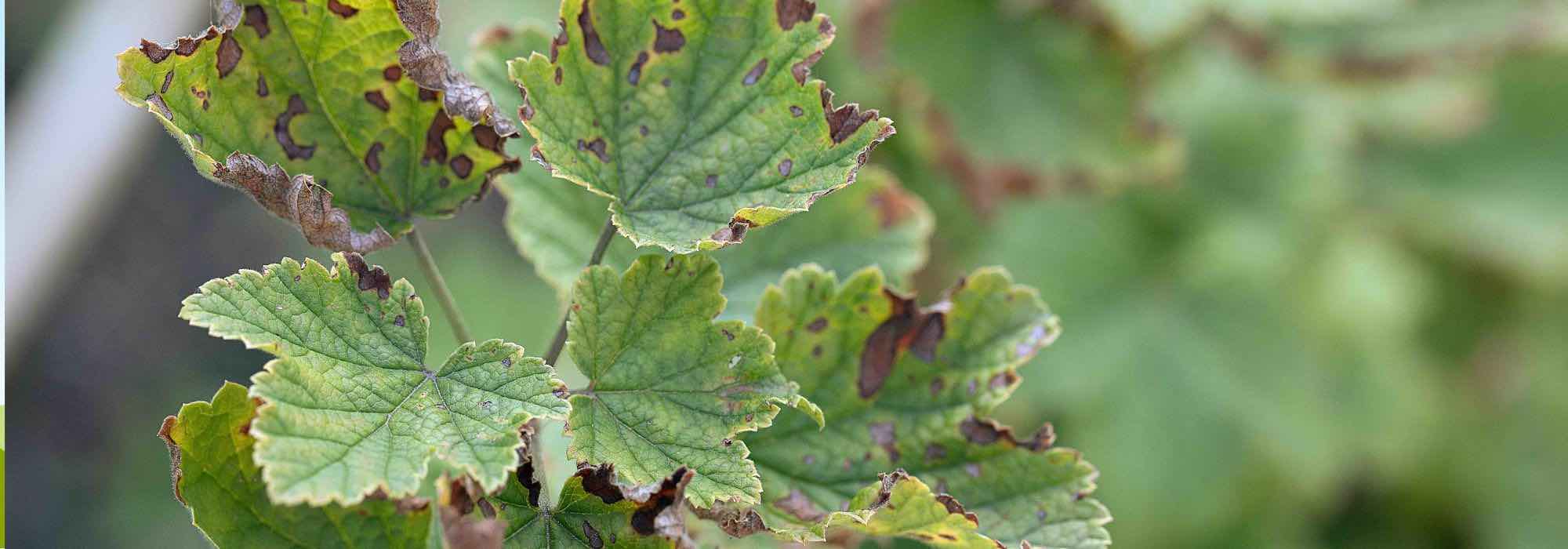
In terms of symptoms, you will notice brown or beige spots that discolour the foliage. The leaves then drop, the stems dry up, fruit production is reduced, and the plant becomes weakened.
For more information: Anthracnose
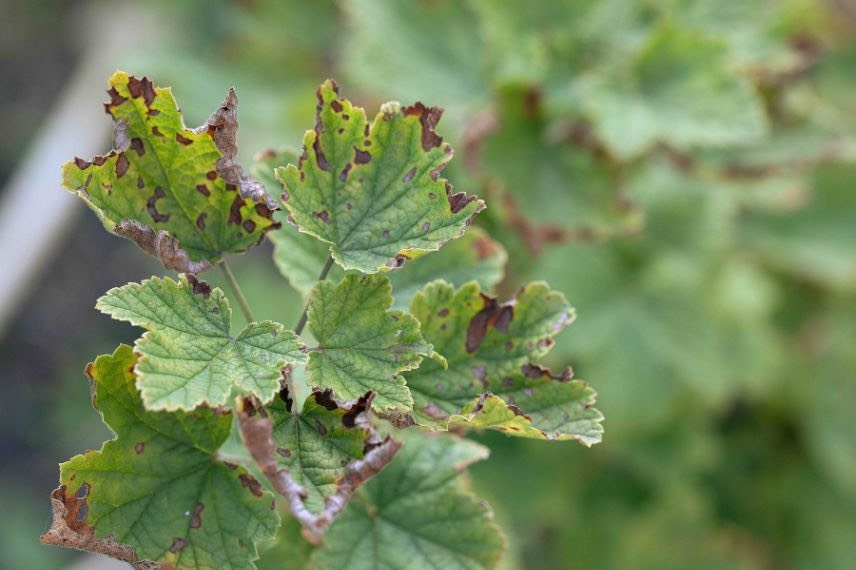
Symptoms of anthracnose on blueberry leaves
Description and symptoms of grey mould
Botrytis or grey mould thrives in damp, confined conditions, at around 20°C, as in a greenhouse or under any shelter. But it can also be found in the garden, in spring or autumn.
The fungus can affect all parts of the plant: leaves, stems, flowers, blueberries, roots. It is characterised by brown spots covered with a grey felt. The fungi then cause rotting, followed by drying of the diseased parts. The flowers no longer develop, the fruits become inedible.
For more information: Botrytis or grey mould
Prevention
To prevent the appearance of cryptogamic diseases, manage the cultivation conditions of your blueberry bushes, to make them naturally less susceptible to diseases. Give them acidic soil, regularly amended, with no excess nitrogen.
- Avoid planting a blueberry bush in an area previously infected by a cryptogamic disease, as spores can remain active in the soil for a long time.
- Watering should be regular, but without allowing moisture to stagnate. Install an organic mulch at the base of your blueberry bushes, to limit evaporation. Avoid wetting the foliage at watering time and preferably water in the morning. Prefer rainwater, less calcareous than tap water. If needed, you can install a drip irrigation at the base of your fruiting plants to facilitate watering.
- Maintain adequate spacing between your plants, to avoid fostering a confined atmosphere conducive to the development of fungi. If needed, remove a few leaves to promote air circulation. If your blueberry bush is grown in a pot, move it outside during fine weather.
- Always disinfect your cutting tools with alcohol after use, to prevent the spread of diseases between plants.
- Quickly remove dead leaves, broken or damaged stems, which can open the way to diseases.
- Regularly observe your plants to be able to intervene quickly if symptoms appear.
Natural antifungal treatments
As soon as the first symptoms of a cryptogamic disease appear, remove all affected parts to the waste facility (not to compost): leaves, stems and fruits. Then thoroughly clean your cutting tools with alcohol.
Turn to natural fungicidal treatments based on sulfur or to the Bordeaux mixture. Note, however: this product is allowed in organic farming, but we advise using it sparingly. Prolonged use can in time disrupt soils and promote the growth of fungi, creating a real vicious circle.
Many gardeners prefer using plant manures both preventively and curatively to combat cryptogamic diseases. Horsetail manure is to be preferred. The nettle manure, on the other hand, would help support the plant’s immune defences. They should be used diluted in water (5–10%), then sprayed onto the affected parts in the late afternoon. Repeat every 15 days.
On the other hand, grey mould is a cryptogamic disease difficult to treat. Preventive measures are most effective.
For more information:
– How to make horsetail manure?
– Bordeaux mixture and other copper-based treatments in the garden
Read also
Blueberry: planting, pruning, and careThe walking caterpillar
Description and symptoms
This is the caterpillar of a nocturnal moth (the Misty Moth). It is small, slender and light green in colour. It is recognisable by its jerky movement, drawing its hind legs up to its front legs as it folds in two. Eggs laid from autumn by the females hatch in early spring.
This small, voracious insect feeds on leaves, buds, sometimes even developing fruit, potentially jeopardising the harvest. You will observe on your blueberry plant leaves skeletonised, with only the veins remaining. The caterpillars are also easy to spot and you will notice white silk threads on the plant.
Prevention
Apply nettle manure from March or April as a preventive measure.
Promote biodiversity in the garden, to attract caterpillar predators, such as blue tits, in a sustainable way. To do this, ban pesticides, leave wild areas in the garden, install nest boxes, bird feeders and birdbaths, etc.
Regularly monitor your blueberry bushes to act quickly if presence is detected.
Natural treatments
If the caterpillars are not numerous, remove them by hand.
Treatments based on Bacillus thuringiensis would also be effective. For more information: Bacillus thuringiensis: a natural insecticide.
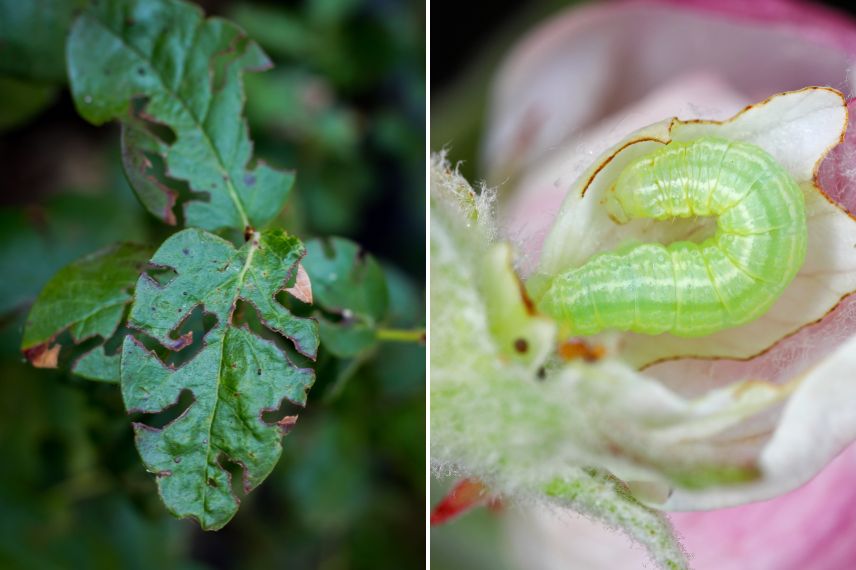
Damage caused by the looper caterpillar
Fruit-eaters: birds and gastropods
Prevention
Against birds, if their appetite reduces your harvest to nothing, install a filament protection with fine mesh above your blueberry bushes once flowering has finished.
Natural treatments
For gastropods, there are many natural solutions. The granular baits suitable for organic farming, beer traps, barriers made from eggshells or ash (to be renewed after rain), hand-picking at dusk, the release of pullets or Indian Runner ducks, etc.
For more information: Slugs: 7 ways to fight effectively and naturally

- Subscribe!
- Contents
Comments