





























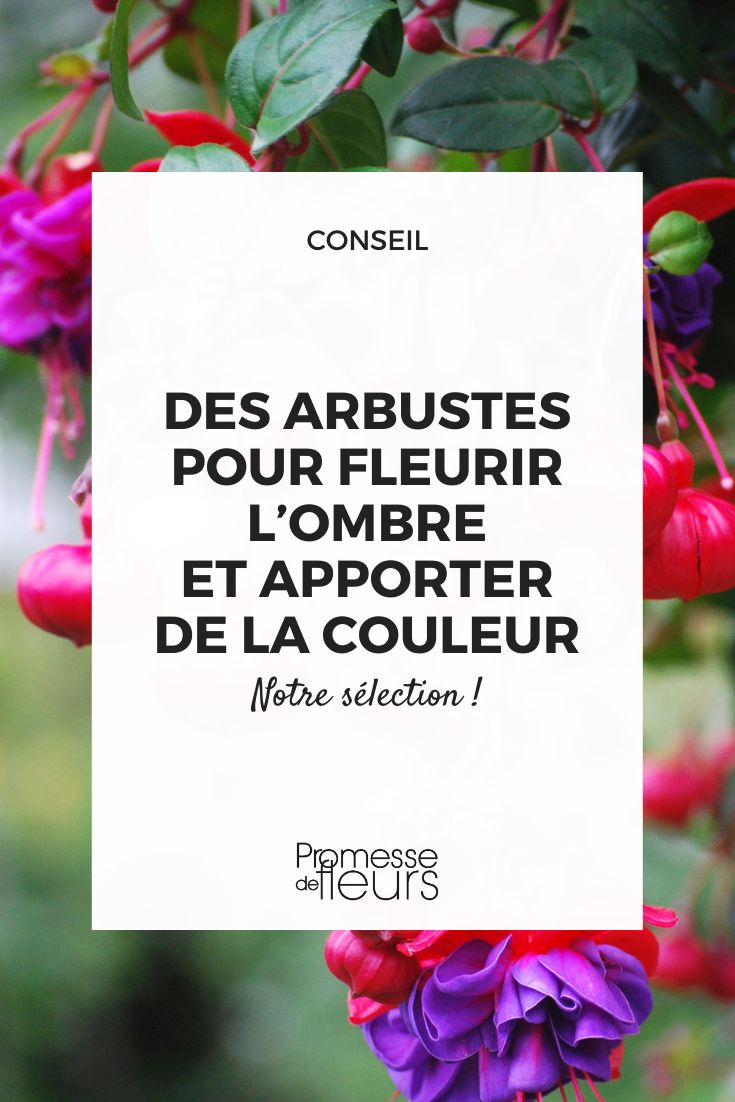
Blooming in the shade: our selection of shrubs to add colour
Our selection
Contents
Creating a shaded garden can seem daunting, but there are numerous solutions to transform these often-neglected spaces into lively and colourful spaces. In this article, discover a selection of bushes perfect for flowering, energising and structuring your shaded areas.

Fuchsias
The fuchsia is an elegant shrub, perfect for shaded areas of the garden. It develops a graceful habit and abundant flowering, with bell-shaped pendulous flowers in light or bright colours. These flowers appear in light clusters generally from June to October. The difference to look at closely concerns hardiness: some fuchsias are frost-prone and others withstand -15°C.
Fuchsia prefers a position in shade or partial shade, sheltered from direct sunlight. It likes cool, well-drained soils rich in organic matter. By planting fuchsias in the shadier corners of the garden, you bring grace and elegance, with long-lasting flowering, fairly noticeable, as the flowers are numerous, and depending on colour choice and the shape of the flower, the flowering can be a little discreet or very showy.
Fuchsia magellanica is one of the hardiest species. It reaches about 1.5 to 2 metres in height. ‘Mrs Popple’ is prized for its bright red and purple flowering. ‘Annabel’, with a compact habit, bears pale pink double flowers.
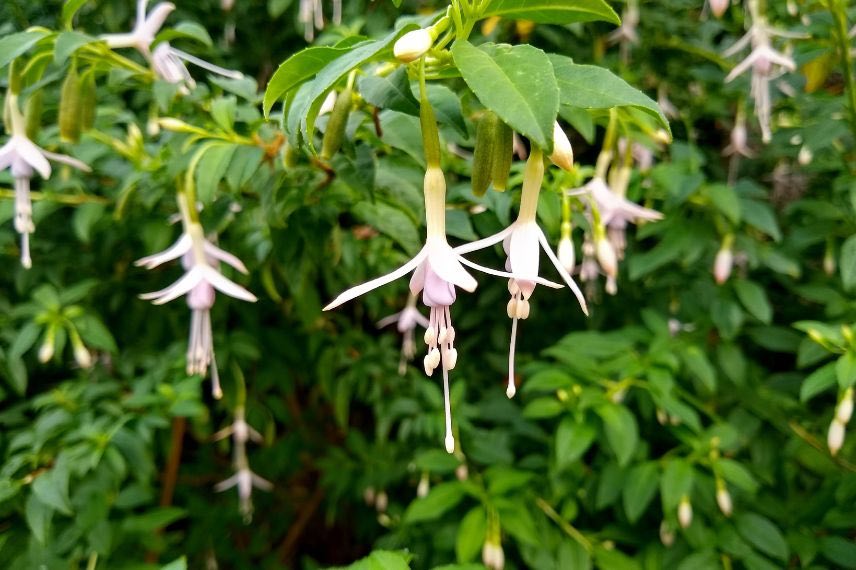
Fuchsia magellanica var. molinae
Read also
Shade Bush: Which Ones to Choose?Daphnes
The Daphne is a compact and elegant shrub, prized for its captivating fragrance and delicate flowers. Depending on the species and varieties, its flowering occurs in winter or in spring, with small pink, white or purplish flowers, often arranged in dense clusters. Its sweet fragrance perfumes the garden, even on the coolest days.
Daphne prefers partial shade or bright north-facing locations, sheltered from full sun, and grows well in well-drained, humus-rich soil. It likes cool soils, but not overly damp, rather acidic to neutral. Once planted, it does not like to be moved, so it is important to choose its position carefully from the outset.
Daphne odora is one of the most fragrant daphnes. It is available in several cultivars, such as ‘Aureomarginata’, which features cream-margined leaves and pale pink flowers. The Daphne mezereum var. rubra flowers from late winter, before the leaves appear. It bears very fragrant pink flowers. For small spaces, the Daphne cneorum, standing about 30 cm tall, is an excellent option.
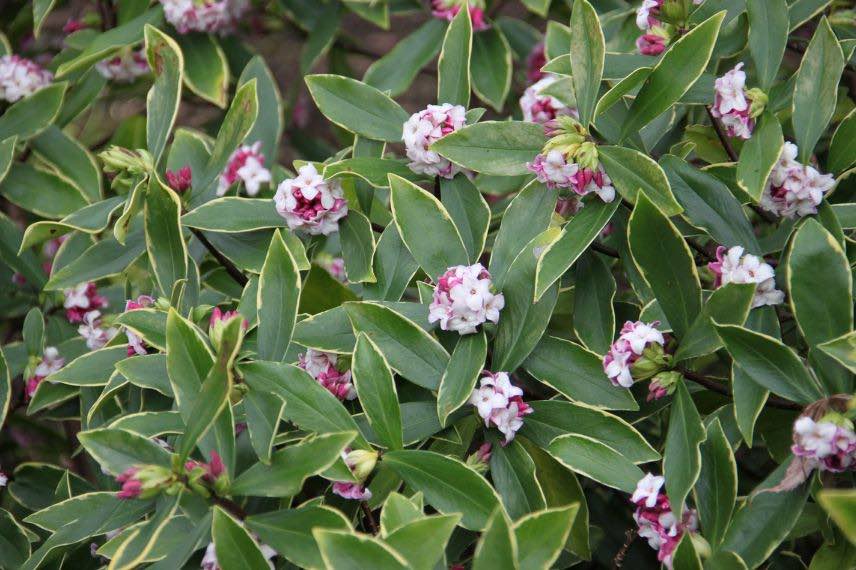
Daphne odora ‘Aureomarginata’
Hydrangeas or hydrangeas
It’s hard not to mention hydrangeas for shade gardens, with their large globular heads or panicles. Among the shade-tolerant species, you’ll find Hydrangea macrophylla, known for its flowers in large globular heads, often blue or pink depending on soil type. Hydrangea serrata, more delicate, offers flat and delicate flowers, perfect for adding a subtle touch of colour. Also note the species Hydrangea involucrata and Hydrangea aspera for shade.
These species thrive in shade or partial shade, sheltered from the scorching sun, and prefer rich, cool and well-drained soil. Regular watering is essential to maintain good moisture, especially in summer.
The Hydrangea macrophylla Endless Summer‘The Bride’’, with white flowers, adds a lot of light to shaded areas. The variety is particularly interesting for its repeat flowering, which continues from June until the first frosts. The Hydrangea serrata ‘Bluebird’, with its blue flowers, is perfect for adding a fresh touch to semi-shaded areas.
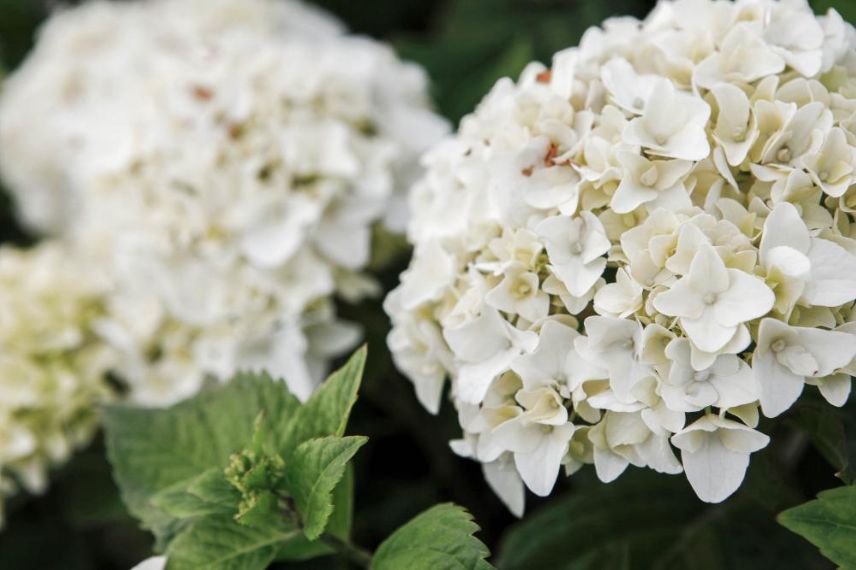
Hydrangea macrophylla ‘The Bride’
Read also
10 plants to create a shady rockeryAzaleas and Rhododendrons
Azaleas and rhododendrons are shrubs with spectacular flowering, particularly suited to shaded gardens. Azaleas, with their lighter-coloured flowers and often grouped into clusters, offer a wide range of colours, from white to vivid pink, including orange and red. Rhododendrons, for their part, produce large flower clusters in vibrant hues and evergreen foliage that structure the garden all year round.
These shrubs prefer partial shade, where they are protected from direct sun, for example in an east-facing position with morning sun, and they thrive in acidic, cool, well-drained soil. They also require good moisture, but not standing water, which could damage their shallow roots.
Azalea mollis ‘Delicatissima’ is a deciduous azalea that produces superb pastel pink flowers maculate with yellow. It is a compact variety, ideal for small shaded gardens. The dwarf rhododendron ‘Azurika stands out for its very intense blue-violet flowers. It is a compact variety, ideal for small shaded gardens. The Rhododendron ponticum is a hardy species, with violet flowering in spring. It is perfect for structuring a woodland border.
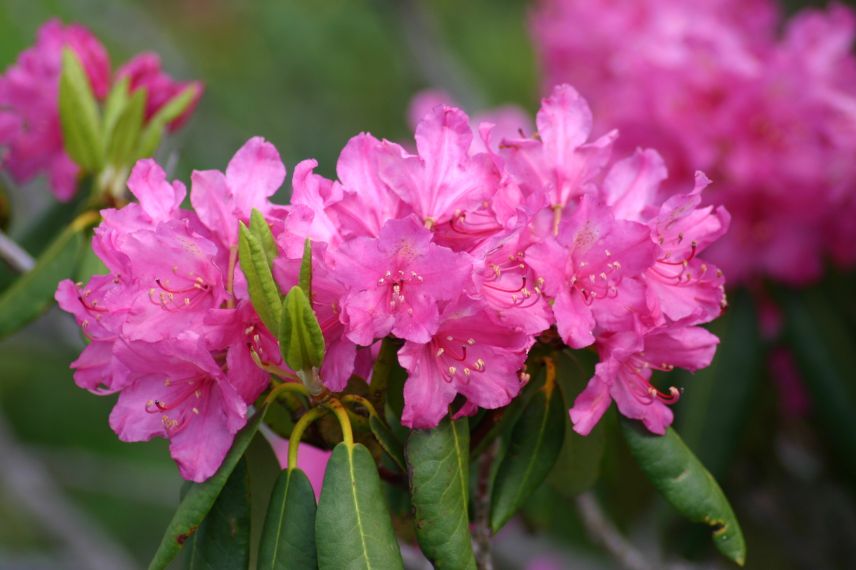
Rhododendron ponticum
Michelias
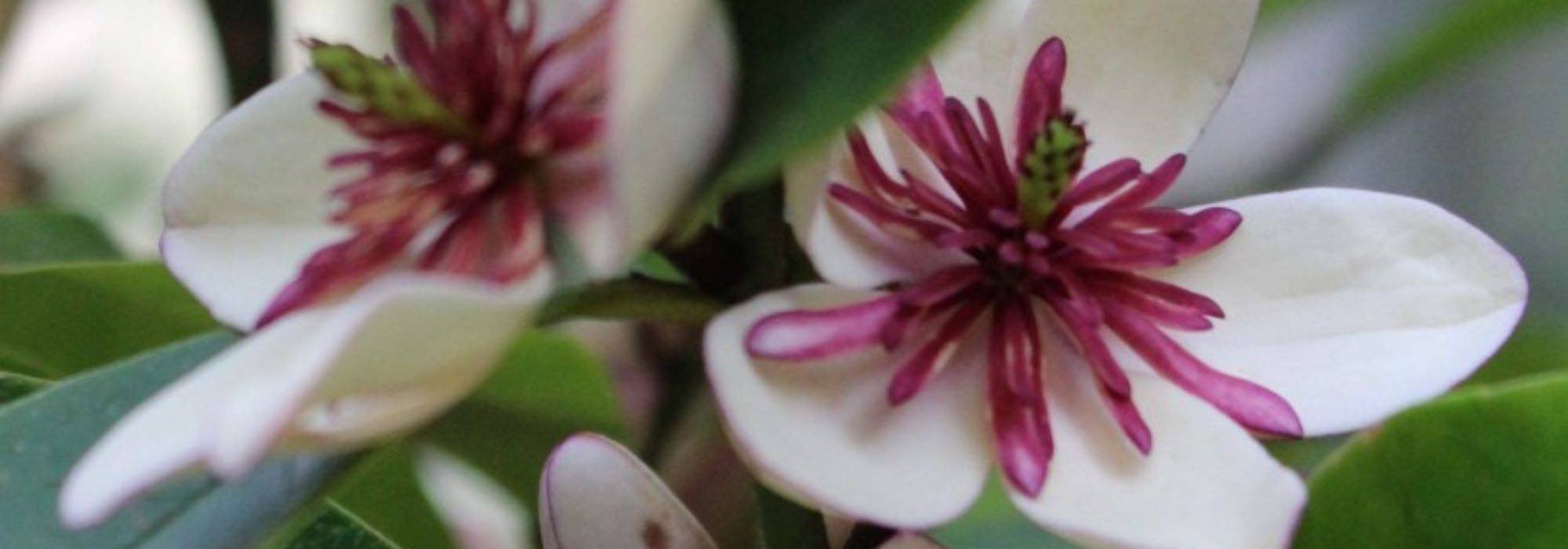
The Michelia, related to magnolias, is an evergreen shrub with glossy foliage and fragrant flowering. Its flowers, in soft tones, appear in spring and emit a captivating fruity fragrance, often reminiscent of citrus trees. Michelia is a perfect choice for bringing an exotic and elegant touch to shaded gardens.
This shrub prefers partial shade, where it is protected from direct sunlight, especially in hot regions, but elsewhere as well. It simply develops a looser habit in partial shade. It thrives in rich, well-drained soil that is neutral to slightly acidic. It enjoys regular moisture, without excess, and protection from cold winds.
The Michelia figo forms a compact shrub with small cream-pink flowers with a fruity fragrance, often described as reminiscent of banana. It is perfect for a sheltered corner of the garden, reaching about 2 to 3 metres in height. ‘White Caviar’ produces white flowers with pink stamens. ‘Fairy Blush‘ is a popular variety, with pink flowers.
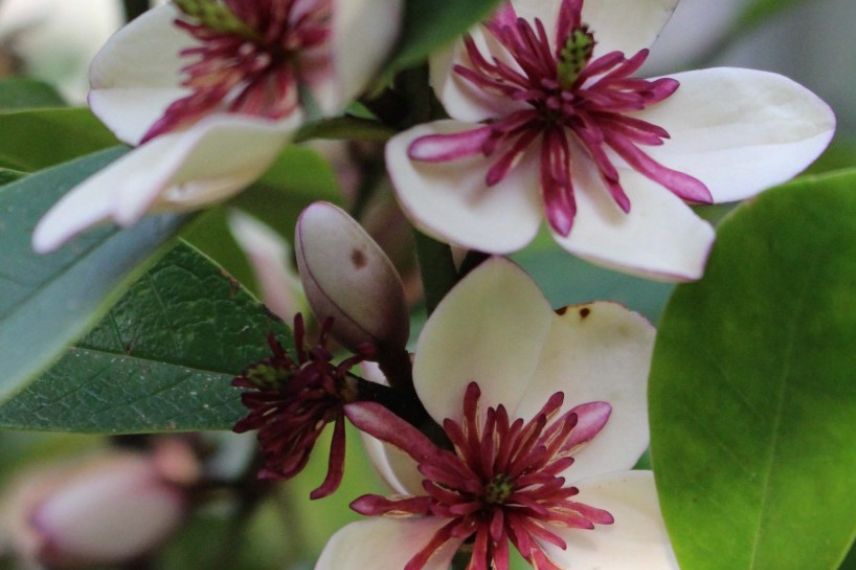
Michelia ‘White Caviar’
Camellias
The camellia is an evergreen shrub with dark, glossy foliage and delicate, very elegant flowers. Depending on species and varieties, its flowers, often with multiple petals, appear from autumn to spring and offer a wide palette of colours, from white to deep red, including pink. Their beauty and long-lasting flowering make them a must for shade gardens.
The camellia prefers a position in partial shade or shade except for Camellia sasanqua which flowers in autumn and tolerates sun north of the Loire. It grows well in acidic, cool, well-drained soil, rich in organic matter. It appreciates constant moisture, but hates waterlogging which can rot its shallow roots.
The Camellia japonica ‘Nuccio’s Pearl’ is prized for its double flowers in a gradient of pale pink, which lightens to white as they bloom. They bloom from February to April, and this variety is hardy down to -15°C. It reaches about 1.5 metres in height, making it an excellent choice for growing in pots or in borders. The Camellia sasanqua ‘Kanjiro offers autumn flowering with large, bright pink petals that are crinkled, appearing from November to February. The Camellia ‘Donation’ is a classic variety with long flowering, from January to April. Its semi-double pink flowers can measure up to 12 cm, and this fairly hardy variety is easy to grow, even for beginners.
Among ericaceous shrubs, also look at the kalmias, little known but endowed with superb and abundant flowering in porcelain-coloured clusters.
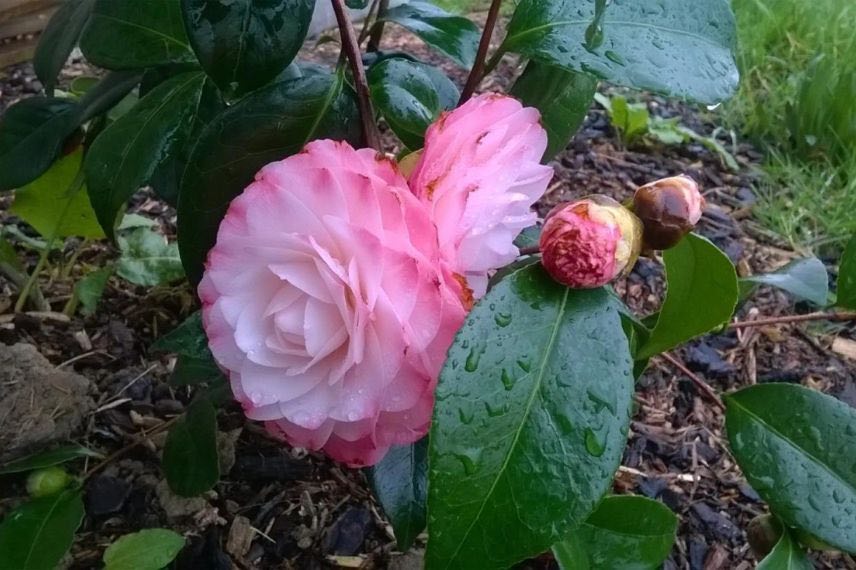
Camellia japonica ‘Nuccio’s Pearl’
Mahonia
Mahonia is an evergreen shrub ideal for shaded gardens, appreciated for its architectural habit, decorative foliage and spectacular winter flowering.
Its thick leaves, composed of thorny leaflets, resemble holly and add interesting texture to the garden.
In winter it bears long clusters of fragrant yellow flowers, followed by blue-black berries that attract birds.
Mahonia prefers shaded or partial-shade exposures and thrives in well-drained, humus-rich soil.
It tolerates poor soils, but it appreciates regular moisture, especially in dry periods.
Resistant and easy to maintain, it is also very hardy, tolerating cold temperatures without issue.
Mahonia media ‘Winter Sun’ is a popular variety for its fragrant yellow winter flowering, which appears from November to February, brightening the garden during the cold season.
Mahonia x wagneri ‘Fireflame’ stands out for its evergreen foliage that takes on red and orange tones in autumn and purple in winter.
Mahonia aquifolium, native to North America, is a compact species ideal for small gardens that tolerates calcareous soil. It produces yellow flowers in spring, followed by decorative blue-black berries.
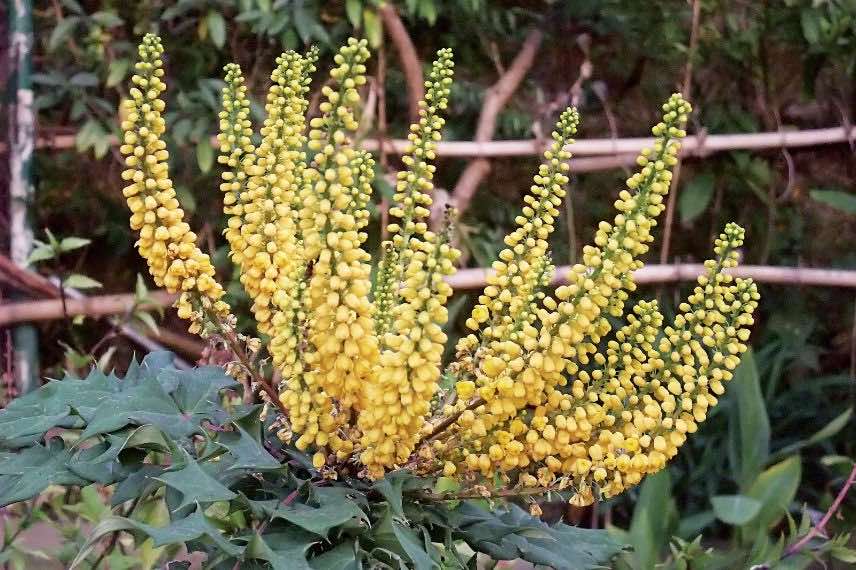
Mahonia ‘Charity’
- Subscribe!
- Contents
Comments