





























Pairing ideas with Opuntia
6 successful pairing ideas
Contents
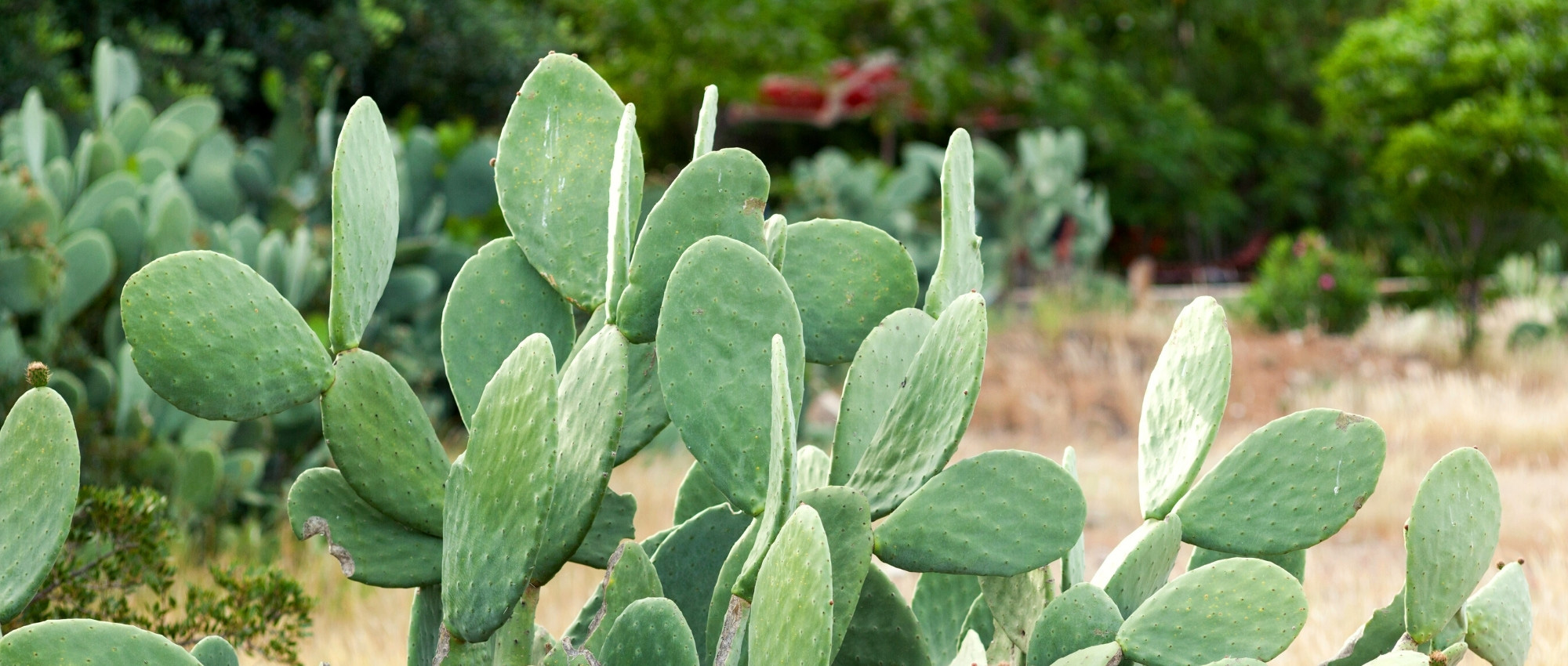
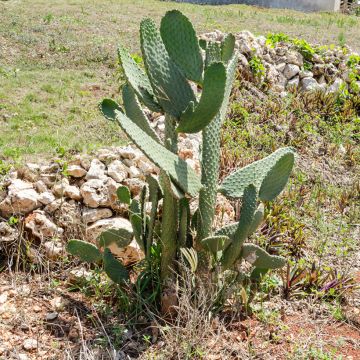
Opuntias or prickly pears, are very unique cacti with their flattened stems (shaped like paddles), bearing small white cushions where the thorns are inserted. The most well-known among them is the Barbary fig (Opuntia ficus-indica), valued for its edible fruits, but there are many varieties. Opuntias also produce beautiful flowers in vibrant shades: yellow, orange, red, or pink.
Like other cacti, Opuntias are very drought-resistant and thrive in well-draining, rather poor soil, and in a sunny location. Thus, they are perfect for enhancing a rock garden or a mineral-dominant garden. They are appreciated for bringing a beautiful exotic and refreshing style to the garden. The hardiness of Opuntias varies greatly depending on the species: some are frost-sensitive while others can withstand temperatures as low as -20 °C! Choose a variety suited to your region so you can grow it in the ground without any issues. Discover in this guide our 6 best ideas and inspirations for pairing Opuntias, according to your desires and garden style!
And for everything you need to know about their cultivation, feel free to check our complete guide “Opuntia: Planting, cultivation, and care”

In a Mediterranean-style garden
Particularly suited to mild, sunny climates, Opuntia easily integrates into Mediterranean-style gardens. For example, create a rockery or a sunny border by planting Opuntia alongside aromatic plants: lavender, thyme, rosemary, savory, santolina, common sage, and everlasting flower. Integrate some perennials with colourful flowering, such as Phlomis fruticosa, Armeria maritima, agapanthus, and Eryngium maritimum. We recommend adding some height with shrubs such as oleander or Anthyllis barba-jovis. Next to them, the palm Chamaerops humilis (one of the few palms native to the Mediterranean basin) will make a striking impact with its exotic silhouette and palmate foliage! You can also incorporate some climbers, which you can train on a pergola or trellis: consider bignonia, jasmine, and bougainvillea.
Discover our guide “7 tips for creating and succeeding in a Mediterranean garden”
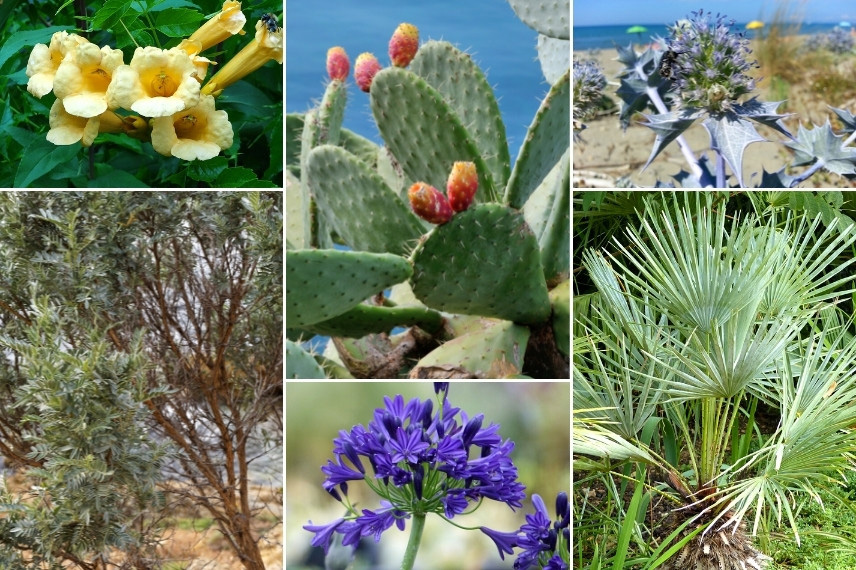
Campsis radicans ‘Yellow Trumpet’, Opuntia ficus-indica, Eryngium maritimum, Anthyllis barba-jovis (photo Adobe Stock), Agapanthus ‘Royal Velvet’ and Chamaerops humilis ‘Cerifera’
With cacti and succulents
Enjoy the Opuntia to create a beautiful dry exotic atmosphere, very refreshing, by pairing it with other cacti and succulents… You can achieve this ambiance even without living in the Mediterranean region, as some succulent plants are quite hardy! However, be sure to work on the drainage (the soil must not retain moisture in winter), for example by planting on a mound and incorporating gravel or coarse sand into the soil.
Choose a species such as Opuntia engelmanii var. rastrera or Opuntia phaeacantha ‘Mojavensis’, both perfectly hardy (down to -20 °C!). To accompany them, we particularly recommend the cactus Cylindropuntia imbricata, as well as the stunning Agave havardiana, both capable of withstanding temperatures down to -15 °C. Feel free to plant some sedums and houseleeks alongside them. Also consider the Aloe striatula: it is one of the hardiest aloes (it tolerates temperatures down to -12 °C). For winter, we recommend placing a transparent sheet (glass or plastic) over these cacti and succulents to protect them from rain. Although these plants are quite hardy, they originate from arid regions and are sensitive to winter moisture.
To learn more, discover our complete guide on outdoor cacti and succulents!
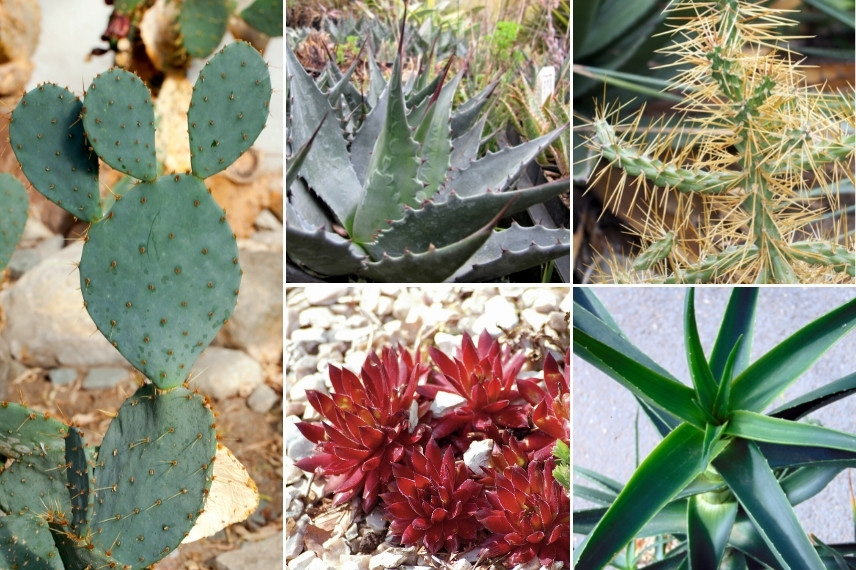
Opuntia phaeacantha (photo Diego Delso), Agave montana (photo M. Hansen), Cylindropuntia imbricata (photo Agnieszka Kwiecień), Sempervivum ‘Othello’ and Aloe striatula
Discover other Opuntia
View all →
Available in 1 sizes
Available in 1 sizes
Available in 1 sizes
Available in 1 sizes
Available in 1 sizes
Available in 1 sizes
Available in 1 sizes
Available in 1 sizes
Available in 1 sizes
Available in 1 sizes
In a sunny, flowering rockery
As it appreciates dry, well-drained soils, Opuntia will easily find its place in a rockery. To create a rockery, simply prepare a raised spot in full sun (bank, slope, mound…), place large stones to retain the soil, and mix in draining elements (gravel, coarse sand, stones…). This will allow water to drain easily, creating the ideal conditions for growing Opuntia. All you need to do is plant it between the stones, accompanied by small flowering plants with a carpet habit such as aubrietes, Draba aizoides, Phlox subulata, and Iberis sempervirens. Also consider Convolvulus cneorum, a small shrub related to bindweed, which offers silver foliage and beautiful white flowers. You can also plan a small space to incorporate some houseleeks and sedums.
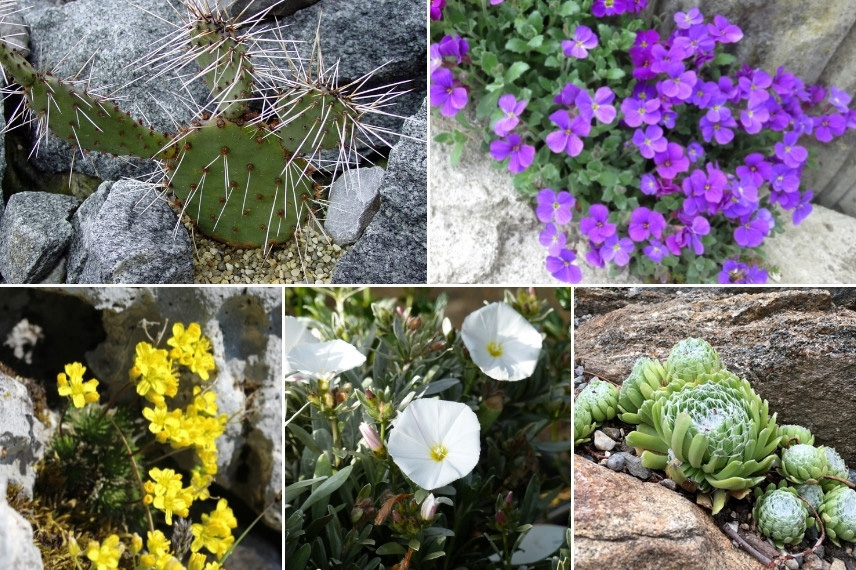
Opuntia phaeacantha var. albispina (photo Matjaž Wigele), Aubrieta ‘Royal Violet’, Draba aizoides (photo Björn S.), Convolvulus cneorum and Sempervivum arachnoideum (photo Kristine Paulus)
In an exotic and graphic garden
The Opuntia is a structuring cactus with an elegant and well-defined shape: take advantage of it to create a graphic and exotic atmosphere. For the colour palette, favour muted tones: chocolate brown, bronze, purple, white, or dark red. Integrate plants with graphic and elegant foliage: think of Phormiums, Cordylines, Yuccas, Dasylirions, and the stunning Cycas revoluta. Next to them, place small grasses like Carex comans, Stipa tenuifolia, or Blue Fescue. For flowering, consider agapanthuses (choose a white or very dark blue variety, such as ‘Black Magic’). Also discover the stunning Allium schubertii, which offers gigantic spherical inflorescences made up of numerous small star-shaped flowers.
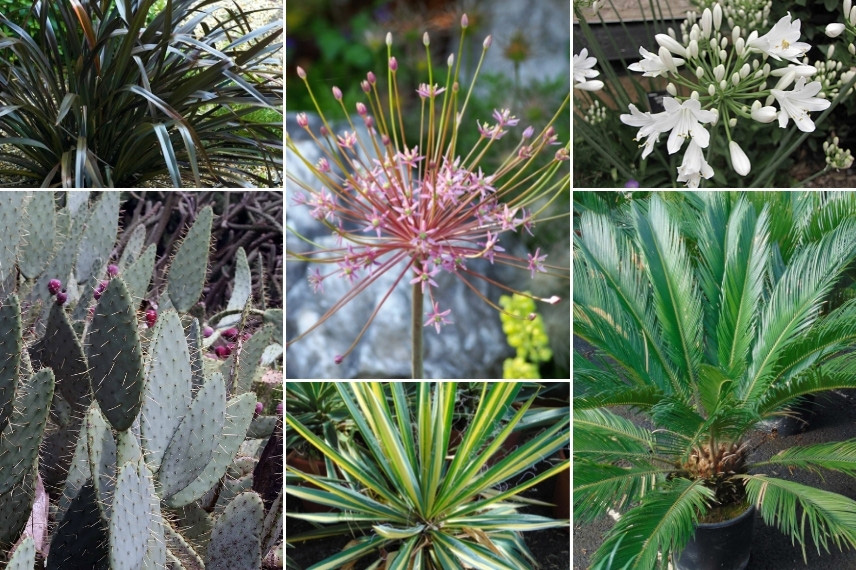
Phormium cookianum ‘Black Adder’, Allium schubertii (photo Agnieszka Kwiecień), Agapanthus africanus ‘Albus’, Opuntia lindheimeri var. Linguiformis (photo David J. Stang), Yucca filamentosa ‘Bright Star’, and Cycas revoluta
For a dry and warm atmosphere!
Opuntias produce beautiful cup-shaped flowers, typically in yellow, orange, or red. Take the opportunity to create a warm-toned exotic garden with dry medium plants, featuring fine or thorny foliage (avoid broad, lush, light green leaves…). Plants native to arid environments have reduced their foliar lamina to limit evapotranspiration and thus better withstand drought. Therefore, favouring cacti and plants with narrow leaves will create a stunning effect of an exotic dry garden! For flowering options, consider kniphofia, crocosmias, Delosperma ‘Wheels of Wonder Fire’, and the stunning Sparaxis tricolor. You can also incorporate California poppies, Eschscholzia californica. To structure the bed, focus on the decorative foliage and the very exotic silhouette of Dasylirions, Phormiums, and Yucca rostrata.
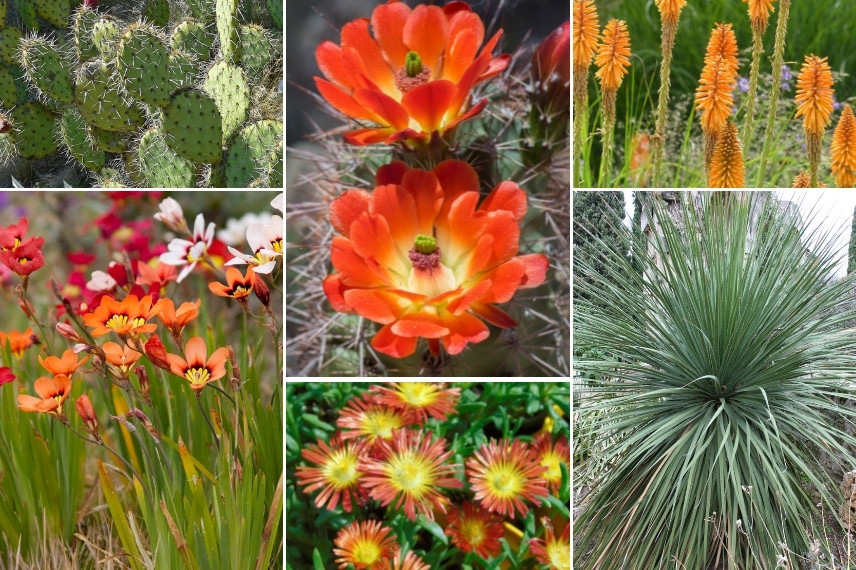
Opuntia phaeacantha (photo Stan Shebs), Opuntia engelmanii var. Lindheimeri (photo Adobe Stock), Kniphofia ‘Fiery Fred’, Sparaxis tricolor (photo Richard Shiell – GWI – Biosphoto), Delosperma ‘Wheels of Wonder Fire’ and Dasylirion
To play with contrasts of shape and texture
You can create a lovely contrast by highlighting the sharp shapes and thorny appearance of the Opuntia among soft, airy plants. For example, plant it amidst grasses such as Stipa tenuifolia, Stipa pennata or Pennisetum orientale. Integrate alongside them lightly flowering, airy plants like gypsophilas, asters, Cotinus coggygria, Lagurus ovatus… Also consider the very soft foliage of Stachys byzantina. To enhance this contrast effect, pair the Opuntia with other cacti or thorny plants: Cylindropuntia imbricata, agaves, Eryngiums, Dipsacus fullonum… Also think about Dasylirion, whose stiff leaves create a lovely tousled and very structured appearance.
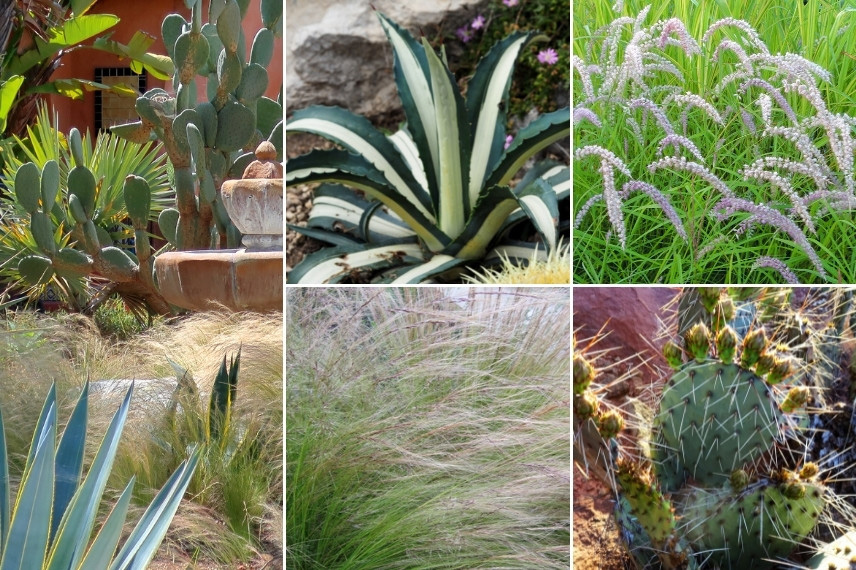
Association of Opuntia ellisiana, Stipa tenuissima and Agave tequilana ‘Sunrise’ (photo cultivar413), Agave americana ‘Mediopicta’, Pennisetum orientale ‘Tall Tails’, Stipa tenuissima (photo Leonora Enking) and Opuntia polyacantha (photo Andrey Zharkikh)
- Subscribe!
- Contents
Comments