





























8 small-flowered roses to have in your garden
for a natural atmosphere full of nuances
Contents
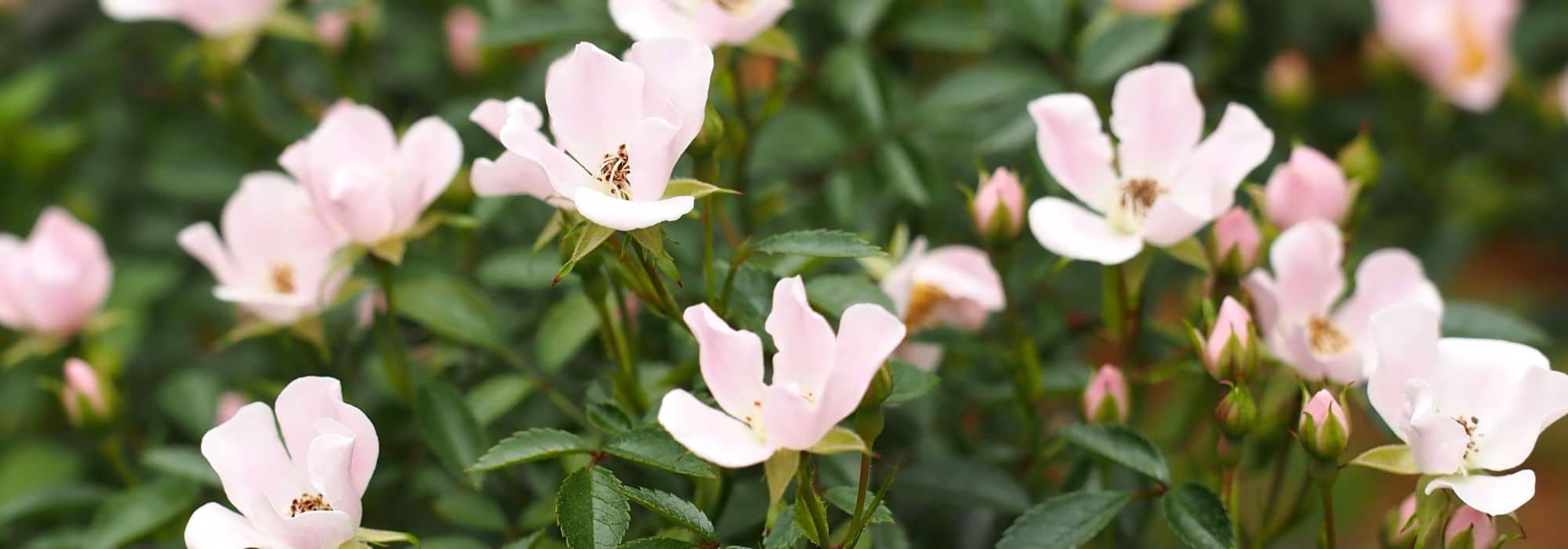
If you love flowering gardens and roses, discover our selection of small-flowered roses. They are elegant, with a whole range of colours, ranging from red to yellow, including pale pink and white. Small-flowered roses bring beauty and natural charm to a garden, provided you mix their size and shape, whether in a cup, rosette, globular, or turbinate form.

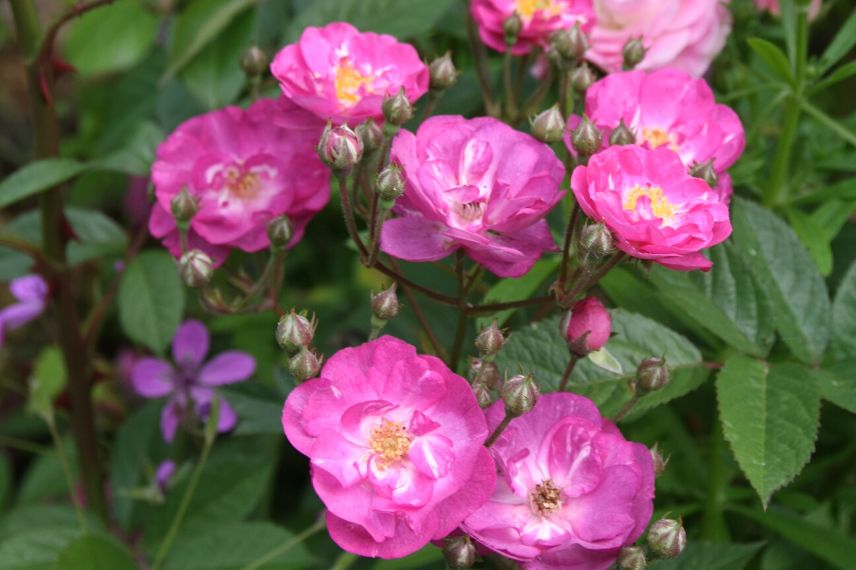
The shrub rose 'Sibelius', with its graceful habit and subtle tones
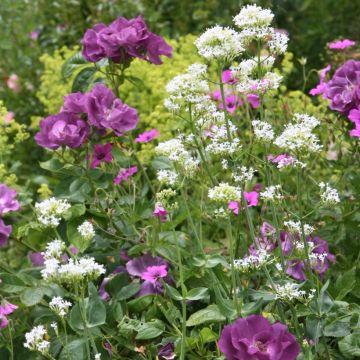
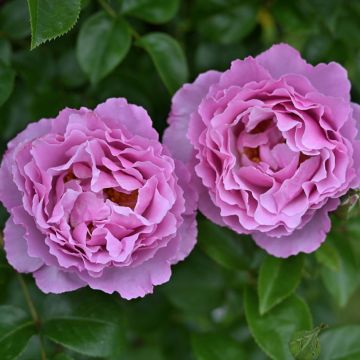
With its natural habit and abundance of semi-double small flowers in subtle shades of violet, pink, and magenta, the ‘Sibelius’ rose exudes charm. From June to September, it produces graceful round bouquets rich in tones, causing its branches to bow. Its flowers emit a light fragrance and open to reveal a heart of golden stamens. The roses give way to lovely small decorative red fruits, and its medium green foliage turns red and yellow in autumn. Created by Louis Lens, it is a hybrid of the musk rose (Rosa (x) moschata). It forms a small bushy bush about 1.20 metres high and wide. Vigorous and low-maintenance, it adapts to all growing conditions. In humid climates or late in the season, it may be susceptible to downy mildew or “black spot disease.”
Its free form resembles a dome, allowing it to be paired with old roses that have more generous blooms, such as ‘Charles de Mills’ or ‘William Lobb’. It can also be combined with a white, pink, or blue clematis to create a wild and romantic atmosphere.
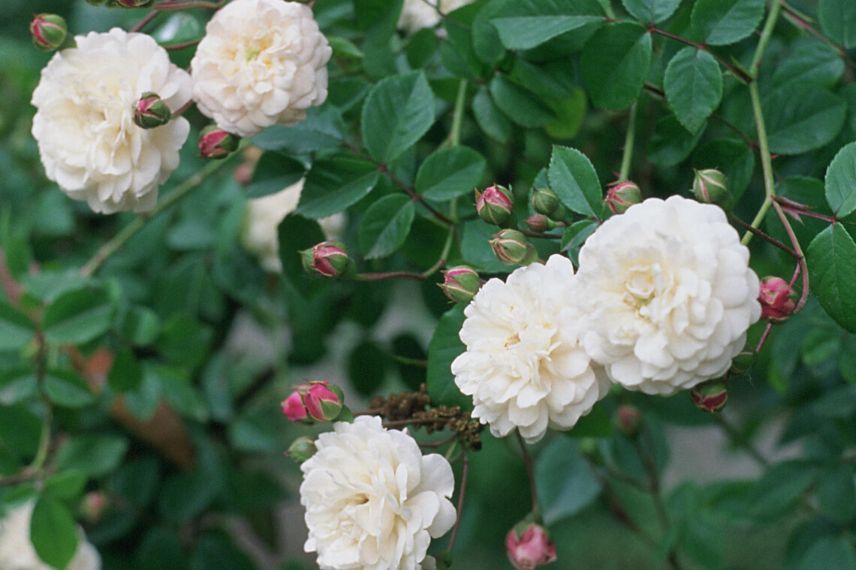
The rambling rose 'Félicité et Perpétue', a charming air of abandonment
The rambling rose ‘Félicité et Perpétue’ adds a lot of charm to a garden. Vigorous and resistant to all types of growing conditions, even the driest and stoniest soils, it climbs on a fence, shed, or tree up to a height of 5 metres. From June to July, it is covered in a spectacular flowering of large clusters of tightly packed, very double cream-white pompons, blooming alongside bright pink buds. The rosette-shaped flowers emit a floral and fresh primrose scent. Its exuberant foliage is dark green, glossy, and semi-evergreen.
You can accompany this delightful rambling rose with viticella clematis in mauve or pink, or with a texensis clematis ‘Princess Kate’ with its unique bell-shaped flowers in purple and white.
Discover other Roses
View all →
Available in 2 sizes
Available in 0 sizes
Available in 2 sizes
Available in 2 sizes
Available in 2 sizes
Available in 2 sizes
Available in 2 sizes
Available in 2 sizes
Available in 1 sizes
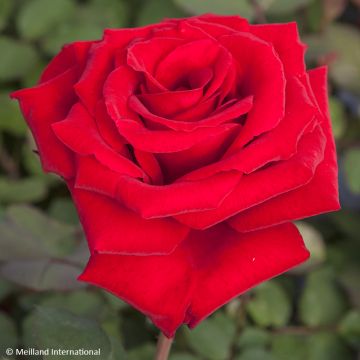
Available in 3 sizes
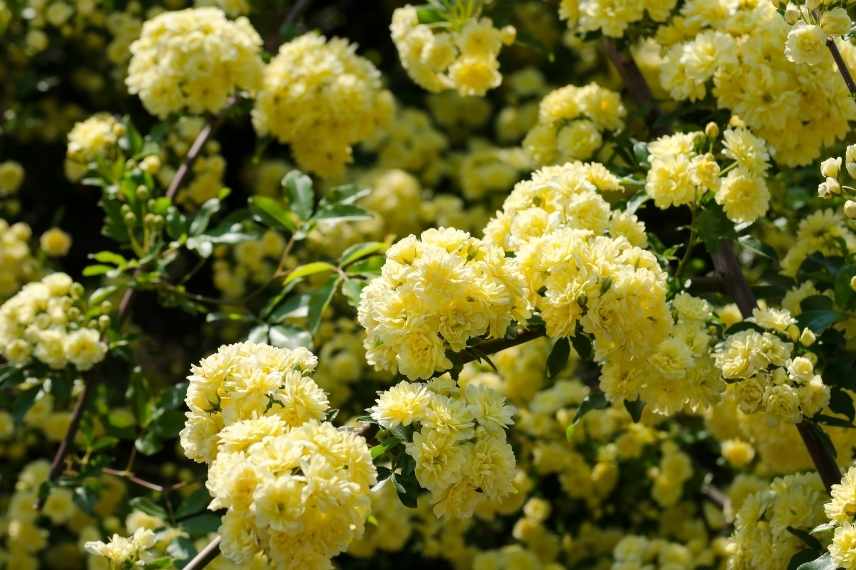
The Banks' rose 'Lutea', a vigorous liana with small yellow roses.
Reaching heights or lengths of up to 12 metres, the Banks ‘Lutea’ rose (Rosa banksiae) is a very vigorous species in the south of France and as far as Île-de-France. From April to June, it is adorned with a multitude of small, very double flowers in a beautiful sunny butter yellow. For harmonious growth, expose it to sunlight and shelter it from the wind. If allowed to grow freely, its habit resembles that of a monumental fountain. Its thornless stems bear bright green, glossy, semi-evergreen foliage.
Use the Banks rose to decorate a house facade or an old wall. On this support, it can be paired with a summer-flowering clematis such as the Clematis viticella ‘Dark Eyes’ with purple flowers, which will enhance the spectacular aspect of its cascades of flowers.
Read also
10 shrub roses with pink flowersThe old rose 'Pink Grootendorst', bright pink carnations
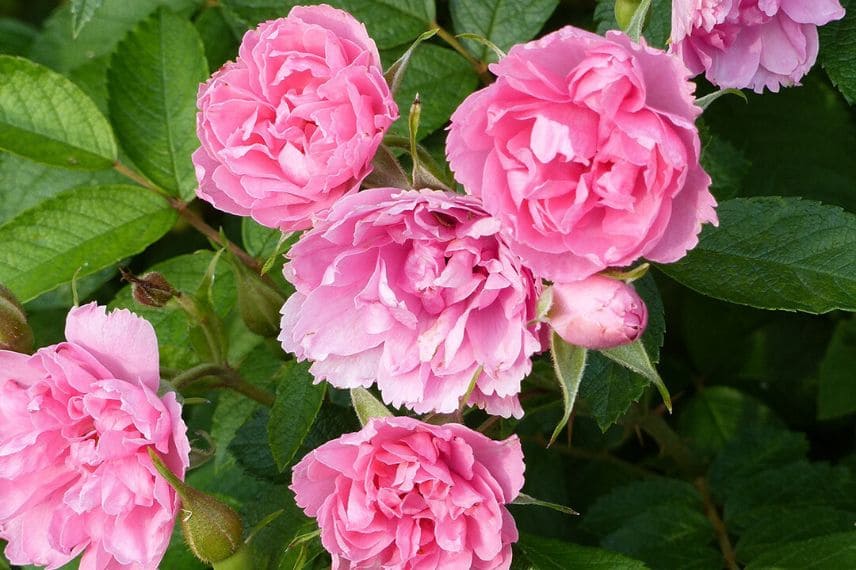
The old rose ‘Pink Grootendorst’ is a bush 1.10 metres high and 1 metre wide that bears small flowers in shades of pink with fringed petals, resembling double carnations. Grouped in small bouquets, the roses appear abundantly, from June to July, and then from September to October, offering a two-part display. The lovely shades of pink contrast with the glossy light green, crinkled foliage, which is free from diseases. Its deciduous leaves are plentiful right down to the base of the rose bush. In autumn, they turn golden yellow and the stems become beige. Very hardy and tolerant of salt spray as well as poor soils, this rose is very easy to grow.
This dense and vigorous bush pairs well with nearby varieties, such as ‘F.J Grootendorst’ with carmine pink flowers, as well as cotinus, lilacs, or even viburnums to create a rustic atmosphere.
The weeping standard rose 'Scarlet Meillandecor Meikrotal', the brilliance of red
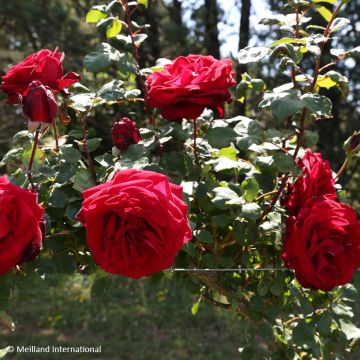
Highly floriferous, the weeping rose ‘Scarlet Meillandecor Meikrotal’ offers, in addition to its magnificent habit, an explosion of intense dark red flowers from June to November. This bush, reaching a height of 2.5 metres, bears semi-double cup-shaped roses that exude a light fragrance. The dark green, glossy foliage provides a striking contrast to the red of the flowers. Its cascade of blooms immediately catches the eye in a garden, and it stands out beautifully as a specimen on a lawn or at the heart of a flowerbed.
This weeping rose adds style and volume to lower rose beds or groundcover. You can highlight its rich colours by placing grey-foliaged plants at its feet, such as stachys or lamb’s ears, Artemisia ‘Nana’, or Cerastium. It can also be planted along a pathway or at the front of a large flowerbed.
The botanical rose Rosa glauca, an unusual rose.
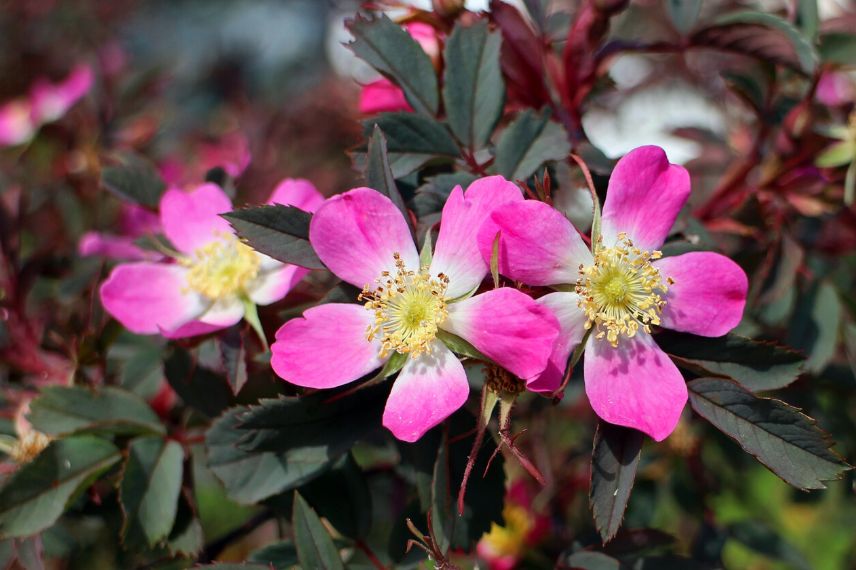
The botanical rose Rosa glauca (or rubrifolia) is an original bush that boasts numerous advantages. It features unusual bluish or purplish foliage, which is adorned from June to July with small single flowers reminiscent of wild roses and coloured in a lovely lilac pink with a bright yellow stamen centre edged in white. After flowering, small, shiny red fruits, which are very decorative, appear. It attracts pollinating insects that visit its flowers and birds that eat its fruits. The bush reaches a height of 2.5 metres. Vigorous and easy to maintain, it has been awarded the “Garden Merit” by the Royal Horticultural Society of England.
In a garden, you can pair Rosa glauca with grasses that will add lightness, such as Pennisetums, lavenders, hardy geraniums, and agapanthuses to create beautiful contrasts with the purplish blue foliage of the rose.
The rose 'Bees Paradise Mango', with small fleshy roses
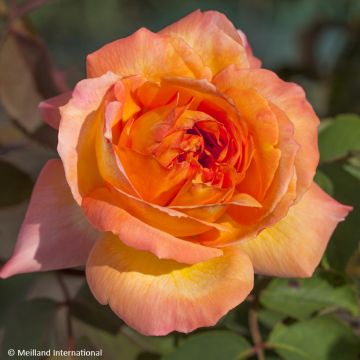
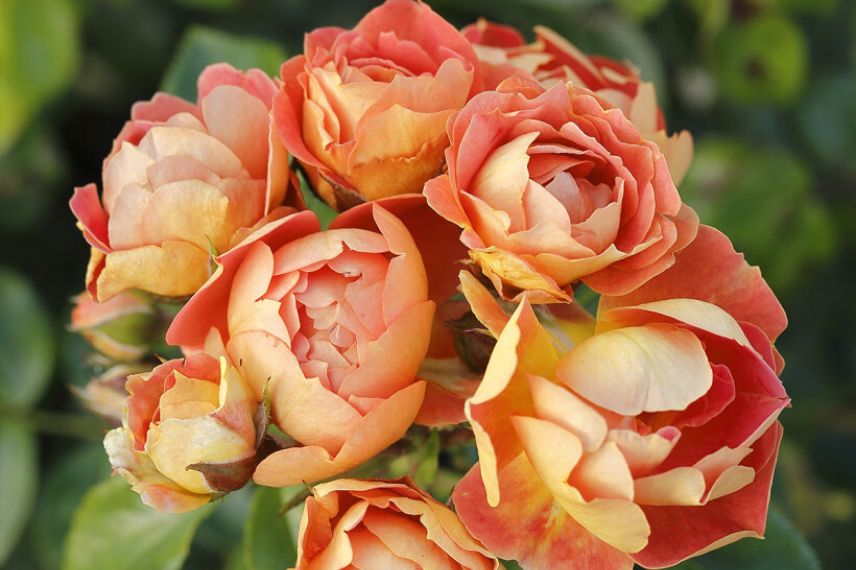
The ‘Bees Paradise Mango’ rose is a small bush, 50 cm tall, with a bushy habit that produces small, semi-double, globular flowers with yellow petals on the outside, which fade and blush slightly over time, and orange on the inside, evolving from coral to orangey pink. It blooms from June to October and its flowers reveal a heart of golden stamens late in the season. The foliage is dark green, smooth, and deciduous. This rose is not susceptible to diseases and shows vigorous growth. With its dense and compact habit, it fits well in borders, rockeries, or slopes in the garden.
With its romantic appearance and vibrant colours, the ‘Bees Paradise Mango’ rose pairs beautifully with dwarf roses like ‘Bordure Blanche’, snapdragons, foxgloves, nepetas, and pinks.
The groundcover rose 'Nozomi', with delicate dog roses
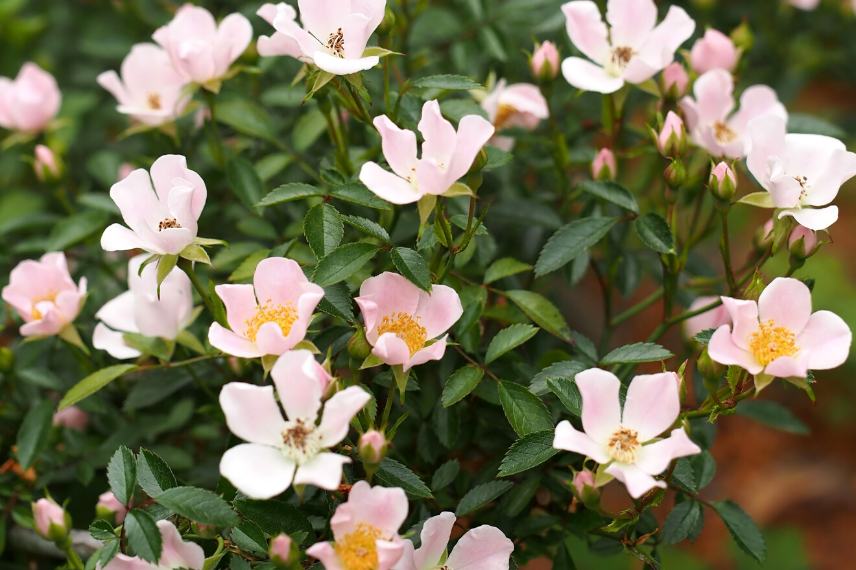
The ‘Nozomi’ groundcover rose is a small rosebush, 35 cm tall, creeping and well-suited for covering slopes and rockeries. On dark green foliage, small flowers of 2 cm in a pearly pinkish white bloom from June to August, resembling delicate dog rose flowers. The flowers open to reveal a heart of golden stamens, followed by small decorative orange fruits. Disease-resistant and vigorous, it can be used as groundcover, as a border for flower beds, or as a miniature climbing plant.
When planting several specimens, it highlights flower beds and gracefully adorns borders. You can pair it with ‘Blue Cloud’ hardy geraniums and lactiflora campanulas for natural and refined scenes. If allowed to grow freely, it forms a carpet of flowering foliage with a very natural appearance and beautifully enhances the front of flowering shrub beds, such as abelias, mock oranges, and shrubby wormwoods.
- Subscribe!
- Contents
Comments