





























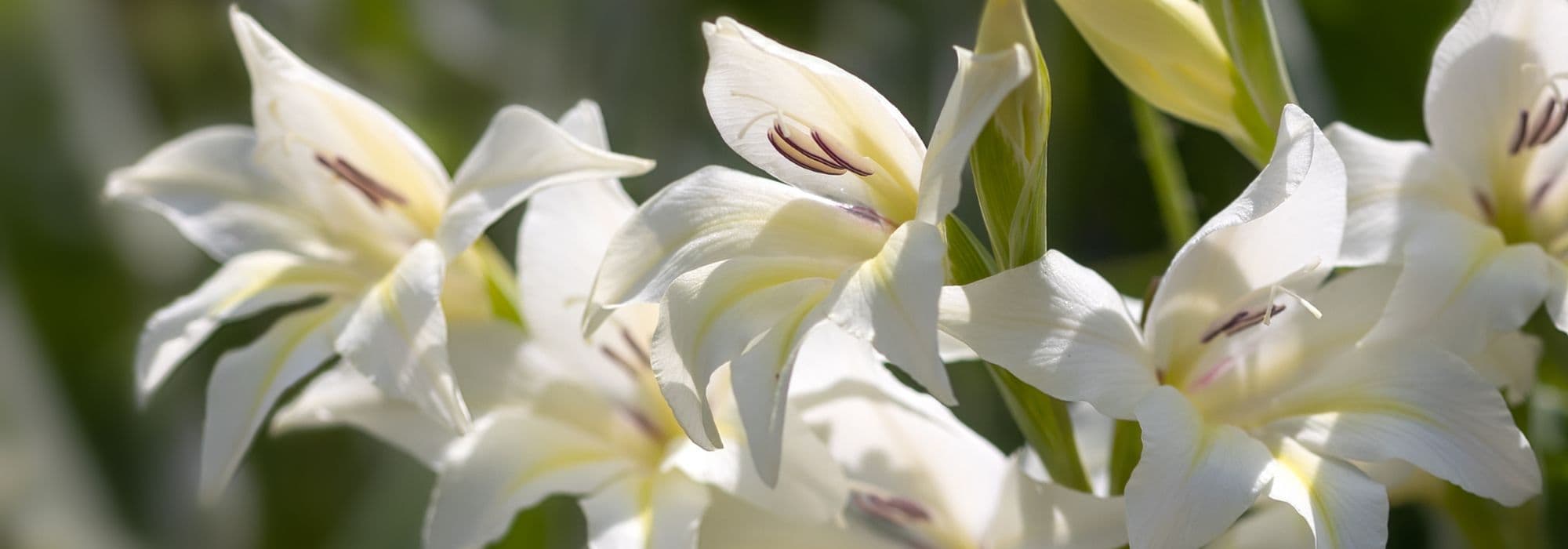
7 white flowered gladioli
to bring brightness to the garden
Contents
Elegant and refined, gladiolus (whose Latin name ‘Gladiolus‘ means “little sword”) is a centrepiece in gardens. Valued for its wide range of colours and tall habit, this summer bulb thrives in well-drained, sunny soil. Known for its resilience and majestic appearance, it adds a unique charm to borders and in bouquets. Its often late flowering extends the enjoyment of the floral display, when other plants have already completed their cycle in the garden. The white-flowered gladiolus, an embodiment of purity and sophistication, is an ideal choice for those looking to bring a touch of understated elegance to their garden.
Discover our selection of 7 white-flowered gladioli, to add splendour and brighten up the garden.

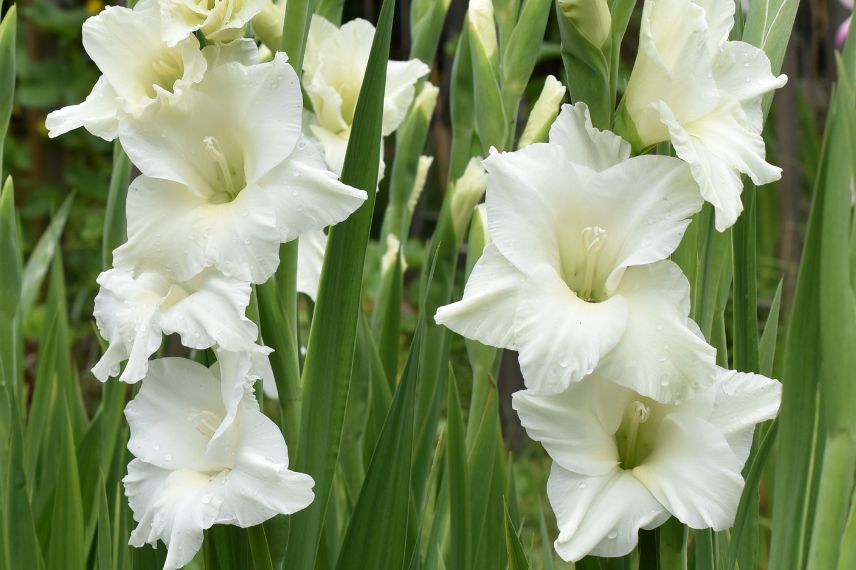
Gladiolus 'White Prosperity'
The Gladiolus or Gladiolus ‘White Prosperity’ is a lovely hybrid variety, highly valued for its sophisticated summer flowering from July to September, depending on the region. Its flowers, of bright pure white, are an ideal choice for cut flower arrangements for special occasions and for enhancing garden borders. Grown in full sun, in rich, fertile, well-drained soil, this white gladiolus develops sturdy stems up to 1.20 m tall, topped with 18 to 20 magnificent funnel-shaped flowers that bloom from the bottom to the top over approximately two weeks. Its broad sword-shaped leaves unfold like a surprising green fan. It is hardy down to -6°C.
The pure whiteness of ‘White Prosperity’ pairs perfectly with the varied colours of a flowering garden. This gladiolus will create a harmonious visual contrast when planted in groups with sages, small grasses, lunarias, baptisias, wallflowers, and forget-me-nots in azure tones.
Read also
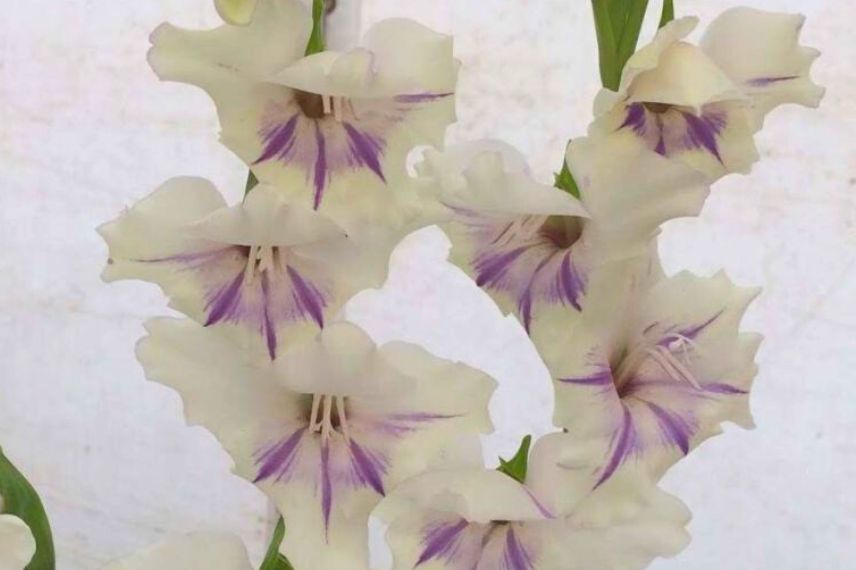
Gladioli: planting, growing and careGladiolus 'Angel Kisses'
The Gladiolus ‘Angel Kisses’ (Gladiolus nanus x primulinus ‘Angel Kisses’) is a rare variety with a modest size, both elegant and graceful, ideal for romantic or wild gardens. Its white flowers, slightly tinged with mauve and streaked with fine purple lines, bloom in the heart of summer, from June to August, on stems measuring 60 to 70 cm, creating a natural and charming display. Its average hardiness down to -6°C will require a thick winter mulch to thrive. It prefers rich, fertile, but well-drained soil in full sun. Its beautiful inflorescence, shaped like a spike bearing around ten buds, resembles that of small orchids.
Plant ‘Angel Kisses’ in a border, alongside forget-me-nots, reseda, and grasses. You can also play with the white of some alstroemerias or columbines for elegance, and add, here and there, silver foliage from wormwood or Stachys byzantina.
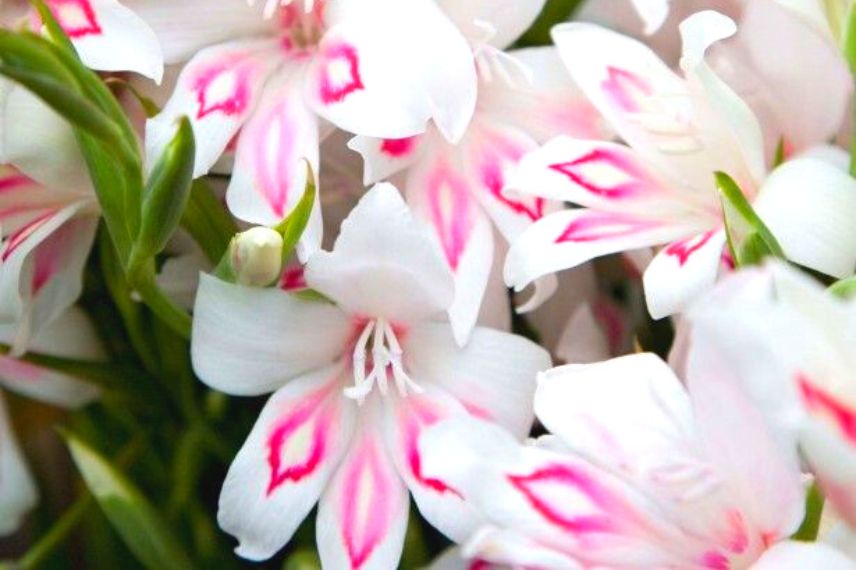
Gladiolus 'Nymph'
The Gladiolus colvillei ‘Nymph’ is a charming dwarf gladiolus, distinguished by its star-shaped white flowers adorned with lovely tear-shaped maculate markings in cherry pink and a pale yellow centre. This delicate flowering is perfect for romantic gardens. It reaches a height of 40 to 50 cm and typically blooms in late spring and early summer, around June to July. It thrives when planted in full sun, in rich, well-drained soil. It particularly enjoys sandy soils but is averse to heavy clay. Like most gladioli, it can withstand frosts down to -6°C once well established and mulched in winter.
The ‘Nymph’ gladiolus pairs beautifully with groundcover roses for a touch of romance, as well as with forget-me-nots, penstemons, and perennial flax to add a rustic touch to the garden.
Read also
Planting GladioliGladiolus 'The Bride'
The Gladiolus colvillei ‘The Bride’ is a beautiful variety of dwarf gladiolus, renowned for its star-shaped white flowers, marked with a hint of pale yellow at the centre and adorned with purple stamens. Its spike-like inflorescences, bearing up to 10 buds, resemble lily flowers but are smaller. Perfect for brightening up the garden! Its modest height, reaching 40 to 45 cm, makes it ideal for the edge or centre of borders. This gladiolus prefers to wait until July to bloom, when flowering becomes rarer in the garden due to the heat. However, it is not afraid of the sun; quite the opposite! It also enjoys rich, well-drained, sandy soil but dislikes heavy clay soils. Its dark green, sword-like leaves form a stunning fan.
The gladiolus ‘The Bride’ offers a delightful floral display for those looking to add a touch of brilliant whiteness and natural elegance to their garden. In a romantic garden, it pairs beautifully with a penstemon and groundcover roses, such as the variety ‘The Fairy’. Its whiteness will contrast beautifully with the blue of forget-me-nots or the bright red and silver foliage of an artemisia in a more natural border.
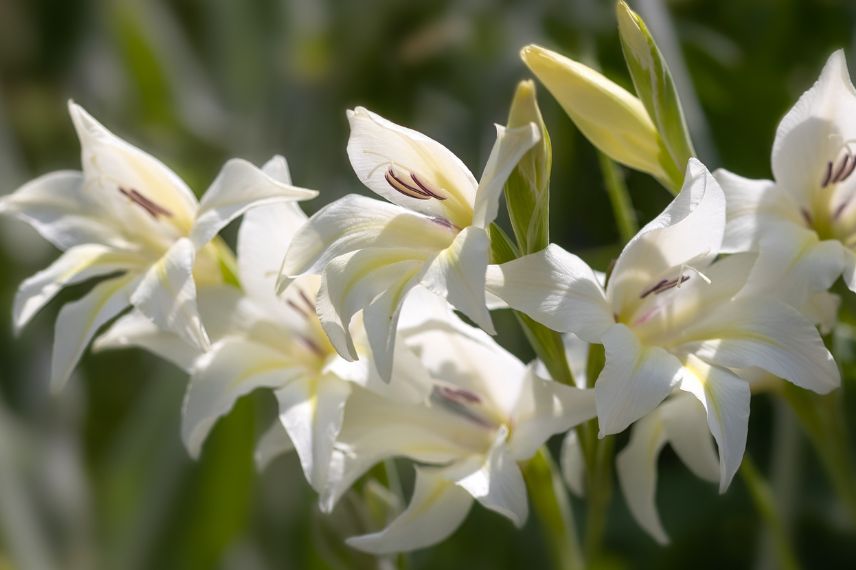
Gladiolus 'Home Coming'
Both elegant and subtly coloured, the Gladiolus ‘Home Coming’ boasts bright white flowers, enhanced by a delicate purple mark at the throat, like a brushstroke. Depending on the light, it can sometimes be difficult to tell if it is pure white or just slightly washed out with pink. A feast for the eyes and an asset for romantic gardens. The flowers, arranged on tall spikes measuring around 85 cm, appear from July to September. They will make a stunning display in borders and bouquets. Like all gladioli, it enjoys a sunny position in rich, well-drained, even sandy soil. This variety is hardy down to -6°C.
To complement the beauty of this gladiolus, plant it alongside white or purple flowering salvias (such as Salvia nemorosa ‘Caradonna’), a monarda, a gypsophila, or the round flowers of white ornamental garlic.
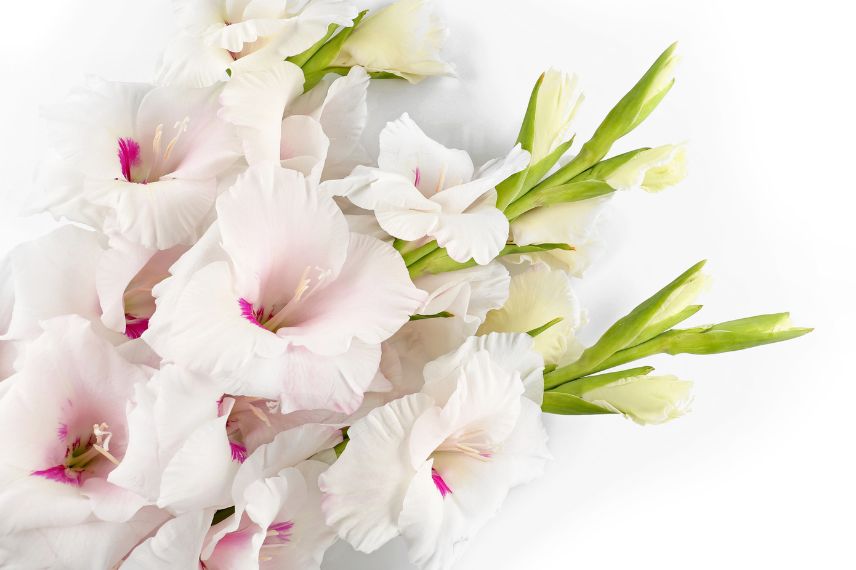
Gladiolus 'Lucky Star'
Don’t be fooled by its name, as the ‘Lucky Star’ variety is an old cultivar of Gladiolus callianthus, which retains its wild elegance. It produces large white flowers in a spike, shaded with yellow and adorned with a lavender pink star-shaped centre, from August to October, adding striking visual charm to any garden. Not to mention its fragrant flowering, perfect for warm late summer and autumn evenings. In addition to being stunning in borders, this bulbous gladiolus provides beautiful cut flowers for creating a bouquet. It features a lovely stature and enough hardiness to withstand temperatures down to -9°C in dry soil. In colder regions, its cultivation is similar to that of other gladioli. Its tall flower stems can reach up to 1.10 m and each carries 8 to 10 flower buds. It should be grown in full sun, in well-drained, rich soil, preferably sandy.
This gladiolus captivates with its exceptional grace and will look wonderful alongside grasses such as Pennisetum, Eragrostis, or Stipa. It is also a perfect choice for slightly wild borders, where it will find its place among unpretentious annuals like cornflowers or nigella.
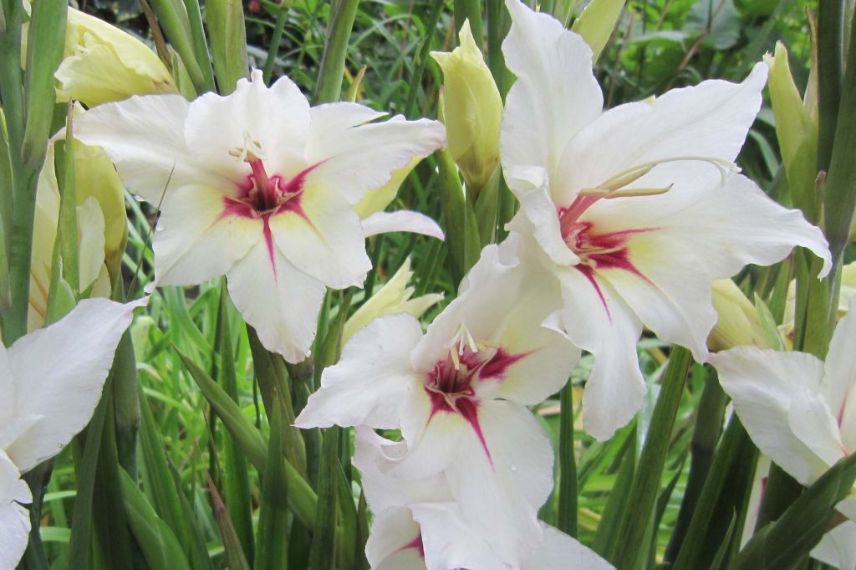
Colville's Gladiolus 'Frozen Sparks'
The Gladiolus colvillei ‘Frozen Sparks’ offers charming floral spikes, reaching 85 cm in height, adorned with large flowers featuring white petals delicately marked with violet-pink on the edges, surrounding a small light green throat. All remarkably splashed with violet pink. This remarkable flowering occurs earlier and lasts longer than that of classic gladioli, typically in late spring or early summer, around June-July. This gladiolus can withstand brief periods of frost down to -8/-10 °C, allowing it to be left in the ground all year round in mild regions, with good drainage and appropriate winter mulching. This beautiful specimen will make a statement in borders, beds, in a large pot, or in a vase. Give it a sunny spot, sheltered from strong winds, in well-drained, rich, and fertile soil.
In a romantic bed, it can be paired with a lovely groundcover rose, such as the variety ‘Nymph’ or ‘Elvira’. For a more naturalistic bed, prefer the simplicity of Echinacea ‘White Swan’ and the light spike flowering of Eremurus robustus.
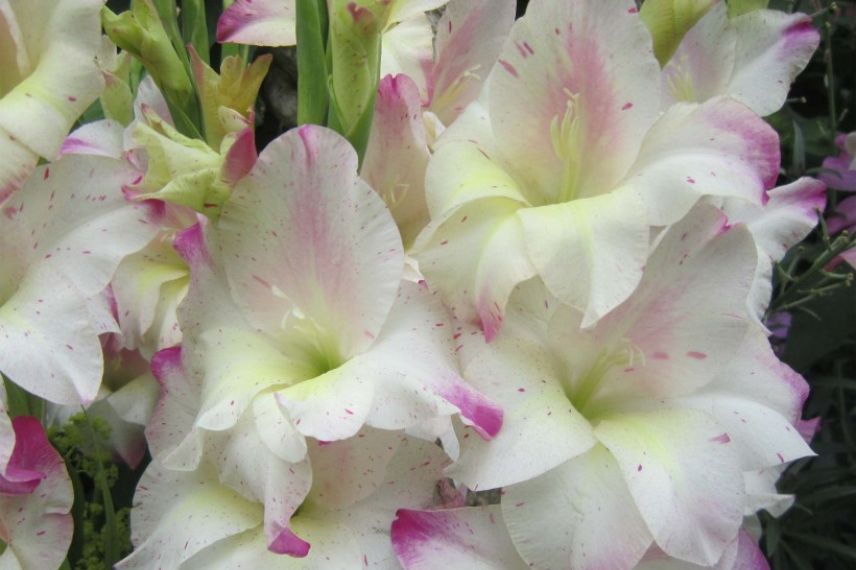
The Abyssinian gladiolus
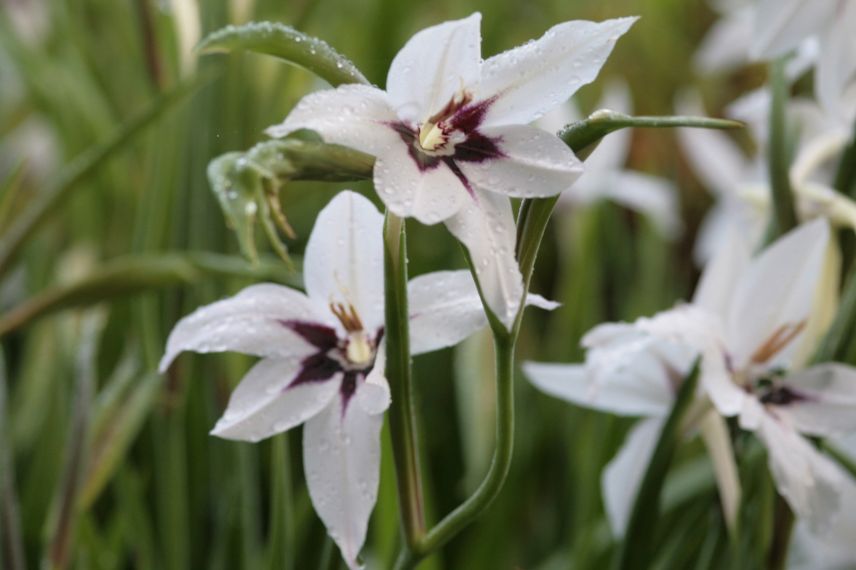
The Abyssinian gladiolus, or Gladiolus callianthus, is an ancient and refined variety that brightens up late summer and autumn with its flowers from August to October, depending on the region. Each stem, approximately 80 cm tall, showcases 8 to 10 delicate funnel-shaped flowers. Graceful, they display a brilliant white colour with a star-shaped purple centre. Their pleasant and sweet fragrance fills the garden during summer and autumn evenings. Not very hardy, this gladiolus can withstand cold down to -5°C. The Gladiolus callianthus thrives in full sun, in fertile, well-drained, and even sandy soil, but sheltered from strong winds. It is also easily grown in pots and will make a stunning bouquet.
In perfect harmony with grasses such as Pennisetum, Eragrostis, or Stipa, as well as with simple annuals such as cornflowers or nigella, it adds a touch of wild romance to any garden. It also dances gracefully alongside Nepeta or hardy geraniums, creating an impressionist tableau of life and colour.
For further reading
- Discover all our varieties of gladiolus.
- To find out everything, browse our sheet on gladioli: planting, growing and maintaining.
- Subscribe!
- Contents

Comments