





























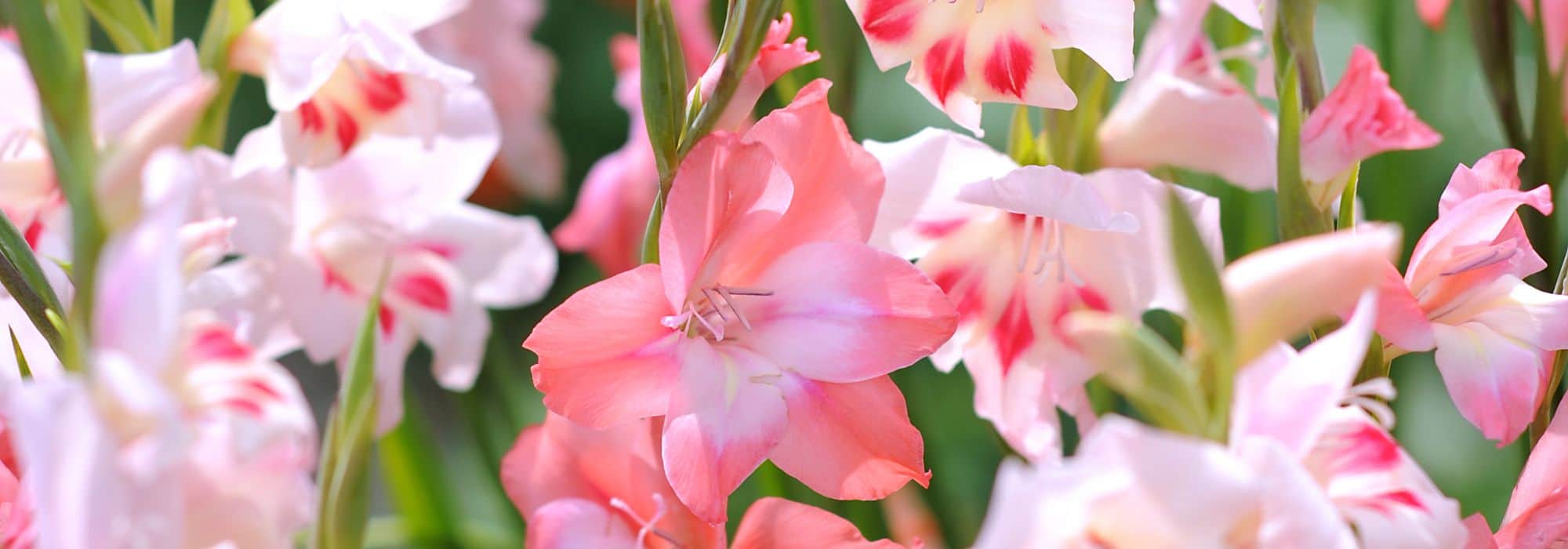
7 pink flowered gladioli
Our selection to bring poetry to the garden
Contents
Gladiolus is a summer bulb, highly valued for its both refined and elegant appearance. Originally named Gladiolus, meaning “little sword” in Latin, it is distinguished by its fan-shaped foliage. With a flowering period generally extending from summer to autumn, gladioli provide a colourful display, prolonging the flower season. They thrive particularly well in full sun, in well-drained soil. Among the many varieties, pink-flowered gladioli add a touch of softness and romance to the garden, whether in borders or pots.
Discover our selection of seven pink-flowered gladioli, varieties to enhance your garden with a note of poetry.

Gladiolus 'Elvive'
The Gladiolus ‘Elvive’ is a variety with very large flowers, in stunning shades of pink and mauve, flowering from July to September. Each flower is a bright lilac pink, with a centre that lightens to a soft mauve tone, all enhanced by a maculate (spot) purplish hue at its heart. With its impressive height reaching 1.10 m, Gladiolus ‘Elvive’ is a must-have, whether in a vase or in your garden. This bulbous plant thrives in fertile, well-drained soil, preferably sandy. Planting in full sun is recommended for optimal flowering.
In a romantic garden, a touch of softness can be added by pairing it with the Gladiolus ‘The Bride’ and the Echinacea ‘White Swan’ for their white flowers. Also consider gypsophila, Campanula lactiflora ‘Loddon Anna’, and don’t forget ground-cover roses, such as ‘Larissa’. And why not the Agapanthus ‘Double Diamond’ or the Delphinium ‘Casablanca’?
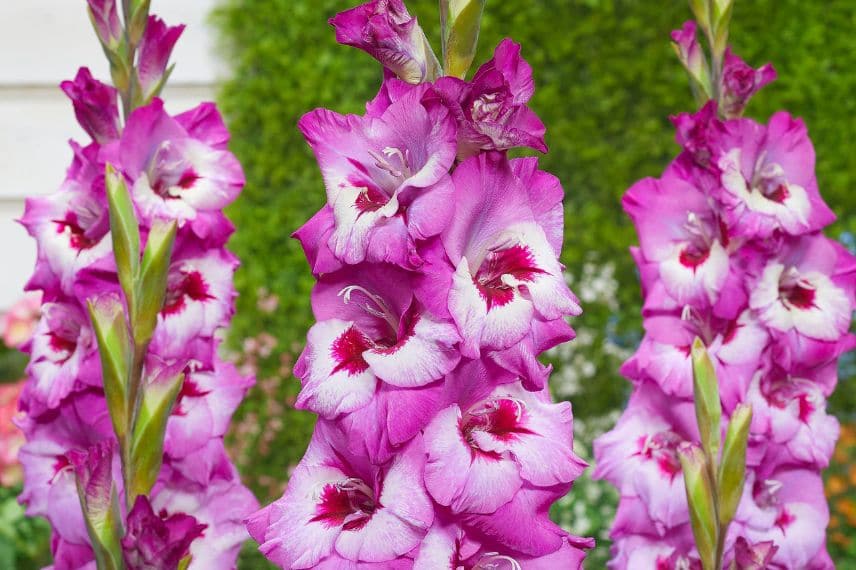
Byzantine Gladiolus 'Whistling Jack'
With a height of around 60 cm in flower, the Byzantine Gladiolus ‘Whistling Jack’ is a charming little tall variety, perfect for wildflower beds and bouquets. Unlike most gladioli, it blooms in late spring, from April to June depending on the region. Beautiful flowers of deep magenta-pink, with changing reflections, sometimes leaning towards purple and red, then emerge in succession. Occasionally, a fine and delicate white line appears in the middle of the petals. It is distinguished by its hardiness, down to -15 °C once well established, allowing it to remain in the ground during winter in most regions, provided it is given rich, well-drained, even sandy soil. The Gladiolus byzantinus ‘Whistling Jack’ particularly enjoys full sun.
Its appearance will blend beautifully into a wildflower bed, alongside low grasses, a perennial sage ‘Mainacht’, a hardy geranium, or nepeta. In a predominantly pink display, it is an essential choice, succeeding the Iris and harmonising with roses.
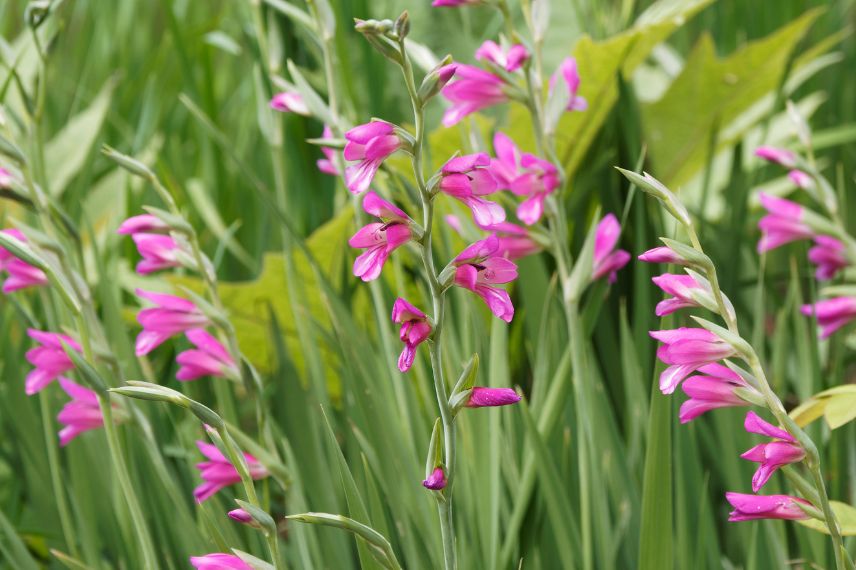
Gladiolus 'Elvira'
The Gladiolus ‘Elvira’ is a charming dwarf variety, measuring around 65 cm in height. It blooms in July, producing elegant floral spikes in pastel shades. The flowers display a soft and subtle pink, with bright pink maculate markings adorning the lower petals. Frost-resistant down to -6°C, this small gladiolus can remain in place outdoors in regions with mild winters, provided it is properly mulched during the winter. Its beauty shines everywhere, whether in a vase, in a border, or in a pot! In open ground, bulbs should be planted in full sun, in rich, well-drained, even sandy soil.
In the garden, Gladiolus colvillei ‘Elvira’ harmoniously pairs with ground cover roses, such as ‘The Fairy‘, small grasses, as well as a penstemon or the blue of forget-me-nots and nepeta.
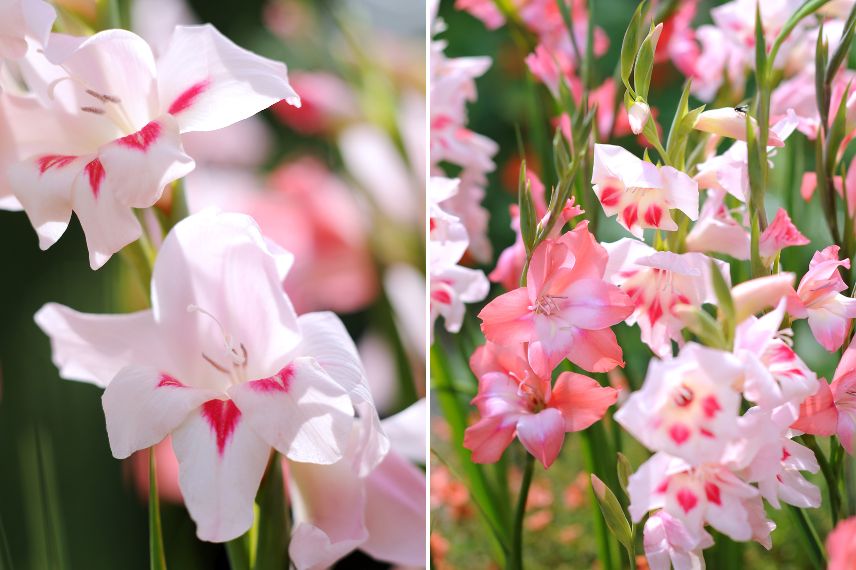
Read also
Planting GladioliGladiolus 'Priscilla'
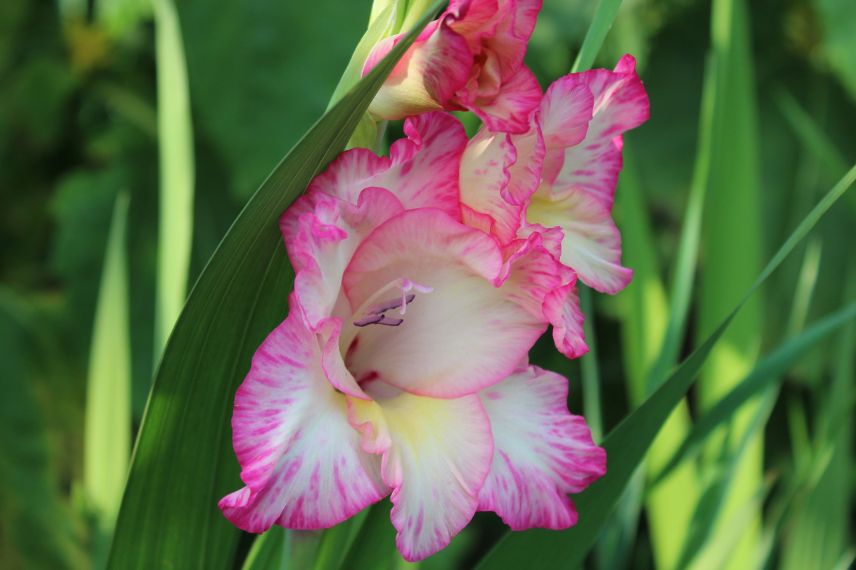
The Gladiolus ‘Priscilla’ stands out with its large flowers featuring frilled petals and a complex colour palette in shades of pink. The white flower is highlighted by a bright pink edge and a yellow-tinged centre. They are borne on sturdy stems, reaching up to 1 metre in height, from July to September depending on the region. Like all hybrid gladioli, this variety thrives in full sun, in rich, fertile, and especially well-drained soil, ideally sandy. Its average hardiness extends to -6°C in winter.
The habit of Gladiolus ‘Priscilla’ is particularly enhanced when paired with plants that have either lush or delicate foliage, which accentuates their generous flowering. For a stunning effect, plant several bulbs together in a border, alongside sages, small grasses, a Baptisia ‘Pink Truffles’, or forget-me-nots for a striking contrast.
Gladiolus 'Charm'
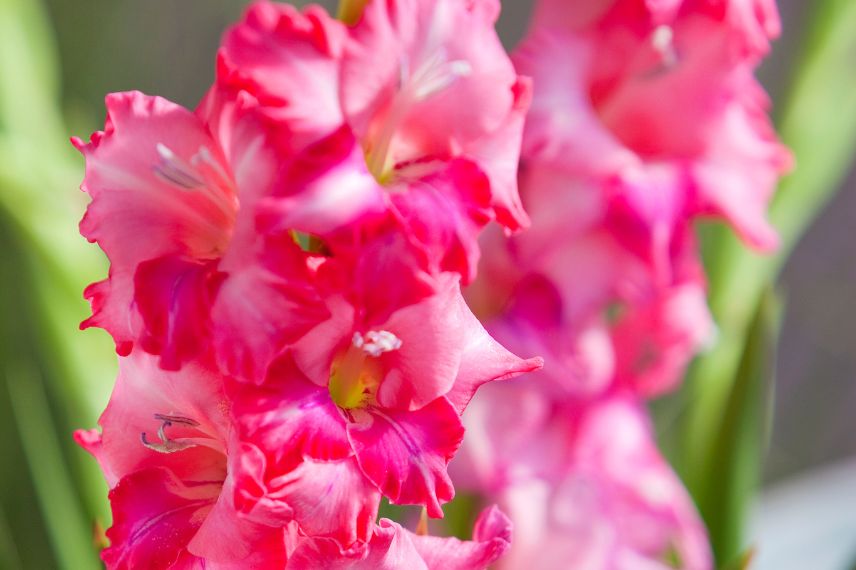
The Gladiolus ‘Charm’ lives up to its name! This hybrid Gladiolus features bright, smaller flowers, revealing two shades of vibrant pink adorned with a remarkable white macule. With an earlier flowering period, from June to August, than its larger counterparts, it produces several flower spikes measuring 60 to 65 cm in height from a single corm. This long flowering period continues for several weeks. This Gladiolus can withstand temperatures down to -12°C with winter protection. The Gladiolus tubergenii ‘Charm’ thrives best when planted in full sun, in fertile, rich, and well-drained soil, particularly sandy and loamy types. Its more natural appearance makes it easy to integrate into perennial or bush plantings. Additionally, it proves to be an excellent option for cut flower arrangements.
To create a romantic atmosphere, pair the Gladiolus ‘Charm’ with old roses, spurge, or perennial sages, harmonising the colour shades. For a finishing touch, add some ornamental grasses, such as Stipa, to your floral arrangement.
Gladiolus 'Adrenaline'
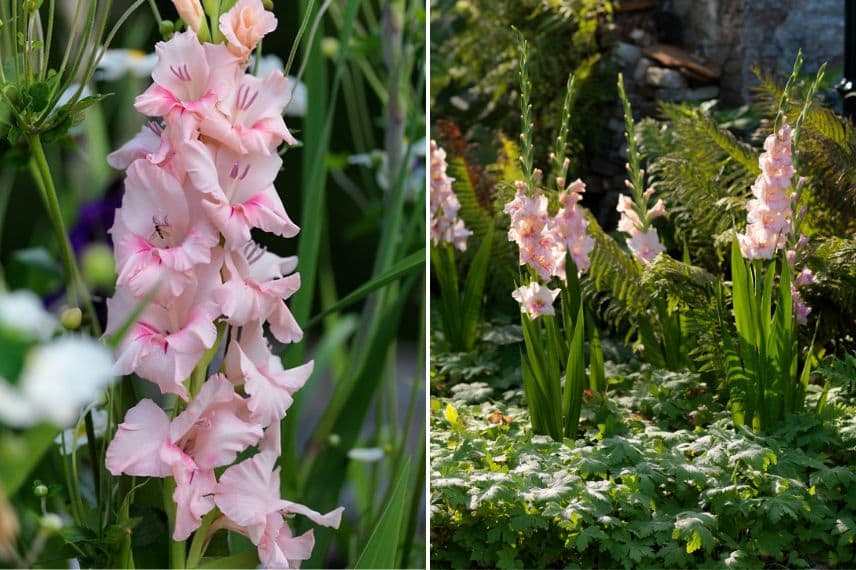
The Gladiolus ‘Adrenaline’ is a stunning variety with large flowers, originating from the United States of America. It is distinguished by its generous spikes of flowers with slightly ruffled petals, in soft shades of candy pink and washed with white, all enhanced by a heart splashed with a more pronounced pink. This adds a touch of softness and poetry to the garden. Visible from afar in borders with its height of 90 cm, this plant blooms for a long time, from July to September, and is ideal for adding a note of verticality to cottage gardens as well as for creating magnificent bouquets. The Gladiolus ‘Adrenaline’ thrives in rich, fertile soils that are well-drained, ideally sandy, and in a sunny position.
Perfect for adding a romantic touch to your floral arrangements, this sublime gladiolus will blend beautifully alongside an old rose or among groups of sage, hardy geraniums, monarda, or forget-me-nots.
Gladiolus 'Dared'
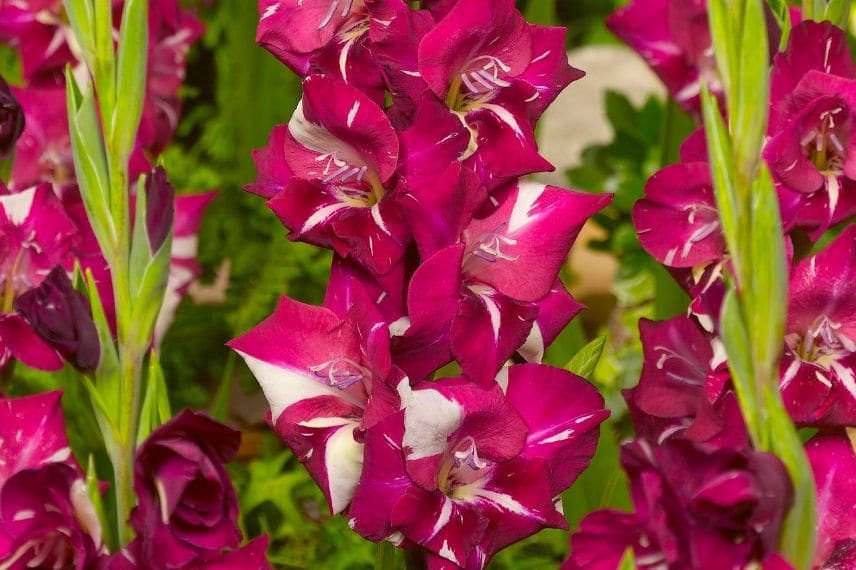
The Gladiolus ‘Dared’ is a stunning variety with large flowers, distinguished within borders by its surprising bicolour shades. Its flowering period, from July to September, reveals splendid flowers with wide, curled petals, in a colour ranging from magenta pink to red-purple, all variegated with white. Its flower spikes, reaching 80 cm, will be perfect in the midst of borders. This remarkable variety, like all hybrid gladioli, prefers rich, fertile, well-drained soils, ideally sandy, as well as full sun exposure. Moderately frost-resistant, it can withstand winter temperatures down to -9°C when well protected by a thick mulch.
Surround it with light flowers in purple, white, pink, or blue to enhance your summer bouquets and borders. Plant the Gladiolus ‘Dared’ in small groups among sages, grasses, monardas, and forget-me-nots.
For further reading
- Discover all our varieties of gladiolus
- To find out everything, browse our guide on gladioli: planting, growing and maintaining.
- Subscribe!
- Contents
Comments