





























7 oregano varieties to discover
Our guidance on choosing the best varieties
Contents
A herbaceous perennial plant in the Lamiaceae family, oregano (Origanum) is recognised for its culinary, aromatic and medicinal virtues. Oregano, also known as wild marjoram, forms a tuft of upright stems that are slightly reddish, bearing small leaves that are often villous and downy, emitting a peppery aroma and a spicy flavour reminiscent of thyme and marjoram. Popular in cooking, oregano is also enjoyed as an infusion or decoction. It also contains essential oils such as thymol or cymol. Nevertheless, it can also be grown for its ornamental value as it bears, from July to October, a multitude of small flowers ranging from purple to white, including pink. These flowers, surrounded by foliose bracts, are particularly melliferous and attract swarms of bees, butterflies and other pollinating insects.
Not particularly demanding, oregano loves rockeries and dry soils where its extensive radicular network enables it to anchor itself firmly. However, it will adapt to all soils, provided they are light, well-aerated and well-drained. By contrast, oregano does not tolerate damp. It is also drought- and cold-tolerant (down to -15°C) and it thrives in pots.
Ready to plant oregano in your vegetable plot or borders? I invite you to discover seven of the best oregano varieties.
For more information: Oregano: sowing, cultivation, harvest

Common oregano (Origanum vulgare) or wild marjoram.
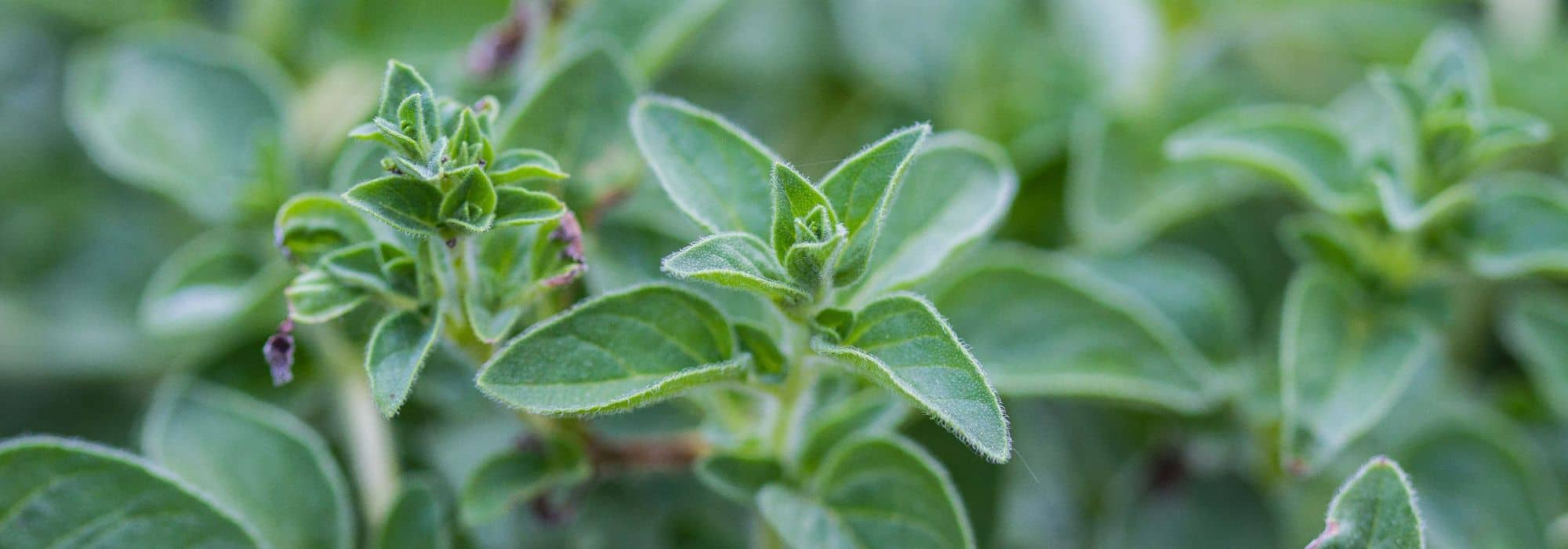
Origanum vulgare is the quintessential aromatic herb in Italy. How could you imagine a pizza without oregano? This oregano, also known by the popular term wild marjoram, forms a very fragrant clump 40 to 70 cm tall and wide. With deciduous foliage, consisting of small round to ovate, velvety leaves, highly aromatic, mid-green. As for the stems, they are generally velvety and glandular. From June–July to September–October, small pink flowers bloom, some with purplish tinges.
The leaves emit a subtle fragrance, ideal for flavouring sauces, pizzas or olive oil.
The oregano seeds are sown in March–April in a sunny spot, sheltered from the wind. It is also possible to plant oregano in pots in spring or autumn.
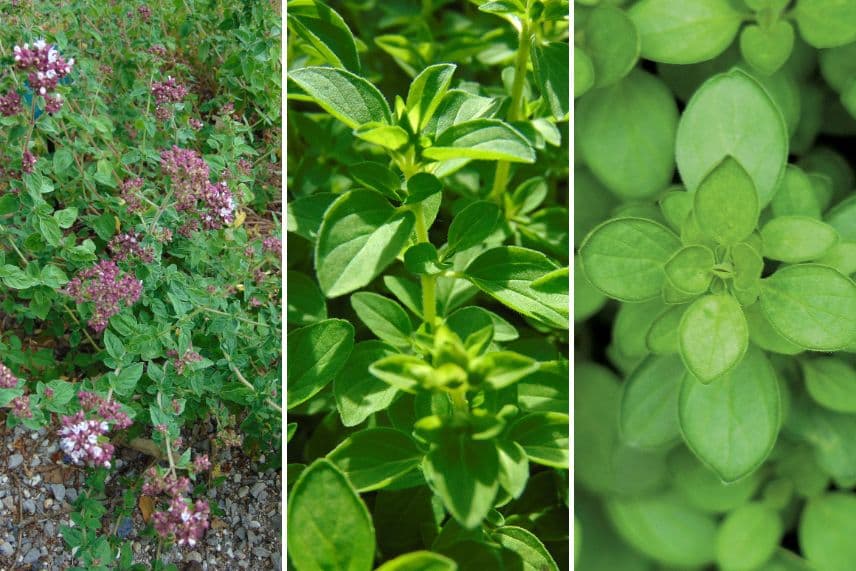
If you wish to grow oregano on a rockery or a bank, opt for Origanum vulgare ‘Compactum’, a groundcover variety that spreads about 40 cm wide with a similar height. Its very dense, compact habit allows it to quickly cover dry, sun-baked soils.
As for the variety Origanum vulgare ‘Hot and Spicy‘, it hardly hides its characteristics: its leaves impart a stronger and more powerful flavour than the standard variety, with very peppery and very spicy notes.
Read also
Oregano: sowing, growing, harvestingOregano with colourful foliage
To add a touch of whimsy to your garden and to your plate, you can also choose to sow or plant oregano varieties with coloured or variegated foliage. They share the same aromatic and medicinal properties as common oregano, with colour to boot! Thus, they can be grown not only in the kitchen garden but also in beds, borders, rockeries or on a bank. There are several varieties, each as interesting as the next:
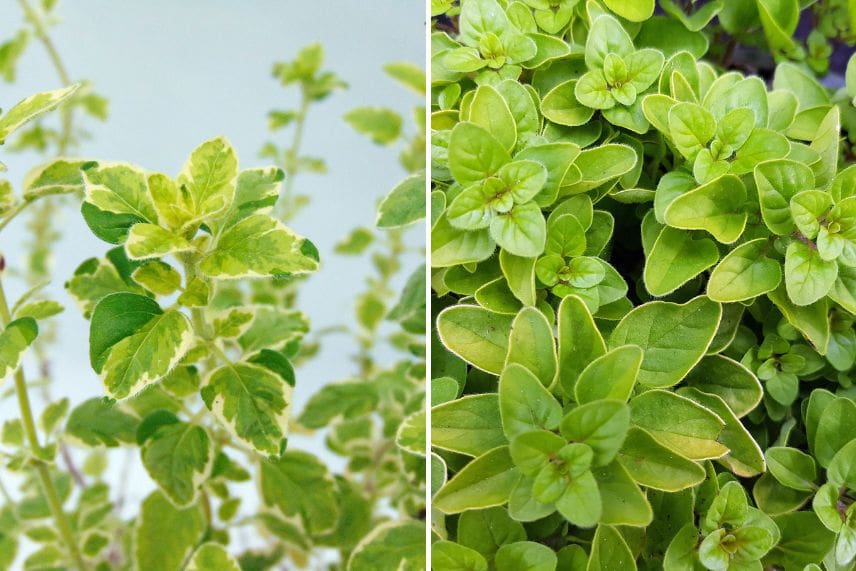
- Origanum vulgare ‘Aureum’: this oregano variety offers bright golden-yellow foliage in spring that becomes chartreuse in midsummer. It also features a tubular pale pink flowering. The flowers are nestled in green bracts tinged with purple-violet. This oregano variety adopts a creeping but non-invasive habit. Fast-growing, it forms a beautifully coloured cushion about 30 cm across in all directions.
- Origanum vulgare ‘Norton Gold’: this horticultural oregano variety, bred from the cross-breeding between Origanum vulgare ‘Aureum’ and Origanum laevigatum, stands out for its small, golden, glossy aromatic leaves. In bright sun, they take coppery tints, shaded with a blue-tinged sheen. In summer, the foliage turns chartreuse green. The flowering is pink. Although aromatic, this foliage cannot be used in cooking. This oregano adopts a rounded, spreading habit, reaching 35–40 cm tall with a width of 50–60 cm.
- Origanum vulgare ‘Thumbles Variety’: this cultivar features foliage more rounded than the other varieties, green-yellow quite bright in spring before turning green in summer. Its flowers are practically white, surrounded by green bracts tinged with pink.
- Origanum vulgare ‘Country Cream’: even more unusual, this variety offers variegated foliage, dark green edged with white to cream-yellow. The young shoots are entirely golden. As for the flowering, it displays a pretty white with a pink tint.
Round-leaved oregano
Origanum rotundifolium ‘Kent Beauty’ is a cultivar, more commonly regarded as an ornamental plant rather than as an aromatic perennial. Yet, these blue-grey leaves are perfectly edible and can be used for their aromatic and culinary qualities.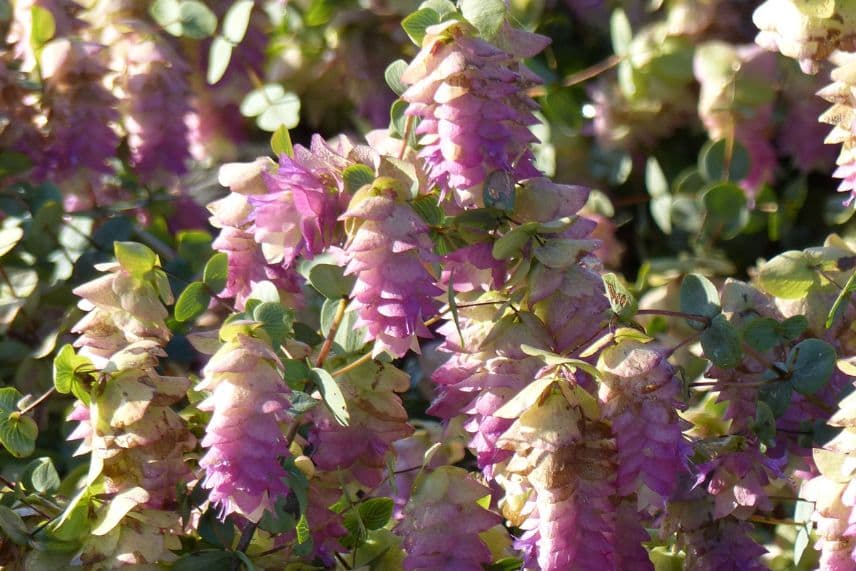
This oregano variety is truly distinguished by its inflorescences resembling bells or pom-poms, composed of bracts displaying a pretty green-cream colour that shifts to a strong pink, and tubular flowers in a very intense mauve. These trailing and highly decorative flowers bloom continuously from June to October to enchant rockeries and slopes, as well as the top of a low wall or a pretty basin on a balcony or terrace. In fact, this oregano variety has a semi-prostrate habit and features arching stems reaching 35 cm to 40 cm in length. The tuft does not exceed 25 cm in height. Hardy to -15°C, this oregano thrives in well-drained soil that tends toward alkaline and is rather poor. It needs full sun, except in regions where the sun’s rays are too intense.
Read also
Growing oregano in potsSmooth-leaved oregano
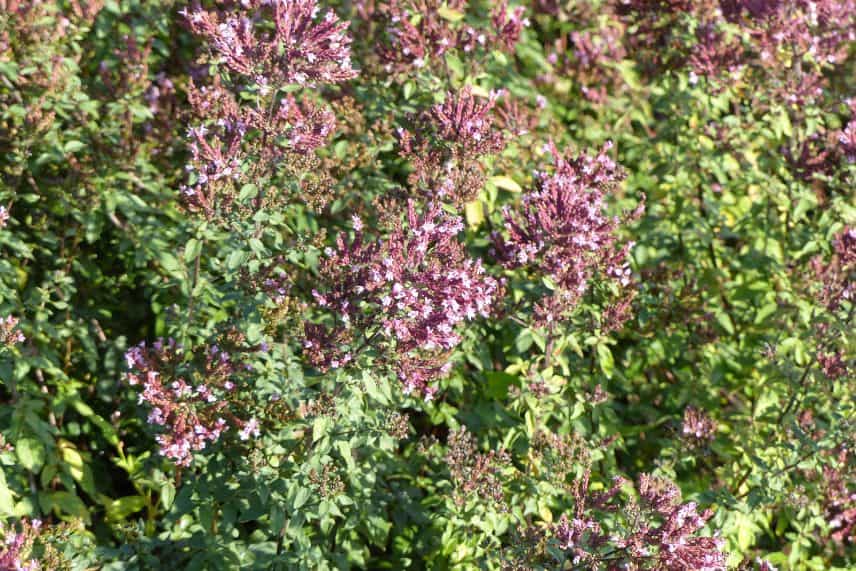
Origanum laevigatum ‘Herrenhausen’ is a smooth-leaved oregano variety, very vigorous and floriferous. Ideal in borders, this oregano forms a handsome, compact, dense and ramified clump, with aromatic foliage blue-tinged with purple in spring and winter. It quickly forms a cushion about 50 cm across, from which, from June to September, a profusion of small flowers emerges, pink-mauve bouquets surrounded by dark purple bracts. These flowers are borne on very fine stems of a pretty reddish-purple hue. During the flowering period, insects regularly alight on them to enjoy their nectariferous and melliferous qualities.
The foliage is highly aromatic. This hardy perennial thrives in dry, warm conditions. It makes an excellent groundcover, perfect in a border or at the front of a perennial border.
Lebanese oregano
Origanum libanoticum is a somewhat less fragrant oregano than other species, mainly used for its ornamental qualities. However, its small leaves are edible and add their aromatic notes to tomato and cucumber salads, or to sauces. This oregano is, moreover, part of Zahtar, a famous spice blend. Called hop-flowered oregano, this perennial offers small pink-purple flowers nestled in green anise bracts. These flowers bloom from June to September on foliage consisting of small heart-shaped leaves, light green with a slightly greyish tint.
It has a spreading, semi-creeping habit, with stems reaching up to 30 cm in height and a spread of 40 cm.
Greek oregano
Origanum heracleoticum is one of the most fragrant oregano varieties, with a strong, spicy flavour, particularly pronounced when the leaves are dried. Its essential oil is also widely used in aromatherapy. It forms a pretty plant with a spreading, carpet-forming habit, with leaves that are bright green and villous, with pointed tips. This oregano also stands out for its white flowering with green bracts, sometimes tinged with purple, highly melliferous, which lasts from May to October.
Garden marjoram
We cannot conclude this overview of the different oregano species without mentioning Origanum majorana, commonly known as garden marjoram or ordinary marjoram. As a close relative of oregano, marjoram has foliage with a more camphoraceous, finer and more volatile scent, generally grey-green. But what really sets it apart is its low hardiness (down to -8°C), which allows it to be grown in the open ground only in the south. Elsewhere, it is grown as an annual plant.
It is also recognisable by its white flowers, grouped in terminal spikes, surrounded by round bracts, which give it the vernacular name of “shell marjoram”.
- Subscribe!
- Contents

Comments