





























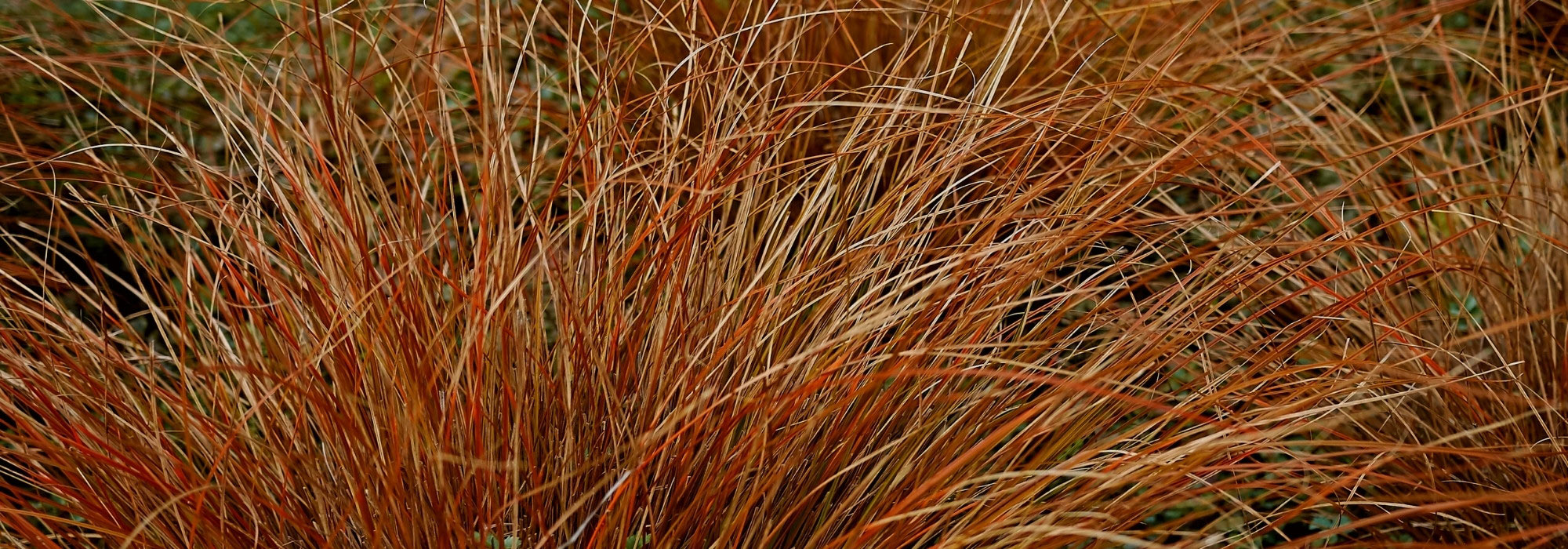
7 Carex to plant in full sun: our selection
The best Carex for a sunny garden
Contents
Carex or sedges are grasses that offer evergreen and fine foliage, ranging in a broad palette of colours from yellow through blue, via green, bronze, or even red. They are valued for their density and the diversity of leaf forms (there are more than 1,500 species of Carex). Slim and graceful, they can be planted just as well in pots as in the ground, and they readily enjoy the sun, provided it is not scorching. If you want to expose your specimens to UV rays, you would do well to discover these seven varieties that thrive particularly in UV light.

The Carex flagellifera
Its leaves, ranging from bronze to gold, are extremely slender, almost whip-like: that is why it is sometimes called the Carex flagellifera ‘flagellate sedge’.
This perennial native to New Zealand is distinguished by its foliage in unusual colours, with a wholly asymmetrical habit – which adds a touch of whimsy to garden decor.
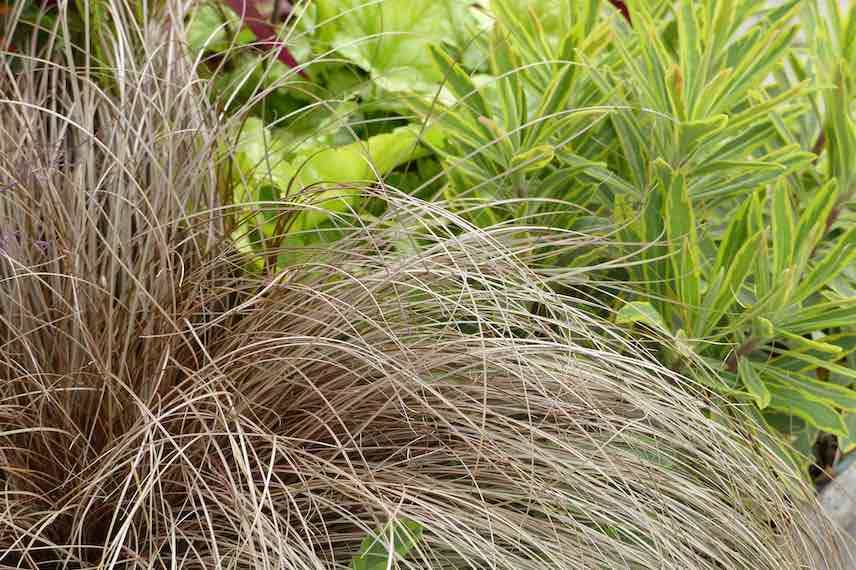
The leaves of this species are evergreen, long and very slender, with a slightly spiralled form. Between spring and summer, their colour is close to bronze, with deeper shades. They become beautifully coppery after the first cool autumn nights.
This sedge is ideal for a grasses garden, on a south-facing slope, in full sun and in well-drained soil. To vary the tones, it can be paired with a Carex oshimensis ‘Evercream’, which should be planted in partial shade.
Read also
Carex: planting, dividing and careCarex testacea ‘Lime Shine’
Throughout spring, Carex testacea ‘Lime Shine’ will change colour. At the end of winter, its leaves are lime green, but they increasingly lean toward orange as sunny days bring summer nearer. Even in winter, this sedge brightens the garden, thanks to its evergreen and dry foliage, slightly blond. All the leaves of this sedge are very long, gramineous, with tips subtly twisted.
This plant has the advantage of being particularly dense, and its trailing habit also adds to its originality. Well placed in sun and planted in well-drained soil that is not too dry in summer, this carex reaches its final size in 4 to 5 years. It forms a very generous clump, measuring about 50 cm high and 40 cm in spread.
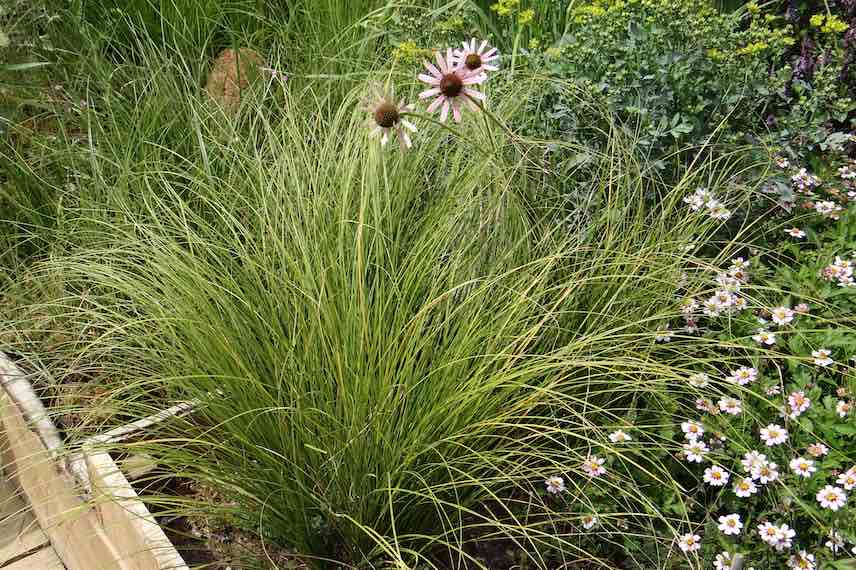
To echo the blonde hue of this sedge, you can plant it in a border also featuring Angel Hair, or Stipa tenifolia. This Central American native plant also enjoys sunny exposures… Gentle breezes cradle its very fine and light blades, bringing movement and life to the garden.
Carex buchananii
Buchanan’s sedge, or Carex buchananii, is an evergreen species whose leaves are distinguished by their brown hue with beautiful coppery reflections. When young, the leaves are about 45 cm long and have a slightly cylindrical shape. They initially stand upright, before drooping as they age over the months. In summer, a few discreet flower spikes may even appear, generally not exceeding 3 cm.
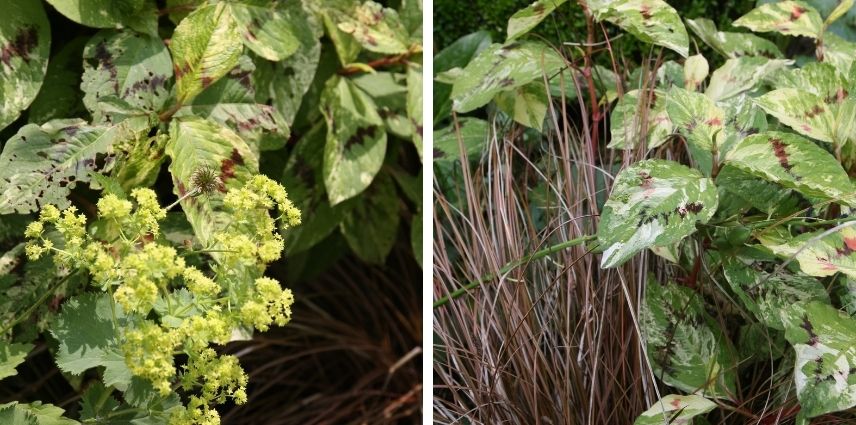
If you want to create a variegated display of carex in the garden, you can pair this species with other varieties that also enjoy sun, such as Carex comans ‘Frosted Curls’. It can also be interesting to plant this carex beside other grasses in similar colours, such as orange sedge, or Carex testacea ‘Prairie Fire’.
Read also
Grasses: which variety to choose?Carex riparia 'Variegata'
This grass thrives in damp soils, which is why Carex riparia ‘Variegata’ is also known as riverbank sedge. Deciduous, its foliage is predominantly green, but it has white and even silvery markings that create a very pretty contrast.
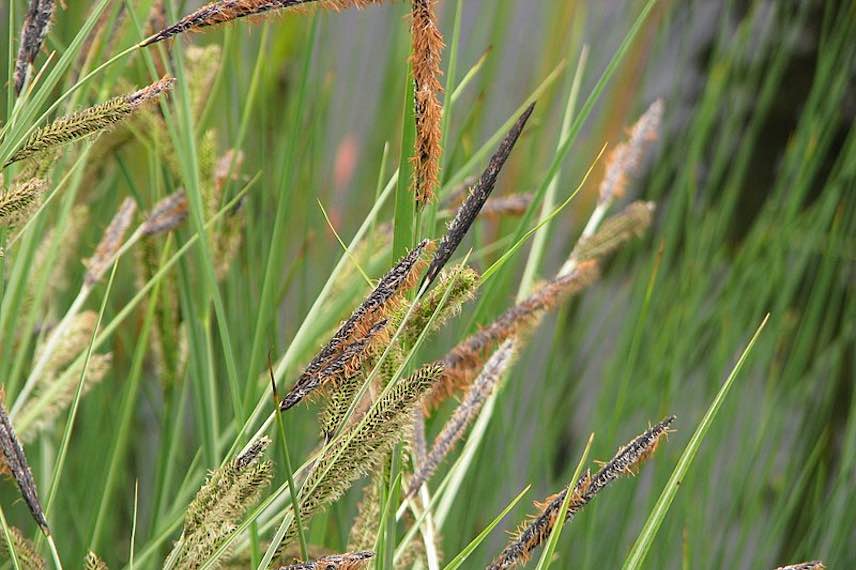
With its rapid growth, riverbank sedge is ideal for brightening a large garden. However, avoid planting it in cramped spaces, to ensure it can spread naturally and freely.
In terms of companions, you can enhance your variegated Carex by adding Carex oshimensis ‘Everest’.
However, when planting this Carex, you should know that this variety requires partial shade, unlike riverbank sedge which prefers full sun.
Carex acutiformis
Unlike many Carex that have few to no flowers, Carex acutiformis stands out with slender green leaves and elegant brown flowers which appear at the end of spring, around May, and stay until July. This plant, which enjoys sun, grows readily near water features, because it also needs moist soil to look its best.
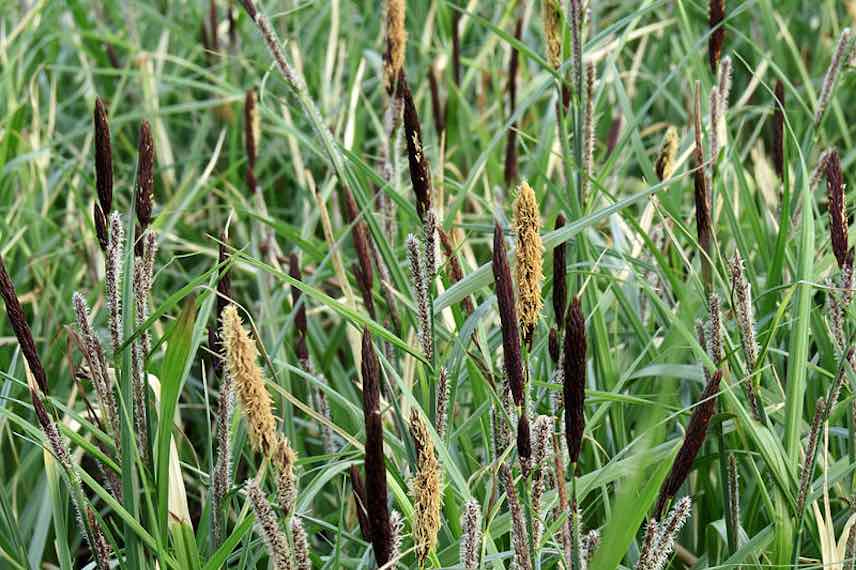
Marsh sedge is often found in the wild around France’s marshes, but it can be planted in the garden, around a water feature or if you live by the coast. If it can be paired with other Carex that require sun, this specimen can also be planted with Acorus gramineus ‘Variegata’ (Japanese sweet flag) or with the river thistle and its beautiful purple flowers.
The Carex × oshimensis 'Feather Falls'
The Carex ‘Feather Falls’ is a hybrid sedge, able to withstand inclement weather, and easy to plant even for those new to gardening. Throughout the year, this ornamental grass captivates with its distinctive geometry and its small beige spikes, particularly welcome in spring.
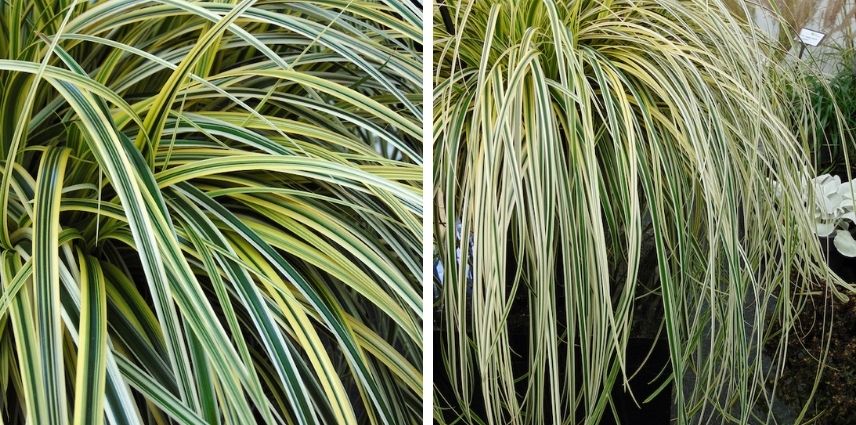
Originating from the Cyperaceae family, this grass-like cousin comes from Japan and was introduced recently, around 2016. It is a species capable of remaining in the garden for many years without specific maintenance, provided it is planted in a sunny position in well-drained humus-bearing soil. This variety pairs well with the Provence cane, in fairly similar colours, and also enjoys sunny conditions.
Carex comans 'Frosted Curls'
In the manner of a slightly wild mane,Carex comans ‘Frosted Curls’ adds beauty to and brings your garden to life with its tufted, dense and trailing habit. Its green, prettily blue-tinged leaves display a more coppery hue in winter—and it withstands frost without any trouble. Originating from New Zealand, this low-maintenance grass enjoys sun and covers soil in a creative way, with an almost wild, very pleasing character.
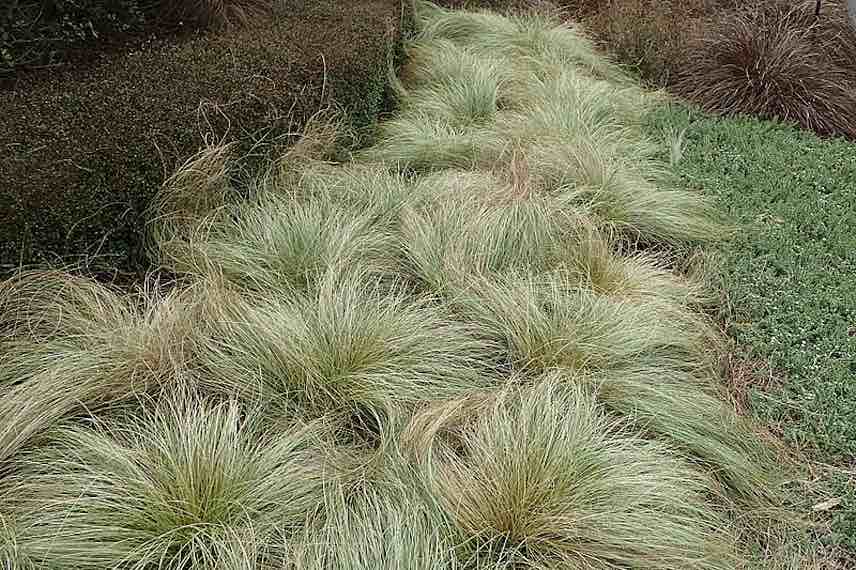
To create a mix of carexes that plays with colours in the garden, blend this species with New Zealand sedge, or Carex comans ‘Bronze Form’. Slightly taller, it will create a lovely contrast with its almost copper-coloured hue.
Further reading
When you see how easy carex are to look after, and how distinctive and attractive they are, you quickly realise it would be a shame to miss out on them in the garden. Always make sure you have full information about the planting conditions and the care requirements of each specimen… Then begin growing them; it remains very accessible for beginners
- Subscribe!
- Contents
Comments