





























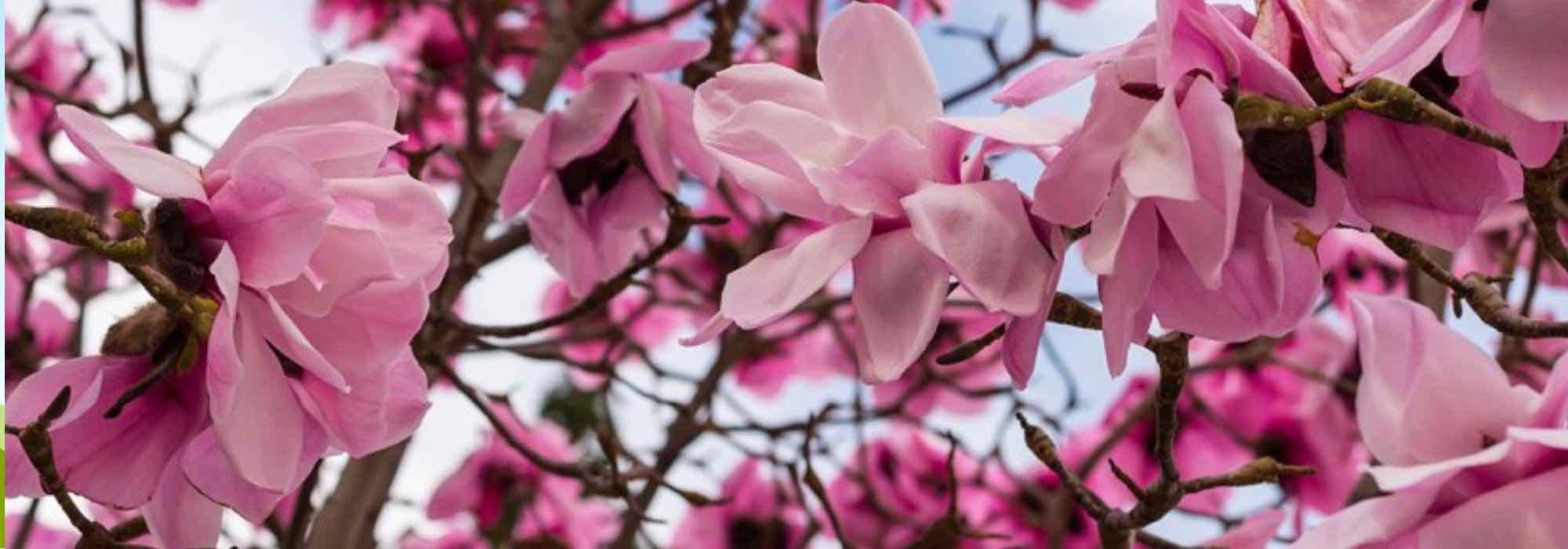
5 spring-flowering magnolias
For a spring-flowering garden
Contents
Originating from Japan, China or Nepal, Magnolias are shrubs with spectacular flowering. The flowers, often fragrant, offer a full range of shapes—from tulip to star, and even candle-shaped—as well as colours: white, purple, pink and yellow. There are spring-flowering Magnolias, which most often have deciduous foliage, and summer-flowering Magnolias, which have evergreen foliage. Hardy, pollution-tolerant and easy to grow, Magnolias thrive in light, cool soil that is neutral to slightly acidic. They prefer full sun or partial shade, sheltered from cold winds. Discover our selection of Spring-flowering Magnolias that will enchant your garden as soon as the warm weather arrives.

Magnolia stellata 'Waterlily', with large white star-shaped flowers
Star Magnolia – Magnolia stellata Waterlily offers, in March and April, flowers reminiscent of large white stars, with a touch of pink at the edge. Slightly scented, they carry notes of lemon and vanilla. They appear before the leaves, which are medium green and turn yellow. The foliage is deciduous. Originating from Japan, Magnolia stellata is the earliest and most floriferous species in the genus. It reaches 2.5 metres in height at maturity, with a width of 2.25 metres. With its rounded, well-branched habit, it is perfect for a small garden or for growing in a container on a terrace. Another advantage is that it flowers from 18 months old.
In a garden, Magnolia stellata Waterlily is particularly striking when planted as a specimen on a lawn. As its foliage is deciduous and its spring flowering, it can be paired with shrubs with staggered flowering, preferring non-calcareous soil. For example, pair it with an autumn Camellia such as Camellia sasanqua ‘Versicolor’ which produces delicate white blooms with pink edges, from October to December. At its feet, you can add summer-flowering bulbs, such as white Arums or Calla lilies – Zantedeschia aethiopica, which produce bright trumpet-shaped flowers from May to August.
Read also
Magnolias: planting, pruning and careMagnolia Iolanthe, with very large pink flowers
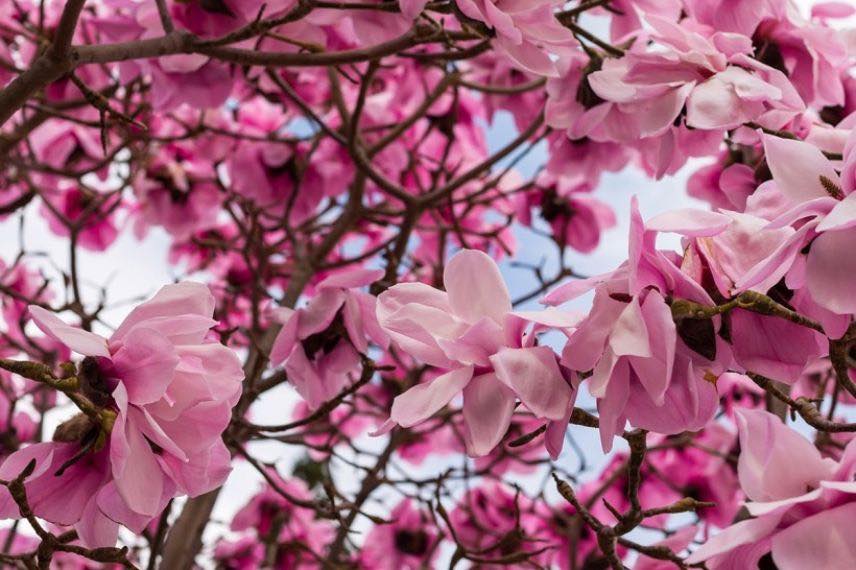
The Magnolia Iolanthe is a variety native to New Zealand and China with spectacular flowering. In April and May, it bears large flowers measuring 25 to 35 cm in diameter in soft shades of lilac pink to cream. They open in cup-shaped form before the appearance of the dark green leaves, which are deciduous. This Magnolia is hardy and favours soil that is rich, cool and well-drained, slightly acidic. At maturity, it reaches a height of 2 metres and a width of 1.6 metres.
In a garden, you can plant it on its own or as a hedge by alternating this variety with other Magnolias, such as the Magnolia grandiflora Little Gem which flowers in summer, offering flowers of pure white, from June to September. The flowers resemble tulips and are set off by evergreen foliage. In this hedge, you can add a Magnolia liliflora Nigra with purple flowers that appear from April to July and also evoke tulips. Also consider the Magnolia soulangeana, which produces magnificent flowers, always in tulip shape, in pastel pink, from April to May.
Kobe Magnolia, a large shrub with rapid growth
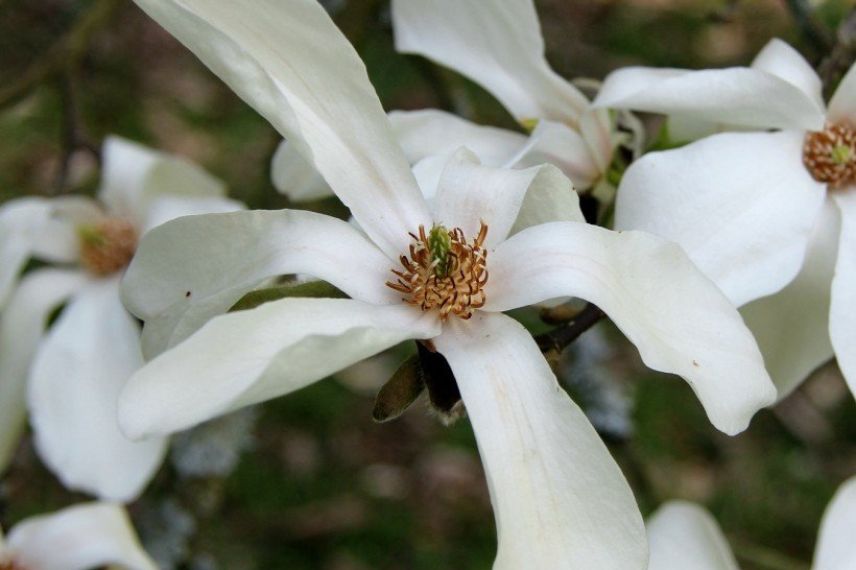
Magnolia kobus is a fast-growing tree that reaches 10 metres tall and 9 metres wide at maturity. It features a pyramidal and ramified habit. From March to April, it is clothed with a multitude of white, cup-shaped flowers sometimes pink-tinged that unfold on the bare branches. The mid-green foliage with a paler underside appears after flowering and is deciduous. Originating from Japan, the Kobe magnolia thrives in cool, rich, well-drained soil. It is one of the few magnolias that tolerate lime. It grows in a sunny or lightly shaded site, sheltered from winds.
In a garden, it can be planted as a specimen on a lawn or accompanied by bulbs and perennials to stagger the flowering times. Think, for example, of Cilician autumn crocuses which bloom in September and October, as well as candlestick primroses – Primula pulverulenta – with delicate carmine-purple flowers that appear in June and July.
Read also
Magnolias: 7 companion planting ideasMagnolia loebneri 'Leonard Messel', pink, fragrant star-shaped blooms
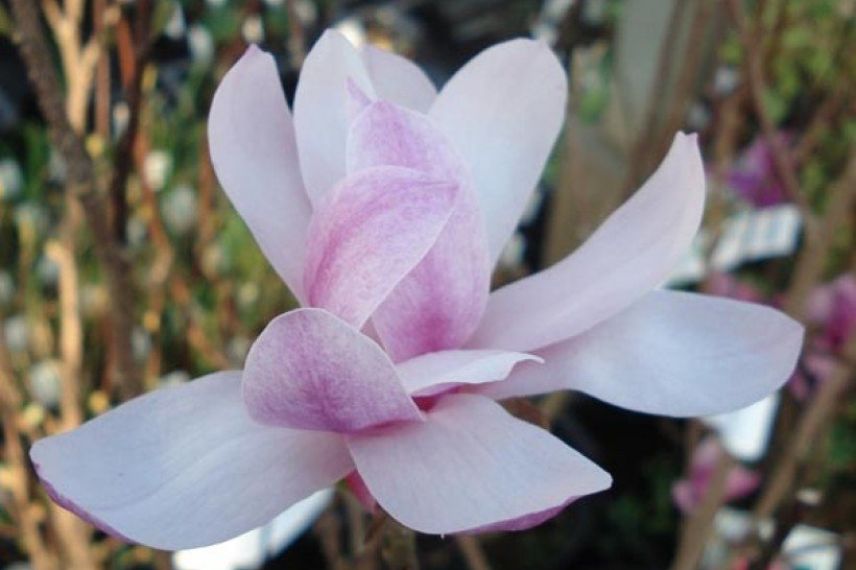
The Magnolia loebneri ‘Leonard Messel’ is a charming shrub with a rounded habit, which bears star-shaped and scented flowers in March and April, before the leaves appear. The flowers are light pink inside and lilac pink outside. Delicate, they are adorned with about a dozen fine petals. The medium green foliage is deciduous. In winter, the bright pink flower buds are very decorative. At maturity, the Magnolia loebneri ‘Leonard Messel’ reaches a height of 2.5 metres with a width of 1.5 metres. Native to Japan, it is the result of a cross-breeding between Magnolia stellata rosea and Magnolia kobus.
In a garden, it can be planted as a specimen plant or alongside evergreen shrubs such as the Japanese Azalea ‘Silver Queen’ with variegated foliage, which bears pink-fuchsia flowers from April to May.
Magnolia Fairy Cream, a long, fragrant flowering
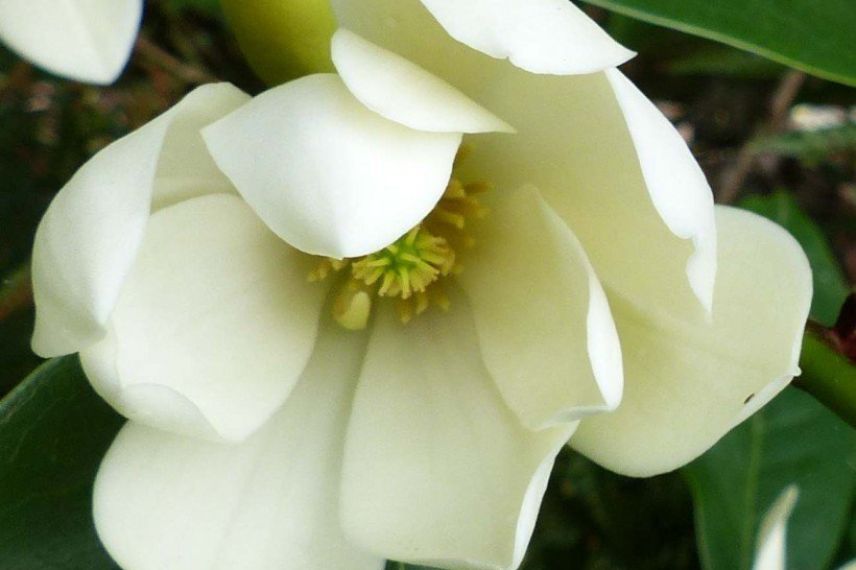
The Magnolia Fairy Cream offers a long fragrant flowering period from March to June. It bears cream-white to very pale yellow flowers, opening in large cup-shaped blooms with lemon, pear and banana scents. The wax-textured petals reveal a central mass of yellow stamens in the form of a granular club-shaped mass. Its dark green, glossy foliage is evergreen. It forms a bush 3 metres tall by 2.5 metres wide, with a rounded habit. Hardy, it prefers slightly acidic, well-drained and cool, moist soil, and a sunny or partial shade site. It can be grown in a garden or in a pot.
On peut marier le Magnolia ‘Fairy Cream’ avec un ou plusieurs Viburnum, tels que le Fragrant Viburnum. Elle offre un feuillage persistant vert lustré, qui devient rouge en automne, et donne des fleurs blanches entre mai et juin.
- Subscribe!
- Contents
Comments