





























5 easy spring bulbs for beginners
Selection of foolproof bulbous plants to brighten up gardens, balconies, or terraces
Contents
Among the hundreds of varieties of spring-flowering bulbs, some are truly astonishingly easy to grow. Once planted, they even have the ability to acclimatise quickly, returning faithfully each year.
For beginner gardeners or those who do not wish to spend too much time caring for their plants, these low-maintenance bulbs will make a lovely impact with minimal effort.
Discover our selection of 5 easy-to-grow spring bulbs!

Daffodils: reliable blooms that brighten up spring
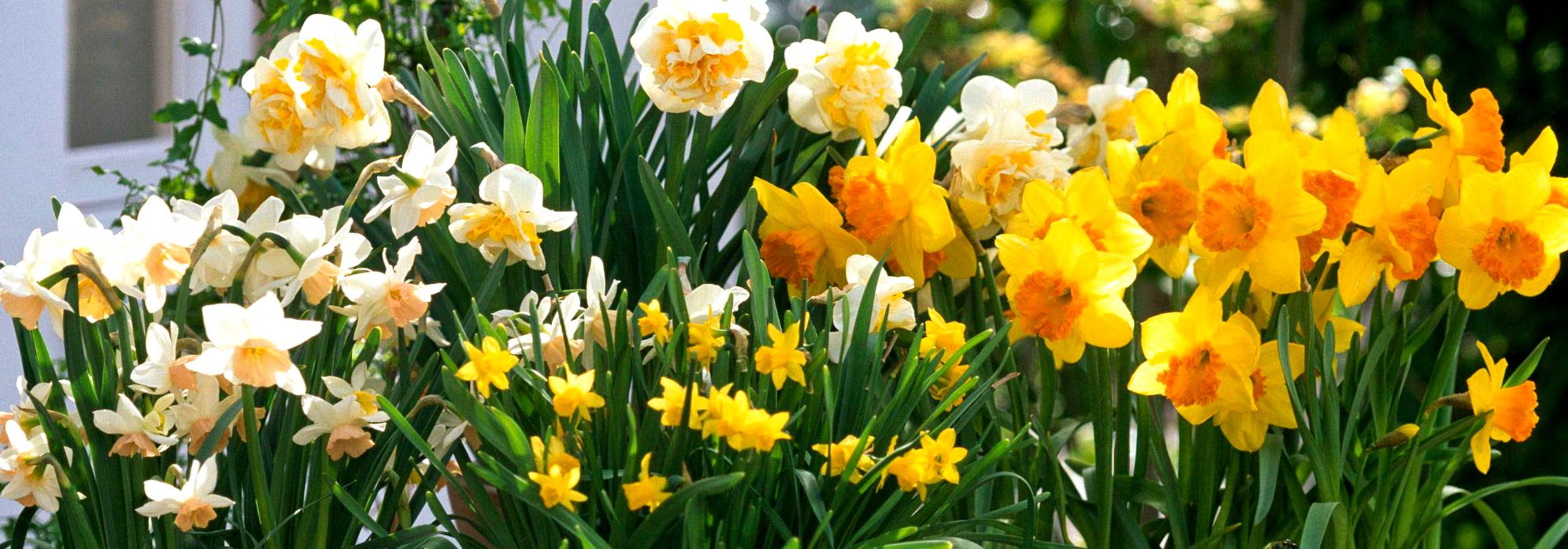
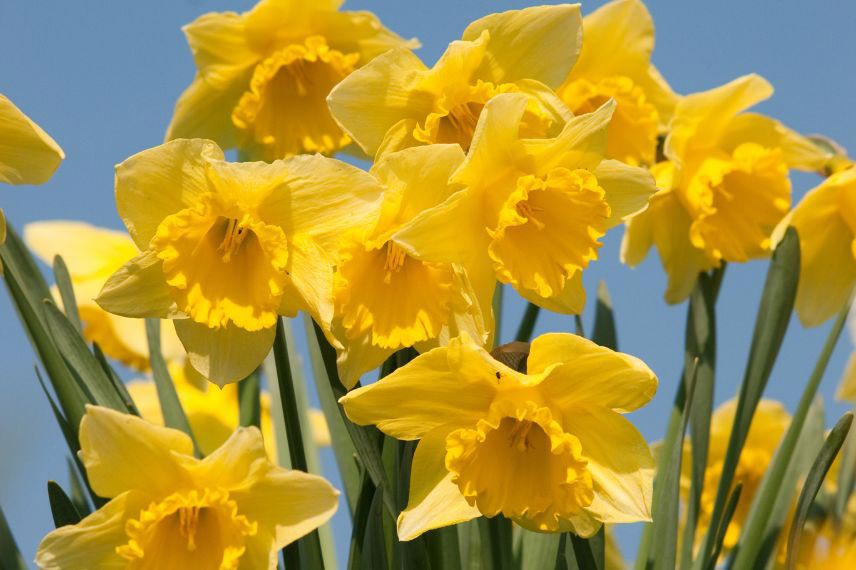
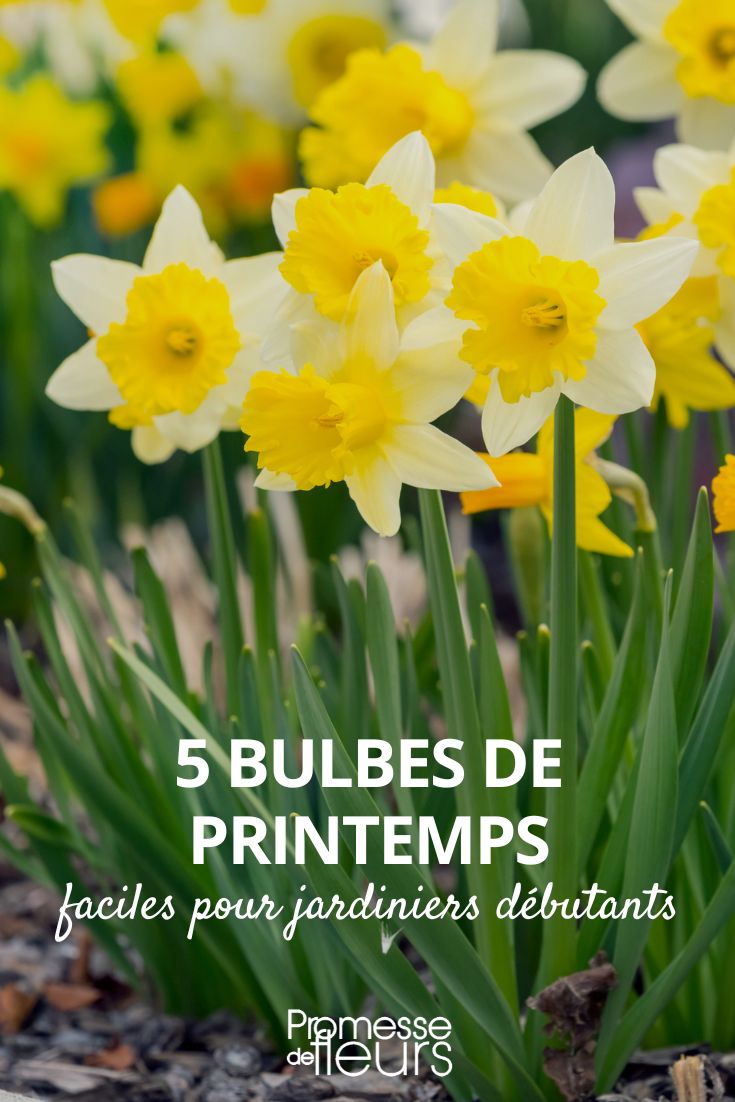
Among spring bulbs, daffodils or jonquils are certainly among the most popular. They sometimes reveal themselves even before the end of winter, as early as February, while others bloom until May-June, just before the first summer heat.
Very bright, these bulbous plants reward us with flowers in shades of white, yellow, or orange, either monochrome or bicolour. The flowers can be single, double, trumpet-shaped, pom-pom, or orchid-like, natural or highly sophisticated. In fact, there are hundreds of varieties to suit all tastes! Some cultivars are even delicately scented, such as ‘Avalanche’ or ‘Rose of May’, perfect for creating beautiful spring bouquets.
In terms of height, the tallest varieties reach about fifty centimetres, while dwarf daffodils or mini daffodils do not exceed 20 cm.
Daffodils are easy to grow and robust bulbous plants, not fearing cold or diseases. They can be grown in full sun or partial shade. In the garden, they easily find their place in beds, borders, at the foot of deciduous trees, or to brighten up a rather plain lawn. Our bulbs will also thrive very well in pots or planters to brighten up terraces, balconies, and window sills.
Low-maintenance plants, daffodils are capable of returning tirelessly each year without human intervention. They are indeed among those plants that naturalise effortlessly in the garden, easily acclimatising to their environment.
To learn more:
Read also
Spring bulbs: 6 nice pairing ideasMuscari: adorable blue or white spring clusters
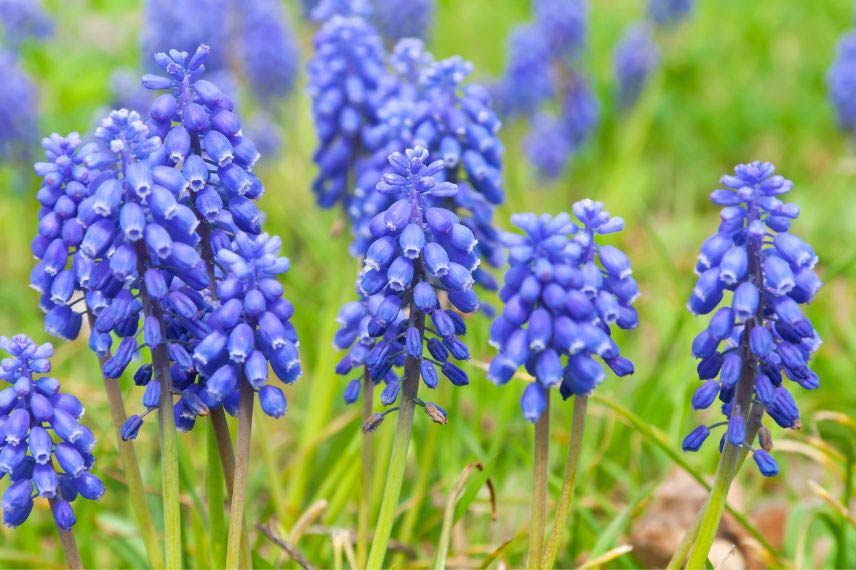
Other symbols of spring’s arrival: the muscari! These are must-haves that easily invite themselves into the garden. Very simple to naturalise, they multiply quickly and generally return by themselves each year, gradually forming beautiful, vibrant carpets. The flowering, often fragrant, occurs between March and May.
Muscari resemble mini hyacinths, with their upright clusters of flowers, made up of tightly packed little bells. Some varieties stand out with their double flowers in plumes (Muscari comosum ‘Plumosum’) or floret-like flowers reminiscent of broccoli (Muscari armeniacum ‘Fantasy Creation’). In terms of colour, intense blue-violet and white are the most common, but there are also pink cultivars (‘Pink Sunrise’) or bicolours (the Muscari latifolium with its dark purple clusters topped with blue flowers). More surprisingly, the Muscari macrocarpum ‘Golden fragrance’ produces brownish-purple buds, revealing yellow flowers at maturity, which fade to pink-orange.
Measuring approximately 15 to 60 cm, muscari should be planted in groups to create fragrant flowering carpets, at the front of a flower bed, in light woodland, in rockeries, or in pots. They can also be suitable for indoor cultivation.
Hardy and low-maintenance, tolerating both sun and partial shade: these are truly easy-going and foolproof bulbs.
To learn more:
Discover other Spring bulbs
View all →
Available in 1 sizes
Available in 1 sizes
Available in 1 sizes
Available in 1 sizes
Available in 1 sizes
Available in 2 sizes
Available in 1 sizes
Available in 1 sizes
Available in 1 sizes
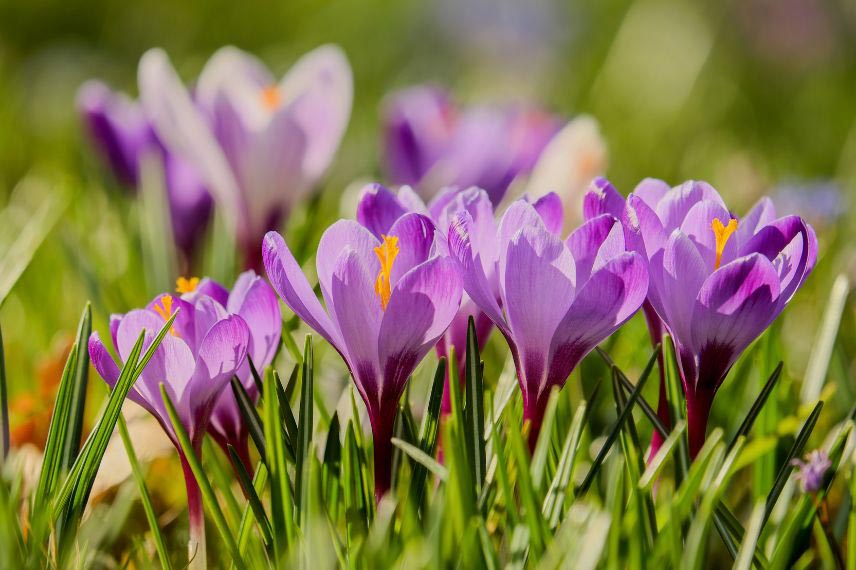
Crocuses: one of the first splashes of colour at the end of winter
Crocus is one of the first bulbs to show the tips of its petals at the end of winter. Often as early as February, it unveils delicate flowers in a beautiful palette of colours: white, orange, yellow, purple, blue, and even pink. Their orange stamen heart adds a bright and contrasting touch to these small spring bulbs.
Botanical crocuses or Crocus chrysanthus are certainly the most popular. On the other hand, Crocus vernus or “Mammoth” (‘Grand Jaune’, ‘Jeanne d’Arc’) are later varieties that reveal themselves in March-April, prized for their large flowers.
Our favourite varieties? The Crocus sieberi ‘Hubert Edelstein’, a bicolour cultivar with small flowers blending white and purple, or ‘Orange Monarch’ for its stunning bright orange flowering striped with purple-black.
Measuring only between 8 and 15 cm, crocuses fit in anywhere, in full sun or partial shade. They will create splashes of colour or bright carpets, brighten up rockeries and borders, and serve to create delightful flowering pots.
Hardy and disease-resistant, the crocus requires no maintenance. It only needs well-drained soil (that does not retain water), allowing it to acclimatise and develop quickly over the years. An ideal bulb for beginners!
To learn more:
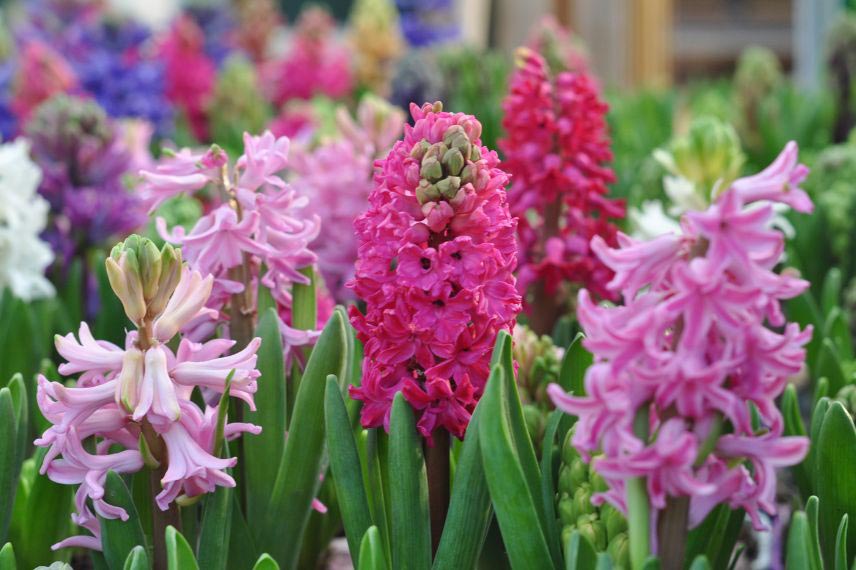
Hyacinths: large, fragrant bulbs easy to care
Hyacinths or hyacinths are not without their advantages. They bloom early, usually before the end of winter in February for some, revealing magnificent clusters of star-shaped flowers with a powerful fragrance.
They offer a multitude of colours, ranging from delicate pure white (‘Multiflora White’, ‘Carnegie’) to a dazzling bright pink (‘Jan Bos’). More surprisingly, the hyacinth ‘Dark Dimension’ is striking with its dark, intense black-purple flowers.
But it is also their diverse uses that make them particularly appreciated bulbs. In pots or in the garden, at the front of a border, in rockeries or along pathways, they create beautiful, bright, and fragrant spring scenes. They are easy bulbs that will thrive even indoors. During the Christmas season, they are often forced to bloom earlier, creating lovely decorative pots.
Not very demanding, quite hardy (down to about -15 °C), hyacinths enjoy sunny or slightly shaded locations. Outdoors, they will return year after year with ease.
To learn more:
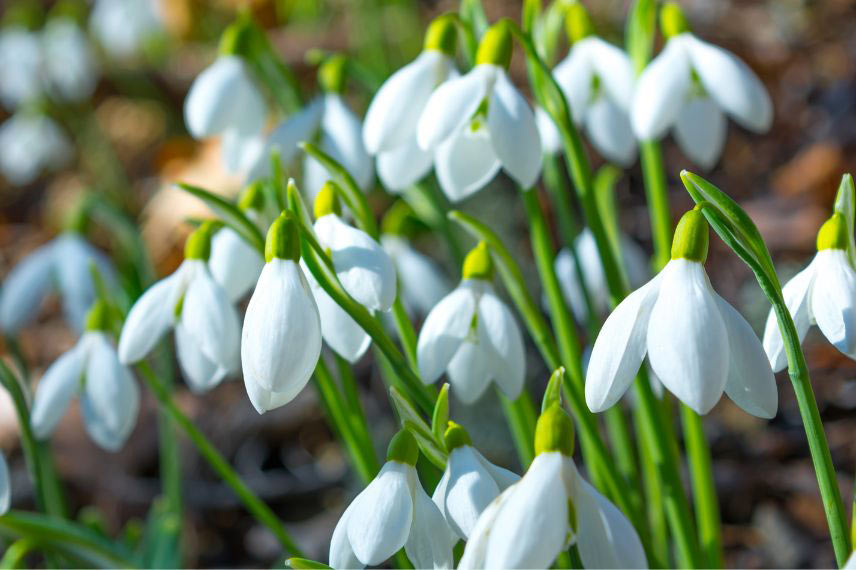
Snowdrops: small maculate flowers without constraints
These are adorable and delicate little flowers heralding the end of the cold season: snowdrops or Galanthus! They bloom early, sometimes as soon as January and even under the snow, for about 3 weeks.
Airy and refined, the flowers form small bell-shaped blooms with a pendulous habit. They can be single (Galanthus elwesii, Galanthus nivalis) or double (Galanthus nivalis ‘Dionysus’, ‘Flore Pleno’). The colour, a beautiful pure white, is sometimes accented with a touch of green, as seen in ‘Viridi-Apice’.
Easy to grow, hardy, and low-maintenance, this bulb naturalises very easily in the garden. It will generously multiply over time, creating beautiful almost immaculate carpets.
Plant it in containers to create flowering pots, or in the garden to dress the base of deciduous trees, define a border, or flower the foreground of a bed.
To learn more:
- Subscribe!
- Contents
Comments