





























10 unknown edible berries
Our selection of original bushes and fruit trees
Contents
Hawthorn, blackthorn, dog rose or elder: many trees and bushes offer edible berries that are not commonly consumed but deserve to be better known. Especially since they are often excellent for health, due to their vitamin and antioxidant content. Some can be enjoyed raw, as they are, while others can be used to make delicious jams, jellies, compotes, syrups, or liqueurs. They are perfect for discovering new flavours and surprising your guests with dishes or preparations that are out of the ordinary! These bushes will allow you to create an original fruit hedge, accompany more common fruit trees in an orchard, or simply enhance your garden. In addition to being edible, these berries are sometimes very decorative, bringing colour to the garden once the flowering is over. Discover our selection of 10 little-known berries!
Feel free to also check out our entire range of original and exotic fruit trees.

Hip
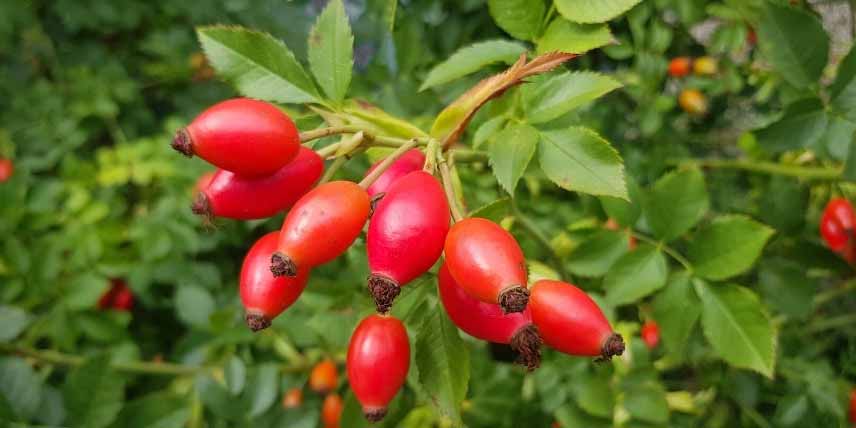
Hips are the fruits of the dog rose (Rosa canina). They are also known as “scratching bottoms” because they contain urticating hairs. To consume them, one must open them and remove these hairs, making their preparation tedious. They are actually pseudocarps, resulting from the swelling of the floral receptacle. They are fleshy, oval, bright red, and shiny, measuring between 1.5 cm and 2.5 cm long. They ripen in autumn, around October-November. It is best to pick them after the first frosts, once they are over-ripe. They are very high in vitamin C, as well as minerals, trace elements, and antioxidants. They are acidic and astringent when raw, which is why they are generally consumed cooked, in jams, coulis, infusions, or decoctions.
Discover our tutorials “How to dry your own hips?” and “How to make rose hip jam?”
Read also
Growing dogwood for its fruitsBlackthorns
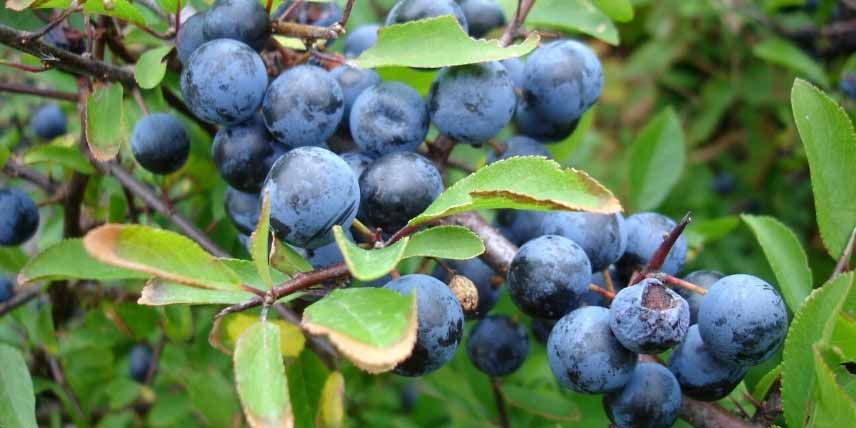
These are the fruits of the blackthorn (Prunus spinosa), also known as sloe, a spiny bush that grows wild in France, along edges, in woods, hedges, and fallow land. It produces beautiful white flowers in early spring, followed in autumn by the appearance of dark blue drupes, covered with a light blue bloom. They measure 1 to 1.5 cm in diameter and are highly appreciated by birds. Astringent and acidic, the first frosts are awaited for harvesting, as they then become sweeter. Sloes are used to make liqueur, jams, compotes, and tarts.
Hawthorn haws
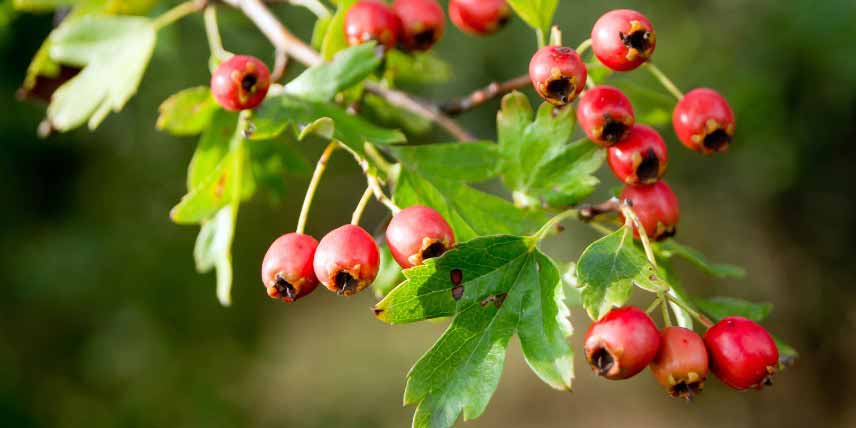
Hawthorn haws are the fruits of the hawthorn (Crataegus monogyna and Crataegus laevigata). Like those of the wild rose, they result from the swelling of the floral receptacle. They are round, fleshy, and resemble mini apples, with a bright red colour. Haws are somewhat bland and mealy when eaten raw, but are enjoyed in jams or jellies, for example, mixed with other fruits like raspberries. Harvesting takes place from September until the first frosts. Haws have medicinal properties: they are hypotensive, aid digestion, and help combat hypertension.
To learn more about hawthorn cultivation, check our complete guide: “Hawthorn, Crataegus: planting, pruning, care”
Elderberries
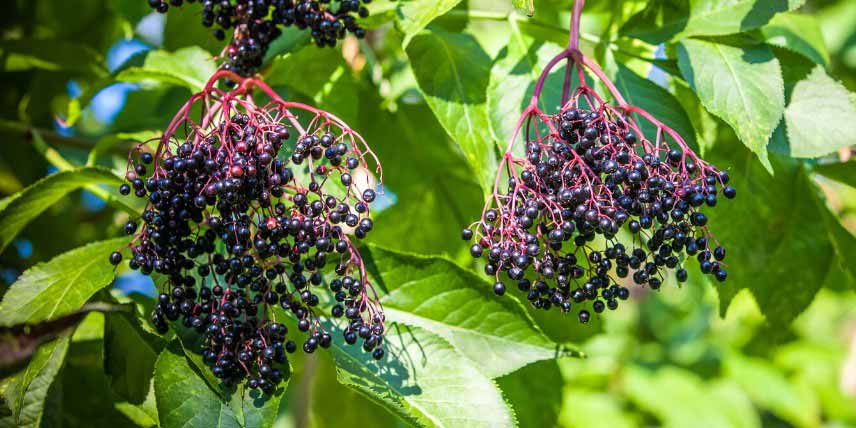
Black Elder, Sambucus nigra, is valued for its fragrant and edible flowers (which can be used to make syrups and fritters), but also for its berries, which are harvested in August and September. It produces large clusters of rounded berries, measuring 6 to 8 mm, that start red and turn a glossy black-purple, borne on bright red pedicels. They are indigestible when raw, so they must be cooked before consumption. They can be made into syrups, jellies, jams, incorporated into cakes and pastries, or used to make elderberry wine. They are particularly rich in antioxidants, vitamins A, B, C, and iron.
Discover our tutorial: “How to make elderberry jam?”
The strawberry tree
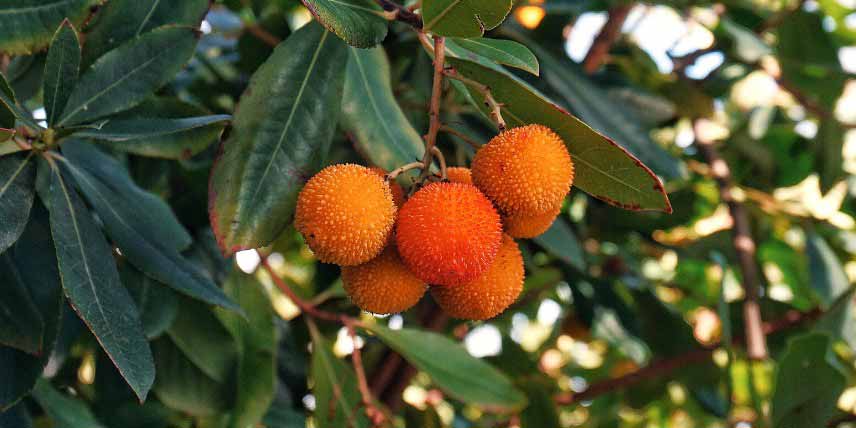
The strawberry tree (Arbutus unedo) known as the “Strawberry Tree”, is a Mediterranean bush valued for its evergreen foliage, bell-shaped white or pink flowers, and highly decorative fruits. They are round, measuring 2 to 3 cm in diameter, and have a rough surface covered with small spikes. Initially yellow, the fruits turn reddish-orange at ripeness. They are harvested in late summer to early autumn and have a sweet and slightly tangy flavour. They can be eaten raw (in moderation as they are heavy to digest, and in large quantities, they can cause vomiting and colic) or cooked. They can be made into jam, jelly, compote, or liqueur. Strawberry tree fruits are very rich in vitamin C and polyphenols. They also have antidiarrhoeal, astringent, and diuretic properties.
Discover Olivier’s article on our blog: “The strawberry tree: a fruit to discover”
Goji berries
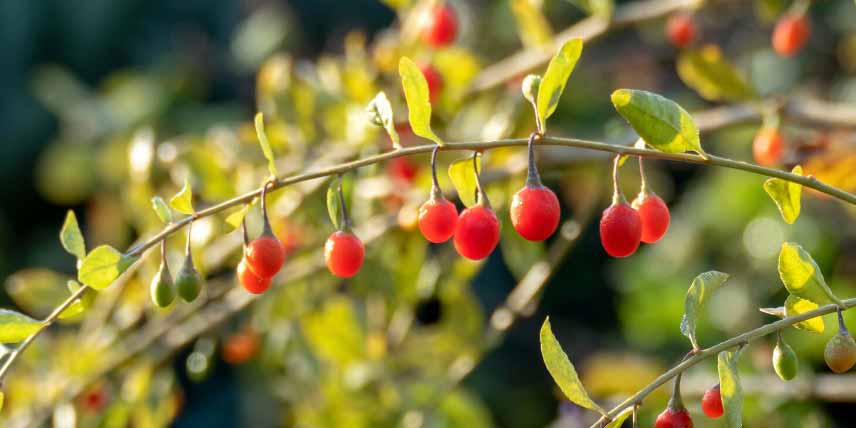
Goji or Wolfberry (Lycium barbarum) is a bush native to China, with a very flexible and ramous habit (it can indeed be trained), and slightly thorny branches. It produces beautiful small purple flowers, followed by elongated red berries. They are harvested between July and the first frosts. They are particularly rich in vitamin C, antioxidants, and trace elements. In China, they are attributed exceptional virtues; they are even nicknamed “fruits of happiness” and are reputed to enhance longevity. Goji berries can be consumed fresh or dried.
Our advice sheet: “Cultivation, Harvest, and Drying of Goji Berries”
Amelanchier
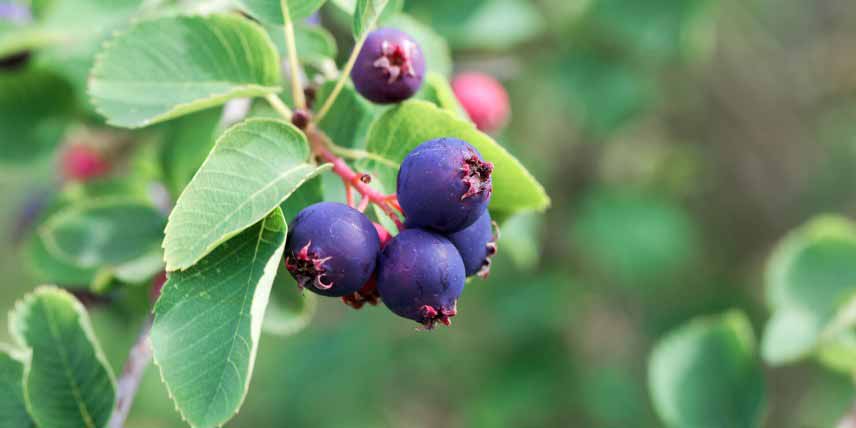
Amelanchier is a deciduous shrub that offers an abundant display of starry white flowers in spring. Its foliage also takes on lovely hues in autumn, featuring shades of red, purple, and copper. It produces small round berries in summer, which are very decorative, first pink and then dark purple. They resemble blueberries in colour, shape, and size, as they hardly exceed 1 cm in diameter. They are harvested from July to August and are juicy, sweet, and slightly tangy. Amelanchier berries are rich in antioxidants, pectins, and dietary fibre. Still relatively unknown in France, they are mainly consumed in Eastern Europe and Canada. They can be enjoyed raw or cooked, for example in jams or pies.
Our advice sheet: “How to Harvest and Store Amelanchier Fruits?”
Haskap or May berry
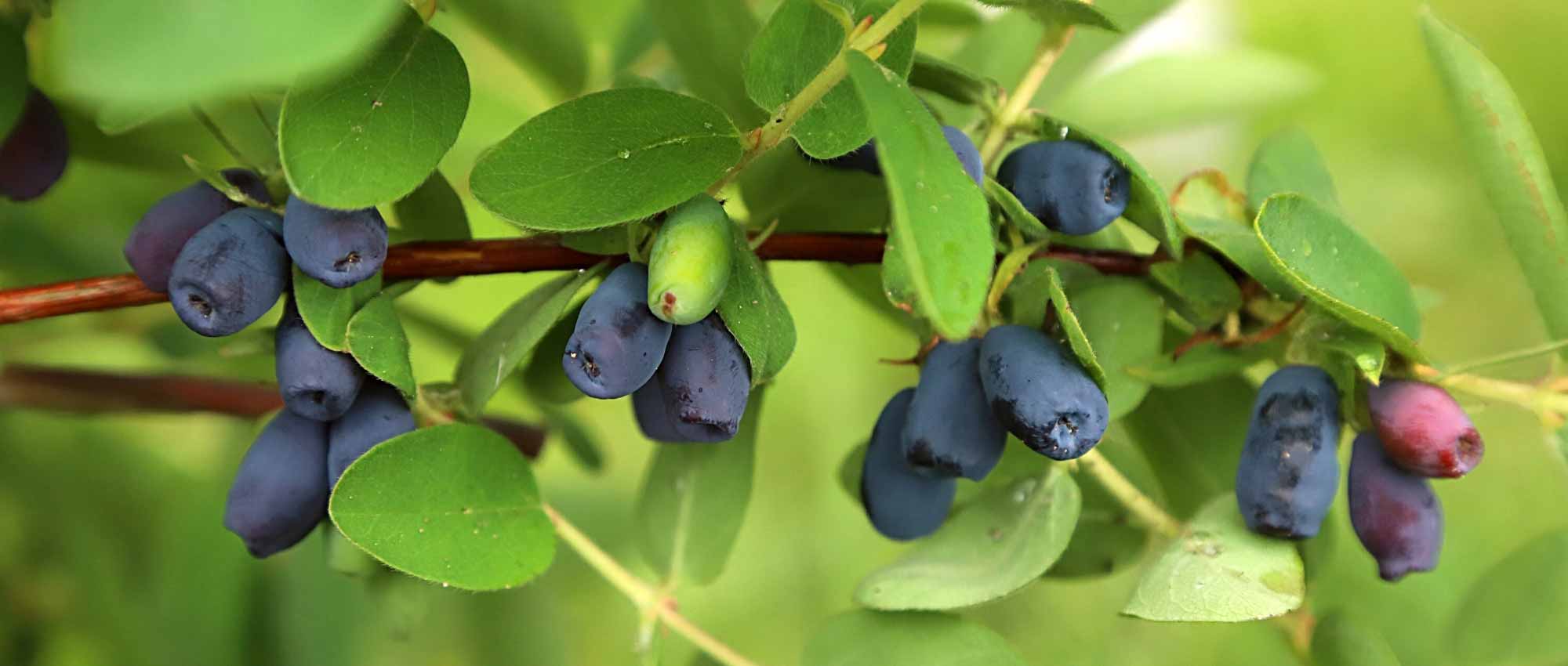
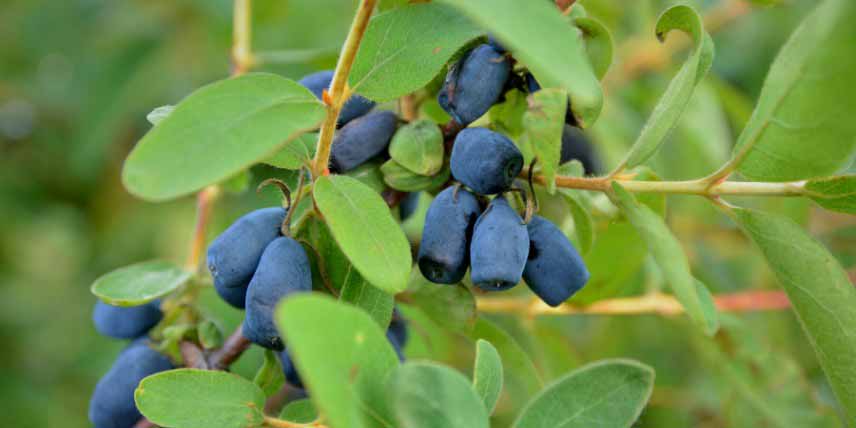
The honeyberry or Lonicera kamtschatica is a bush honeysuckle that produces elongated, bluish berries in spring, covered in bloom. They are harvested in May-June, which gives them their nickname “May berry.” They have a tangy, slightly sweet flavour reminiscent of blueberries. They are particularly rich in vitamins B and C, as well as trace elements. Honeyberry fruits can be eaten raw, but they can also be used to make delicious jellies and jams, as well as sorbets and juices. This is a very hardy bush (down to -40 °C) that thrives in cool, fertile, non-calcareous soil.
→ Our tutorial: “Harvesting and Preserving May Berries” and May Berries: How to Choose the Right Variety for Your Garden?
Aronia
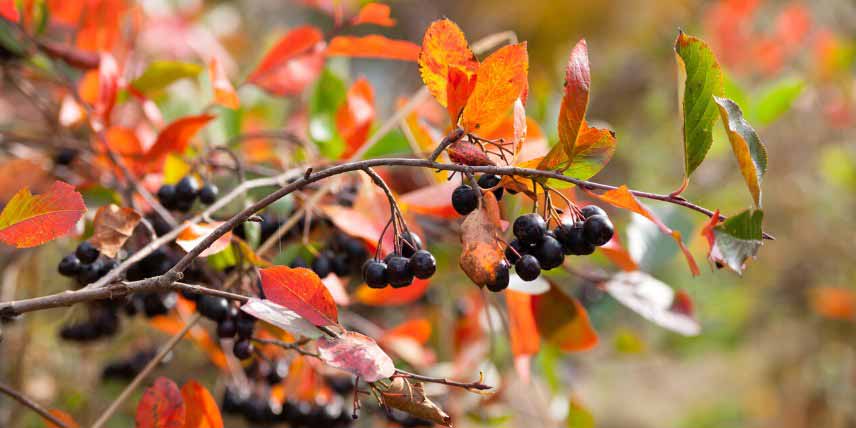
Aronias are deciduous bushes native to North America, valued for their edible red or black berries, as well as their highly decorative foliage in autumn. Aronia berries are round, reaching up to 1.5 cm in diameter, and resemble blueberries. They are rich in vitamins B and C, minerals, and antioxidants. They can be consumed fresh or used in pastries, jams, syrups, and jellies… They develop a pleasant blackcurrant flavour when cooked. Although Aronia melanocarpa, Aronia arbutifolia, and Aronia prunifolia all produce edible berries, varieties with black berries, which have a milder taste, are preferred for consumption. We particularly recommend Aronia melanocarpa, Aronia prunifolia ‘Viking’, and ‘Nero’.
Discover our complete guide on growing Aronia, as well as our tutorial: “How to dry Aronia berries?”
Sea buckthorn
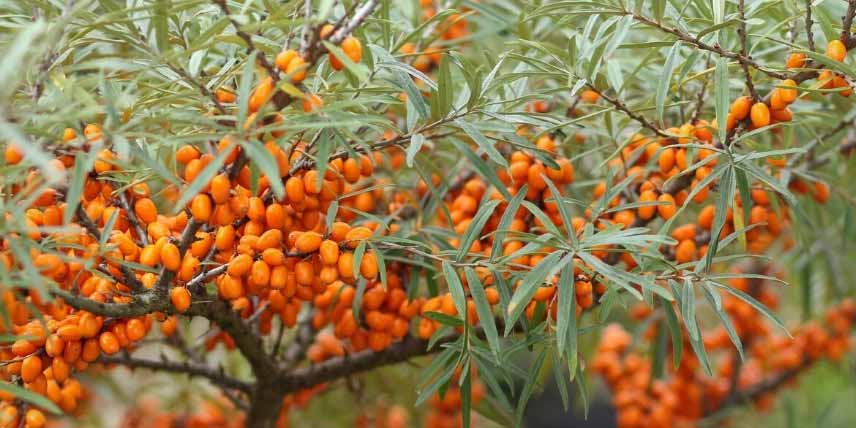
Sea buckthorn or Hippophae rhamnoides (not to be confused with strawberry tree) is a large thorny bush with silver foliage, which grows spontaneously in France in mountainous regions and along the coast. It is a dioecious bush: there are male and female plants, so you will need to plant both or choose a self-fertile variety to enjoy fruiting. Female plants produce beautiful orange fruits, very high in vitamin C. They are oval-shaped and measure just under 1 cm in diameter. They are acidic when raw, but can be consumed in jam, syrup, and juice. Sea buckthorn thrives in full sun, in poor, well-draining, sandy, or chalky soil.
Discover our complete guide on cultivating sea buckthorn
And also...
Many trees and bushes offer original and lesser-known edible berries! We could also mention feijoa, akebia, plane tree mulberry, physalis, medlar, rowan, nashi, gooseberry, schisandra, jujube, pawpaw…
Discover our entire range of unusual and exotic fruit trees and our article: Grow Japanese Goumi for its edible fruits.
- Subscribe!
- Contents

Comments