





























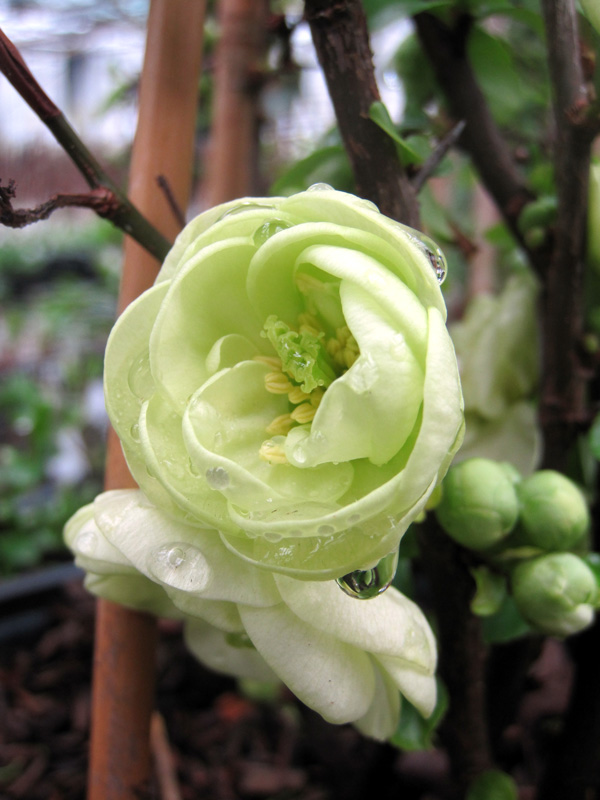
Chaenomeles speciosa Kinshiden: New variety, very elegant, with porcelain-white flowers.
Chaenomeles, or Japanese quince, are finally flowering in our greenhouses, two to three weeks earlier than those in the garden; their abundant flowering marks the start of spring.
Ce qui est agréable avec les chaenomeles c'est qu'ils fleurissent avant de produire leur feuilles, les fleurs se détachent ainsi parfaitement de leur silhouette tortueuse, ce qui n'est pas sans rappeler certaines estampes japonaises dans lesquelles, sont représentés, des branchages arqués, constellés de petites fleurs aériennes, souvent rouges d'ailleurs, sur un paysage hivernal.
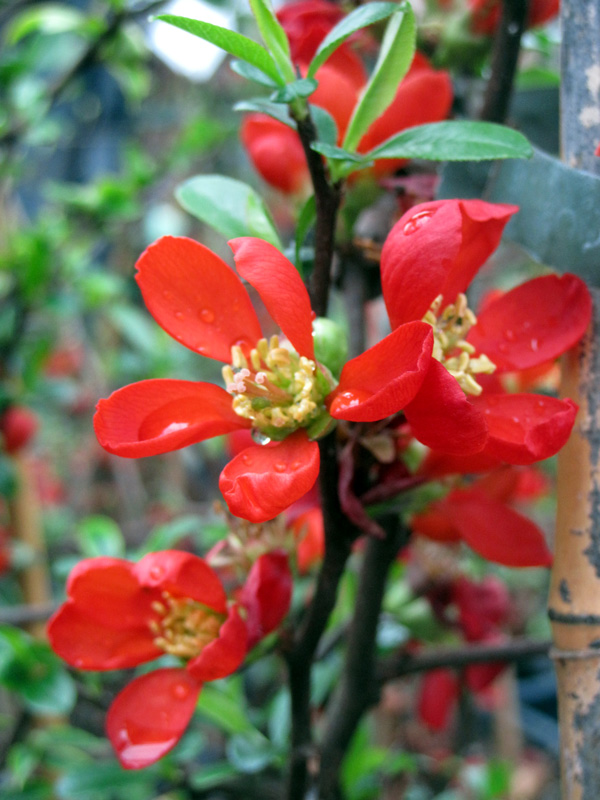
Chaenomeles speciosa Hot Fire: This intense red colour is often depicted in Japanese prints.
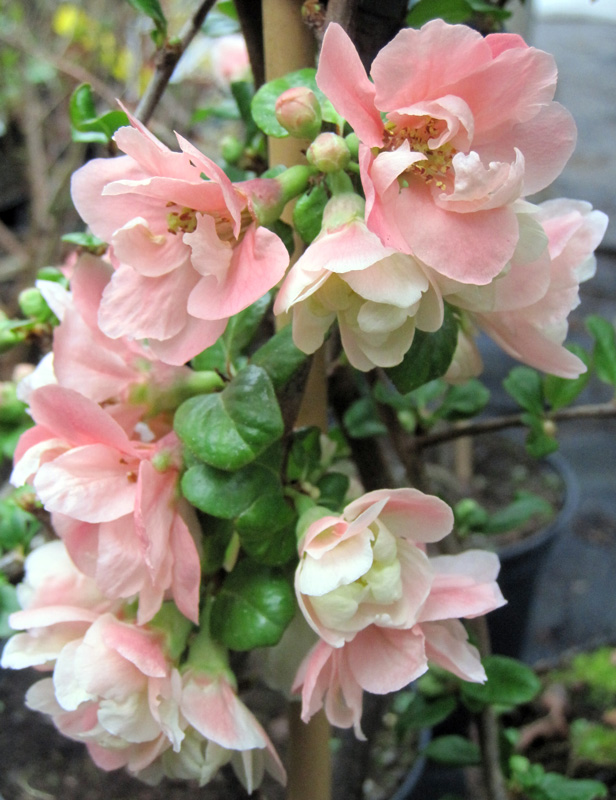
Chaenomeles speciosa Falconnet Charlet
Faciles de culture, ils poussent partout, en terrain acide comme en terrain calcaire, au soleil comme à mi-ombre, ce qu'ils redoutent en fait ce sont les sols très lourds et très humides.
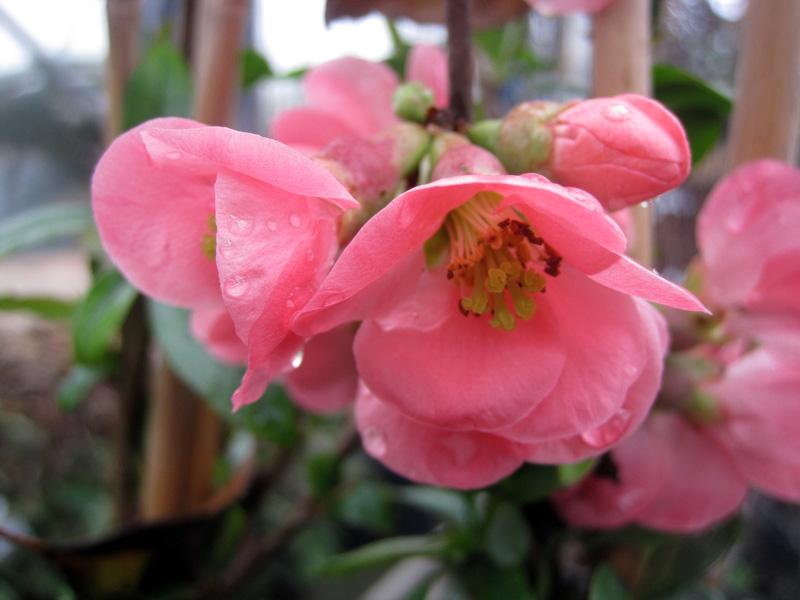
Chaenomeles speciosa Eximia: A variety with very large flowers.
Il existe 2 grandes catégories de Chaenomeles, les C. speciosa et les C. superba. The speciosa are recognisable by their large flowers; they flower a little later than the superba and are somewhat larger. The superba produce flowers that are often smaller but more numerous; they have a somewhat more compact habit and somewhat more twisted branching than the speciosa.
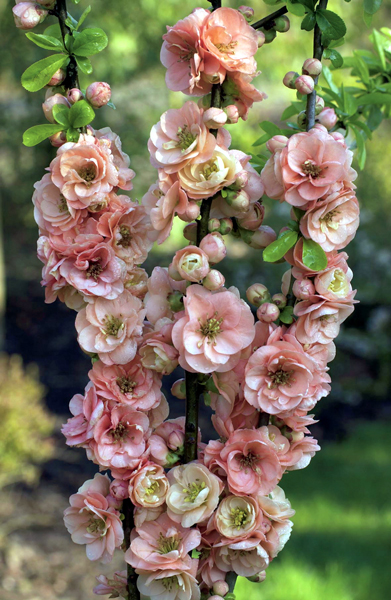
Chaenomeles (x) superba Cameo: The flowers are smaller but more numerous.
Les cognassiers du Japon fleuriront ainsi pendant three weeks to a month and then, during the summer, some will bear yellow fruits the size of a ping-pong ball.
Fruits should be eaten cooked; they are apparently as tasty as the traditional quinces (Cydonia oblonga), but unlike the latter, Chaenomeles have the considerable advantage of taking up very little space as adults; they reach about 2 metres in height and width, and are well suited to small spaces as well as to pot culture.

Comments