Cookies help us to offer you a personalised browsing experience and to measure our audience. You can configure them at any time and consult our privacy policy.
This website uses cookies to improve your experience when browsing the website. Of these, cookies classified as necessary are stored on your browser because they are essential for the basic functionality of the website to work. We also use third-party cookies to help us analyse and understand how you use this website. These cookies will only be stored on your browser with your consent. You also have the option of refusing these cookies. However, deactivating some of these cookies may have an effect on your browsing experience.
red
7
white
2
orange
12
salmon
2
yellow
7
purple
1
pink
27
Flowering time
Show more +Show less -
Height at maturity
Min.
Max.
Recommended planting time
Show more +Show less -
Supplied in
Show more +Show less -
Our selection
Show more +Show less -
Price
Min.
Max.
Spread at maturity
Min.
Max.
Growth rate
Show more +Show less -
Garden style
Show more +Show less -
Product Rating
Hardiness - Cold resistance
Show more +Show less -
USDA Zone
Show more +Show less -
Ornamental interest
Show more +Show less -
Type of use
Show more +Show less -
Availability
More filters9
Fewer filters
Does this plant fit my garden?
Set up your Plantfit profile →
Filter
Sort by:
Display
56results
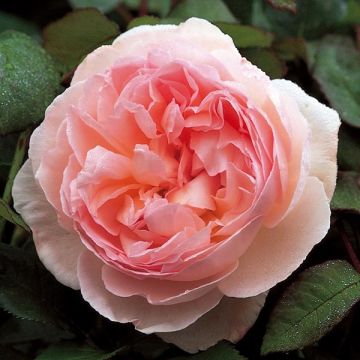
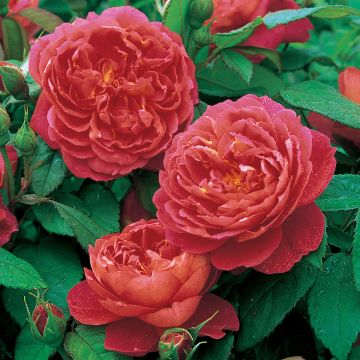
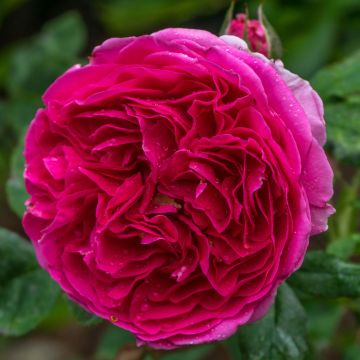
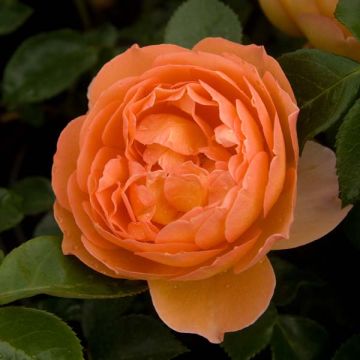
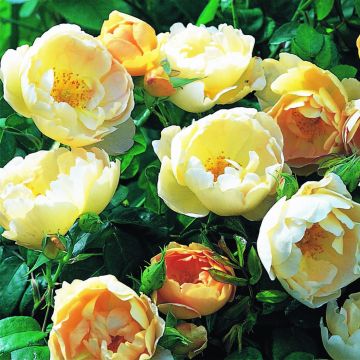
The highly scented English Roses: here is a selection of roses created by David Austin that stand out for the intensity and complexity of their fragrance, which can evoke the scents of Old Roses, Tea Roses, myrrh, sometimes revealing notes of fruits, herbs, or musk, with each variety combining all these fragrances in infinite combinations. "David Austin, firmly believing that scent is half the beauty of a rose", has always aimed to restore olfactory value to modern roses. Today, famous for the diversity of their fragrances, many English Roses have been awarded for their wonderful scent in international competitions. 'Constance Spry', a historical creation by the renowned English rose breeder, with its unique flowering, is famous for its myrrh fragrance, which can also be found in 'Scepter’d Isle', for example. 'Golden Celebration', on the other hand, exudes the typical scent of a Tea Rose, while 'The Generous Gardener' is a beautiful combination of musk and myrrh. 'Lady Emma Hamilton' stands out with its intensely fruity fragrance, with notes of grape, pear, and citrus. Those nostalgic for old-fashioned roses will find in 'Gertrude Jekyll' the authentic scent of old roses, both powerful and balanced, capable of perfuming an entire section of the garden. To fully enjoy these intoxicating scents, plant your scented English roses near the house or in a high-traffic area!
The flowering period indicated on our website applies to countries and regions located in USDA zone 8 (France, the United Kingdom, Ireland, the Netherlands, etc.)
It will vary according to where you live:
In zones 9 to 10 (Italy, Spain, Greece, etc.), flowering will occur about 2 to 4 weeks earlier.
In zones 6 to 7 (Germany, Poland, Slovenia, and lower mountainous regions), flowering will be delayed by 2 to 3 weeks.
In zone 5 (Central Europe, Scandinavia), blooming will be delayed by 3 to 5 weeks.
In temperate climates, pruning of spring-flowering shrubs (forsythia, spireas, etc.) should be done just after flowering.
Pruning of summer-flowering shrubs (Indian Lilac, Perovskia, etc.) can be done in winter or spring.
In cold regions as well as with frost-sensitive plants, avoid pruning too early when severe frosts may still occur.
The planting period indicated on our website applies to countries and regions located in USDA zone 8 (France, United Kingdom, Ireland, Netherlands).
It will vary according to where you live:
In Mediterranean zones (Marseille, Madrid, Milan, etc.), autumn and winter are the best planting periods.
In continental zones (Strasbourg, Munich, Vienna, etc.), delay planting by 2 to 3 weeks in spring and bring it forward by 2 to 4 weeks in autumn.
In mountainous regions (the Alps, Pyrenees, Carpathians, etc.), it is best to plant in late spring (May-June) or late summer (August-September).
The harvesting period indicated on our website applies to countries and regions in USDA zone 8 (France, England, Ireland, the Netherlands).
In colder areas (Scandinavia, Poland, Austria...) fruit and vegetable harvests are likely to be delayed by 3-4 weeks.
In warmer areas (Italy, Spain, Greece, etc.), harvesting will probably take place earlier, depending on weather conditions.
The sowing periods indicated on our website apply to countries and regions within USDA Zone 8 (France, UK, Ireland, Netherlands).
In colder areas (Scandinavia, Poland, Austria...), delay any outdoor sowing by 3-4 weeks, or sow under glass.
In warmer climes (Italy, Spain, Greece, etc.), bring outdoor sowing forward by a few weeks.