





























Mangetout peas, also known as mangetout, are easy to grow and very rewarding for the gardener. Unlike ordinary garden peas, the entire pod is eaten before the peas inside are fully formed. It is a tender, sweet vegetable, and particularly rich in vitamins.
Discover, in this tutorial, step-by-step how to sow mangetout peas, from seed selection to the first harvest, to ensure successful mangetout sowing.
Choosing the right mangetout pea variety
Before getting your tools out, it's essential to choose the variety that suits your space. There are two main families:
- Nan varieties: they reach about 40 to 60 cm in height. They are ideal for small gardens or even container growing on a balcony. They require little to no staking. Notable varieties include ‘Norli’ or ‘Bambi mangetout’.
- Climbing or rambling varieties: they can climb up to around 2 metres. They require support, such as trellis, nets or canes, but offer a markedly higher yield on a small ground area. Notable varieties include ‘Corne de Bélier’ or ‘Héraut’.
Did you know? Mangetout peas, like garden peas or chickpeas, are legumes. This means that they have the ability to fix atmospheric nitrogen in the soil thanks to nodosities on their roots. By growing mangetout peas, you naturally improve the fertility of your soil for subsequent crops, such as tomatoes or courgettes.
When to sow mangetout peas?
Mangetout peas dislike very hot weather, but enjoy the cool of spring.
- In temperate climates: sow from February to April. Early sowings, under a tunnel or forcing veil, allow harvesting before the first heat waves in June that cause the plants to yellow.
- In mild or Mediterranean climates: autumn cropping is possible with sowing in October/November for a very early spring harvest.
The peas germinate as soon as the soil reaches 7 to 10°C. No need to rush if the soil is still frozen or waterlogged: the seeds would be likely to rot.
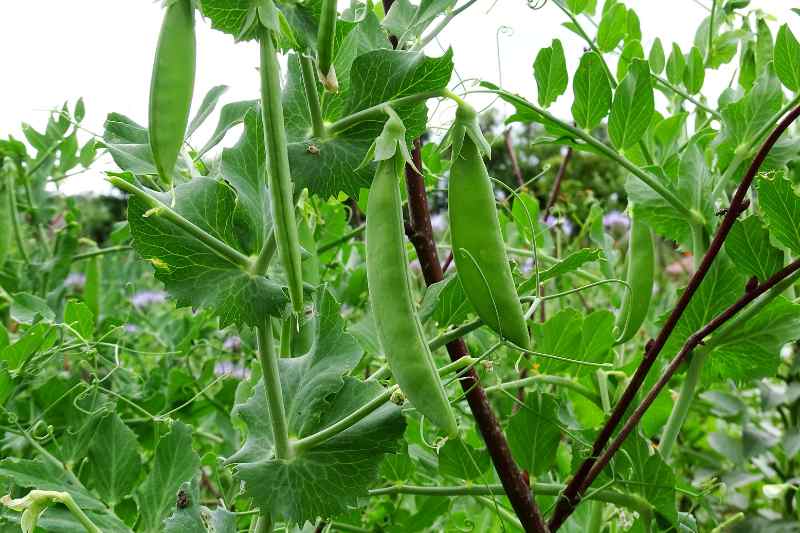
Where to sow mangetout peas?
Mangetout peas are not very particular, but they do have preferences:
- Exposure: a sunny spot is perfect at the start of spring. If sowing later in the season, choose a partially shaded exposure to prevent the pods from becoming too fibrous in the hot sun.
- Soil type: mangetout peas prefer light, well-drained and deep soil. Avoid applying fresh manure or fertilisers high in nitrogen just before sowing, as this would promote foliage at the expense of flowers and thus pods.
- Soil preparation: a simple scratch is enough to loosen the surface and remove weeds.
How to sow mangetout peas step by step?
There are two schools of thought for sowing peas: sowing in rows or sowing in pockets.
- Preparing the seeds: to speed germination, you can soak your seeds in room-temperature water for 12 to 24 hours before sowing. This softens the integument of the seed and starts the germination process.
- Mark furrows 3–4 cm deep. Space your rows 40 cm apart for dwarf varieties and 60–80 cm for climbing varieties.
- Place the seeds, either one seed every 2–3 cm, or in pockets (clusters) of 4–5 seeds every 20 cm. Sowing in pockets is recommended to help the plants stand better.
- Cover with fine soil and lightly firm with the back of the rake to avoid air pockets.
- Water with a fine spray if the soil is very dry.
How to companion plant mangetout peas?
To optimise your vegetable plot, mangetout peas pair very well with
- Radishes: you can sow radishes between pea rows; they will be harvested well before the peas take up all the space.
- Lettuces: will benefit from the light shade offered by supports for climbing peas.
- Avoid garlic, onions and shallots, which do not enjoy proximity to legumes.
What maintenance after sowing?
Once your peas start to poke their heads above the soil (about 10–15 days after sowing), maintenance begins.
Support for climbing varieties
Don’t wait for the stems to sag. As soon as they reach 10 cm, install supports. You can use:
- Hazel branches or bamboo arranged as a teepee.
- A sheep-netting fence stretched between two stakes.
- Nylon netting.
Butting up (hilling)
This is an important step, but often overlooked. When the plants reach about 15 cm in height, mound a little soil at the base of the stems. This promotes rooting and helps stabilise the plant against wind.
Watering
Mangetout peas are sensitive to water shortage, especially during flowering and pod formation. Water at the base regularly, avoiding wetting the foliage to prevent fungal diseases.
Pest monitoring
Mangetout peas are fairly robust, but they do face a few enemies or diseases:
- Birds that love the fresh young shoots. Install protective netting or deterrents at emergence.
- Green aphids often cluster at the tips of the stems. A jet of water or a water/soap solution usually suffices.
- Powdery mildew is a white, felt-like coating that appears on the leaves late in the season. It is often a sign of water stress or excessive heat. Remove heavily infected plants to prevent spread.
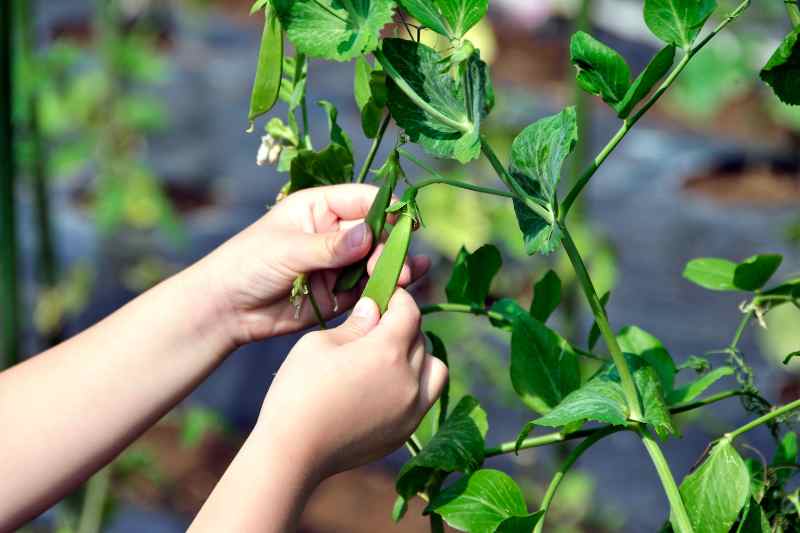
When and how to harvest mangetout peas?
The secret to perfect mangetout peas lies in harvest timing.
Harvest as soon as the pods reach their adult size, but are still flat. The peas inside should be barely visible. Harvest every 2 to 3 days.
Pods are consumed very quickly. The longer you wait, the more sugars convert to starch, and the pod loses its tenderness.

Comments