





























The time for sowing has arrived in the vegetable garden. In your seed box, some packets may be lying around, sometimes torn open... The expiry date on the packet has passed, and a few seeds may have even escaped... Doubt sets in: are these seeds still viable? Rather than wasting time sowing in vain, it's better to test the germination of your old seeds. We will explain, step by step, how to check if the seeds are still good.
Why and when should you perform a germination test?
A packet of expired seeds is not necessarily destined for the bin!
The longevity of seeds in question
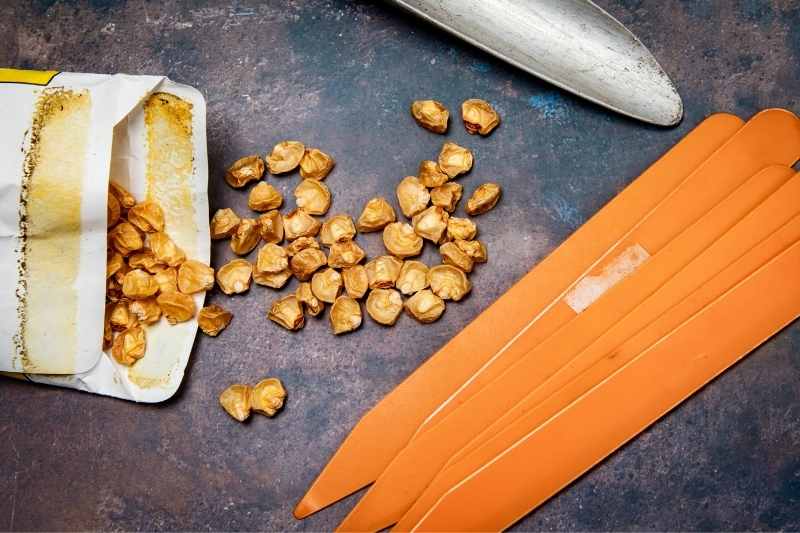
The lifespan of seeds varies greatly depending on the species. For instance, onion seeds last only a year, while some seeds of cucurbits can remain viable for six years or more. Additionally, the lifespan of seeds varies according to storage conditions. Humidity, heat, and light accelerate deterioration, reducing seed viability.
When should you perform a germination test?
The ideal time to conduct the test is a few weeks before the planned sowing date for the relevant varieties. This gives you time, if the result is poor, to buy new seeds without missing the sowing date.
How to perform a germination test?
The simplest technique, using absorbent paper, is very effective. There is another method, soaking the seeds, but the test is less reliable.
Step-by-step method:
- Take 10 seeds from your packet, randomly selected to obtain a representative sample.
- Lay one or two sheets of absorbent paper, such as kitchen roll, in a rectangular plastic box.
- Moisten them with a spray bottle until they are well wet, but not excessively. They should not drip when lifted. Too much water will rot the seeds.
- Place the ten seeds on one half of the absorbent paper, leaving a space of at least three times their size. They must not touch each other.
- Fold the other half of the absorbent paper over to cover the seeds.
- Clearly mark the name of the species and variety of seeds, along with the test date.
- Close the box with its transparent lid, or, if not available, use plastic wrap to retain moisture and create a microclimate conducive to seed germination.
- Place the box in a warm spot, with a temperature between 20 and 24 °C, not necessarily very bright.
- Monitor the moisture. The absorbent paper should remain consistently damp. You can regularly spray a little water if the paper starts to dry out.
How to interpret the results?
The germination time varies from one vegetable species to another.
How long do seeds take to germinate?
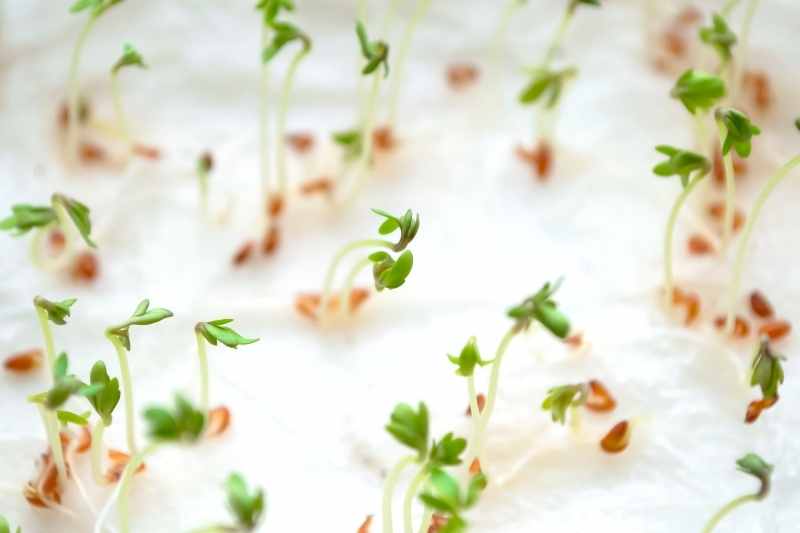
- Fast-germinating seeds (radishes, salads, beans, courgettes...) sprout in 3 to 7 days.
- Seeds with average germination time (tomatoes, peppers, aubergines, cabbages...) need 7 to 14 days.
- Long-germinating seeds (carrots, parsley, certain flowers...) can take up to 3 weeks or more.
Be patient and give the seeds time to germinate. For more information: The germination of vegetable plants.
How to calculate the germination rate?
Once the time has elapsed, you can calculate the germination rate. Simply count the number of seeds that have developed a healthy sprout.
Then, perform this simple calculation: the number of germinated seeds divided by the number of seeds tested, multiplied by 100.
For example, if you tested 10 seeds and 7 have germinated, you obtain a germination rate of 70%.
How to interpret the result?
Overall, you can draw the following conclusions:
- A germination rate of 80% is excellent. You can sow without any issues.
- A rate between 50% and 80% is good to average. The seeds can still be sown, but it is recommended to double the number of seeds.
- A rate below 50% is low. It may be better to buy new seeds. However, sow the others, as you never know when a pleasant surprise might occur!
- A rate of 0%: compost everything!
What to think of the seed soaking test?
Another quick technique for larger seeds (beans, peas) is the soaking test. This involves submerging them in water for 12 to 24 hours. Seeds that sink are generally considered good to sow, while those that float are often non-viable (empty shell, dried out).
This test is indeed quicker, but less reliable than the absorbent paper method, as some seeds naturally float even if they are good.
Our additional tips for properly storing your seeds
The best way to prevent a low germination rate is to properly store your vegetable seeds. Always keep your seeds in:
- A cool, dry place, ideally below 15 °C.
- Darkness.
- Air-tight containers to protect them from moisture.
Comments