






























Indoor Saxifrage: Growing and care
Contents
The essentials of Indoor Saxifrage
- It is a small perennial plant with very graphic veined foliage, ideal for indoors
- Its trailing habit makes it perfect for hanging displays or window sills
- It enjoys gentle light, without direct sunlight, and moderate ambient humidity
- Care for indoor saxifrage stolonifera is minimal
- Perfect for natural settings, open terrariums, and minimalist decor
The word from our expert
Unlike garden saxifrages, often used in rockeries or borders, indoor saxifrages are ornamental perennials that adapt remarkably well to pot cultivation. Their flexible habit, decorative leaves, and light flowering make them charming houseplants, suitable for growing year-round in a bright environment. The most popular is Saxifraga stolonifera, also known as the “strawberry plant,” identifiable by its green leaves veined with silver, long trailing stolons, and fine, airy white star-shaped flowers.
Among the most appreciated varieties, Saxifraga stolonifera ‘Tricolor’, which is equally easy to care for, delights with its variegated leaves of green, cream, and pink, making it very decorative when hung. The moss saxifrage is, however, attributed to other species that are not suitable for indoor cultivation.
To thrive, the indoor saxifrage needs bright but indirect light, a cool to moderate temperature, and a light, well-drained substrate that is slightly moist but never waterlogged. The care of Saxifraga stolonifera indoors is quite straightforward. It is advisable to allow the surface of the potting mix to dry out between waterings, as excess water can cause collar rot. A good humidity level will promote healthy foliage without the need for misting. Easy to propagate by cutting, Saxifraga stolonifera is also suitable for cultivation in a closed terrarium, where it forms an elegant green carpet.
Thanks to its natural aesthetic and minimal care, saxifrage fits perfectly into interiors inspired by Japandi, slow decor, or botanical themes, where it brings freshness, texture, and lightness, whether suspended or potted.

Cultivation needs of indoor Saxifrage
| Exposure | Bright light without direct sunlight, ideally near an east or north-facing window |
| Watering frequency | Regular, but moderate, when the surface of the soil begins to dry |
| Humidity % | 50 to 70 %, enjoys a slightly humid environment without dry air |
| Ideal temperature | Between 15 and 20 °C, struggles with high heat or cold below 5 °C |
| Soil type | Light, well-drained, rich in humus, with a base of potting soil and sand |
| Repotting | Every 2 years or so, in spring, into a slightly larger container |
Read also
Saxifrages: planting, growing and careSaxifrage, commonly known as saxifrage, is a genus of flowering plants in the family Saxifragaceae. These hardy perennials are often found in rocky or alpine environments, thriving in well-drained soils. They are appreciated for their attractive foliage and delicate flowers, which can vary in colour from white to pink and yellow. Saxifrages are ideal for rock gardens, borders, and containers, providing a charming display in spring and early summer. Their ability to tolerate poor soil conditions makes them a popular choice for gardeners looking to add resilience and beauty to their landscapes.
“`html
Botanical data
- Latin name Saxifraga
- Family Saxifragaceae
- Common name Spider saxifrage, Jew's beard, Old man's beard
- Flowering May to August
- Height 15 cm
- Sun exposure Bright indirect light
- Soil type Light potting mix, Well-draining potting mix
- Hardiness -20°C
The genus Saxifraga, belonging to the family Saxifragaceae, comprises over 400 species of herbaceous perennial plants, some of which are evergreen, often originating from montane or rocky environments. This family also includes closely related genera such as Heuchera and Bergenia, which share with saxifrages a good ability to adapt to poor soils and ornamental foliage.
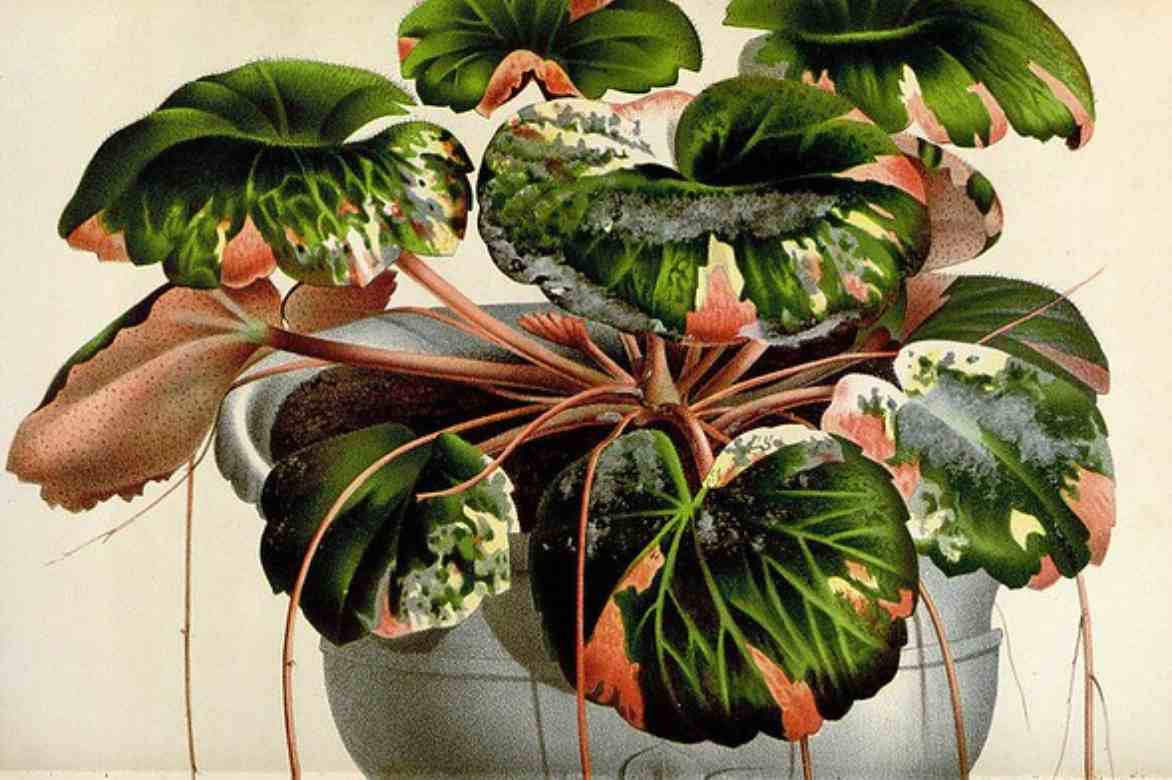
Saxifraga sarmentosa ‘Tricolor’, botanical illustration
The Latin name Saxifraga, derived from the words saxum (rock) and frangere (to break), evokes the remarkable tendency of certain species to settle in the crevices of rocks, giving the impression that they are cracking the surface. This vivid name perfectly reflects their survival strategy in mineral and demanding environments.
Primarily originating from Eurasia and the temperate or alpine zones of the northern hemisphere, saxifrages naturally colonise scree, rocky crevices, cliffs, and cool undergrowth, where ambient humidity and filtered light create ideal conditions for their development. This preference for shaded, moist, yet well-drained environments explains their excellent adaptation to indoor cultivation, provided they are offered gentle light, good ventilation, and a cool atmosphere. However, garden saxifrages such as sphagnum saxifrages (‘Saxifraga × arendsii ‘Pixie’, for example) are not suitable for long-term indoor cultivation. These alpine perennials require cool air, a wide temperature range, and especially a marked winter cooling to thrive, which a heated interior cannot provide.
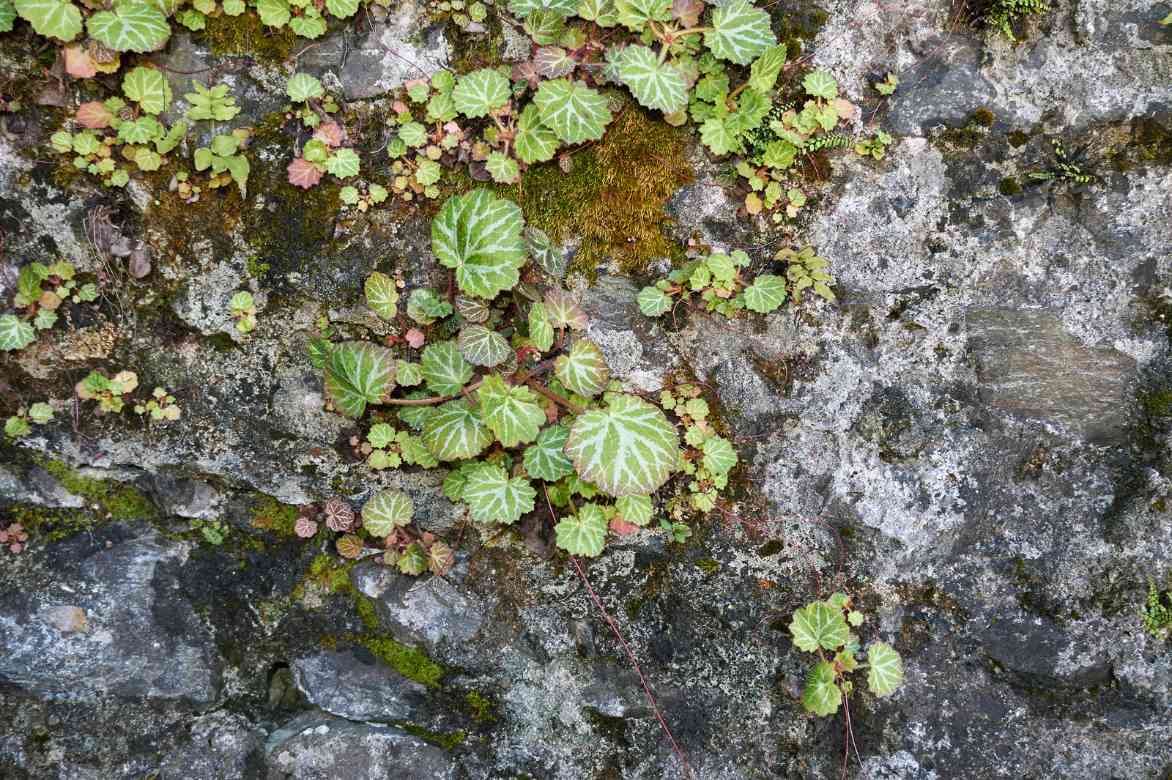
Saxifrages appreciate rocky and mineral materials
While many species are used in rock gardens or mountain gardens, some stand out for their natural aptitude for indoor cultivation. Unlike field saxifrages, these more compact and ornamental forms thrive easily in pots, provided they receive gentle light, a light substrate, and a cool, slightly humid atmosphere. This is particularly true for Saxifraga stolonifera, the most popular species for indoors, which can also be grown outdoors as a groundcover in shade, as it tolerates minimum temperatures down to -20°C.
This species has a low, spreading to trailing habit, forming a dense and regular basal rosette. It develops a fasciculate, shallow root system, suited to light, well-drained substrates, without the need for deep rooting. It produces long, flexible petioles, usually pubescent and tinged with red, that arise directly from the collar to individually support each leaf.
The foliage, evergreen indoors, is one of its main ornamental attractions. Each lamina, rounded to reniform, features a finely dentate margin and a velvety surface, deep green marked with well-defined silver veins. The plant emits long red stolons, very thin, that creep or trail and give rise to small adventitious rosettes capable of rooting spontaneously.
The flowering, discreet yet elegant, usually occurs in spring or summer, depending on the growing conditions. An elongated floral stem, sometimes branched, rises above the foliage and bears small flowers with five unequal petals: three short upper ones, pure white or speckled with pink, and two elongated, narrow lower ones, arranged in a slightly asymmetrical star shape. These flowers, borne on long, thin pedicels, create a remarkable impression of lightness and delicacy.
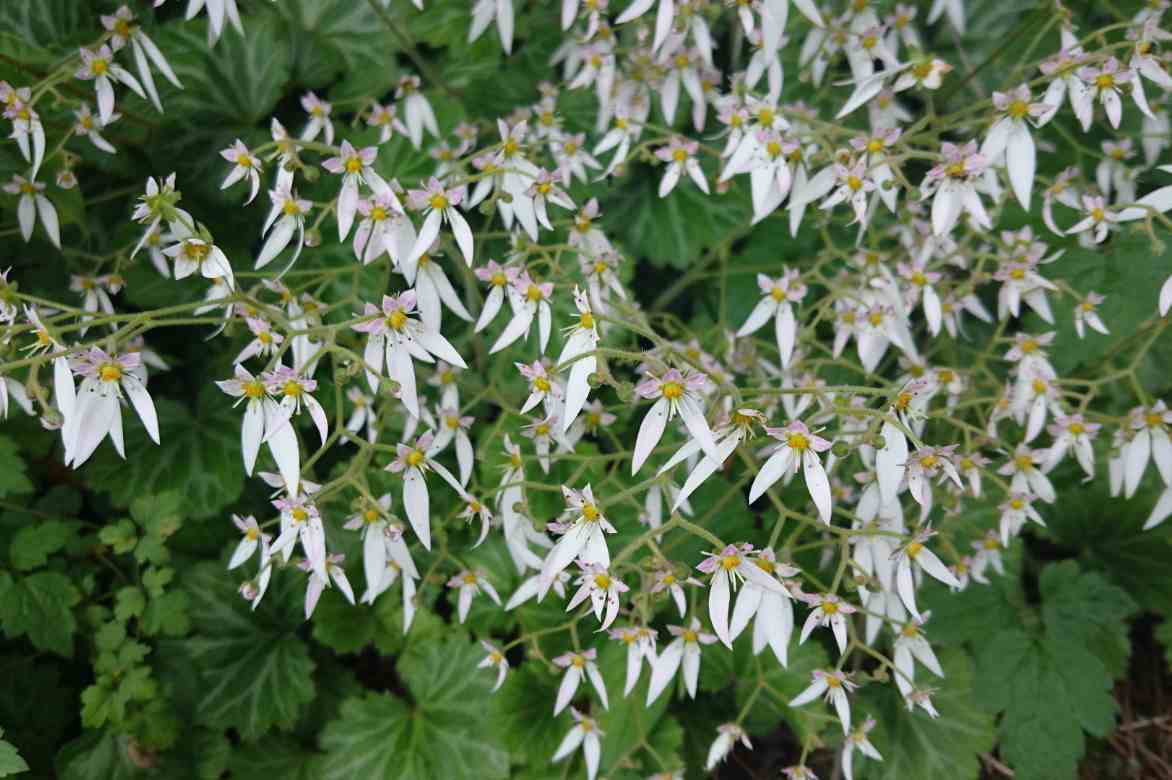
A discreet and very elegant flowering
This species is an excellent choice for greening a bright interior all year round, bringing a touch of nature and freshness without requiring demanding care. Other species, including Saxifraga sarmentosa, are also suitable for indoor cultivation due to their trailing habit and great robustness, making them easy to maintain in a bright room.
“`
Our favourite saxifrage varieties

Saxifraga stolonifera Variegata - Creeping saxifrage
- Période de floraison June to September
- Hauteur à maturité 15 cm
Read also
How to make an open terrarium?Planting Saxifrage in Pots
When to plant in a pot?
Saxifrage can be planted in a pot at any time of the year, as long as it is grown indoors. However, planting in spring or early autumn is preferable, as the plant then enters a phase of active growth, which facilitates its rooting in the new substrate.
What pot to choose for planting saxifrage?
Upon receiving the young plants in plug plants, it is recommended to repot them quickly into a suitable container. A small pot with a diameter of 7 to 9 cm, equipped with drainage holes, is sufficient to start. A terracotta or unglazed ceramic pot is ideal, as it promotes substrate respiration, but a plastic pot can also be suitable, provided that moisture is monitored closely. It is also a lovely indoor plant for enhancing a hanging display.
Saxifrage can also find its place in an open terrarium, as long as it is open, since this plant does not tolerate confined and stagnant humidity, which would encourage the development of fungal diseases.
Where and how to install it?
Indoors, saxifrage appreciates bright to moderate indirect light, such as that found in a room facing east or north. It fears direct sunlight, which can scorch its delicate foliage, especially behind glass. A medium to high humidity, around 50 to 70%, is perfect for it. It can be placed on a bed of damp clay balls or near other plants to benefit from a more humid microclimate. It prefers cool to moderate temperatures, ideally between 10 and 20 °C. In winter, it tolerates a slight drop, but should not go below 5 °C.
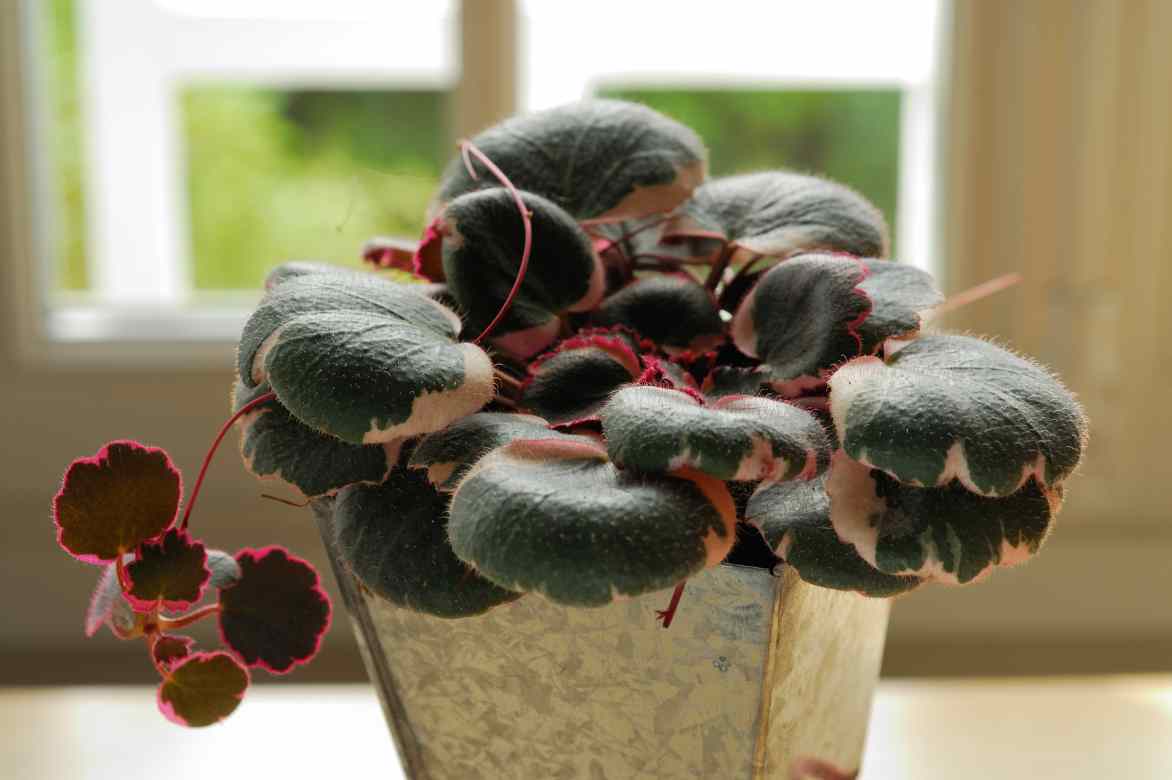
Saxifrage ‘Tricolor’
Substrate
To successfully grow saxifrage indoors, the substrate must be airy, rich, and drain water quickly while retaining some moisture. Here is a balanced composition to favour:
- 60% quality universal potting soil, sieved to avoid large particles
- 20% perlite to promote drainage and lighten the mix
- 20% horticultural sand or fine pumice, to enhance aeration and prevent excess moisture.
Steps for planting mini-plants
- Prepare a clean small pot with drainage holes, placing a layer of clay balls or coarse gravel at the bottom.
- Fill with the previously moistened substrate, without compacting, up to 1 cm below the rim.
- Gently place the plug plant in the centre of the pot, positioning the collar level with the substrate.
- Add substrate around the plug without compressing, to allow the roots to breathe.
- Water lightly to moisten everything without soaking.
- Place the pot in its final position, in a bright spot but protected from direct sunlight.
Planting in a terrarium
- Choose an open terrarium, preferably made of glass, with sufficient height to allow good aeration.
- Install a drainage layer at the bottom: clay balls, gravel, or pumice, about 2 to 3 cm deep.
- Add a thin barrier of activated charcoal to prevent odours and mould.
- Fill with the light, well-draining substrate suitable for saxifrages.
- Plant the plug plant on the surface, without burying the collar, then lightly pack around it.
- Water sparingly with a spray bottle, without soaking, to maintain a constant ambient humidity, but not saturated.
- Place the terrarium in a bright to partially shaded spot, at a moderate temperature, without direct sunlight exposure.
Cultivation and Care of Indoor Saxifrage
Watering
Indoor saxifrage appreciates regular but moderate humidity. It is important to allow the surface of the substrate to dry out between waterings to avoid excess water, which is particularly harmful to its shallow root system. During the active growth period, from spring to autumn, watering every 7 to 10 days is generally sufficient, adjusted according to ambient temperature and room humidity. In winter, watering can be reduced to once every two weeks, ensuring a minimum of moisture in the substrate. It is essential to never leave standing water in the saucer and to avoid misting the foliage, which is sensitive to stagnant moisture that encourages the development of fungal diseases.
Fertilisation
Saxifrage is not particularly demanding, but occasional feeding can support its growth in pots. A diluted liquid fertiliser for indoor plants with a low concentration, applied once a month between April and September, helps to stimulate growth and strengthen the foliage. It is advisable to use a diluted dose, as excess fertiliser can burn the fine roots. During the dormant period, from October to February, no fertilisation is necessary.
Pruning
A regular cleaning of faded or damaged leaves is recommended to maintain the plant’s aesthetics and prevent disease outbreaks. Long stolons can be cut once they have formed well-rooted seedlings, to limit overcrowding or to use for propagation. Remove faded flowers as well to keep the plant compact and healthy.
Precautions
- Saxifrage dislikes too hot and dry environments, as well as cold drafts. It is advisable to avoid windowsills exposed to direct sunlight or too close to a radiator.
- A good ventilation of the room is recommended, without subjecting the plant to sudden changes in temperature or humidity.
- An ambient humidity of 50 to 70% is ideal, for example, by placing the pot on a bed of moist clay pebbles, without direct contact with water.
Repotting
Repotting is recommended every 2 to 3 years, preferably in spring, when the plant shows signs of fatigue or when the pot has become too tight. A slightly larger container should be chosen, completely renewing the substrate to provide fresh, well-draining, and aerated soil.
Parasites or diseases of saxifrage
Indoor saxifrage is a rather robust plant, but it can sometimes be prone to a few diseases or pest attacks, especially under unsuitable growing conditions. Here are the main issues to watch for, along with natural solutions to address them:
| Problem | Symptoms | Natural Solution |
| Excess moisture | Soft, blackened leaves at the base, collar rot | Reduce watering, improve drainage, repot in well-aerated substrate |
| Powdery mildew | White fluff on the foliage | Remove affected leaves, space out plants, enhance air circulation |
| Aphids | Sticky leaves, deformation, presence of green or black insects | Spray with a solution of black soap or introduce natural predators |
| Mealybugs | Small cottony white masses on stems and leaves | Clean with a cloth soaked in 70° alcohol, increase ambient humidity |
For more information, read our advice sheets on Aphids: identification and treatments and mealybugs: identification and natural treatments.
Propagating Saxifrages
Repotting is also an opportunity to divide the offsets from the runners, in order to rejuvenate the mother plant and create new specimens from the young rooted seedlings. This herbaceous perennial propagates by propagation by cuttings, like strawberry plants. This type of propagation can be done all year round, but it is particularly successful in spring or late summer.
- Identify a runner bearing a small seedling with emerging roots.
- Cleanly cut this runner a few centimetres from the mother rosette.
- Plant the seedling in a small pot filled with a light, well-draining substrate.
- Water lightly to moisten the substrate without saturating it.
- Place the pot in a bright location, out of direct sunlight, at a moderate temperature.
- Maintain consistent humidity without misting or excess water.
Associations and decor
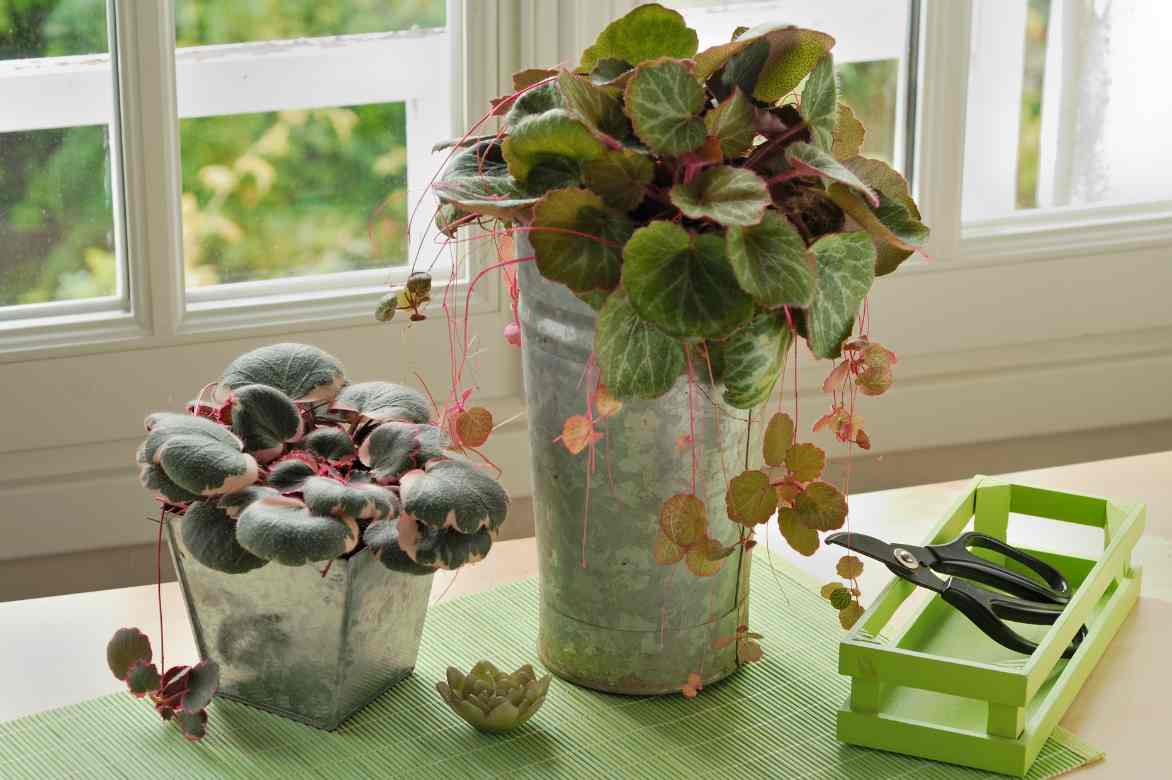
Saxifrage integrates perfectly into interiors with a natural, soft, and plant-filled ambiance, where light is present without being direct. Its trailing and airy habit, combined with highly graphic veined foliage, makes it an ideal plant for decor inspired by Japandi, slow decor, or wabi-sabi, where texture, freshness, and organic simplicity are celebrated.
Saxifrage naturally finds its place in a bright bathroom, a cool kitchen, or an east-facing office, where ambient humidity and filtered light create a microclimate conducive to its flourishing. Placed on a wall shelf, suspended in a raw ceramic bowl, or cascading over the edge of a little-exposed window, in suspension, a saxifrage displays all its charm without ever weighing down the space.
To create a lovely scene, it can be paired with plants that have similar requirements: Chlorophytum ‘Variegatum’, with its variegated ribbon-like leaves, creates a contrast of shape and tone while sharing the same light and humidity needs. Tradescantia zebrina ‘Pink Paradise’, with its metallic pink and silver reflections.
It can also be installed in an open terrarium, where it will benefit from a stable humidity environment, perfectly suited to its needs. In this case, it pairs well with plants like Fittonia and Pilea, which share the same needs for gentle humidity, filtered light, and light substrate.
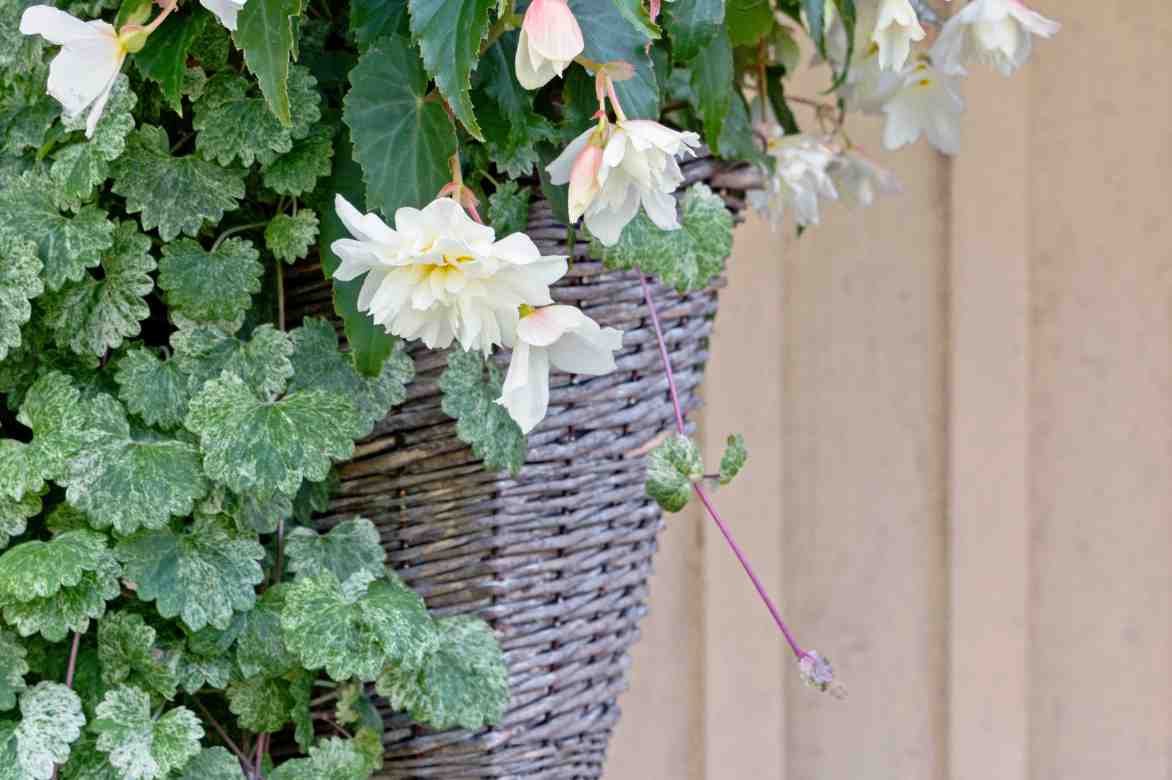
Begonia and Saxifraga stolonifera
See also
→ Discoverour wide range of houseplants.
→ Ourdecorative foliage houseplants and ourflowering houseplants.
→ Ournumerous books on houseplants.
Frequently asked questions
-
What exposure do saxifrages need?
Indoors, saxifrages thrive in bright light without direct sunlight, such as near an east or north-facing window. They also do well in filtered light, provided that good ambient humidity is maintained.
-
How to care for saxifrage?
Indoors, the care of saxifrage is simple: moderate watering without excess, and a quick cleaning of faded leaves to stay healthy.
- Subscribe!
- Contents
Comments