





























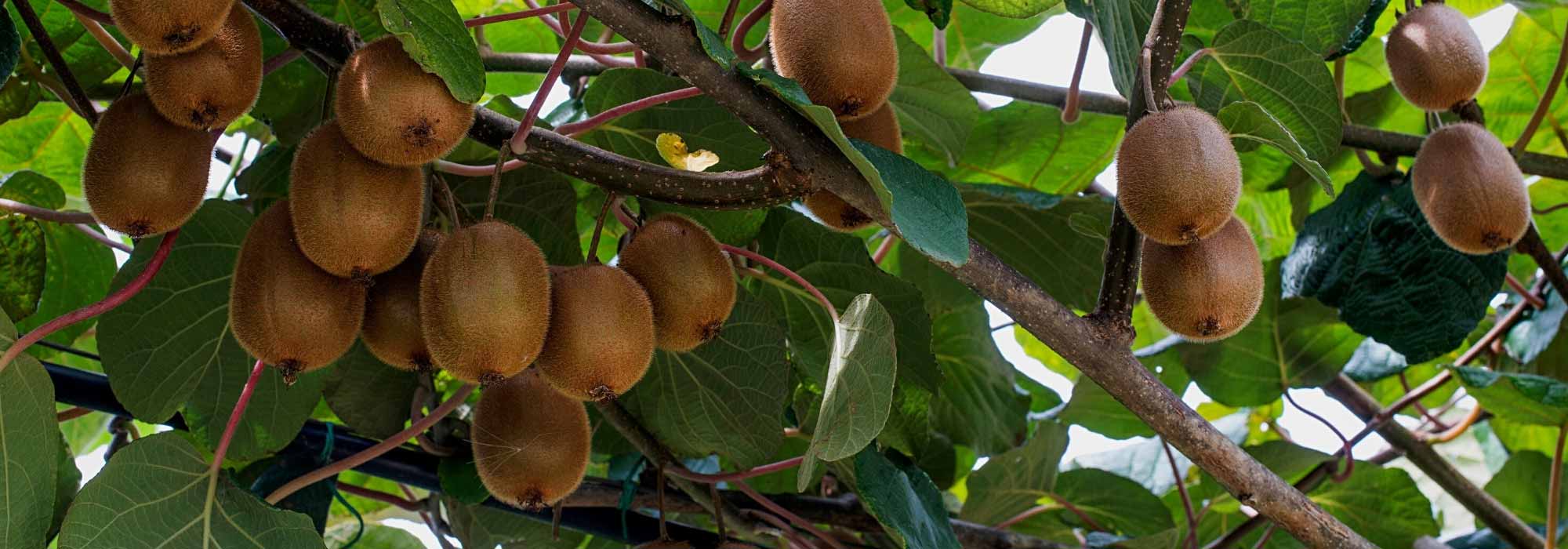
Why isn't my kiwi plant fruiting?
How do I get fruit on a kiwi plant?
Contents
Kiwi (Actinidia) is a liana from New Zealand that produces vitamin-rich, flavoursome fruit with villous skin and green or yellow flesh. Hardy down to -15°C, the kiwi grows very well in our gardens once well established in the sun, sheltered from cold winds, properly espaliered in a fresh, slightly calcareous, well-drained soil. However, despite its vigorous appearance, your kiwi does not produce fruit. The lack of fruiting depends on several factors, pollination, choice of variety (only female plants produce fruit), climatic conditions or cultivation practices. Let’s look together at the causes of this problem and the solutions to enjoy abundant harvests!

Because it is too young
The kiwi comes into fruit relatively quickly. You will need to wait around 4 to 5 short years before you can harvest for the first time, although some varieties are a little earlier. After about ten years of cultivation, a mature plant can yield up to 30 to 50 kg of fruit per year.
Because pollination does not occur
Most kiwi species are dioecious, which means you must plant a male plant close to a female plant to allow pollination by bees and thus obtain fruit. Male plants, more floriferous than female plants, do not produce fruit, but they produce pollen, which is necessary to fertilise the flowers of the female plants. That is why, to encourage cross-pollination, you must find a compatible variety that flowers at the same time and you must plant at least one female plant with a male pollinator plant, bearing in mind that one male kiwi can pollinate around 5 to 7 female plants. Today, there are self-fertile kiwi varieties, in other words bearing male and female flowers on the same plant: one plant is then enough to obtain fruit. Ideal when you have a small garden! These include:
- ‘Solissimo’, which produces large green fruits weighing about 60 grammes
- ‘Solo’, which yields many small-sized kiwis (20 to 30 g), sweet and juicy
- ‘Boskoop‘, which offers medium-sized kiwis with tender green flesh, sweet and juicy
- ‘Jenny, which produces small fruits with green flesh around November
- ‘Herma’, which produces large green-fleshed kiwis as early as the third year of cultivation
→ Discover our kiwi pairs, duos made up of a male plant and a female plant, such as the combo female kiwi ‘Hayward’ and male kiwi ‘Atlas‘ for example.
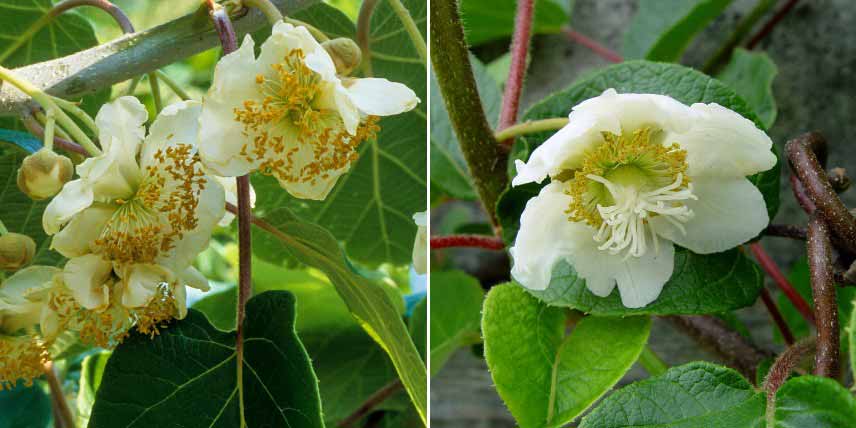
The male flowers, bearing numerous long stamens covered in pollen, and the female flowers, with many white styles in the centre, collecting the pollen, surrounded by a crown of short stamens. It is the female flowers that will produce the fruit.
Because the soil doesn't suit it
Actinidia prefers rich, well-drained, cool soils, without too much lime that could cause chlorosis or yellowing of the leaves. While it prefers soil that always retains a little moisture in summer, it dislikes heavy soils and will grow poorly in soil saturated with water in winter. That is why, if your ground is poorly draining, it is better to plant it on a raised mound and spread a layer of gravel at the bottom of the planting hole. If you want fruit, give it rich soil. Do not hesitate to add well‑rotted compost when planting and then each spring, placing it around its base and lightly forking it into the surface of the soil.
Because it is poorly installed
Although not demanding, the kiwi still requires some growing conditions essential to its health, and therefore to its fruiting. Give it enough space so that it can develop properly, especially as you will necessarily need to provide two plants for non-self-fertile species. It prefers sunny but not scorching locations, particularly in southern France. It should ideally be planted with its top facing the sun, along a south-facing wall. If your kiwi is planted in shade, it is less likely to produce fruit. A spot sheltered from cold winds and severe spring frosts is essential to protect its young shoots and avoid compromising the flowering. Its expansive nature requires a sufficiently sturdy support to establish itself: train its long stems along a taut wire, a mesh, or a well-positioned pergola.
Because it is not suitable for your region
Although hardy (-12/-15 °C), the kiwi is fairly sensitive to severe late frosts, since the buds freeze from -4/-5 °C. An Actinidia exposed to winds that are too strong or too cold will struggle to bear fruit. In regions with harsh winters, it is preferable to plant a Siberian kiwi or Kiwai (Actinidia arguta), a cousin of the kiwi that can withstand down to -20 °C.
Because it hasn't been pruned
Pruning is essential, especially on female plants, to achieve optimal fruiting of the kiwi vine. It also helps to limit its rather vigorous growth. It is generally recommended to prune the year’s shoots after the harvest, in October–November, then cut it back slightly at the end of winter, from December to mid-February, before the onset of the growing season. Always keep a few main branches. Summer fruiting prunings also help to produce larger fruit.
→ To learn more, read our article : “Kiwi pruning: when and how to prune an Actinidia?“.
Because it does not receive proper care
Kiwis need some care to produce fruit properly.
Watering
The Kiwi needs enough water in summer. During the first three years after planting, while it is still young, water regularly in summer to keep the soil sufficiently moist. In very hot weather, water once or twice a week. Mulch the base to help keep the roots cool.
Fertilisation
Each year in spring, at the time of flowering, apply a fruit tree fertiliser. In March, it is recommended to enrich the soil with an organic fertiliser, for example by spreading compost around the base of the kiwi.
Winter protection
In cold regions or if a cold snap is forecast, consider protecting the base with a good layer of mulch. A fleece can also help young kiwifruit plants get through the winter. During the first three winters the kiwi will be more vulnerable; afterwards it will be more resilient.
Diseases
To keep your fruit tree healthy, ensure good drainage of the soil, avoid wetting the foliage, as the kiwi is particularly susceptible to bacterial necrosis in cases of excessive moisture. When pruning, make clean, neat cuts and use horsetail decoctions or nettle manure as a preventive treatment.
→ Learn more about kiwi diseases and pests in our article!
- Subscribe!
- Contents
Comments