





























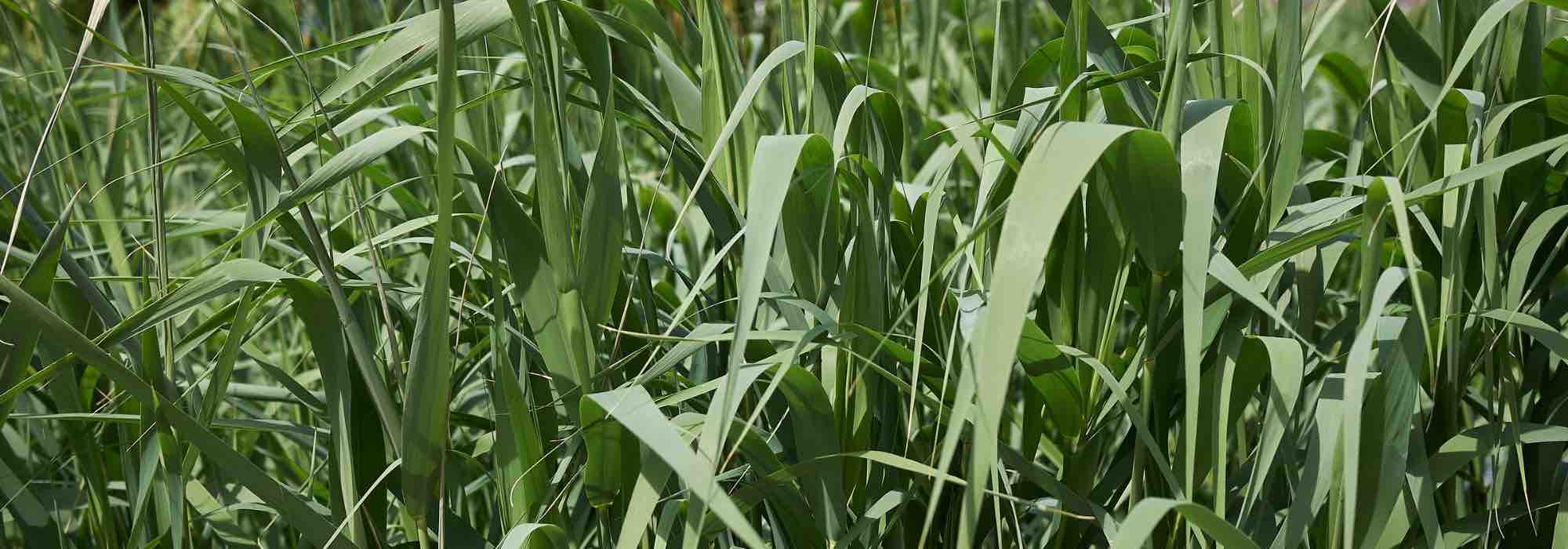
The best plants for phytoremediation
Opt for a natural, eco-friendly water treatment using suitable plants
Contents
Plant-based wastewater treatment is a technique for purifying and treating wastewater, both domestic and non-domestic. To do this, it uses various filtering and/or pollutant-removing plants, chosen according to their characteristics. They work together to recreate a genuinely balanced ecosystem. All aquatic plants have filtration capabilities, but some will prove more effective and better suited than others.
Natural, ecological and economical, plant-based wastewater treatment is becoming increasingly popular and is in line with our current environmental challenges. To top it off, it is a particularly aesthetic solution, resembling the design of water gardens.
Here is our list of effective plants to use in plant-based wastewater treatment.

How to choose plants for phytoremediation?
Different characteristics must be taken into account when choosing effective filtering plants:
- their purifying power;
- their sensitivity to pollution;
- their root and foliar structure (foliage);
- their capacity for immersion;
- their ease of cultivation;
- their aesthetics and their ability to blend harmoniously into the garden;
- their adaptability to the climate and soil type (native plants naturally present in our wetlands are favoured to promote biodiversity).
To achieve effective purification by plants, it is important to combine two distinct types that will work in full complementarity.
- Plants that provide vertical filtration, known as “pre-treatment”. They retain pollutants and suspended particles. Thanks to their root system and the micro-organisms (bacteria) naturally present there, they also help degrade them. They are often combined with a filtering substrate made of gravel and sand. This treatment is carried out mainly in aerobic conditions (in an oxygenated medium).
- Plants that provide horizontal filtration. Their role is to retain and consume the minerals present in the water (nitrogen, phosphorus, nitrates…). These plants have high nutrient requirements, which support their development. They also fulfil an aesthetic function. The treatment here is anaerobic (in a poorly oxygenated medium).
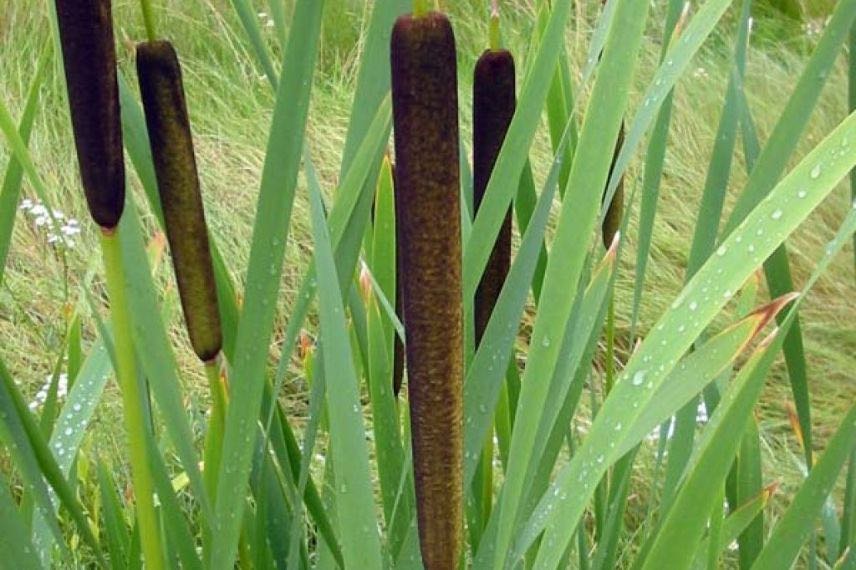
The Typha latifolia
The Typha latifolia or broadleaf cattail is one of those plants you’re likely to encounter on a walk in our territory. It develops easily on the shores of lakes and ponds. The Typha is recognisable by its brown, elongated flower spikes (cattails), with a velvety texture. The foliage in long pointed ribbons adds a truly lush touch.
It is one of the plants most used in phytoremediation, as a vertical filter.
This large plant is capable of reaching more than 1.8 metres in height at maturity. Hardy and vigorous, it can become invasive, which is why it should be reserved for large bodies of water. Plant this cattail in full sun or partial shade.
The Phragmites australis
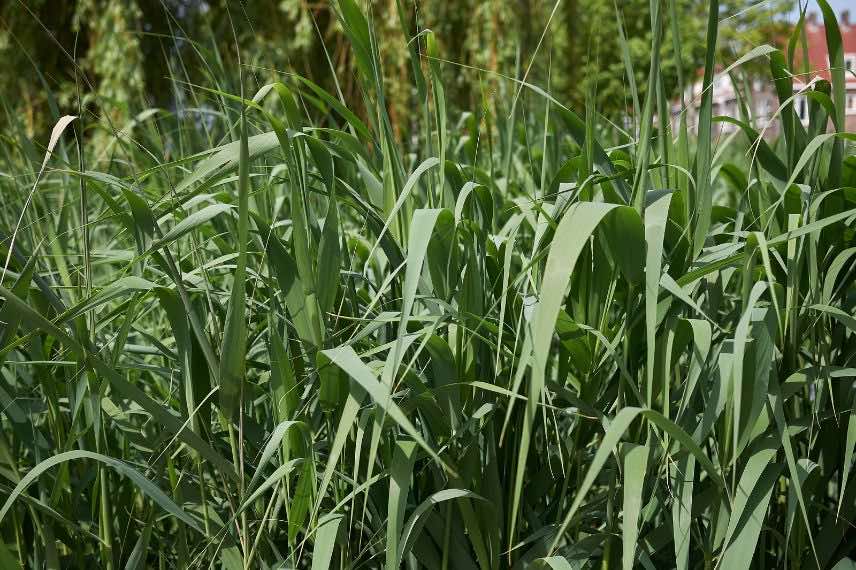
The Phragmite australis or common reed is also an indispensable plant when it comes to phytoremediation. This perennial semi-aquatic grows naturally in our wetlands. It is characterised by large ribbon-like leaves, accompanied by feathery spikes, present from summer to autumn.
It is ideal for stabilising banks and oxygenating the heaviest, marshy, even saline soils. It also provides a safe area for local wildlife. Reeds form an ideal vertical filter with purifying properties; they can even remove heavy metals.
Reaching up to 3 metres in height at maturity, this giant grass brings structure and verticality. It has a great propensity to colonise space thanks to its suckers and running rootstocks, forming over time what are called reedbeds. It will therefore once again be reserved for large bodies of water. This very hardy plant will find its place in full sun or partial shade.
The Iris pseudoacorus
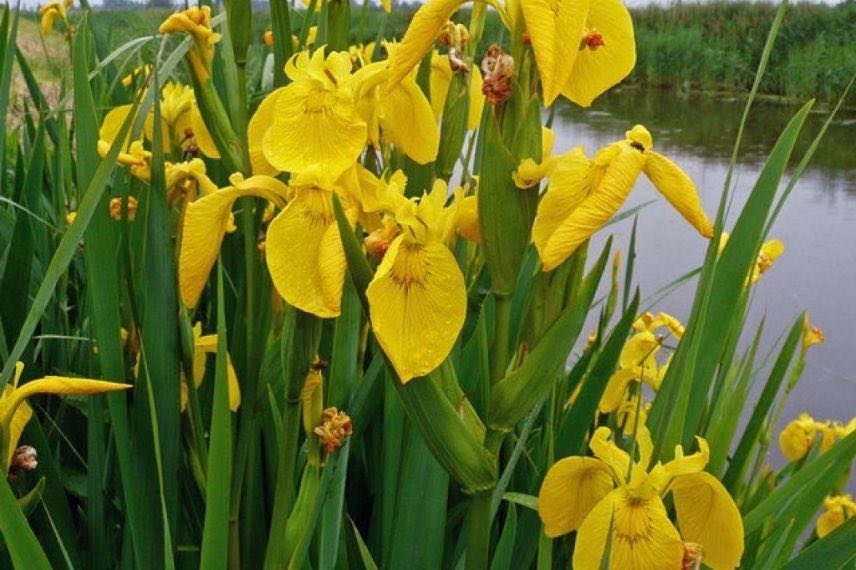
The Iris pseudoacorus or marsh iris is a native perennial plant, which can also be easily encountered in the wild. It favours banks and ditches. The marsh iris is among those plants with very ornamental flowering, which is not always the case with aquatic or semi-aquatic plants. In spring it reveals sophisticated flowers of a particularly bright, golden yellow. Another ornamental feature: its narrow ribbon-like foliage, which is evergreen.
In terms of habit, this Iris will reach about 1 metre in height at maturity, sometimes more. Very hardy and easy to grow, it will establish near all sorts of water features, in full sun or partial shade. This plant can be submerged up to 20 cm. To limit its spread, you can grow it in a pot.
It is one of the very good candidates for phytoremediation, to be used in horizontal filtration.
The Hippuris vulgaris
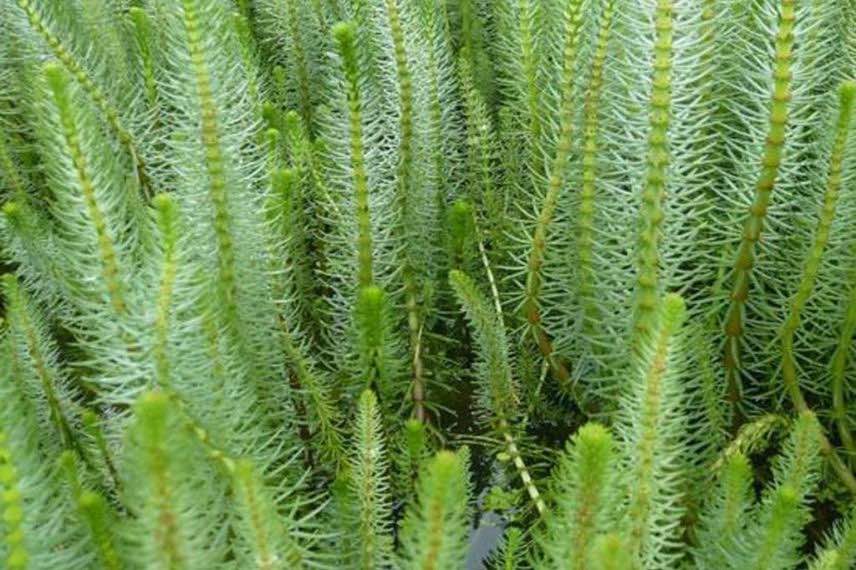
The Hippuris vulgaris or mare’s-tail is an aquatic perennial plant whose stems resemble miniature fir trees. Foliage dies back in autumn and then reappears in spring.
It is often used to balance, oxygenate and cleanse the water in ponds. This nutrient-hungry plant indeed contributes to the uptake of excess nutrients, such as nitrates or phosphates, which allow it to grow rapidly. Mare’s-tail is also a plant favourable to biodiversity, providing shelter for a whole small aquatic fauna (dragonflies, amphibians, fish…).
At maturity it reaches 20 to 50 cm in height. It can be fully or partially submerged. Very vigorous, this aquatic plant can even become invasive, which is why it is better grown in a pot or pruned every year. Very hardy (to below -30°C), it is best planted in full sun or partial shade.
The Juncus effusus
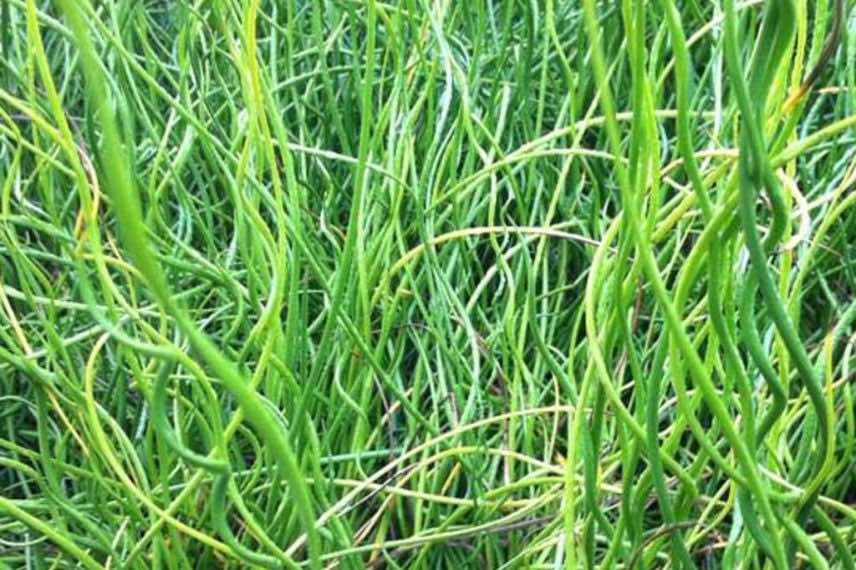
The Juncus effusus ‘Spiralis’ or spiralled rush is a purifying plant, found on the banks of our ditches and other pockets of standing water. This variety stands out for its spiralled foliage, reminiscent of corkscrews. In summer, the flowering consists of reddish-brown spikelets on a lax habit.
This rhizomatous plant will reach 50 cm in all directions at maturity. It will establish in heavy, marshy soil, in full sun or partial shade. It can be submerged up to 10 cm. It is also a good candidate for seaside gardens. With great hardiness and rapid growth, the spiralled rush can be grown in a pot to limit its spread.
The Eleocharis palustrise
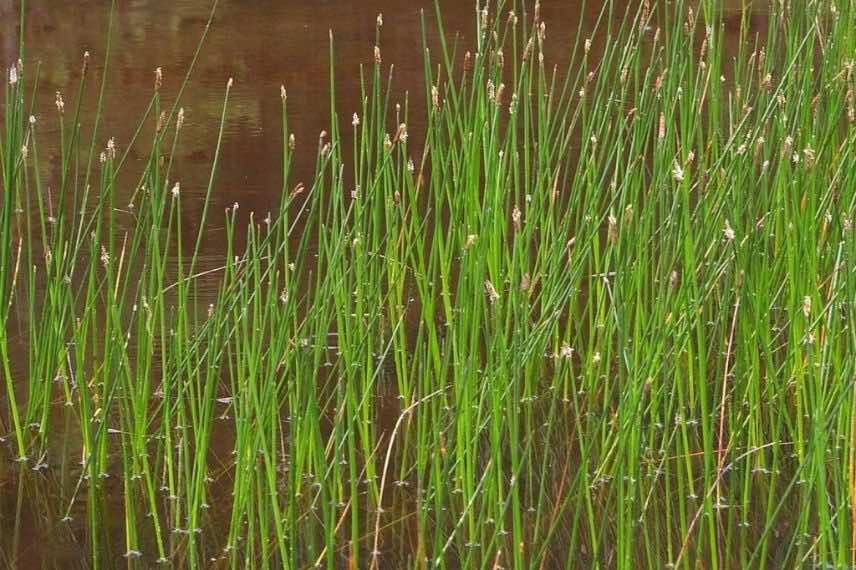
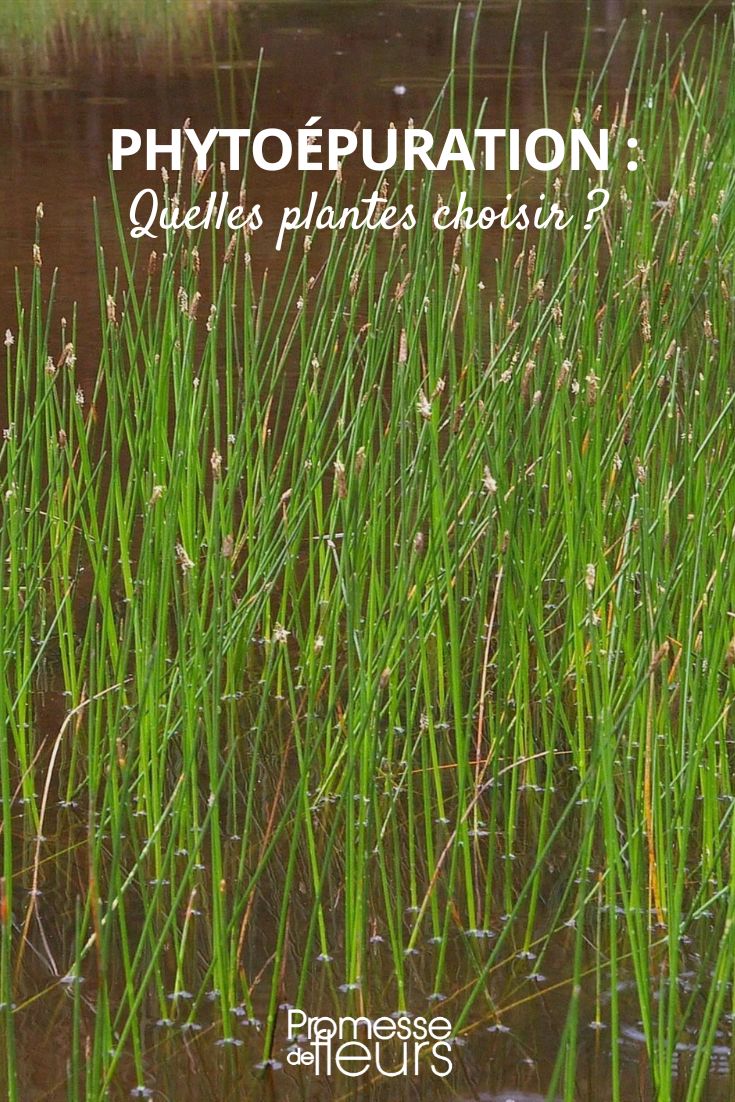
The Eleocharis palustris or marsh scirpus is a perennial of wet areas, often found in shallow still waters. Aesthetically, we appreciate it for its fine upright stems of a vivid green, as well as for its summer flowering.
Scirpus are plants with good purifying abilities, which help oxygenate and cleanse the water, which is why they are prized in natural lagooning projects.
At maturity, this marsh scirpus will reach 30 cm in all directions, making it a good groundcover. Hardy and of rapid growth, the Eleocharis palustrise develops thanks to a running root system, which can make it invasive. Plant it at the edge of a water feature in full sun. It can be submerged up to 10 cm.
For more information: Scirpus: Planting, growing and care
The Lythrum salicaria
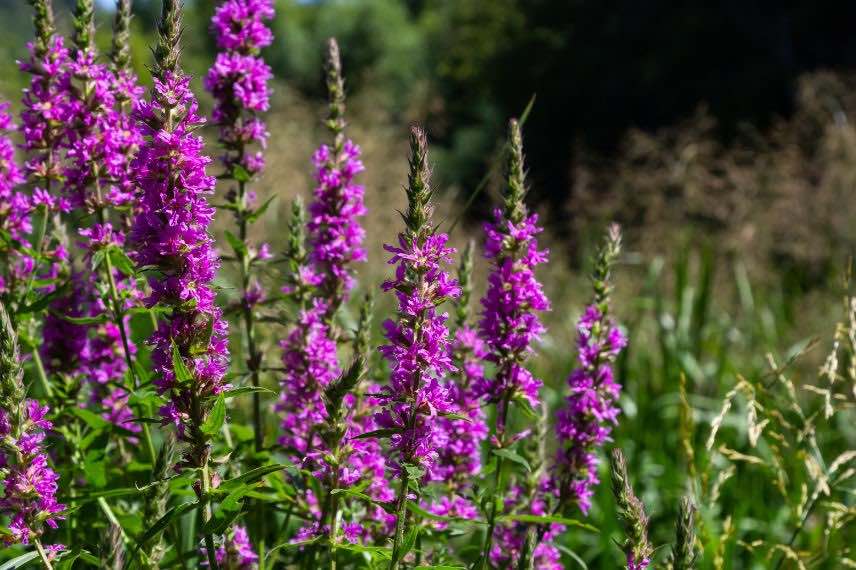
The Lythrum salicaria or purple loosestrife is another native perennial. It is distinguished by its summer flowering, consisting of bright pink spikes reaching up to 40 cm in length. They are particularly ornamental. The foliage is also attractive and forms handsome bushy clumps.
Its habit reaches 1.5 metres in height and also adds vertical interest.
Purple loosestrife is a good candidate for horizontal filtration. Give it a place at the edges of water features, in full sun, even in situations where it is partially submerged. To avoid spontaneous sowing, prune the flowers after fading.
For more information: Loosestrife, Lythrum: planting and care
Other plants used in phytoremediation
This list of filtering plants is not exhaustive. There are in fact many others, such as the aquatic mint (Mentha aquatica), the bamboos, Papyrus (Cyperus), Carex, bur-reeds (Sparganium erectum) or even the water plantain (Alisma plantago-aquatica).
How to use and maintain these filtering plants?
These plants can be used in several ways around the garden.
- To purify the water in a pond, pool or swimming pool, among others, by preventing the growth of algae.
- To stabilise and secure bank edges.
- To provide a wastewater treatment solution as an alternative to conventional systems such as connection to the public sewer or a septic tank. This is the principle of lagooning, that is the creation of artificial basins functioning as an ecosystem. They serve as an intermediate, depolluting and balancing stage before the water is discharged into the natural environment. This type of project can be suitable for domestic, professional (agriculture, livestock, industry…) or public (collective) use. However, it will require careful planning, knowledge of the legal constraints involved, and a minimum amount of surface area available. Do not hesitate to contact professionals to assist you.
For maintenance, it is necessary to schedule two essential annual tasks to keep phytoremediation consistently effective.
- Pruning and mowing. They limit the spread of the most vigorous plants and also prevent dead leaves from polluting the area.
- Weeding. It limits the growth of “undesirable” plants that may compete with the phytoremediation plants in place.
In the long term, particularly for wastewater treatment, it is also recommended to replace the top layer of compost every 10 years.
- Subscribe!
- Contents
Comments