





























What to plant after a fire?
Understanding and acting in your garden after a fire
Contents
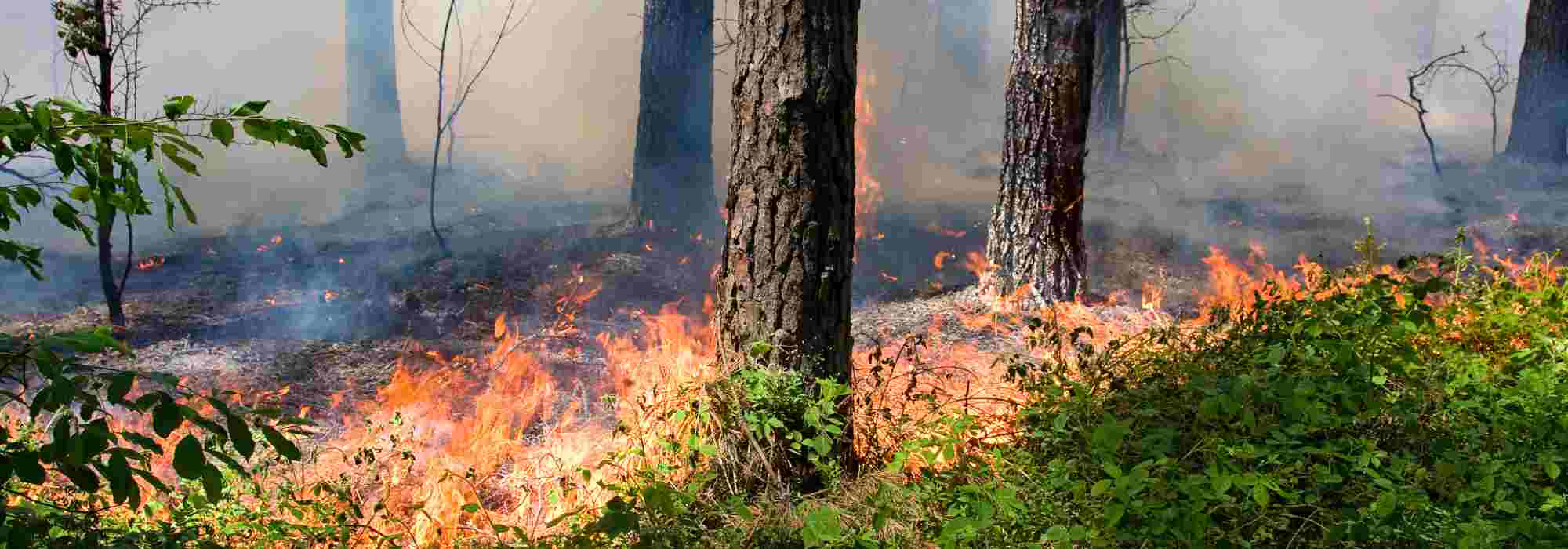
We all remember the summer of 2022 and the terrible wildfires that ravaged thousands of hectares of forests in France, as well as around the world. The climate change we are all experiencing accelerates the precocity, frequency, extent, and duration of these dramatic episodes for nature. When this tragedy affects our own homes and gardens that we have patiently built, it is essential to understand the mechanisms of nature’s regeneration, as well as the damage caused to the soils, to better know how and when to replant.
Let’s explore how resilient nature can recover from such trauma. What plants should be replanted after a fire? What should be done with condemned trees? How can the soil rebalance itself? We provide you with some useful tips for managing the disastrous consequences of wildfires on your garden or land.
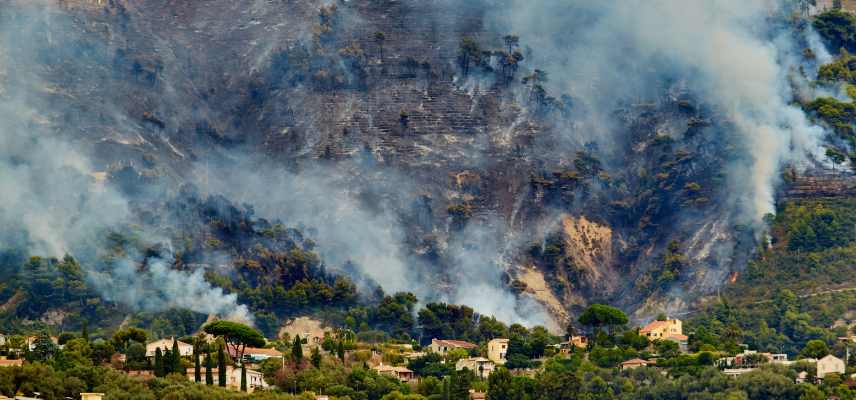
Devastating fires no longer only target villas in the south of the country

Regrowth of vegetation after a fire
A fire may seem to devastate everything in its path, but the power of nature ensures that life will express itself again, sooner or later. Some plants often find a way to regrow. In fact, certain ecosystems, such as coniferous forests, are adapted to survive and can regenerate after fires. These forests have seeds that only germinate after being exposed to high temperatures, meaning they actually depend on fires for their renewal.
Outside of these specific cases, nature has ways to recover after a fire. Herbaceous plants and grasses are often the first to regrow, creating a green carpet that helps stabilise the soil and prevent erosion. Fast-growing plants like poplars and willows can also regenerate quickly after a fire.
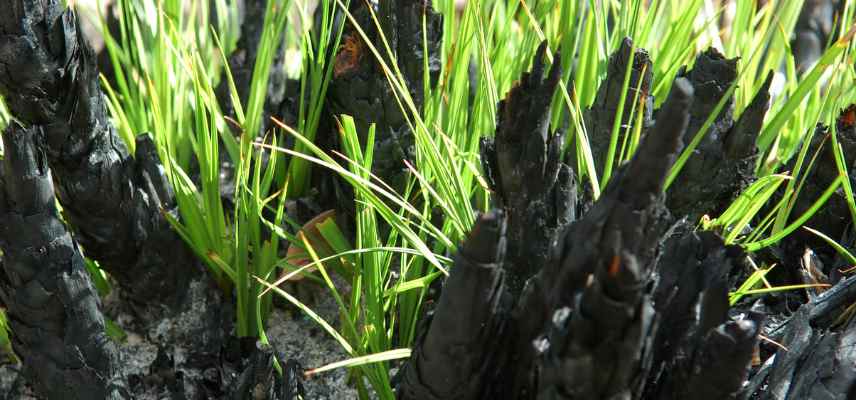
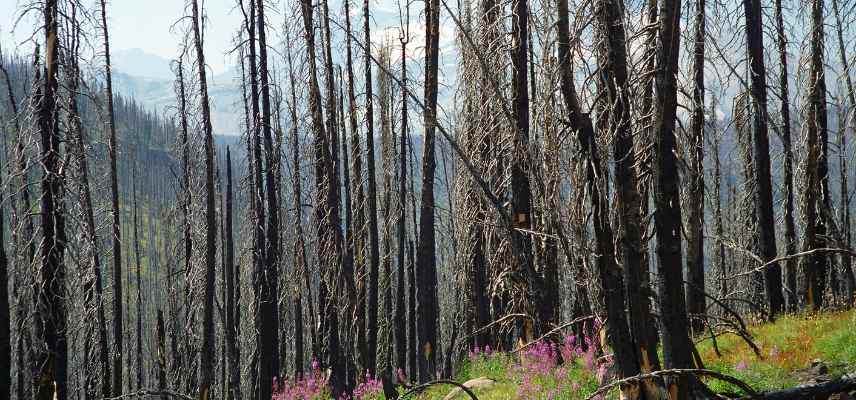
Grasses appear quickly after a fire, amidst the charred stumps…
When to replant after a fire?
The timing of replanting after a fire depends on several factors, including the intensity of the fire, the season, and the type of ecosystem. Generally, it is advisable to wait at least one growth season after a fire to allow nature to begin the regeneration process.
This allows the soil, not to regenerate, as the recovery process is very slow, but for the ashes to partially dissipate thanks to autumn rains, wind, and runoff. The degradation and loss of nutrients, as well as changes in the biological activity of the soil, are also factors to consider before replanting. However, in the case of fires that were quickly controlled, where the soil was superficially affected, mycorrhizal exchanges can recover fairly quickly, and fertility can gradually return. It is worth noting that an increase in soil pH is often observed, but this remains temporary, and in the case of severe fires, there may even be a change in soil structure.
This also provides time to assess the damage and determine which species are best suited for replanting. If the fire occurred at the end of summer or in autumn, it is best to wait until the following spring to begin replanting. This way, the new plants will have the entire growth season to establish themselves before winter.
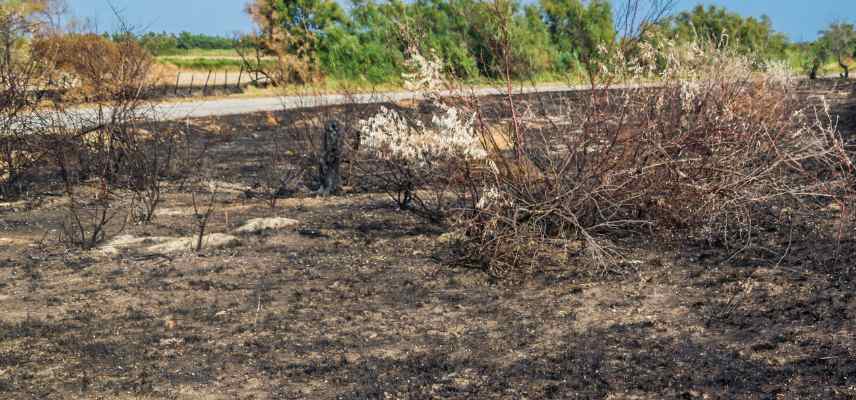
Here, a superficially burned soil will allow nature to re-establish itself quite quickly
What to do with burnt trees?
After a fire, there is often a desire to quickly erase the scars of the blaze, those plants that no longer resemble anything, the burnt trees like charred carcasses standing out against the blue sky. However, it is important to note that these trees can still play a vital role in the ecosystem. They provide habitats for animals and help prevent erosion.
It is recommended to assess each tree individually. If a tree is dead but still solid, it can be left in place. If a tree is dangerously unstable, it may be necessary to fell it for safety reasons.
Which plants are fire-resistant?
When replanting after a fire, especially if your home is at risk of flames due to its location near a forest or in a high-risk area, it is wise to choose plants that are naturally resistant or even adaptable to fire. These are known as pyrophytic (or pyrophilous) plants. These plants have characteristics that help them survive or recover relatively quickly after a fire:
- Either because they have a thick, highly protective bark (like the oak, olive, or certain palms) that protects them from heat, slowing the damage to the sapwood (which is said to be suberized in the case of the cork oak), or because their wood is dense (beech, ash, oak…)
- Or because they have a suckering stump or will sprout and spread a bit further (like Eucalyptus, for example – but be cautious as these are considered very dangerous due to their high flammability, similar to pine, with their strips of bark acting as “fire starters” and the vapours they emit),
- Or they exhibit extreme cellular regeneration capacity that facilitates regrowth along the trunk and branches
- Or because their propagation strategy uses fire as a means of reproduction by releasing seeds that will then germinate (well-known in Callistemon or bottlebrush, and also in cistus).
Among the most fire-resistant trees, we can mention the oak (including the green oak and especially the cork oak), beech, plane tree, and maple. These trees have thick bark that can withstand the heat of a fire if it is not too intense. They are also capable of resuming growth from their stump or branches, even after being partially burned.
In terms of shrubs, Pittosporum, the mock privet (Phillyrea), and the strawberry tree are quite fire-resistant. These plants often have thick, evergreen leaves that retain moisture, helping them withstand heat. Similarly, many succulent or cacti plants (agaves in particular) are considered relatively fire-resistant: they can act as true firebreak plants in a garden by delaying the spread of flames.
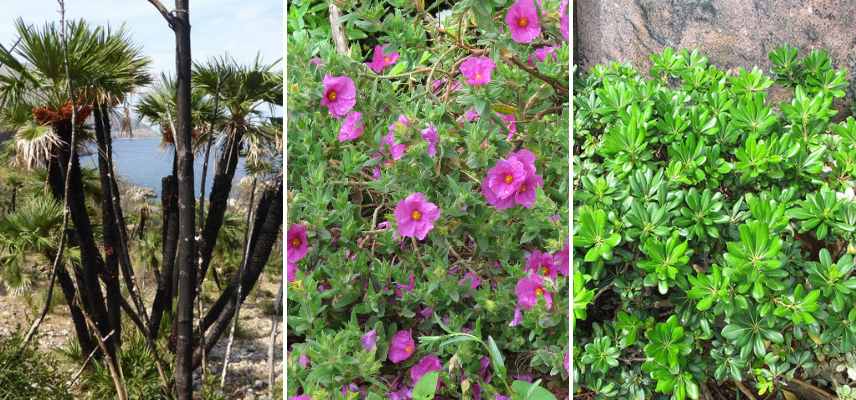
Resilient cordylines (© Gwenaëlle David-Authier) on the left. In the centre and on the right, Cistus pulverulentus and Pittosporum tobira
Tips on plants and how to replant?
To best protect your home, it is important to avoid planting along the perimeter in the form of a hedge. The positioning of ornamental plants is indeed crucial in countering fire, and a hedge presents a dangerous tree-lined boundary. Damage can be limited by planting small multi-species hedges (composed of several species). Anything that creates a dense leafy zone should also be avoided, as it acts as a springboard for fire to spread (such as bamboo).
Maintenance should be at the heart of the garden, with increased effort on pruning, clearing, and the collection of dead and dry leaves as well as accumulated twigs and litter (especially from bamboo), which contribute to the spread of fire.
It is, of course, advisable to not plant the most flammable plants such as conifers that contain resins or those with oils and tannins (cypress, acacia, juniper, rosemary… but also Dictamnus albus, also known as burning bush, etc.).
Grasses are both a good and a bad idea for replanting after a fire. Indeed, these plants regrow quickly and are often the first to colonise burnt soils again. However, they also prove to be rapidly flammable sources, acting like kindling. They should definitely be avoided around residential areas.
To complete the palette of resilient plants that should be prioritised, one should take inspiration from what naturally regrows on burnt land: angelicas, heathers, etc.
Before replanting, to help restore the soil more quickly, you can add compost or manure to increase the organic matter content. You may also consider conducting a soil test to determine which nutrients are needed and add amendments accordingly.
In any case, after a fire, allow nature time to resurface and life to be reborn. Nothing is ever final, and the resilience of nature will never cease to amaze us…
Learn more
With the excellent publication “Fire Risk in Habitat-Forest Interfaces” by Anne Ganteaumme (in French): degree of flammability and combustibility of plants, mechanisms of fire propagation, etc.
- Subscribe!
- Contents

Comments