





























What mulch for the vegetable garden?
All our tips for choosing the best mulch for your vegetable garden
Contents
A short stroll along the edge of the wood confirms that soil never remains naked in nature. In fact, it is futile to try to keep soil perfectly “clean.” Mulching your bush beds and colourful perennial borders is therefore a no-brainer for you. Moreover, mulching holds numerous advantages for both the soil and its microfauna, as well as for plant development, water conservation, and preserving your back.
What if you also adopted this mulching in your vegetable garden? The same benefits will apply, provided you choose the right “mulching.” Some mulches are indeed particularly harmful to the soil and vegetable plants. Join us to discover how and when to mulch in the vegetable garden, which mulches to use or avoid, as well as the few minor drawbacks of this gardening technique.

Why should you mulch your vegetable garden?
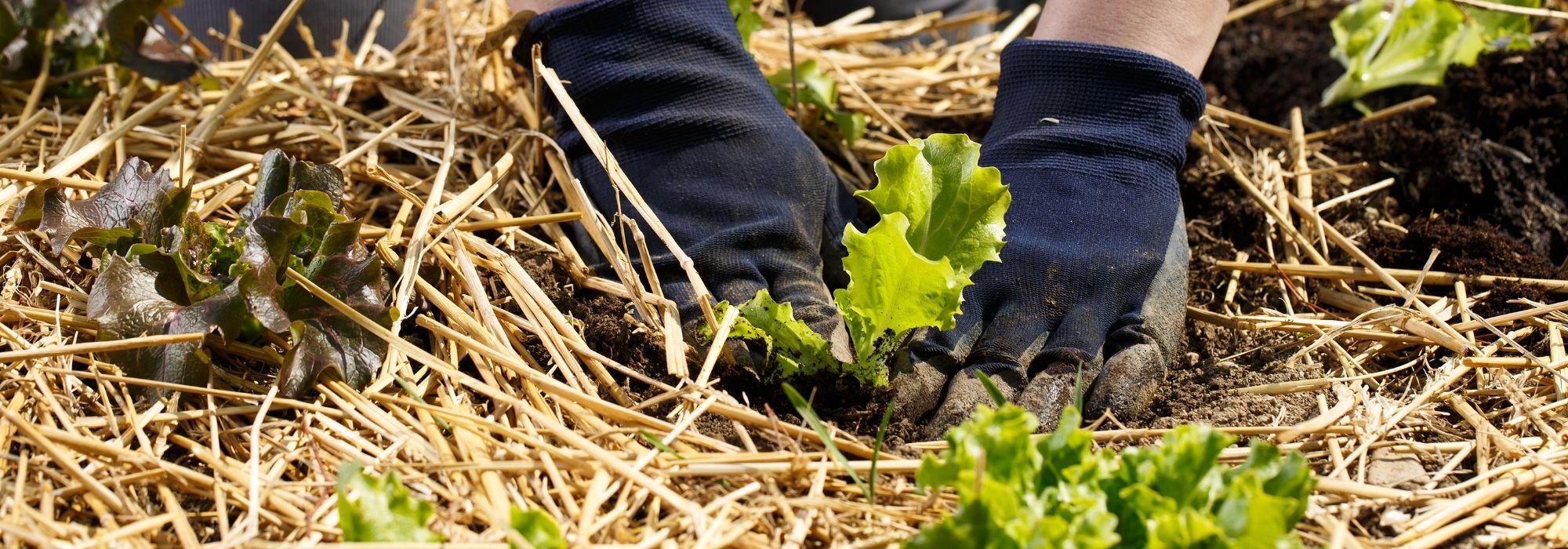
Once again, you have diligently prepared your plots for your vegetables, and just a few days later, the first adventive plants are already making an appearance. It’s only natural, as nature doesn’t appreciate being bare. This includes your beautiful vegetable plants! So, isn’t it time to adopt mulching in your vegetable garden? The benefits are numerous for both your soil and your vegetable plants, as well as your back.
-
- Mulch prevents the chore of weeding by limiting the tendency of annual weeds to develop as soon as the slightest ray of sunshine warms the atmosphere.
- Mulching spaces out watering, as water evaporation is reduced. Thus, the mulch retains a certain level of moisture.
- Mulching helps to limit temperature fluctuations, keeping warmth in and protecting against cold while preventing drying out in summer.
- Applying a mulch reduces soil erosion caused by compaction and leaching.
- Some mulches contribute to soil fertilisation.
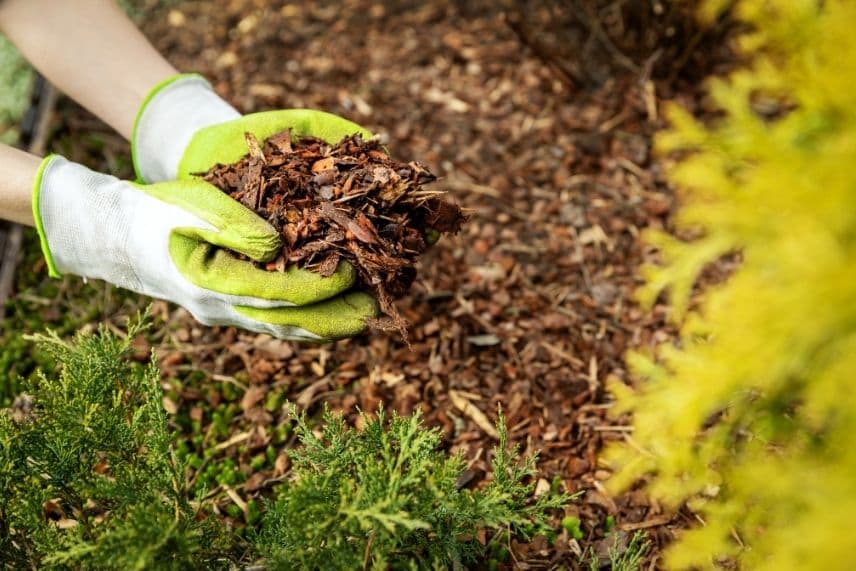 Mulching offers numerous advantages for the soil, plant development, and your back!
Not to mention the aesthetic aspect. Imagine beautiful, ripe tomatoes or well-formed lettuces highlighted by a lovely mulch…
Want to learn more about the benefits of mulching in the vegetable garden, as well as in the ornamental garden? Discover Mickaël’s comprehensive article, Mulching: why? How?
Read also
Mulching: Why? how?Mulches to avoid (or limit) in the vegetable garden
Let’s eliminate synthetic, conventional mulching fabrics or biodegradable ones, which are not at all suitable for a family vegetable garden but very useful in market gardening. This leaves us with organic or mineral mulches. Not all are beneficial for the vegetable garden. Initially, mineral mulches made of gravel, slate, or pumice should be banned from the vegetable garden, as they are completely inert. Reserve them for flower beds, borders, and other rockeries where they will look their best.
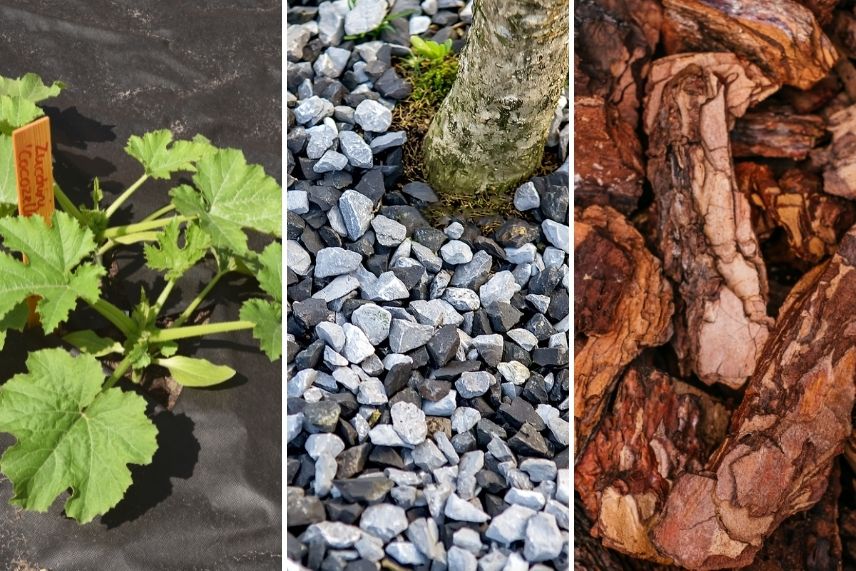
Synthetic and mineral mulches are not recommended for the vegetable garden; pine bark is too inert. However, straw should ideally be mixed with grass clippings.
In the vegetable garden, we focus on organic mulches that have the advantage of being biodegradable and transforming into humus to fertilise the soil. A bonus for the vegetable garden! However, some do not mix well with vegetable plants:
- Pine bark mulches decompose very slowly and do not improve soil quality. It is often said that pine bark is acidic, but it does not actually acidify the soil unless the soil is already acidic. Therefore, pine bark mulches should not be used in the vegetable garden but reserved for beds of ericaceous plants.
- Straw is very effective, especially when spread in a thick layer. In the vegetable garden, it does have one drawback: it can cause a temporary nitrogen deficiency. Why? Simply because the microorganisms that work hard to decompose the straw have high nitrogen needs, which they will draw from the soil, to the detriment of the plants. To avoid this nitrogen deficiency, just mix the straw with grass clippings, which are particularly rich in nitrogen.
The best mulching solutions for the vegetable garden
Vegetable mulches are to be preferred in the vegetable garden, as they provide organic matter when they decompose. Most are commercially available, while others can be homemade.
Commercial mulches
- RCW (ramial chipped wood) and all wood-based mulches, bark, branches, chips or flakes differ by their size. They are sometimes coloured with water, more suited for flower beds and borders. However, RCW can be used in the vegetable garden due to its lightness and ability to decompose slowly. It is therefore best reserved for crops that remain in place for a long time. The decomposition process produces quality humus, especially as it attracts a diverse microfauna, but it can be nitrogen-hungry. It is recommended to add compost to the soil before applying the mulch.
- Bark and cocoa shells are recommended for poor soils, as this mulch, delicately fragrant, is very rich in nitrogen and potash. They decompose very slowly.
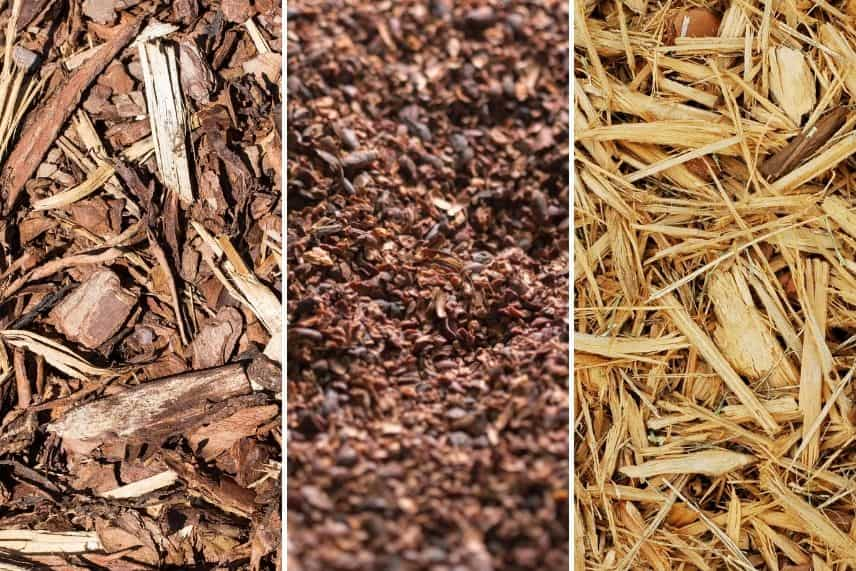 RCW, cocoa bark and lin flakes
 - Lin flakes, miscanthus or hemp make very fine mulches, effective for heavy soils that they help to lighten. They decompose fairly quickly, within one to two years, but have the ability to warm the soil. This is why they can be useful at the end of the season for root vegetables. They integrate very easily into the soil with a simple rake.
- Buckwheat husks are also very fine and therefore easily incorporated into the soil. They have a strong water retention capacity. Moreover, they seem to be avoided by slugs.
Homemade mulches
These homemade mulches are just as effective as commercial mulches while being free, as they come from garden or household waste. However, they do require a bit of patience or work. They are particularly cost-effective, especially if you have a large garden.
- Grass clippings have the advantage of being abundant in the growing season. They are also particularly rich in nitrogen and nutrients. However, their major drawback is that they form compact, sometimes smelly and impermeable mats, ultimately counterproductive, as they can cause the collar of vegetable plants to rot. To remedy this problem, simply dry your grass clippings before using them in the vegetable garden. This layer of natural mulch will need to be renewed regularly… with each mowing of the lawn! Ideally, mix your grass clippings with straw to balance the nitrogen.
- Prunings from shrubs and perennial plants can be shredded. Each year, you carefully prune your trees, shrubs, and perennial plants and need to dispose of the waste at the tip. Investing in a shredder would save you time and provide your own RCW of varying sizes depending on the pruned plants.
- Dead leaves abound in autumn. They can be collected to make an excellent mulch to be laid in winter on the bare soil of the vegetable garden. These dead leaves, spread in a thick layer, will decompose, forming quality humus and nourishing the soil fauna. Additionally, they limit the impact of winter weather.
- Compost, whether mature or not, can be spread directly on the soil of the vegetable garden. It will complete its decomposition in the open air and will advantageously nourish the soil by providing all the nutrients it needs.
- Green manures can also make an interesting mulch for winter, a time when the soil in the vegetable garden is often bare, which encourages the growth of weeds, erosion, and the formation of a crust. To limit effort, choose frost-resistant green manures like mustard and phacelia that will form a fertile layer. This will be buried at the end of winter.
- Leaves from nettle or comfrey are rich in nutrients like nitrogen. There is a definite benefit to covering the soil of your vegetable garden with them, especially at the base of nutrient-hungry vegetables. Prefer young leaves.
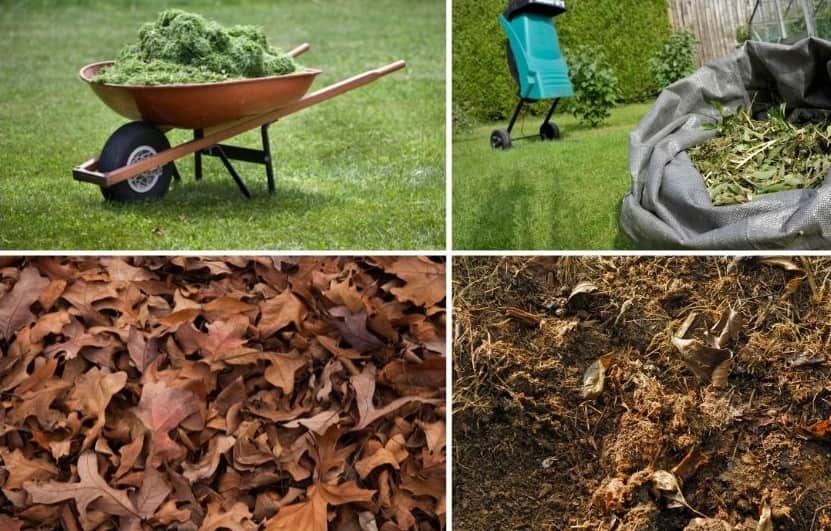 Grass clippings, shredded branches, dead leaves, and compost make good mulches in the vegetable garden
Some drawbacks nonetheless...
Although mulching in the vegetable garden proves very useful for the soil, some disadvantages counterbalance these benefits. And the first disadvantage lies in the impossibility of direct sowing. Indeed, while it is easy to transplant in a mulch, sowing is more challenging, as seeds often require fine, well-worked soil to germinate. To overcome this difficulty, you can simply create a few sowing lines by placing wooden boards before installing your mulch. When it is time to sow, you just need to lift the boards.
Mulching is very useful for maintaining a certain level of moisture in summer to limit watering. Therefore, it is best to install it when spring is well advanced. Why? If you install your mulch too early after winter, it will prevent the soil from warming up. And this is essential for promoting the germination of vegetable seeds!
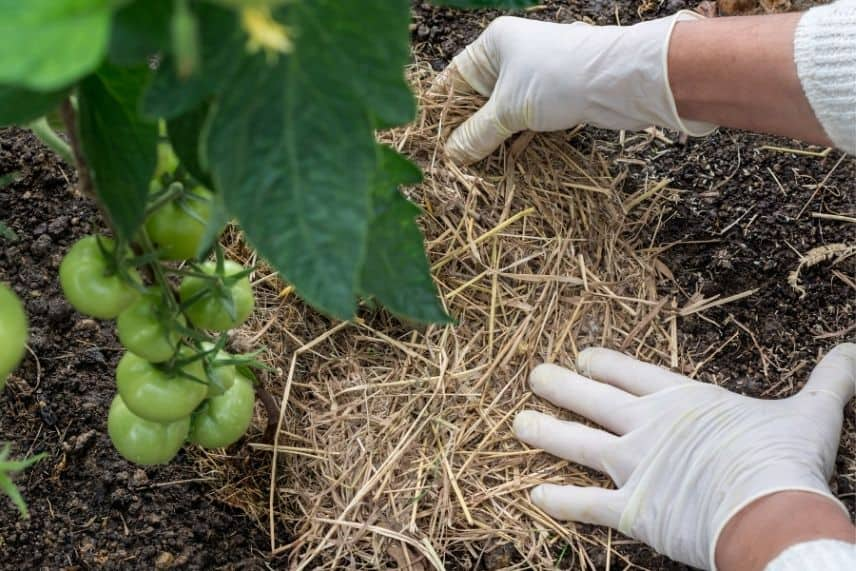
Avoid mulching directly after winter to allow the soil to warm up
Finally, in wet years, avoid excessive mulching, as this could maintain humidity, which can sometimes lead to fungal diseases.
And misconceptions!
- Mulch attracts slugs: false. Indeed, slugs find shelter and food in garden mulch. However, this is no more than a pile of branches or a stone, or even the soil where they like to burrow if they can’t find any other damp hiding place at night. Moreover, this same mulch also attracts slug predators, such as ground beetles, and birds that enjoy scratching through the mulch in search of a few insects to eat.
- Mulch attracts rodents: false. Again, a thick layer of mulch, especially straw, can shelter rodents if they are already nearby. In no case will mulch draw them in from afar. Sometimes, simply limiting its thickness is enough.
- Mulch promotes diseases: false. If laid in a thick layer when moisture is already high, it can encourage the appearance of fungal diseases. Similarly, if you create your mulch from shredded bushes or diseased plants, it can be a source of contamination, but this scenario is rare. Therefore, generally speaking, mulch is not a source of contamination.
- Subscribe!
- Contents
Comments