





























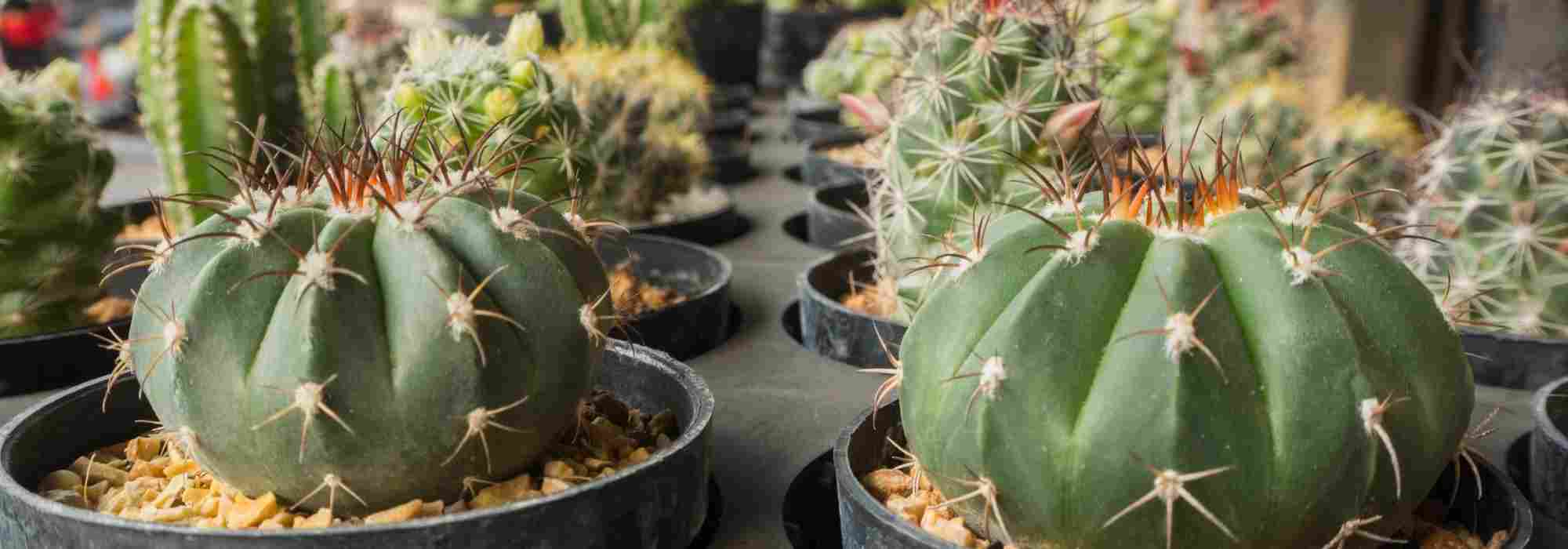
Watering cacti: mistakes to avoid
Our tips for avoiding mistakes when watering cacti.
Contents
Many indoor plant enthusiasts imagine that cacti are indestructible, capable of surviving for months without a drop of water. This reputation for being an easy plant leads some to deprioritise their watering… until, suddenly, the cactus begins to show signs of ill health. Indeed, although originating from the world’s aridest regions, cacti have water needs that are very specific and different from those of other indoor plants. And this is where the most common mistakes are made.
Discover the most common cactus watering mistakes, and, above all, how to avoid them to keep cacti in good health.
Believing that cacti do not need water and ignoring their vegetative cycles.
One of the most common mistakes when watering cacti is thinking they hardly ever need water. It’s true they originate from desert regions and can survive in extreme conditions… but surviving does not mean thriving!
A healthy cactus needs a well-calibrated water supply to grow, to flower, and to maintain its lovely fleshy habit. During the active growth period, usually from spring to the end of summer, that is from April to the end of September, watering is essential. At that time, the cactus draws on the moisture in the soil to develop its tissues and strengthen its internal reserves. Leaving it too long without water can keep it in ‘survival mode’; it slows its growth and becomes more vulnerable.
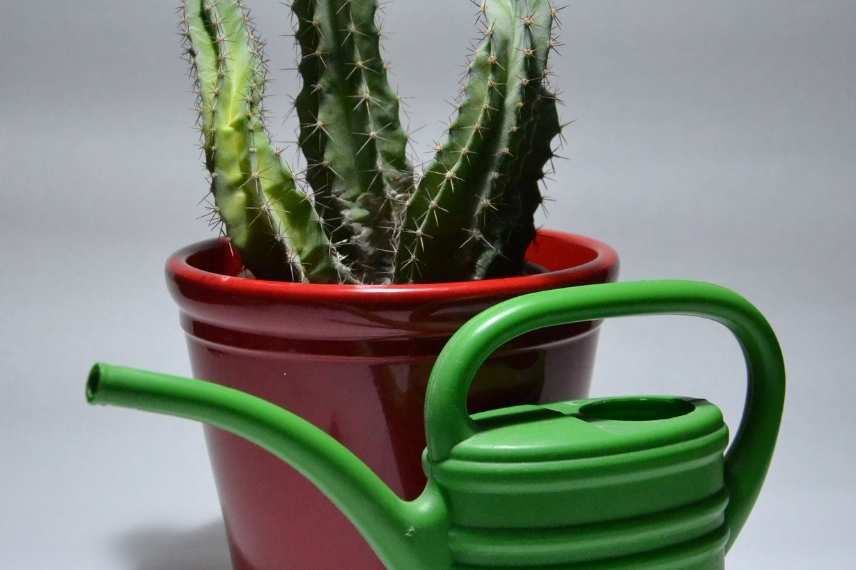
One of the most common mistakes in watering cacti is thinking they hardly ever need water.
Conversely, in winter, from October to the end of March, most cacti enter dormancy or vegetative rest. Their water needs drop considerably. This is the time when many gardeners make the mistake of watering as in summer, thinking they should water their plant even though it doesn’t need it. This excess moisture is particularly harmful, causing root rot, and the sagging of the cacti.
Our advice : follow the seasonal cycle by watering moderately during the growth period and by spacing out watering in winter. Better for a cactus to be a little dry than to be waterlogged.
Watering a cactus too often or too little
Managing the watering frequency of cacti can be tricky to master. Overwatering, and it’s a disaster: the roots rot, the stems become soft, and in just a few days your cactus may deteriorate. Under-watering, and the plant dries out slowly, loses its firmness, or even wrinkles.
Overwatering is undoubtedly the most common mistake, especially among those who want to do too well. Unlike other plants, cacti must dry out completely between two waterings. The substrate must be dry all the way through, and not just on the surface, before you think about rehydrating the plant. A substrate that is constantly damp is a risk to the roots.
Conversely, under-watering is less common, but it occurs mainly during the growth period, when cacti consume more water. A cactus that is thirsty may wrinkle slightly, lose its firmness, or show a noticeable slowdown in growth.
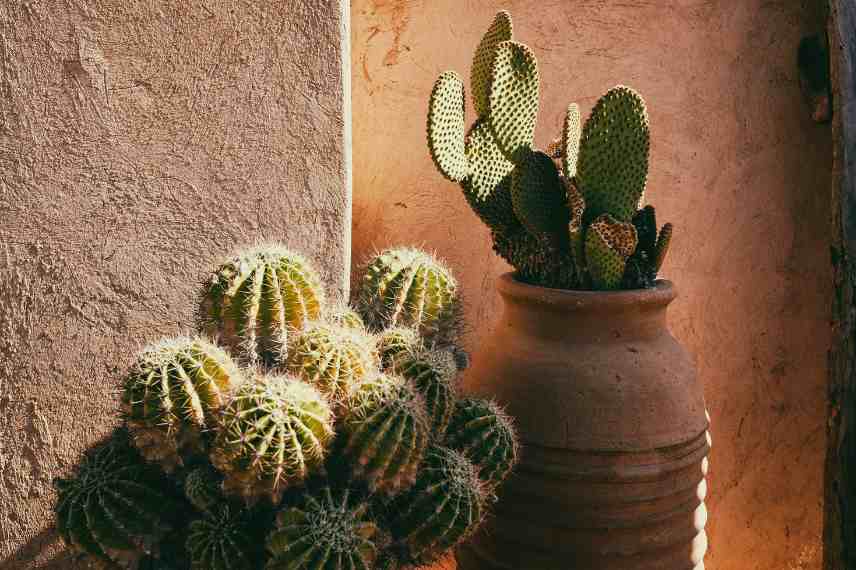
If your cactus spends the warm season outdoors, place it under shelter from the weather to ensure proper water supply.
So how should you water?
- In spring and summer, every 10 to 20 days, depending on the heat of the environment, light, pot size, the species of the cactus… If your cactus spends the warm season outdoors, you should place it under shelter from the weather to ensure proper water supply.
- In autumn and winter, watering occurs once a month, or not at all if the cactus is in dormancy in a cool room, such as a conservatory between 5 and 10 °C.
Our tip: If you’re not sure, simply insert a finger (being careful of the thorns) into the substrate halfway down the pot. If it’s dry, you can water. If it’s damp, wait a few more days.
Using a poor watering method
When it comes to watering a cactus, it’s not just the frequency that matters, but how you do it. A poor watering method can easily compromise the health of your plant, even with good substrate and in line with the watering frequencies.
Many water their cacti from the top, like any indoor plant. That’s not a problem in itself, provided you soak the substrate thoroughly until water drains out of the drainage hole. A light surface watering, however, is not enough: it does not penetrate deeply enough and encourages the development of shallow, more fragile roots.
Bottom watering is also a good option, especially for small pots or in very dry substrate. It allows the roots to absorb water by capillarity, without wetting the base of the cactus. It is sufficient to place the cactus in a saucer for 15 to 30 minutes. But you must never leave the pot soaking for too long, otherwise the substrate can become waterlogged. Residual water is very bad for the roots.
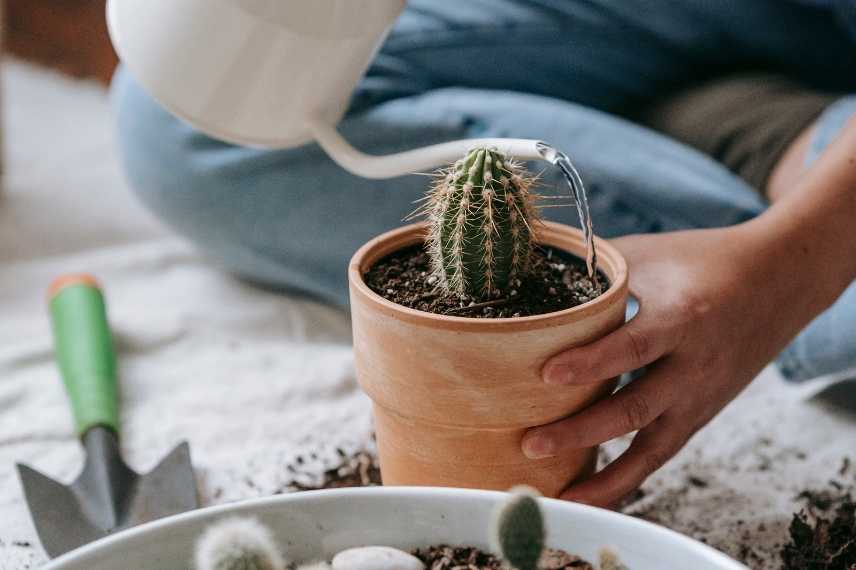
It is recommended to use a fine-spouted watering can to control watering of cacti without splashing the plant.
Similarly, it is not advisable to wet the body of the cactus, especially if it is exposed to direct sunlight. This method causes burns or increases the appearance of fungal spots, particularly on species with a thin epidermis such as Echinopsis.
Our tip: Use a fine-spouted watering can to control watering precisely without splashing the plant.
Read also
How to water a cactus?Neglecting substrate quality
Even with a good watering frequency, a cactus planted in poor substrate has no chance. The most common mistake is using a standard potting compost that is too compact and retains moisture… and ends up causing the dreaded root rot.
A cactus substrate must be extremely well-draining. The aim is for water to pass quickly through the pot without stagnating. The drier the soil dries, the lower the risk of root asphyxia. It is therefore recommended to use a special cactus potting mix or to make your own blend as follows:
- 1/3 of potting compost that is light and has no water retention
- 1/3 of coarse sand or of pouzzolane
- 1/3 of perlite or fine gravel
Another essential point: the pot. It must absolutely have a drainage hole. And beware of drainage saucers and cache pots: if water stagnates at the bottom, it can rise back into the substrate, even several hours after watering. And the soil is waterlogged and damp.
Using unsuitable water
Water used for watering cacti may seem a detail, but it is actually very important. In some regions, tap water is very hard or chlorinated, which, over time, can upset the substrate’s pH, clog the roots’ pores, and cause unsightly white spots to appear on the plant.
Ideally, use rainwater at room temperature. If not available, tap water can be used, provided you leave it to stand for 24 hours before watering, allowing the chlorine to evaporate.
Our advice: for the most sensitive cacti, such as some Astrophytum, it is preferable to test the water’s pH. A slightly acidic water, around 6.5, is often better tolerated.
- Subscribe!
- Contents
Comments