





























To grow Kiwano
And savour this exotic vegetable-fruit that grows very well in our latitudes?
Contents
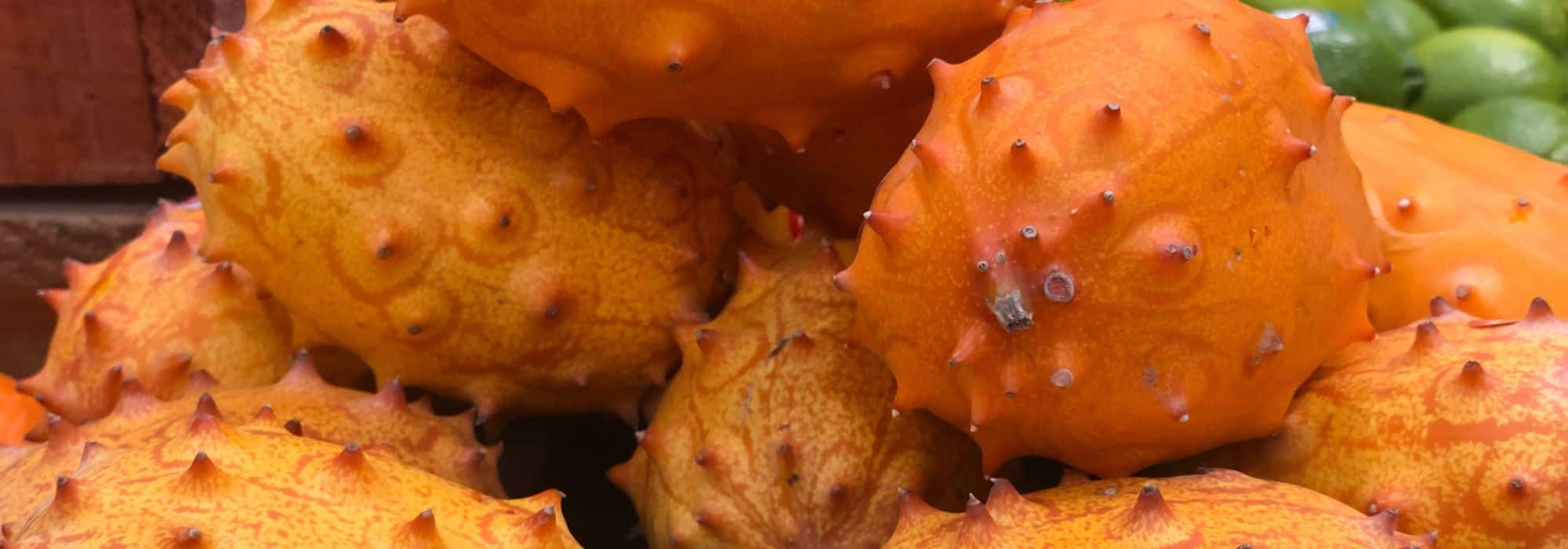
Kiwano, Metulon, Melano, Kenyan cucumber, horned cucumber, horned melon… The names of this fruit-vegetable from the Cucurbitaceae family are numerous and particularly vivid. All these little names indeed evoke a variety of cucumber, quite similar to melon, with a thick, yellow-orange skin covered in spikes.
With a distinctly exotic appearance, the kiwano is a fruit-vegetable that grows easily in our territory as long as it receives warmth and sunlight. Highly productive, this astonishing and atypical variety of cucumber, too little known, is primarily synonymous with rather sweet culinary discovery. It is also a concentrate of vitamins and minerals that allows for a delightful variety while opening up to new flavours.

Kiwano, have you heard of it?
Native to West and Southern Africa, now widely cultivated across the African continent and in New Zealand, the kiwano (Cucumis metuliferus) remains relatively unknown in our region. However, it thrives particularly well in Brittany! And it certainly deserves a place in our vegetable gardens.
The kiwano is a fruit-vegetable of African origin
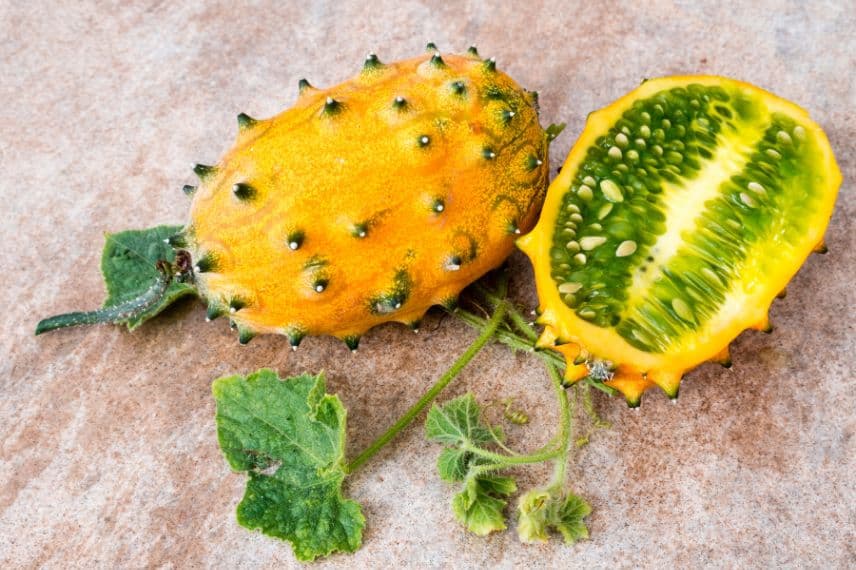
This fruit-vegetable, a close relative of cucumber and melon, belongs to the large family of Cucurbitaceae. With various names that reflect its origins, kinship, and flavours (which we will discuss later!), it boasts a rather original and distinctly exotic appearance. This kiwano (a name, without botanical reference, simply invented and registered by New Zealanders, in reference to the kiwi, which has become common to designate this fruit-vegetable) is ovoid in shape, with a diameter ranging from 10 to 15 cm. Each kiwano weighs between 200 and 500 g.
When ripe, it is covered with a thick yellow-orange skin, adorned with spiky protrusions that resemble horns. During the ripening phase, it displays a dark green colour. As for the flesh, it is fluorescent green. It resembles that of cucumber, with visible seeds.
As for the plant, it is grown as an annual in our regions. It is a runner that can climb up to 2 to 3 m high, bordering on being invasive. Its foliage and stems are covered with a slightly irritating fuzz. It produces male and female yellow flowers, and pollination occurs through insects. Under good growing conditions, a horned cucumber plant from Africa can produce between 30 and 50 fruits.
A fruit-vegetable with an unusual flavour and texture
As a lover of new flavours, you should be captivated by that of the kiwano. The taste of the Metulon indeed oscillates between that of kiwi, banana, pineapple, and melon, with hints of cucumber and lime. The flavour is rather sweet, very lightly sugary, and without bitterness. 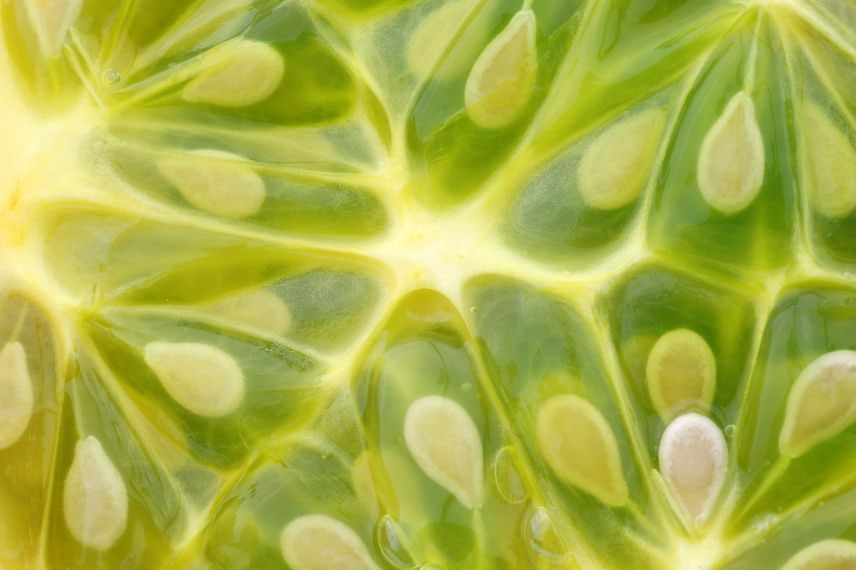
As for its texture, it resembles that of passion fruit, being gelatinous and fresh, fruity, translucent, and watery. The seeds enhance this sensation. The comparison with passion fruit does not stop at texture, as the kiwano can be enjoyed in the same way: it is cut in half widthwise, and eaten with a small spoon.
The skin is also said to be edible.
Where, when, and how to plant kiwano in the vegetable garden?
Kiwano needs plenty of heat. This means it should be grown in a very sunny location. In regions with shorter summers, kiwano can be grown in a greenhouse, provided it is open to allow for insect pollination.
The African horned cucumber is planted in well-worked, perfectly drained soil that is rich in humus and kept moist.
Sowing seeds takes place between April and June, either directly in the ground in regions with mild springs and no risk of frost, or in pots in a greenhouse in areas with less favourable climates. Indeed, kiwano is frost-sensitive. Once the seedlings in pots have 2 to 3 leaves, they can be transplanted outdoors by mid-May, or planted in a greenhouse to ensure sufficient heat for ripeness. If you are planting multiple plants, space them at least 50 to 60 cm apart.
Given the significant growth of the plant, staking is essential.
 Kiwano leaf
African horned cucumbers require regular watering to keep the soil moist. A mulch at the base helps to limit water evaporation and thus reduce watering needs. Be sure to avoid wetting the foliage, as kiwano is sensitive to powdery mildew.
Harvesting and Storing Horned Melon
Horned melons reach ripeness between August and October-November. Kiwano are ripe when they have taken on a lovely yellow-orange colour and are soft to the touch. With their spiky protrusions, it is advisable to wear gloves when harvesting the fruits, especially since the stems and leaves are slightly urticating.
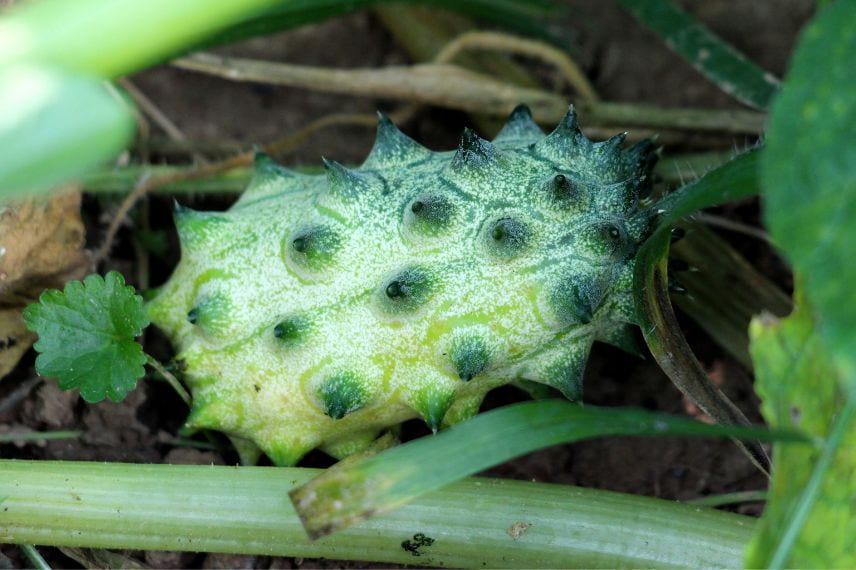
Unripe kiwano
The main advantage of kiwano is their long shelf life. They can be stored for up to 6 months at room temperature (but not in a fruit bowl). Therefore, it is unnecessary to keep them in the refrigerator. This makes it a fruit to enjoy throughout the winter, especially as it is very rich in vitamins!
How to taste this African horned cucumber?
Kiwano is more of a fruit than a vegetable due to its sweet flavour. It is consumed mainly raw:
- As is with a small spoon
- In fruit salad
- In juice
- In sorbet
- In a cake
- Blended into a smoothie
- Added to a vinaigrette or a dog sauce.
Kiwano, a fruit-vegetable with multiple nutritional benefits
Kiwano is a very interesting fruit-vegetable from a nutritional perspective: it is very high in vitamins C (much more than an orange) and B6. It also has a good content of magnesium, iron, calcium, and potassium.
Its very high water content makes it a very low-calorie and hydrating fruit.
- Subscribe!
- Contents

Comments