





























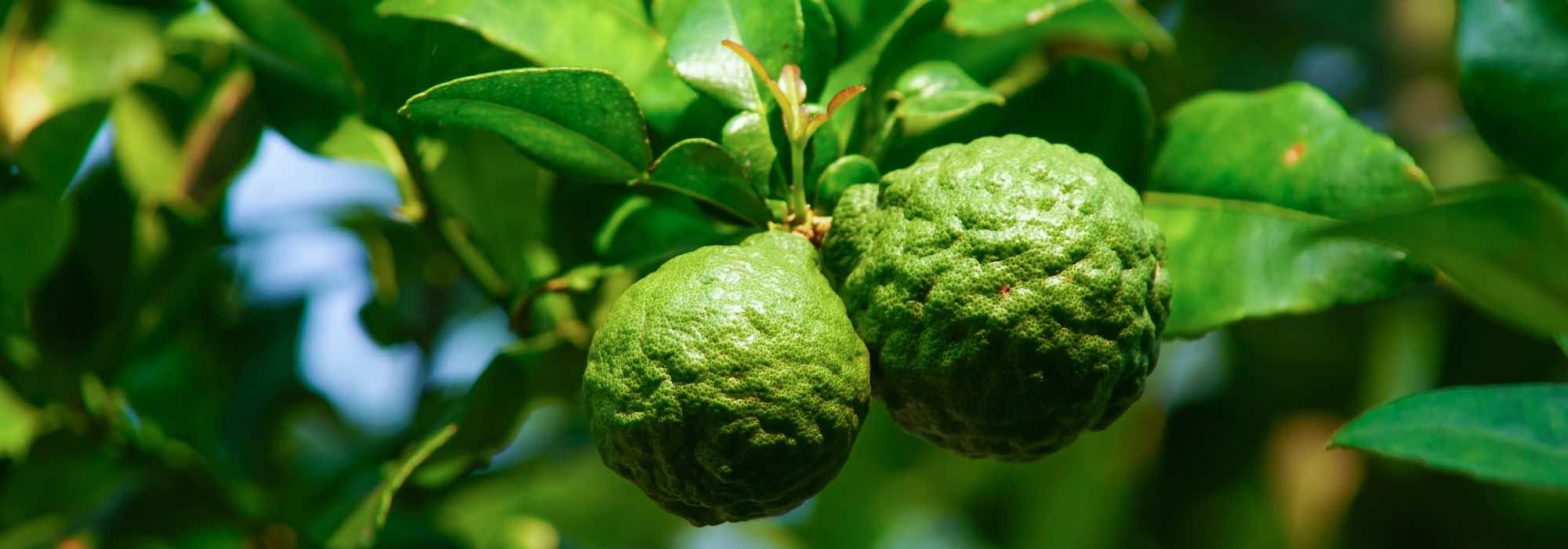
Growing Kaffir lime
All our tips for making the most of this exceptional citrus in the kitchen
Contents
Fans of Asian cuisine or island cuisines are surely familiar with the kaffir lime (or combawa), which is also known as kaffir lemon, and whose fruit and leaves are used. The kaffir lime, or Citrus hystrix, is a citrus fruit that resembles a bumpy lime. Its extraordinary fruit in cooking, highly aromatic, is not always easy to find commercially. It can be grown at home in the ground, provided you live in a region free from frost, as it is hardy down to -4°C. Elsewhere, it should be planted in a pot to be brought indoors during the cold season. This ornamental bush, with moderate growth and medium vigour, is particularly fruitful. It forms an evergreen bush with dark green, glossy leaves and produces a lovely white flowering in summer before yielding these curious, bumpy fruits in autumn, which are so generous for flavouring your cooking.
Discover how to grow kaffir lime and how to use it to impart an unmatched flavour to your exotic dishes.
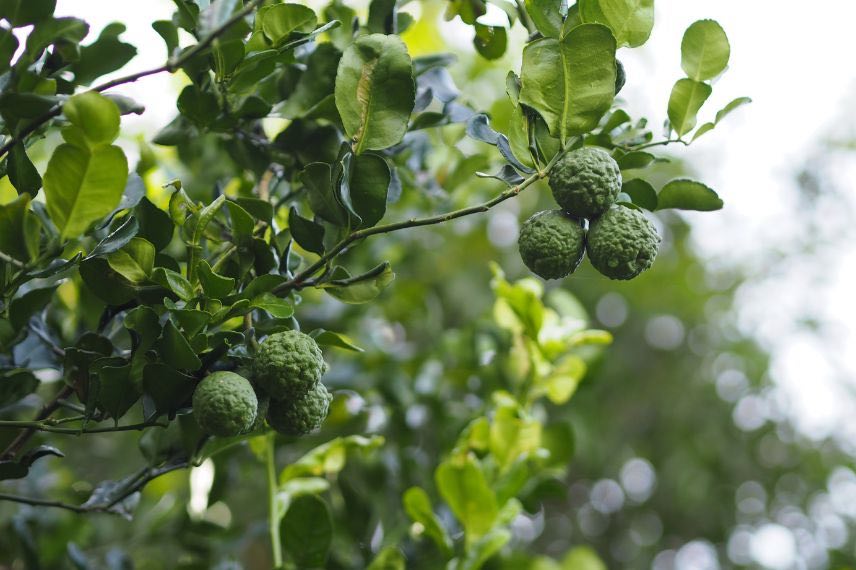
The kaffir lime is a very productive shrub
How to grow Kaffir lime? Where to plant it?
Combava is planted in spring, in March-April, when temperatures rise.
Planting combava in open ground is reserved for the Mediterranean coast, given its low hardiness. It is frost-resistant down to about -4°C.
Elsewhere, combava is grown in pots outdoors and brought inside for the cold season.
Choose a sunny and warm location, but not scorching, sheltered from winds and sea spray. In the northern half of the country, plant it in full sun, at the foot of a south-facing wall, for example. In the south of France, provide it with some shade during the hottest hours to avoid scorching its leaves, while ensuring maximum brightness.
What soil do combavas prefer? The combava lemon tree, a greedy plant, needs rich and fertile soil. Not fond of stagnant water, this soil should also be light and well-draining. This citrus tree dislikes limestone and is best grown in neutral to acidic pH soil.
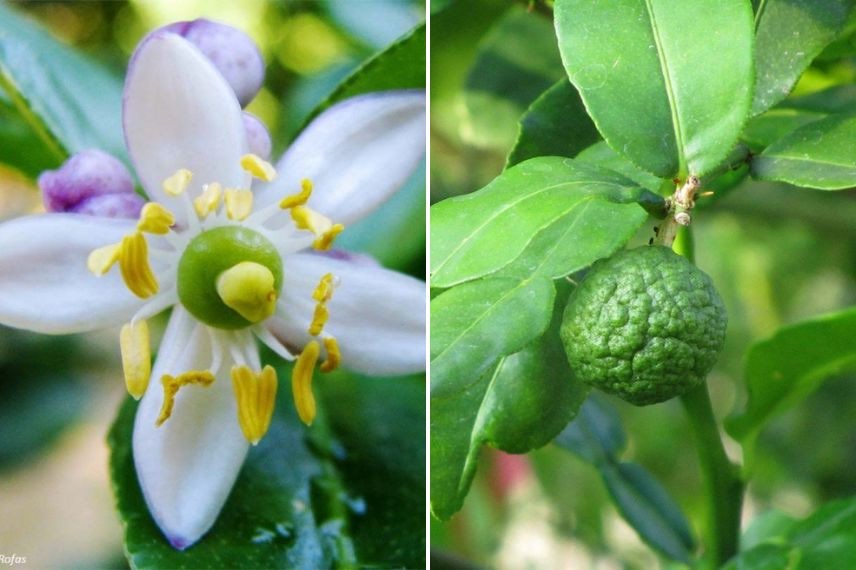
The ornamental qualities of combava: flower, fruit, and leaves
How to plant a Kaffir lime in the ground or in a pot?
To plant a kaffir lime, whether in the ground or in a pot, you will need sand, compost, fertiliser, as well as potting soil, drainage for the bottom of the planting hole or pot, and organic mulch to keep its base cool.
Planting in the ground
- Soak the root ball in a bucket of water for about ten minutes to allow it to rehydrate properly;
- Dig a planting hole approximately 2 to 3 times the size of the root ball;
- Mix your soil with well-decomposed compost, river sand, and possibly potting soil. Feel free to also add a special citrus fertiliser, preferably organic;
- Install a layer of drainage at the bottom of the planting hole (gravel, pumice, clay balls, etc.);
- Add a portion of your soil mix;
- Place the root ball in the centre of the hole, adding your mix until the roots are covered, but without burying the grafting point (a sort of bulge at the base of the trunk);
- Firm down;
- Create a wide basin around the base of your kaffir lime to retain watering water effectively;
- Water generously;
- Mulch carefully to limit water evaporation and space out watering.
Planting in a pot
Choose a container 2 to 3 times larger than the size of the root ball, such as a terracotta pot or a wooden box, which must be drilled or can be drilled by you, to prevent the roots from stagnating in water.
Use a special citrus potting soil or create a substrate consisting of 50% potting soil, 30% compost, and 20% sand.
- Soak the root ball in a bucket of water for about ten minutes to allow it to rehydrate and facilitate the removal from the nursery pot;
- Place a layer of drainage at the bottom of the pot using clay balls or gravel a few centimetres thick (pumice is heavier and should be avoided in pots);
- Pour the potting soil or mixed substrate until about halfway up the pot. You can also add a special citrus fertiliser.
- Remove the nursery pot and loosen the roots at the bottom of the root ball;
- Place your kaffir lime in the pot;
- Fill in with your substrate without burying the collar;
- Firm down;
- Water generously;
- Mulch carefully to a thickness of several centimetres.
Care
The care of the kaffir lime tree boils down to two main axes: watering and fertilisation.
Outdoor cultivation
Water regularly during the first few years, allowing the citrus to develop its root system. Afterwards, water mainly during dry periods, preferably using rainwater. Plan to water once a week in summer, more often in case of prolonged drought. Reduce watering in autumn, then stop or significantly decrease it in winter (adjust according to winter rainfall). Mulch around the base, as this helps to keep the soil cool for longer while limiting weed growth. Place dead leaves or organic mulch around the trunk.
Apply organic fertiliser or well-decomposed compost to nourish the bush.
In autumn, when temperatures cool down, you can install a fleece over the aerial parts to protect the fruits, which are more sensitive to frost.
Pot cultivation
Water regularly from spring to autumn, providing water as soon as the substrate becomes dry (watering once or twice a week). Use rainwater whenever possible. Avoid letting water stagnate in the saucer. The kaffir lime tree is nutrient-hungry, so apply liquid fertiliser about once a month. You can also use slow-release fertiliser. In winter, reduce water and fertiliser applications.
In autumn, around October, bring it into a frost-free shelter, such as a cold greenhouse or a conservatory. Choose a bright but unheated location: ideally, the temperature should be between 7 and 10 °C. In spring, take your kaffir lime tree back outside, placing it in a sunny spot.
Repot your kaffir lime tree approximately every two years, preferably in spring. This way, you renew its substrate and provide more space for its roots and growth. In years when you do not repot, perform a top dressing: remove the surface substrate by a few centimetres and replace it with fresh potting soil.
Read also
Citrus trees: planting and maintenanceWhy isn't my Kaffir lime producing fruit?
There are three criteria to check and modify if your tree is not bearing fruit:
- Is your combava receiving enough light? Make sure its location is warm, bright, and sheltered.
- Is its substrate or planting soil rich enough? If necessary, add compost and fertiliser.
- In winter, during the fruiting period, if your bush is outside, are the temperatures not too low?
Uses
Combava lime is a citrus fruit with multiple uses:
The fruits and leaves are an integral part of the culinary traditions of several Southeast Asian countries.
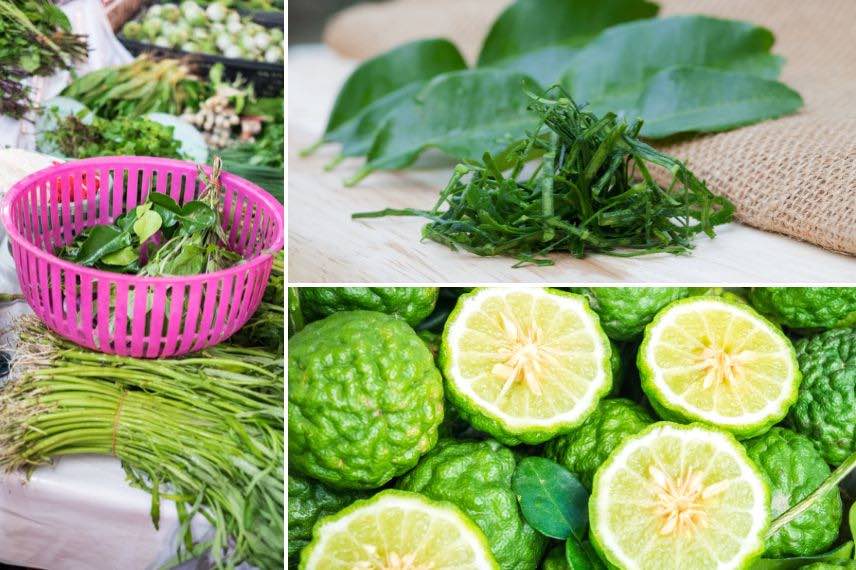
Combava leaves on a condiment stall in Thailand, finely chopped fresh leaves added at the end of cooking and the inside of the fruit
Combava leaves are most often found dried in stores, commonly referred to as kaffir lime leaves. They are just as interesting as the fruit. Widely used in Thai cuisine, the leaves can be consumed fresh or dried. They are included in the composition of curries, soups, and broths, where they impart an aroma similar to lemongrass. When fresh, they are finely chopped to avoid a too-thick “chew” and added at the end of cooking. When dried, they are torn to release their aromas and added during cooking; they flavour the dish but are not eaten.
In the fruit, the zest, which is highly fragrant, is used in curry pastes or Thai sauces, as well as in sauces from Réunion cuisine. It is very versatile; you can use it in all sorts of dishes, bringing a unique and powerful fragrance and a lot of freshness. The juice is present in very small quantities in the fruit. Quite bitter, it is used more incidentally.
This is a citrus fruit that is not consumed like a regular fruit. It has the same condiment use as lemongrass or ginger, for example.
As a fan of Thai flavours, I love preparing “Tom Yam” soup, which is a shrimp broth flavoured with the iconic condiments of this country: lemongrass, galangal, chilli, coriander, lime, and kaffir leaves. The result is very fragrant, spicy, tangy, and vibrant.
Note: the term Combava is used in Réunion, while the name Kaffir is the one used in Thailand.
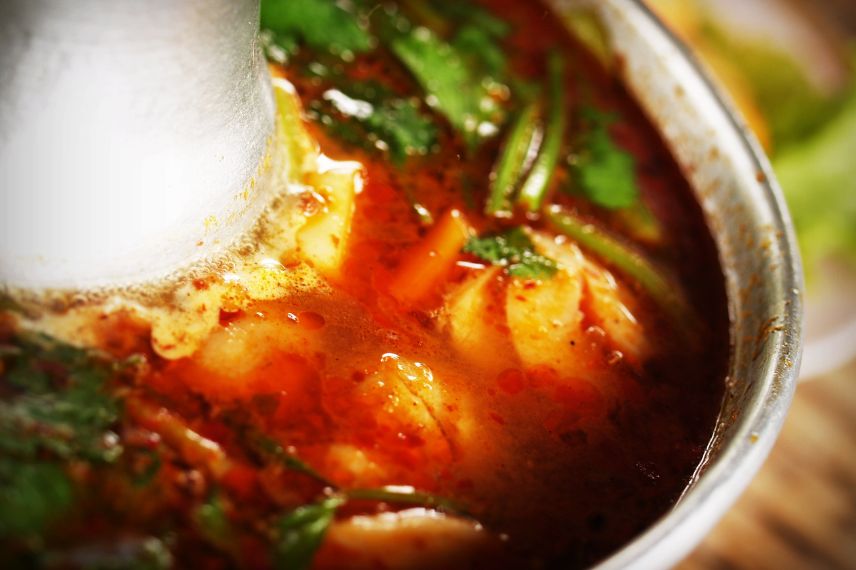
The famous “Tom Yam Kung” served in its traditional dish in Thailand
- Subscribe!
- Contents
Comments