





























Growing Buddha's hand citrus
How to plant and use this unique citron tree?
Contents
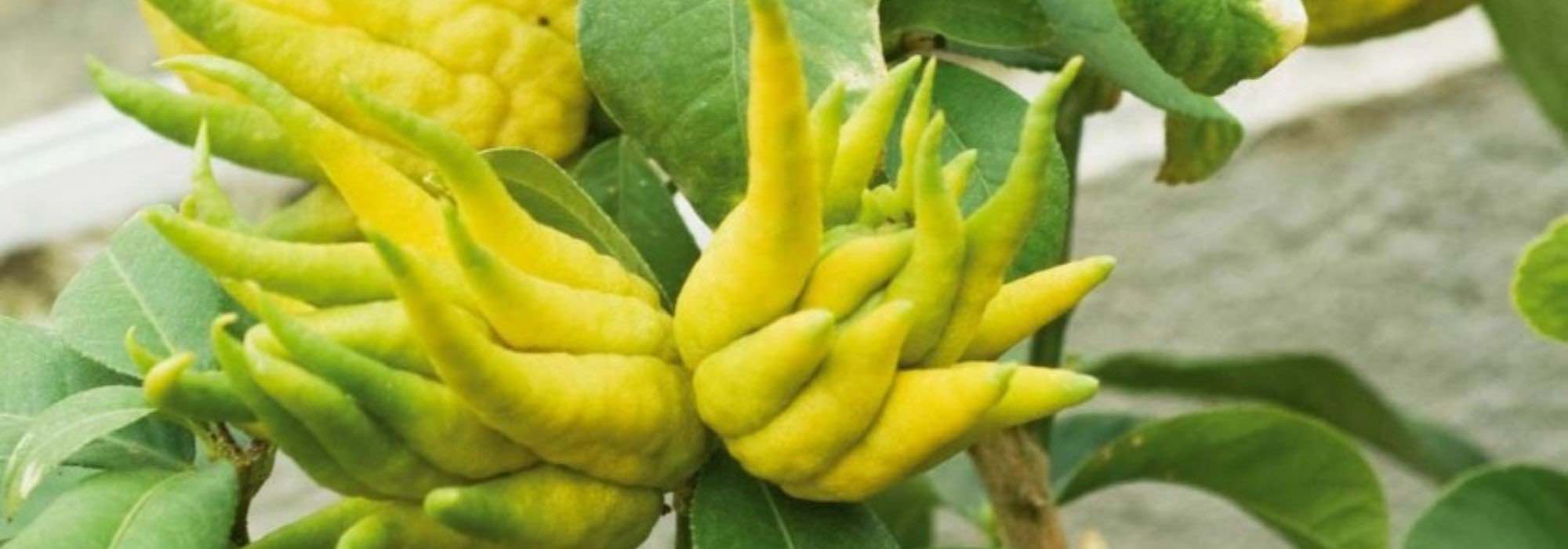
Buddha’s Hand citrus tree is native to north-eastern India and China. The Citrus medica digitata or Citrus medica var. sarcodactylis is a showstopper both on the tree and on the table, being truly spectacular. It is a variety of citron, likely arising from a spontaneous mutation, as is often the case with the genus Citrus. Like the citron, its bark, the main component of this fruit which has no flesh and no pips, emits a very aromatic fragrance. The bush is not very vigorous, with an irregular habit, ornamental. Its spring flowers, often reappearing in September, are tinged with purple and highly fragrant. Its fruits are divided into multiple elongated cylindrical sections. Its cultivation, although similar to that of other citrus trees, is a bit more delicate; its hardiness is low, around -3° C.
Here are all our cultivation tips, whether in pots or in the ground, and tasting advice for this amazing citrus tree!

How to grow a Buddha's hand? Where to plant it?
The Buddha’s hand lemon tree grows as a bush or a small tree with thorny branches. It is planted in spring, in March-April, when temperatures rise.
Its planting in open ground is only possible in an area free from frost, such as USDA zone 9b, along the Mediterranean coastline, as it is very sensitive to frost, tolerating only brief frosts below -3° C.
Elsewhere, it is grown in pots outdoors and brought indoors for the cold season.
Choose a sunny location for its cultivation, but not scorching, sheltered from winds and sea spray. It fears drought, heat, and scorching sun. This makes it more delicate than other citrus trees.
This Buddha’s hand citrus requires, like other citrus trees, rich and fertile soil that is light and well-draining. It dislikes limestone and is best grown in neutral to acidic pH soil.
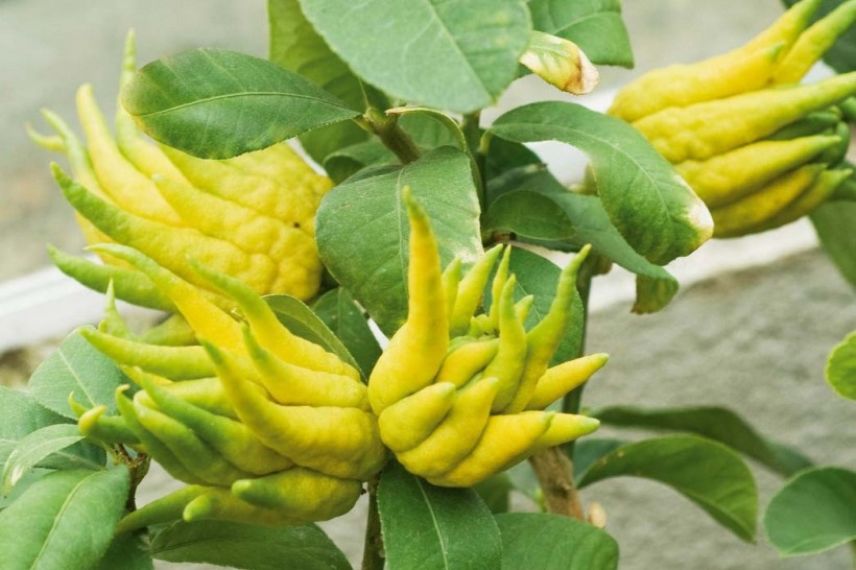
Buddha’s hand bush or Citrus medica digitata
Planting in the ground and in pots
To plant a Buddha’s hand, whether in the ground or in a pot, you will need sand, compost, fertiliser, as well as potting soil, drainage for the bottom of the planting hole or pot, and organic mulch to keep its base cool.
Planting in the ground
- Soak the root ball in a basin of water while you prepare the next steps, allowing it to rehydrate properly.
- Dig a planting hole about 2 to 3 times the size of the root ball.
- Mix your native soil with well-decomposed compost, river sand, and possibly potting soil. Add a special citrus fertiliser, preferably organic.
- Pour a layer of drainage at the bottom of the planting hole using materials like gravel, pumice, or clay balls.
- Pour some of your soil mixture on top.
- Place the root ball in the centre of the hole.
- Add your mixture until the roots are covered, but do not bury the grafting point (a sort of bulge at the base of the trunk).
- Firmly and gradually compact the soil.
- Create a wide rim around the base of your Buddha’s hand to prevent watering from running off.
- Water generously.
- Mulch with an organic mulch several centimetres thick to limit water evaporation and space out watering.
Planting in a pot
For pot planting, choose a container 2 to 3 times larger than the root ball. For the material, a terracotta pot or a wooden container are good choices. Ensure they have drainage holes or drill them yourself, so that water can drain away and not remain in contact with the roots.
Select a special citrus potting soil or create a substrate consisting of 50% potting soil, 30% compost, and 20% sand.
- Soak the root ball in a bucket of water for 10 minutes to allow it to rehydrate and facilitate removal from the nursery pot.
- Place a layer of drainage at the bottom of the pot using clay balls or gravel a few centimetres thick (avoid pumice as it is heavier).
- Pour in some of the potting soil or your homemade mix. Add a special citrus fertiliser.
- Position your bush in the pot, ensuring it is upright and facing a direction you like.
- Fill in with your substrate without burying the collar and leaving 2 cm from the pot’s edge to facilitate watering.
- Firmly compact the soil.
- Water generously.
- Mulch several centimetres thick with organic mulch.
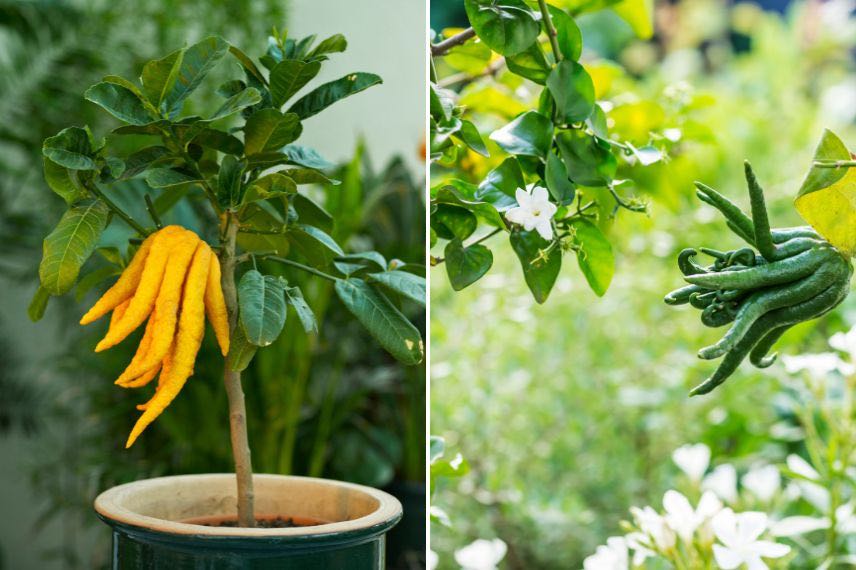
The curious and ornamental fruit on the potted bush
Care
The care of Buddha’s hand is summarised in two main areas: watering and fertilisation.
Outdoor cultivation
Water regularly during the first few years, allowing the citrus to develop its root system. Afterwards, water mainly during dry periods, preferably using rainwater. Plan to water once a week in summer, more often in case of prolonged drought. Reduce watering in autumn, then stop or significantly reduce it in winter (adjust according to winter rainfall). Mulch around the base, as this helps to keep the soil cool for longer while limiting weed growth. Place dead leaves or organic mulch around the trunk.
Apply organic fertiliser or well-decomposed compost to nourish the bush.
In autumn, when temperatures cool, you can install a fleece over the aerial parts to protect the fruits, which are more sensitive to frost.
Pot cultivation
Water regularly from spring to autumn, providing water as soon as the substrate becomes dry (watering once or twice a week). Use rainwater whenever possible. Avoid letting water stagnate in the saucer. Buddha’s hand lemon is nutrient-hungry, so apply liquid fertiliser about once a month. You can also use slow-release fertiliser. In winter, reduce water and fertiliser applications.
In autumn, around October, bring it into a frost-free shelter, such as a cold greenhouse or conservatory. Choose a bright but unheated location: ideally, a temperature between 7 and 10 °C. In spring, take your kaffir lime back outside, placing it in a sunny spot.
Repot your Buddha’s hand on average every two years, preferably in spring. This way, you renew its substrate and provide more space for its roots and growth. In years when you do not repot, perform a top dressing: remove the top few centimetres of substrate and replace it with fresh potting soil.
Read also
Citrus trees: planting and maintenanceWhen to harvest Buddha's hand?
After the flowering of March-April, the fruits grow rapidly. They are harvested at ripeness in November, when their concentration of essential oils is at its maximum and their colour is yellow-orange. They can weigh up to 1 kg and reach 20 cm in length.
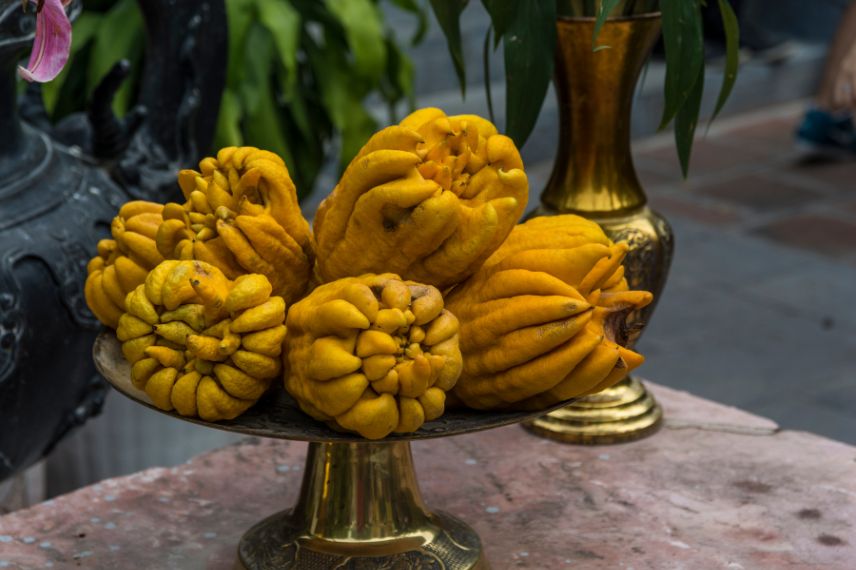
After the harvest, Buddha’s hands are also used for decoration or to scent the home
How are Buddha's hands eaten?
The epidermis of the Buddha’s hand lemon is bumpy and very thick. Its flesh is often absent, giving this fruit an exceptional shelf life. This is how it is used in Asia to scent homes and clothing. It releases a very sweet lemon-orange fragrance. This remarkable aromatic citrus is consumed in cooking for its bark and zest.
It can be used raw, candied, or to flavour desserts and savoury dishes. As the flesh is slightly bitter, it can be sliced thinly to add to salads or fish dishes, imparting a delicious sweet citrus flavour with that characteristic woody note of citrons. Excellent marmalades and jams can be made from Buddha’s hand citron.
You can also cut a few fingers and use them to flavour water in a jug.
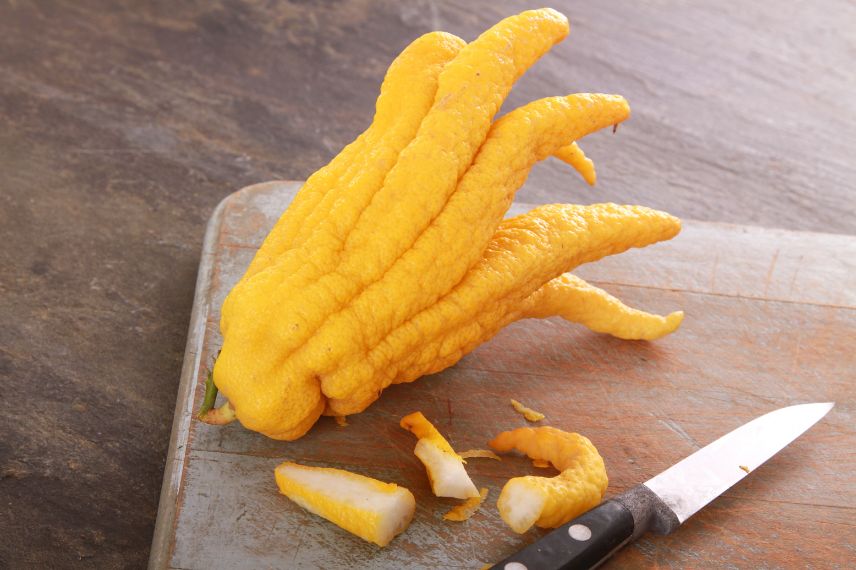
The bark and the albedo (the white part) of this citrus devoid of flesh are consumed
- Subscribe!
- Contents
Comments