





























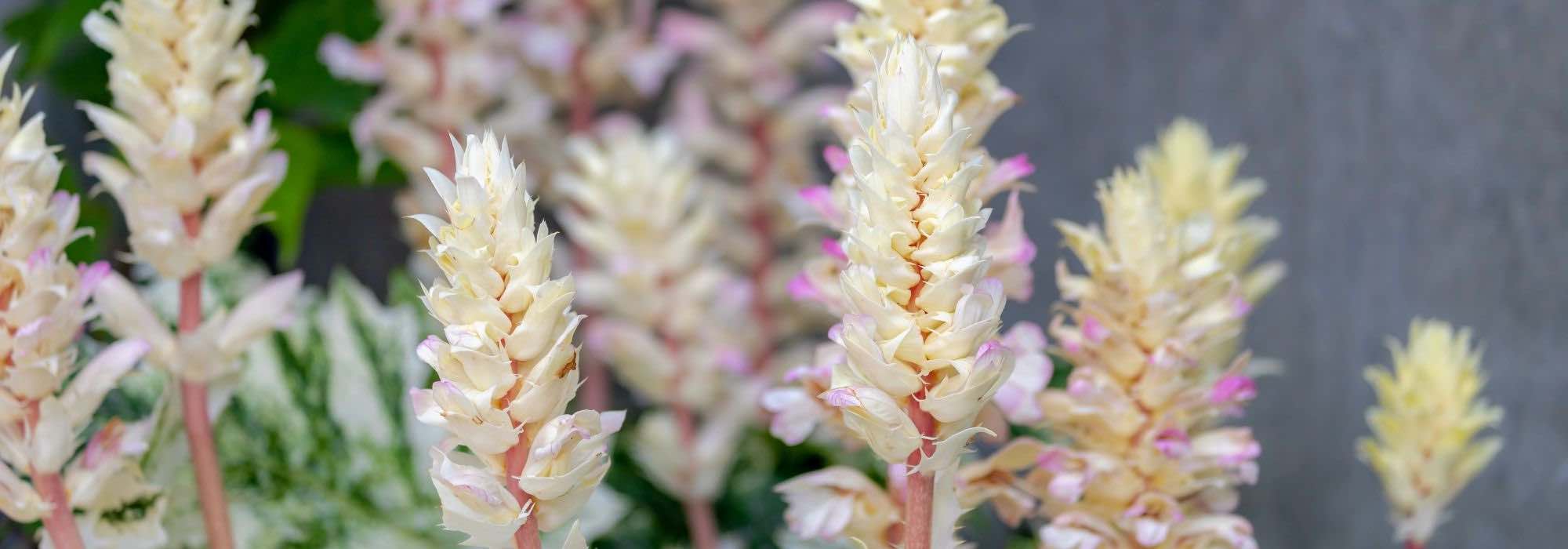
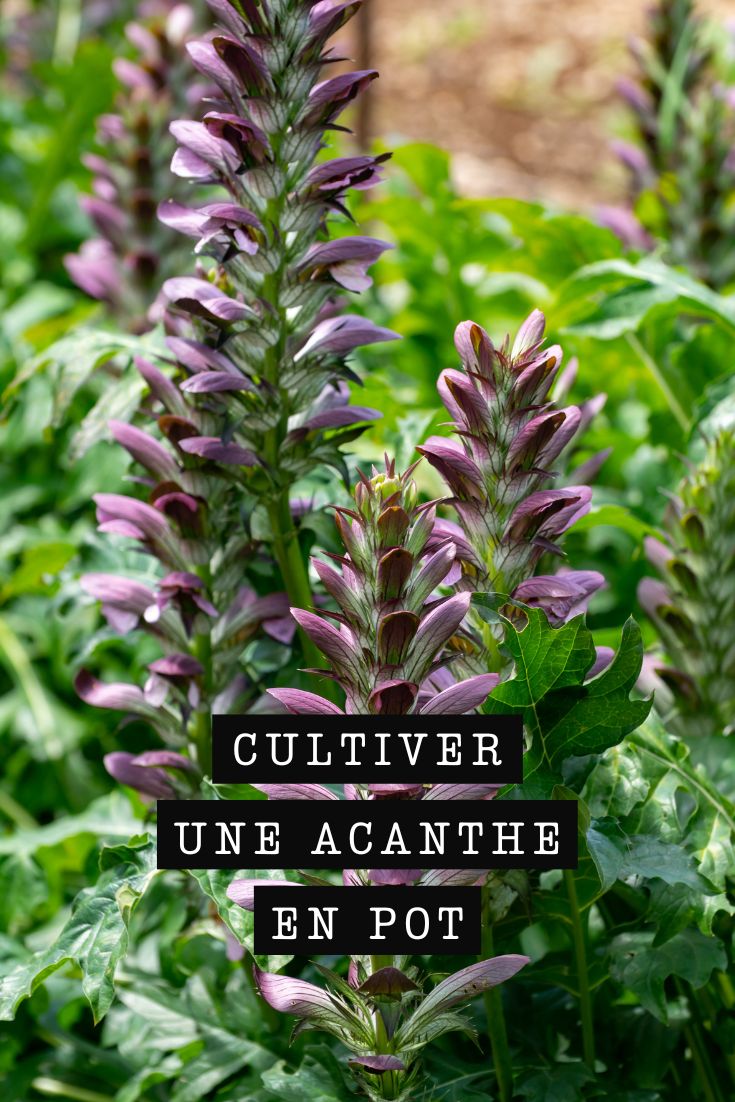
Growing Acanthus in pots
Our planting and maintenance tips!
Contents
Striking in appearance and lush in style, acanthus is a perennial plant highly decorative in the garden, thanks to its deeply lobed foliage and its tall, upright flower spikes. It flowers from June to September, producing two-lipped flowers in white, yellow, green, pink or purple. Its flowers contrast with the large dark-green leaves, which are oblong to ovate and beautifully cut, like acanthus leaves. The shape of the leaves inspired ancient sculptors to decorate Corinthian capitals on Greek temples. The foliage can be semi-evergreen in mild climates or deciduous. These sometimes spiny plants reach up to 1 m to 1.5 m tall and as wide. Easy to grow, they can be planted in full sun or partial shade, in rich, deep, well-drained soil. Although pot cultivation is not common and not advised, it remains possible, provided you take a few precautions. It can be useful, for example, to contain this fast-growing plant and prevent it from spreading throughout the garden. Discover our tips for growing acanthus in pots and enjoying its decorative beauty on your terrace or balcony.
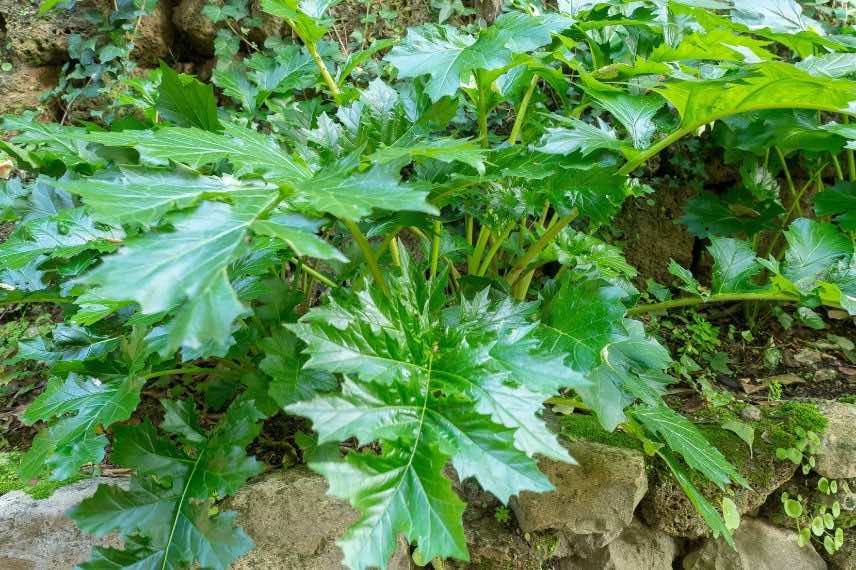
Choose the most compact forms of acanthus for pot culture. Here is an Acanthus mollis, too large for planting in a pot

Which varieties of acanthus to grow in pots?
Native to the Mediterranean basin, the acanthus is a spectacular plant. The acanthus grows quickly and forms suckers, with a deep root system. The most compact acanthus varieties are best suited to pot culture. You can choose for example:
- Acanthus hungaricus – Hungarian acanthus: very architectural, it bears flower spikes up to 80 cm tall on dense, dissected foliage. The leaves are green and glossy, while the flowers are white and sometimes tinged with purple. It flowers in June and July and can be grown in a large container in full sun or in partial shade.
- Acanthus mollis ‘Tasmanian Angel’ – variegated acanthus: reaching a height of 80 cm, it hails from Tasmania and is distinguished by its variegated foliage, which becomes completely white in spring and dark green in summer. Its cream-coloured and pearly-rose flowers brighten shaded corners.
- Acanthus sennii – acanthus: reaching a height of 1 metre, it is a rare acanthus native to the Ethiopian plateaus. In late summer, large spikes of bright red flowers appear on very dissected, green-silvery and spiny foliage.
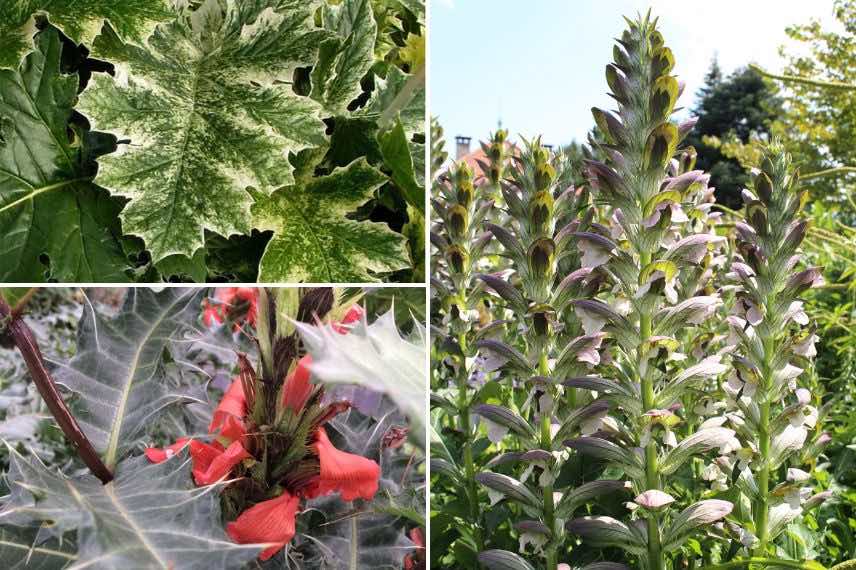
Left, Acanthus mollis ‘Tasmanian Angel’ and Acanthus sennii, with Acanthus hungaricus on the right
Read also
Acanthus: planting, growing and careWhen and where to plant Acanthus in a pot?
- The best time to plant an acanthus in a pot is spring, during April and May, when the risk of frost has passed. It can also be planted in autumn.
- As a Mediterranean plant, acanthus prefers sun, but can also be grown in partial shade depending on the species. Vigorous and hardy down to -15°C in the ground, it adapts to virtually all regions across France.
How to grow Acanthus in a pot?
What type of pot?
- Acanthus can be grown in any type of pot or container, but a terracotta pot provides better aeration of the root system and better drainage, which suits the acanthus well.
- The pot or container must be large enough to accommodate its future root system. Allow for a depth of at least 30 cm, knowing that the acanthus does not like being transplanted and that future repotting should be avoided.
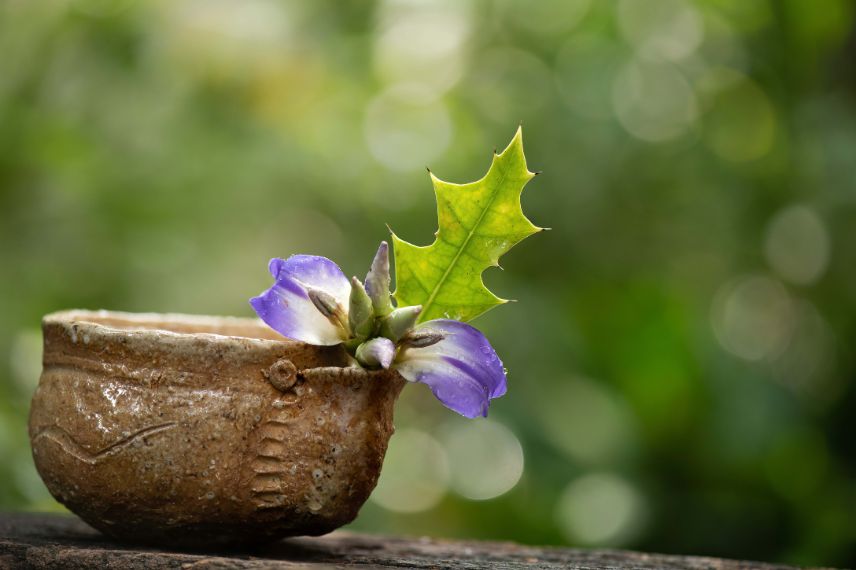
You will need a much larger pot to grow an acanthus
What substrate?
- Acanthus requires a well-drained, rich and deep substrate.
- You can use a potting soil blended with compost or well-decomposed manure.
Planting
- Choose a pot or container large enough for the root system to establish itself. Prepare a depth equivalent to three times the size of the root ball, of at least 30 cm.
- The pot must have drainage holes in the bottom to ensure good drainage.
- Place a layer of clay balls at the bottom to aid drainage, then pour the potting soil enriched with compost.
- Position the acanthus in the centre of the pot keeping the root ball intact. Remember to protect yourself with gloves if the acanthus is thorny.
- Fill the pot with the remaining half of the potting soil.
- Firm the soil around the base to expel air pockets
- Water thoroughly and mulch the base.
Care
Once well established, the acanthus requires little maintenance.
Watering
- Water regularly during the growing period, keeping the growing medium moist in summer, while ensuring it does not become waterlogged. Allow around 2–3 waterings per week.
- When the leaves turn yellow, the plant goes into dormancy and requires less watering.
Fertilising
- Fertilise the plant with liquid fertiliser every month, except during dormancy.
- Fertilising helps achieve beautiful, glossy foliage.
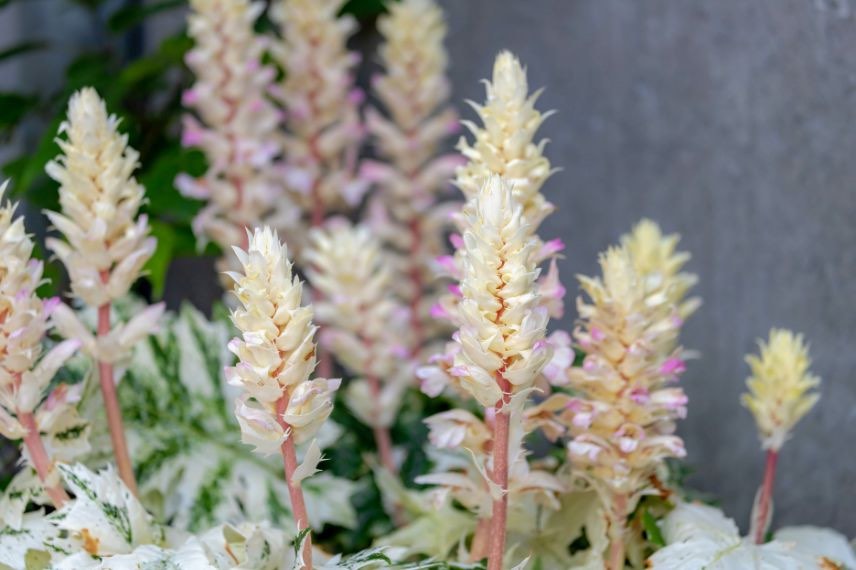
Acanthus mollis ‘Tasmanian Angel’ is a very decorative form of acanthus and fairly compact
Pruning
- After flowering, prune back the faded stems to ground level. You can use the cut leaves as mulch around the base of the acanthus.
- In March, tidy the base by removing the remaining dried leaves, before new growth starts.
Pests and diseases
- Acanthus may be susceptible to slug and snail attacks. If you are facing this issue, discover our tips for getting rid of slugs naturally.
- Acanthus may be susceptible to powdery mildew, a white mould that spreads on the leaves when humidity is high. You can spray nettle manure or horsetail manure to prevent powdery mildew.
In addition to these tips, discover our full range of acanthuses.
- Subscribe!
- Contents
Comments