





























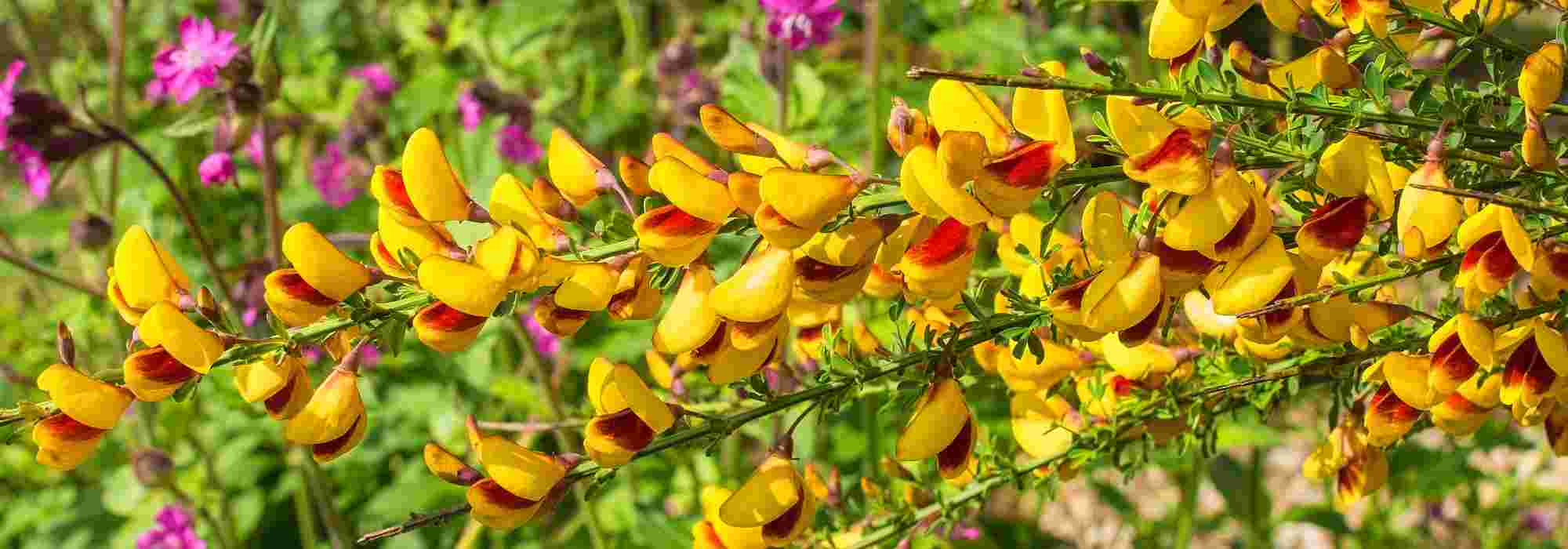
The most beautiful varieties of brooms or Cytisus
a fragrant and bright spring
Contents
Sometimes overlooked by certain gardeners, broom plants are unmatched in brightening up spring with their profusion of fragrant, papilionaceous flowers, often yellow or sometimes orange, red, pink, white, or… multicoloured. Broom plants, or Cytisus, are medium-sized bushes, ideal for a hedge or in a border in a slightly wild garden. However, there are also smaller species and varieties, even prostrate ones, perfect for groundcover, rockeries, or containers on the terrace. Meanwhile, others, much rarer like the Pineapple Broom, can reach over 4 m in height. As you can see, the family of broom plants is vast, and they deserve greater attention.
Among the many qualities of broom plants, it can be noted that they are undemanding. They fear neither poor soils nor cold, as long as they are planted in sunlight and in well-drained soil.
→ Let’s discover in this advice sheet some of the most beautiful varieties of broom to plant in your garden.

A bright yellow broom: 'Golden Sunlight'
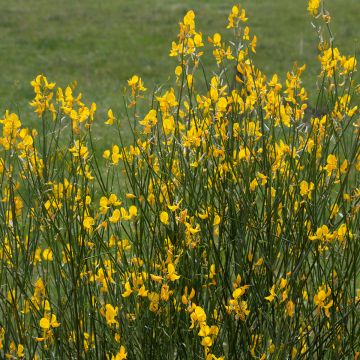
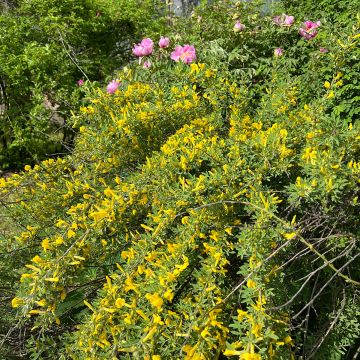
Perfect for brightening gardens with its abundant, vibrant flowering, the Cytisus scoparius ‘Golden Sunlight’ is a variety of broom that captivates with its graceful habit and the abundance of its flowers. Its upright to slightly trailing stems are hidden from May to June under a profusion of clusters of pleasantly scented golden-yellow flowers that attract bees.
‘Golden Sunlight’ is a fast-growing, vigorous bush that will reach approximately 1 m in height and 1.30 m in spread. This variety is derived from Cytisus scoparius, a hardy, short-lived shrub native to Central (up to Ukraine) and Eastern Europe, and found as far as North Africa. Brooms thrive in dry, poor locations, on rather acidic and siliceous soils.
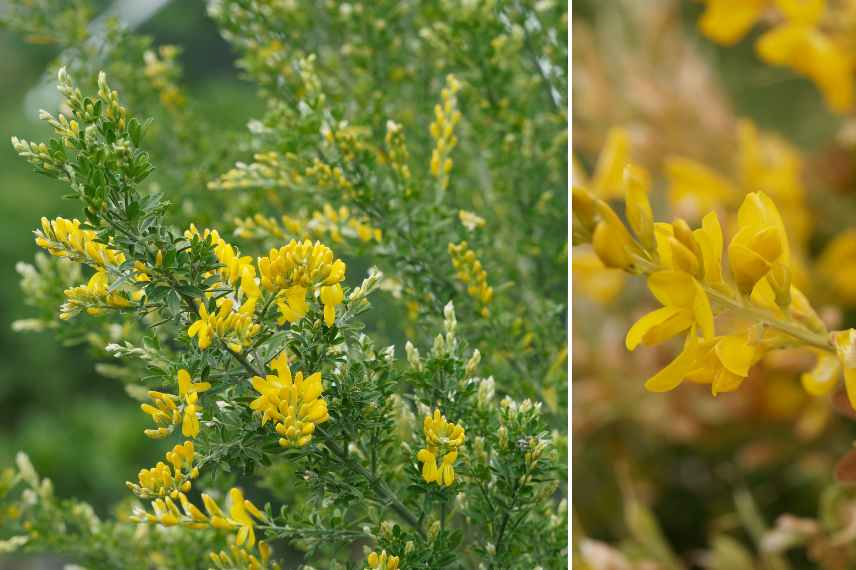
Yellow-orange flowers: 'Apricot Gem'
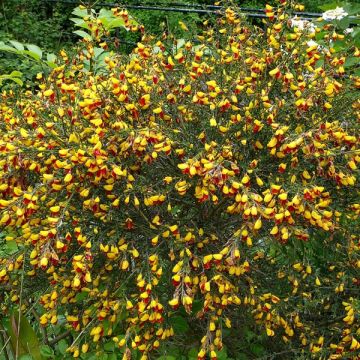
More elegant than the “simple” broom with yellow flowers, Cytisus scoparius ‘Apricot Gem’ reveals soft colours in a diversity of shades ranging from golden yellow to orange-red. In fact, it is covered from June to July with a multitude of small multicoloured papilionaceous flowers, golden yellow edged with red at the centre, topped with apricot orange petals.
Originating from hybridization, the ‘Apricot Gem’ variety is characterized by medium dimensions: approximately 1.5 m in height and spread, and has a silhouette that is both graceful and rustic. Unfortunately, like all broom shrubs, the ‘Apricot Gem’ is a very hardy bush but has a short lifespan, lasting around 5 years.
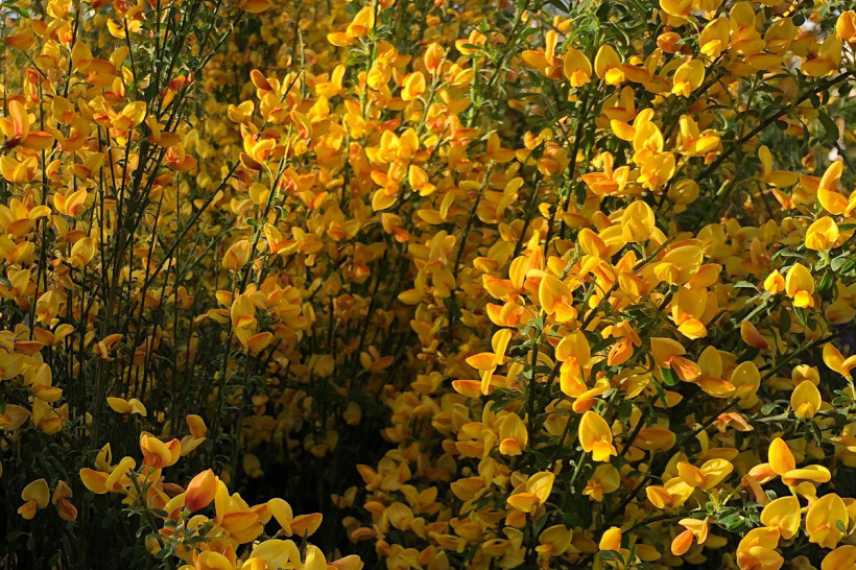
Discover other Broom - Cytisus
View all →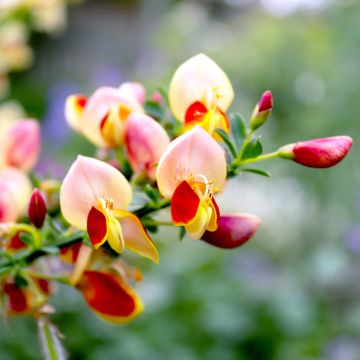
Available in 2 sizes
Available in 2 sizes
Available in 1 sizes

Available in 1 sizes
Available in 2 sizes
Available in 1 sizes
Available in 2 sizes
Available in 1 sizes
Available in 1 sizes
Available in 1 sizes
Crimson flowers: 'Roter Favorite'
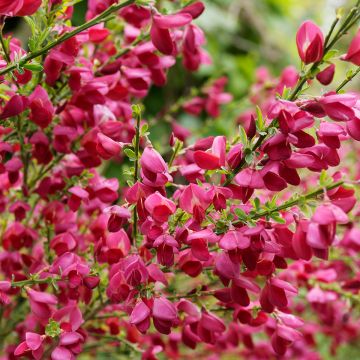
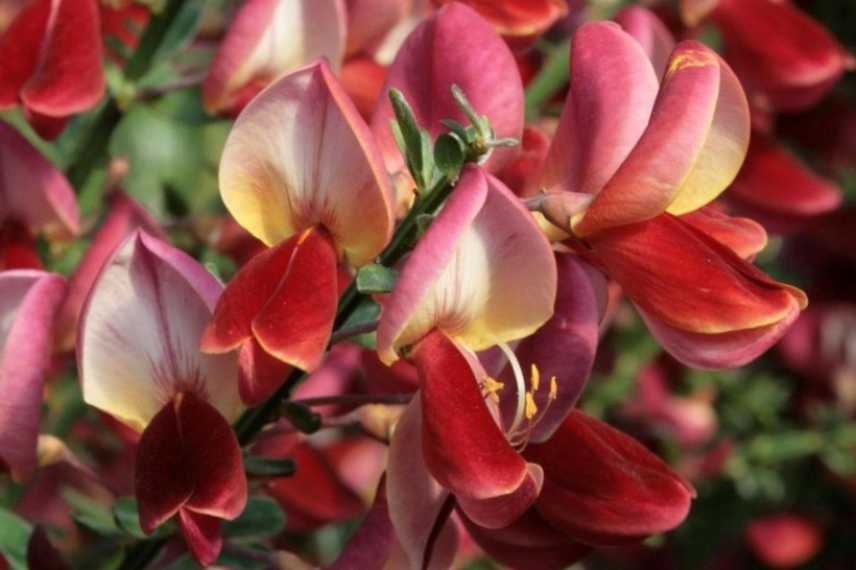
Not all brooms produce yellow flowers; some reveal a flowering in red tones. This is the case with the stunning Cytisus scoparius ‘Roter Favorite’ (sometimes marketed under the name ‘Red Favorite’). This variety offers us an abundance of bicoloured flowers in a blend of crimson and dark red contrasting with golden yellow from May to June.
Relatively compact, this broom develops a bushy habit (1.50 m in all directions) with a wild appearance, upright, fairly dense, yet light in appearance due to its very small, few leaves. This medium-sized bush is perfect for hedges, as a standalone, in borders, in rockeries, or even in pots.
Read also
6 ideas for pairing broom plantsPastel pink flowers: 'Moyclare Pink'
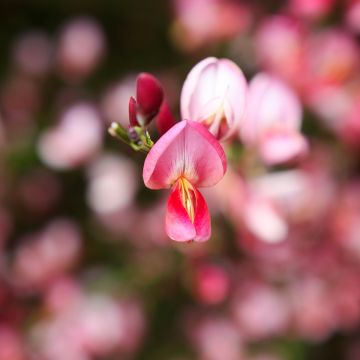
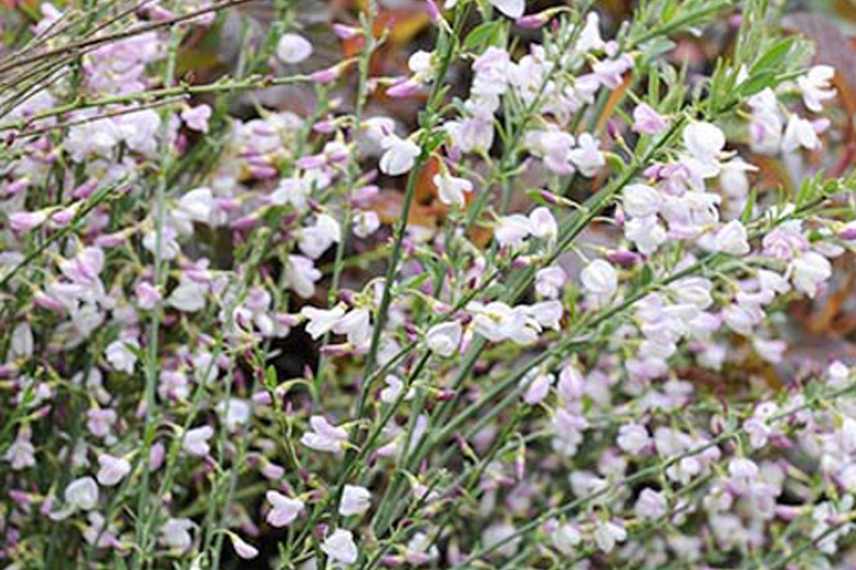
Antipodal to the brightly coloured brooms, Cytisus scoparius ‘Moyclare Pink’ enchants us at the end of spring with a mist of pleasantly scented pastel pink flowers with cream wings. This bush has a bushy habit (1.40 m in height and 1.20 m in spread), but is flexible and light in appearance due to its slightly arching stems.
This broom is fast-growing and thrives in full sun in a large container or in the ground, in light, even sandy and poor soil.
For a white garden: Genista 'Albus'
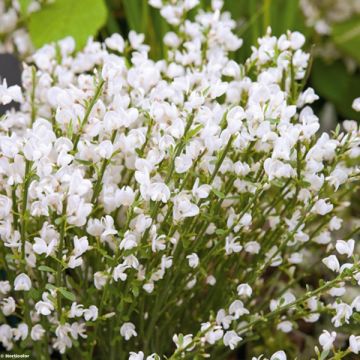
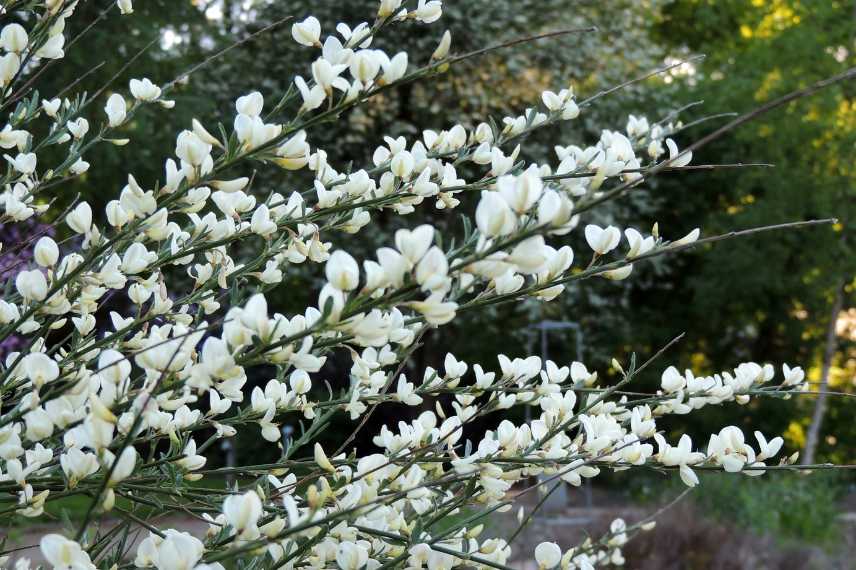
Among the early brooms that flower in early spring, between March and April, there are varieties with white flowers. This is the case for the aptly named Cytisus praecox ‘Albus’. Highly floriferous, this broom is covered in white papilionaceous flowers gathered in bouquets with a powerful fragrance. Relatively compact, no more than 1.20 m in all directions, this bush has a very ramified, dense habit, yet appears light due to its few leaves.
Like other Cytisus, early brooms prefer light, well-drained soils, preferably slightly acidic, in sunny locations.
A multicoloured flowering: 'La Coquette'
Can’t decide between a broom with yellow flowers, one with orange flowers, or one with pink flowers? Well! Choose a multicoloured one!
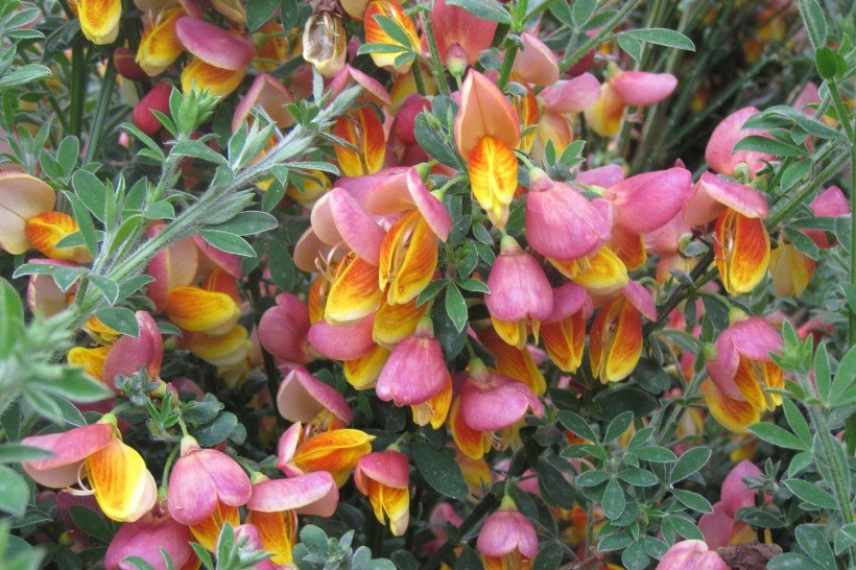
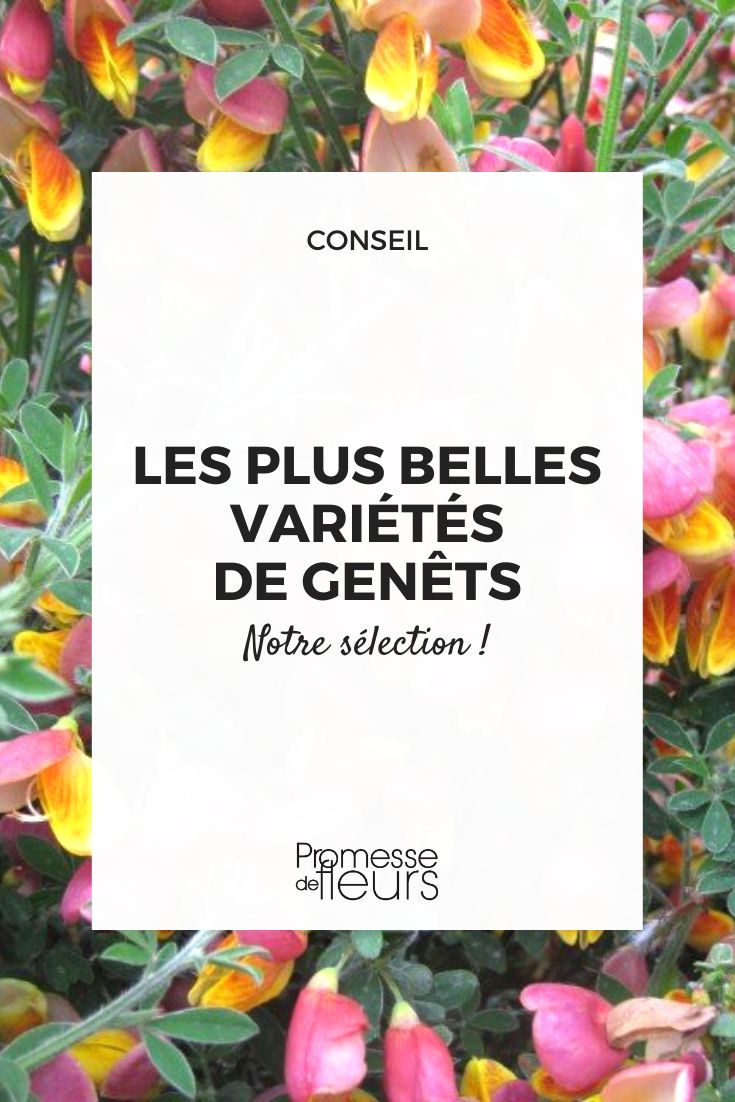
This is the case with the Cytisus scoparius ‘La Coquette’, which delights with its abundant, well-coloured, and pleasantly fragrant spring flowering. From May to June, the flowering unfolds into a multitude of papilionaceous flowers that are pleasantly fragrant. Its pea-like flowers feature a yellow keel, orange-yellow wings tinged with pink, and a cream-yellow banner with a dark pink reverse: ultimately, the overall colour, seen from a distance, becomes a blend of orange and yellow with a hint of pink. This broom does not go unnoticed! The bush develops a bushy habit (1.50 m in height and 1 m in spread), upright, fairly dense, yet with a light appearance.
The Cytisus scoparius ‘La Coquette’ should be planted in a light, well-drained soil, preferably sandy, and slightly acidic, in a sunny position.
Double flowers: Genista 'Plena'
Let’s take a break from the genus Cytisus to focus on the genus Genista. This botanical genus of broom includes small shrubs that rarely exceed 30 cm in height.
The Genista tinctoria ‘Plena’ (sometimes marketed under the name ‘Flore Pleno’) is a double-flowered dyer’s broom. It is an undershrub with a prostrate habit (30 cm high and 50 cm wide) forming a superb cushion literally covered in spikes, composed of numerous double pea-like flowers of a very bright yellow in June-July (with occasional re-blooming in September). The Genista ‘Plena’ produces short, cylindrical, finely ramified green stems. These bear dark green deciduous foliage that falls with the arrival of summer heat, with photosynthesis then being carried out by the green stems.
The Genista tinctoria ‘Plena’ is perfect for covering a rocky slope, a low wall, or a border. This undershrub should be planted in full sun, in poor to average, but well-drained soil, slightly acidic, neutral, or even slightly calcareous.
An intoxicating fragrance: Pilous Broom
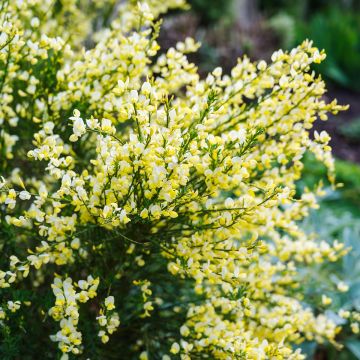
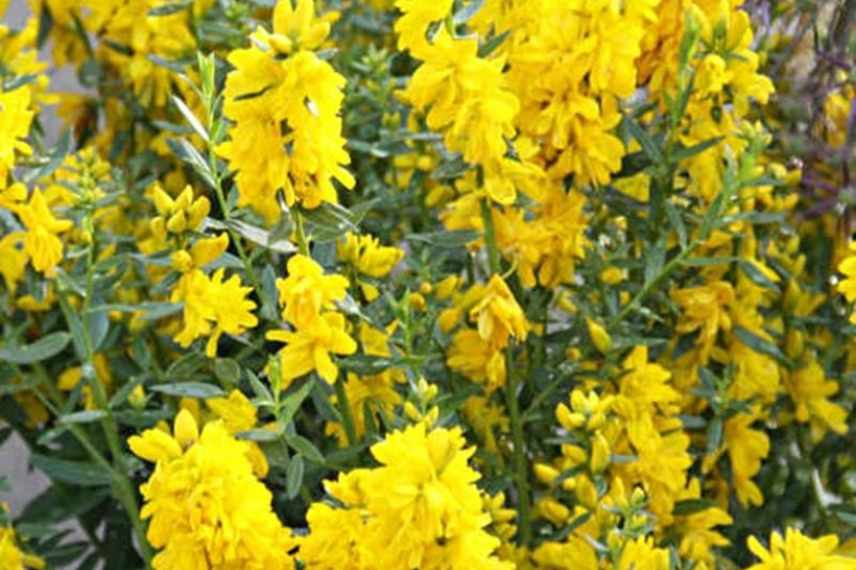
Broom flowers are always fragrant. However, some of them produce flowers with a truly special scent. This is the case with Genista pilosa ‘Vancouver Gold’, also known as Hairy Broom.
It is a very small bush (45 cm high and 1 m wide) making an excellent groundcover due to its dense and spreading foliage. From May to June, Genista pilosa is adorned with a generous flowering of bright lemon-yellow, composed of small pea-like flowers arranged in long clusters, and boasting a subtly sweet, honeyed, and floral fragrance.
This little broom works wonders in rockeries, on slopes, in border plantings, or even in containers where it will create a lovely golden cascade. Very hardy, tolerant of soil type, resistant to drought and sea spray, this creeping broom will find its place in a dry seaside garden as well as in most of our regions.
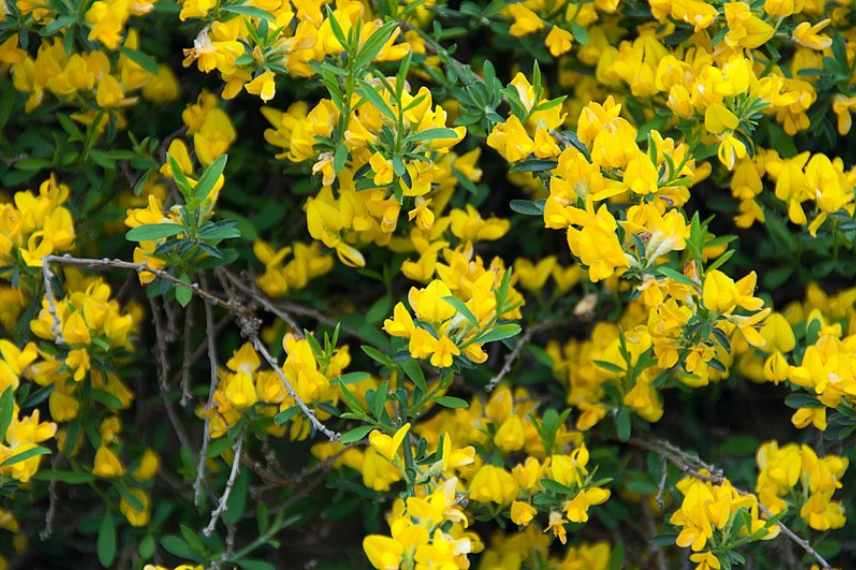
Genista pilosa ©Wikimedia Commons
A curiosity: the Winged Broom
From a distance, the winged broom resembles its yellow-flowered cousins, but this is not the case when you get a little closer.
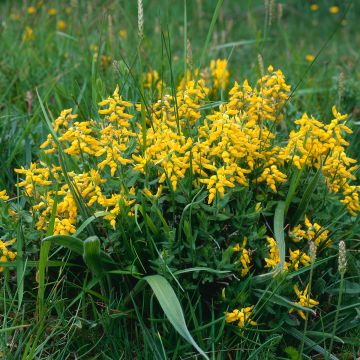
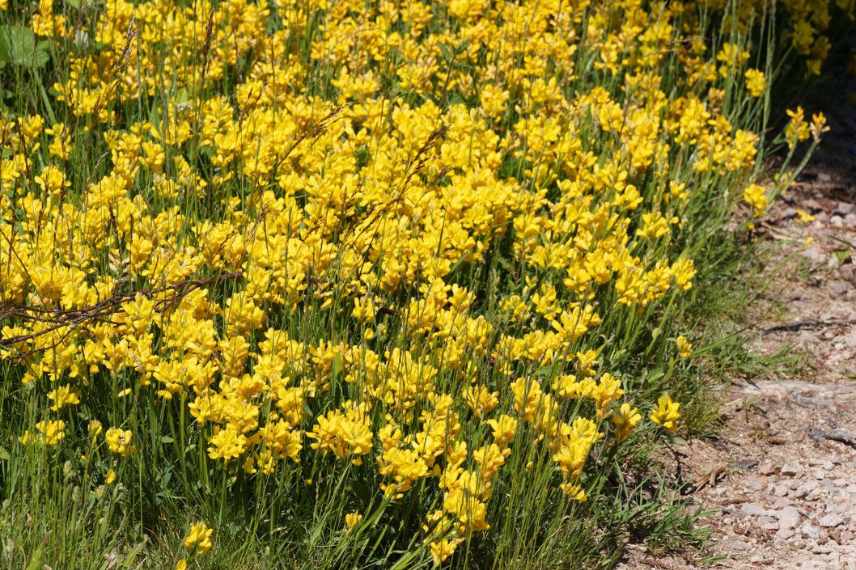
The Genista sagittalis or Winged Broom (also known as Genistrelle) is a small evergreen undershrub that indeed surprises with its upright, winged stems of a lovely soft green. From May to July, it is covered in a profusion of bright yellow, fragrant flower clusters. However, outside of flowering, it is these stems that are remarkable: its woody stems that lie down with upright branches are characterised by being edged with three soft green wings that stop at each node. This feature makes this small broom beautiful all year round, even in winter.
Its bushy habit with dense foliage makes it an ideal groundcover that will delight your borders, rockeries, or containers, whether in full sun or partial shade. This undershrub will find its place in a gravelly, well-drained soil of a rockery or on the crown of a low wall.
A rarity: the Pineapple Broom
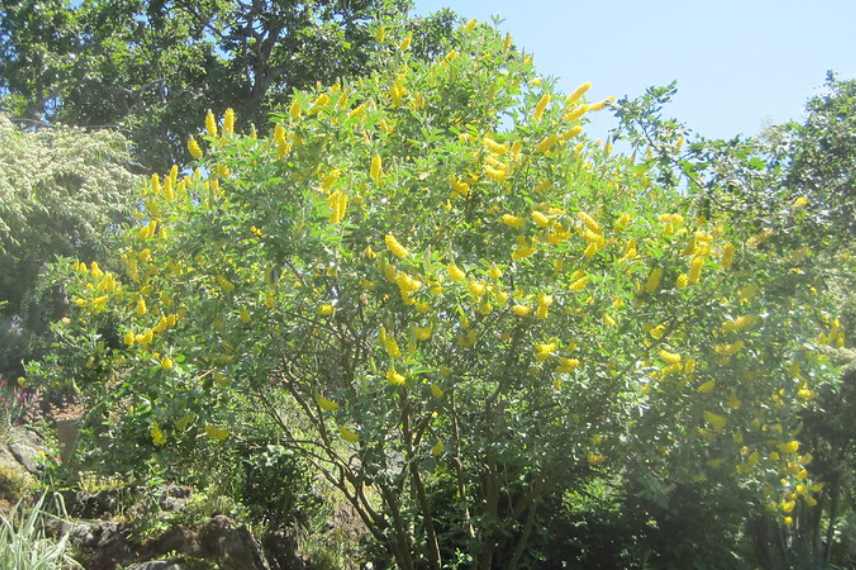
An astonishing rarity among brooms, the Cytisus battandieri, or Pineapple Broom, features a summer flowering in clusters of golden-yellow flowers with a sweet pineapple scent, a deciduous grey-green-silky foliage, and an open and airy habit.
Native to Morocco, in the Middle Atlas and Rif, its growth is rapid and its mature size will reach 3 to 4 m in height, with a spreading of 2 to 3 m. This large bush will thrive in full sun, even in scorching conditions. However, be aware that its hardiness is medium, tolerating temperatures from -12 to -15 °C in sufficiently drained soil.
- Subscribe!
- Contents
Comments