





























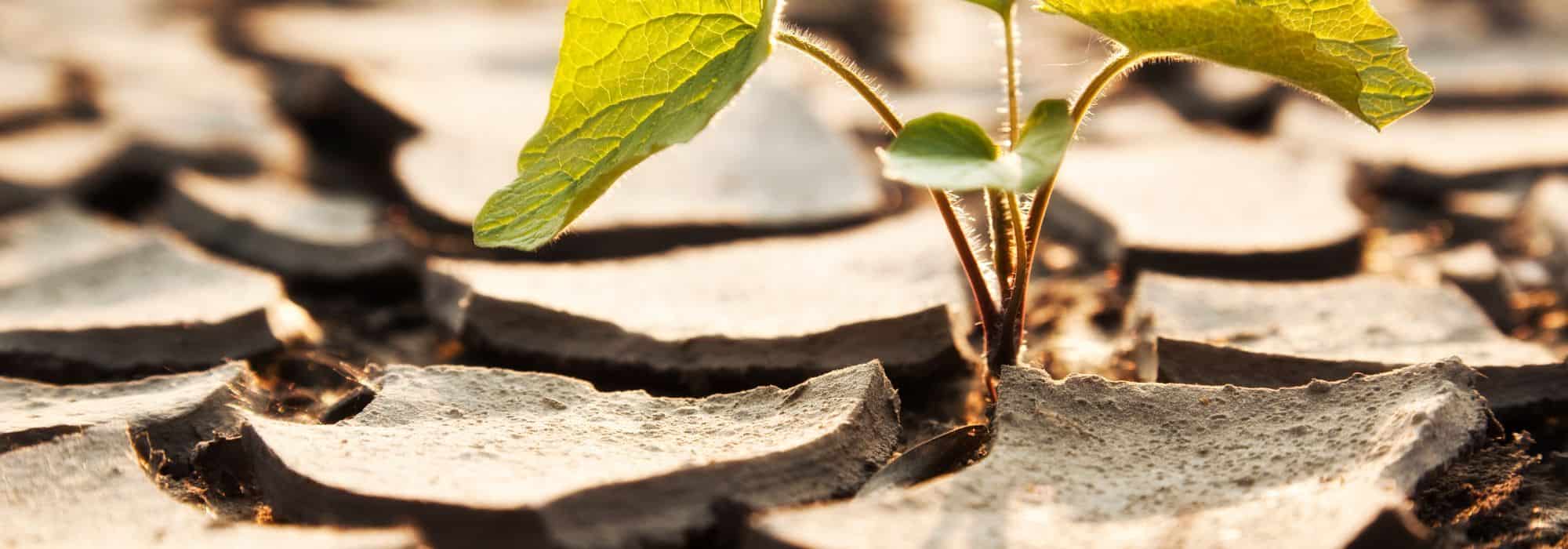
The impact of climate change on pests and diseases in the vegetable garden
What are the consequences for gardening?
Contents
Do the Ice Saints still hold real significance today? Is your sowing and planting calendar, inherited from your grandfather, still up to date? As a gardener, you ask yourself these questions every year, no matter which region you garden in. Indeed, with climate warming, increasingly pronounced year on year, the way we garden is evolving. The context is changing: temperatures are higher, the late season longer, and winters milder; heatwaves and droughts are recurring in summer, and even as early as spring, with frosts less severe. Clearly, gardening is changing its paradigm and we’ll need to adapt when it comes to sowing, planting and watering…
If this climate upheaval has an impact on plants whose vegetative cycle is disrupted (flowering, bud burst period, earlier fruiting, insufficient hardening to cold…), it also directly influences the occurrence of diseases or the appearance of pests.
Let us explore together the overall impact of climate change on gardening, and in particular on diseases and pests. And above all how to anticipate this climate change with natural solutions to have a productive and nourishing vegetable garden.

What is the overall impact of global warming on the vegetable garden?
For decades now, climate change has become more evident. Around the world, extreme weather events are increasing in frequency, ice melt is accelerating, heatwaves are longer and more intense with each year. Including in our beautiful country. Heatwaves are no longer rare and return year after year, drought no longer affects only southern regions and is spreading over longer periods, episodes of heavy rainfall or devastating hail are more common… In short, the climate is changing inexorably, directly impacting the agricultural world, but also our gardens.
In practical terms, with the multiplication of heatwaves, which follow early springs and mild winters, nature is upended. Plants suffer from heat and drought, signs of water stress are becoming more frequent. Similarly, in the face of particularly mild springs, plants gain in precocity, which is not without consequences for their phenological development: bud burst period, flowering, fruiting, harvest… are earlier and, above all, faster. And, in such circumstances, late frosts can be catastrophic. Finally, winters that are too mild disrupt certain plants: fruit trees need cold to fruit, the dormancy periods, necessary for many plants, are insufficient.
Ultimately, plants accumulate dysregulations and are increasingly fragile. And where there is fragility, there are diseases!
But this climate change also has a considerable impact on insects and the soil microfauna. High heat, combined with drought, will inevitably disrupt the life and activity of this soil microfauna. As for pest insects, they take advantage of rising temperatures to proliferate. Moreover, winter cold is not sufficient to destroy these parasites.
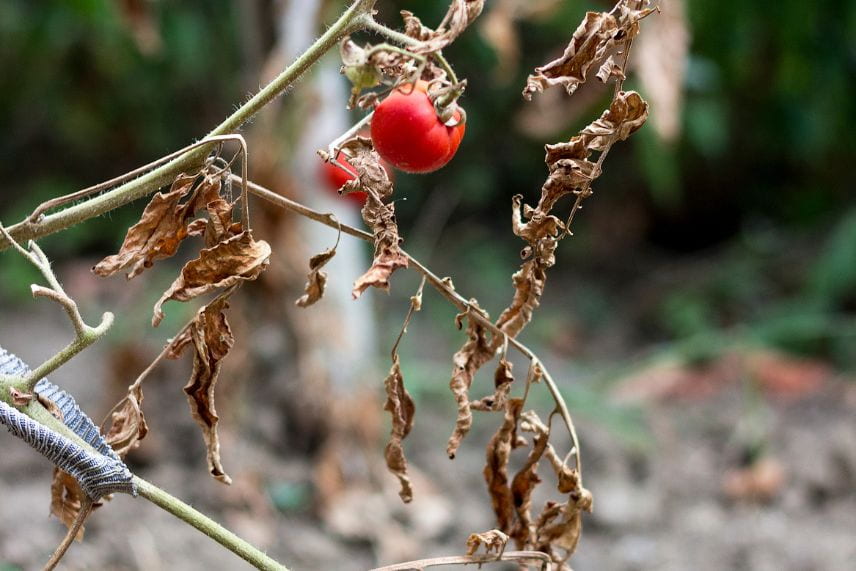
Garden vegetables are particularly affected by climate warming
So, even though the consequences of climate warming are less severe in the kitchen garden than in the agricultural sector, they still perturb the gardener in you. Today and in the future, we will need to adapt, change the way we garden, and preserve a nature already suffering.
Vegetable garden diseases worsened by climate change
Undeniably, these climate disruptions directly threaten plant health. Early springs following mild winters can promote the development of diseases. Indeed, with rising temperatures, viruses and fungi wake up earlier and inevitably strike earlier on delicate plants. Moreover, winter cold can sometimes limit the development of certain diseases. With milder winters, pathogens survive more easily.
Moreover, rising temperatures and increasing humidity form an ideal combination for the development of cryptogamic diseases such as downy mildew, powdery mildew, and rust… These diseases are therefore set to multiply, intensify and appear earlier in spring.

Early warmth combined with humidity increases the risks of downy mildew, powdery mildew and rust…
Finally, climate warming can cause the shifting of infection zones for certain diseases. Diseases that can become established year after year…
Pest insects that benefit from climate warming
Pest insects… are certainly the biggest beneficiaries of these climate changes. Why? Several factors come into play in their proliferation in both agricultural crops and in kitchen gardens. First, mild winters do not permit insects hibernating in their larval or adult form, or in their eggs, to be destroyed.
Secondly, increasingly mild temperatures promote the growth of these insects, as well as their appetite and their ability to reproduce. The consequences of this voracity are clearly visible on plants over a longer period. And many of these insects are likely to produce more generations per season thanks to the extension of the warm period. This is indeed the case for the codling moth, a pest that affects fruit trees, and particularly apple trees. Likewise, aphids proliferate dangerously year after year, since their fertility directly depends on temperatures. In the meantime, the natural predators of these pest insects may not be positively affected by climate warming.
Finally, with climate warming, the distribution ranges of some of these insects are shifting. Some pests, previously confined to the south of France, tend to move northwards and acclimatise easily. To illustrate my point, I will mention two concrete examples. This summer, my little kitchen garden (and the gardener I am!) had to face two waves of pest insect attacks unknown to me. Which add to the return of the Colorado potato beetles, which have been a bad memory for many years! Setting the scene: I live and garden in the beautiful Loire department, near Saint-Étienne. 650 m above sea level. And this summer, my tomatoes were attacked by a noctuid moth, more specifically the Helicoverpa armigera, a tropical-origin moth that had previously been predominantly present in the south of France. The mild temperatures of recent years have allowed it to settle quietly in our region where winters are milder and summers increasingly hot. My cabbages have also been visited by prettily coloured shield bugs (Eurydema ornata), quite similar to the famous ladybirds, also mainly found in southern France. The same goes for the leafhoppers, for the pine processionary caterpillars, for tobacco whiteflies… and many other insects.
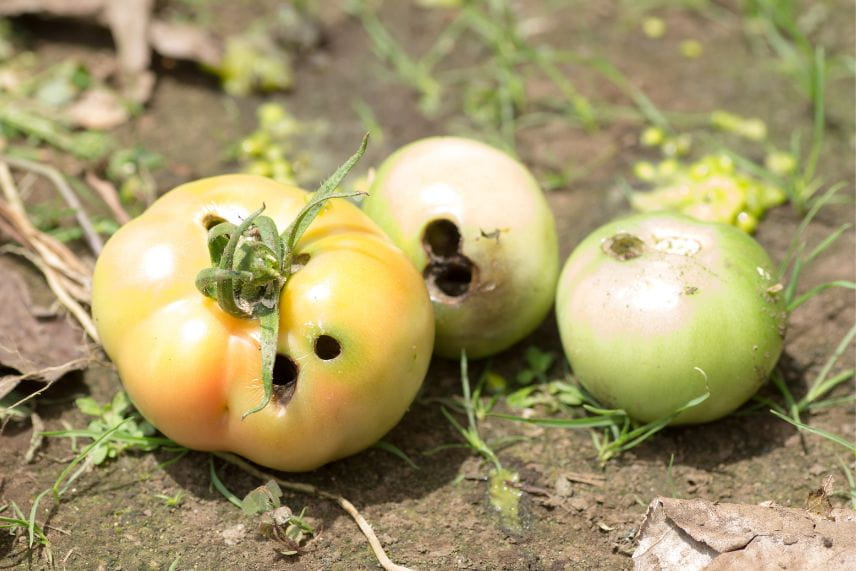
With climate warming, some pest insects, like the tomato moth, are gradually moving northwards across the country
Climate warming also promotes the establishment of harmful insects, arriving (by chance) from distant regions, and finding the favourable conditions to prolong their stay…
Solutions for adapting your vegetable garden to global warming
In the face of climate disruptions, at its own scale, every gardener has a role to play, no matter how small! And if they want to continue to enjoy the fruits (and vegetables) of their work in the vegetable garden, they must radically change their practices by adopting different, more respectful cultivation practices, but also by deploying natural and preventive strategies against pests. A number of measures can be implemented:
- Manage water differently to optimise resources. This involves collecting rainwater at times when it is abundant to use it when it is scarce. It is also possible to adopt different watering systems, such as drip irrigation or the ollas, and more economical. Likewise, gardeners will need to learn to water differently, with moderation and in a measured way, at the right times of day and in reasonable quantities. All our ideas and tips for responsible watering.
- Make use of your garden’s microclimates: a vegetable garden is inevitably made up of zones differently affected by the sun, the temperature, the influence of the wind, the predominance of air currents, the presence of water… It is therefore enough to garden by using the advantages of each of these zones, for example by planting drought-tolerant plants in the dry areas or lettuce in shaded areas…
- Adapt vegetable species and varieties to the climate. Thus, it is possible to select, among species such as lettuce, spinach, radish…, varieties less prone to heat and therefore to running to seed. Or early-maturing varieties that will reach maturity sooner. For example, spinach ‘Viroflay’ which tolerates heat much better than other varieties. If you live in a region where the sun is scorching, you may need to give up summer crops, too prone to heat, and thereby favour vegetables less water-hungry such as parsnips, scorzonera…
- Shift the sowing and planting periods. Indeed, today it is possible to start sowing and plant earlier in response to increasingly early springs. Even if late frosts can still strike in April or May, you can transplant your tomatoes earlier in the season. Likewise, sowing and planting end later in late summer or autumn which is increasingly turning into an Indian summer (in my garden, I sowed beans at the end of August and tasted them in October!)
- Prioritise autumn–winter and spring vegetables in the warmest regions. Thus today, beetroot, peas, carrots, chard and other lamb’s lettuce grow more easily in southern vegetable gardens than traditional tomatoes and courgettes. Likewise, spring or early crops (carrots, peas, leeks, lettuces, radishes, beans…) are increasingly often a great success
- Adopt cultivation practices suited to climate change. And there are many such practices that help combat climate disruption: mulching to feed the soil and retain moisture, no-dig gardening, shading the vegetable garden, the use of plant manures and decoctions to deter pests and boost plants, companion planting and crop rotation, the use of compost or green manures…
- Promote biodiversity to maintain balance in the vegetable garden : reintroducing native species and planting melliferous plants to attract pollinating insects to support natural pest control, as well as pollinators; install nest boxes and feeders and plant hedges to attract garden birds, create habitats for insects and pollinators, make piles of stones, branches or fallen leaves to shelter certain friendly insects, small mammals, reptiles… great pest-eaters; create wetlands.
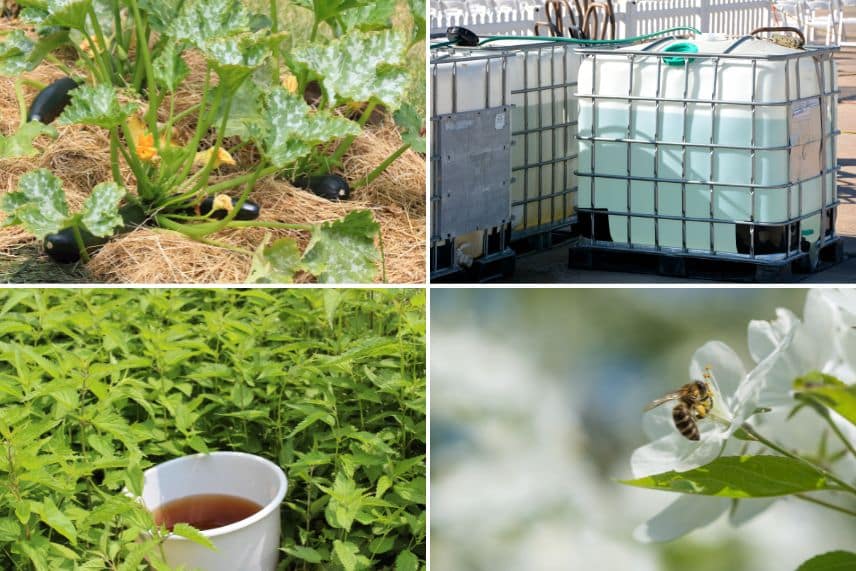 There is an urgent need to adopt new cultivation practices</caption]
- Subscribe!
- Contents
Comments