





























The benefits of mycorrhizas on bare-root plantings
Discover the benefits of this sym symbiosis
Contents
Mycorrhizas are the result of a sym symbiosis between a fungus and a plant, which forms on the roots. They are essential for the health and growth of plants, but because they occur below the soil, they are not very visible and are therefore often overlooked. We present in this article their importance and benefits for bare-root plantings, as well as our advice to favour the formation of these underground alliances and the mistakes to avoid.
Discover our entire range of mycorrhizas and activators relating to root.

Mycorrhizae: what are they?
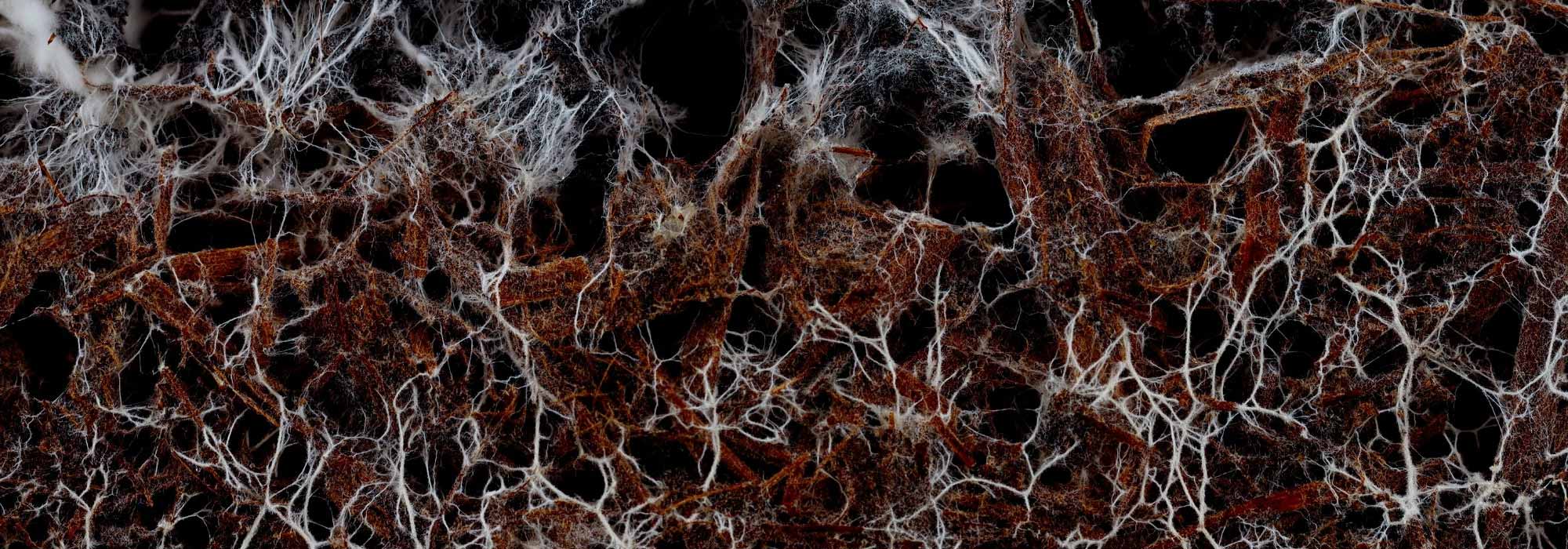
Mycorrhizae are a symbiosis between the roots of a plant and a fungus. The term comes from the Greek myco: “fungus” and rhiza: “root”. Through the mycelium (very fine white filaments), the fungus connects to the plant’s roots and transfers the water and mineral elements it draws from the soil to it, while the plant supplies it with sugars and other organic compounds resulting from photosynthesis. The fungus forms an extension of the roots and thus multiplies the absorptive surface. The area of soil explored by the roots would be multiplied by 10,000 thanks to mycorrhizae. It would replace the absorbing root hairs originally present on the roots. The fungus thus promotes the growth of plants and makes them more resilient. This mutually beneficial relationship allows both organisms to better access the resources they need. This is a very common phenomenon, but one we are not always aware of because it occurs underground and is therefore difficult to observe. Mycorrhizae are thus still relatively little used in gardens, although this interaction has many benefits.
To know more, read : “Mycorrhizae: what are they? What are they for?”
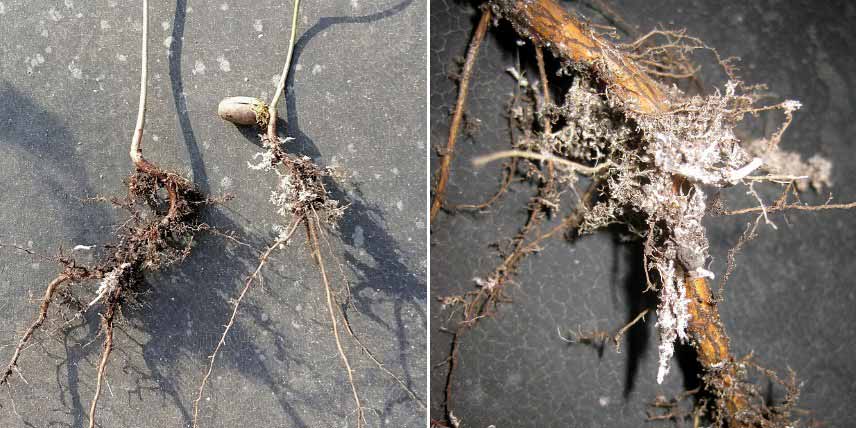
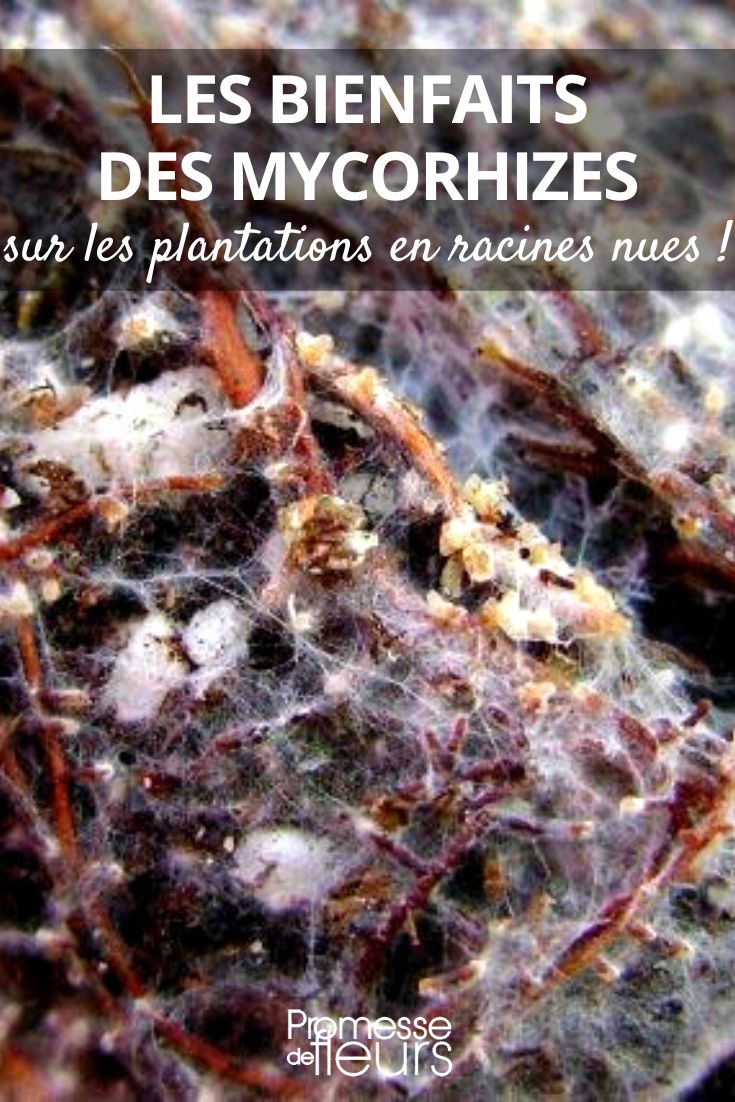
Mycorrhizal roots
The different types of mycorrhizae
A total of seven types of mycorrhizal symbioses are identified, but to simplify there are two main types:
- Endomycorrhizas (internal mycorrhizas): their filaments penetrate inside the root cells to form a closer association. They are the most common: found in more than 80% of cases. They are mainly arbuscular endomycorrhizas (because their structure is arborescent).
- Ectomycorrhizas (external mycorrhizas): much rarer, they colonise only 5% of vascular plants. These mycorrhizas do not cross the cell walls but simply surround the roots, forming a sheath around them. They are effective at protecting against pathogens. They associate in particular with the Fagaceae (oaks, beeches, chestnuts…), birches and pines. This is the case for some well-known and visible fungi such as porcini.
Commercially, strains of the fungus Glomus intraradices (syn. Rhizophagus irregularis) are mainly available. This is an arbuscular endomycorrhiza, which is therefore particularly versatile and can associate with a large number of plants.
Mycorrhizas are supplied as a powder, to be placed at the bottom of the planting hole. In the case of planting bare roots, you can apply the powder to the roots at the time of pralinage. These fungal spores are often marketed mixed with activated charcoal or seaweed meal, and are sometimes also combined with nitrogen-fixing bacteria (Azospirillium sp.).
Some fungi colonise only a single type of plant. Orchids and Ericaceae (ericaceous plants: azaleas, rhododendrons…), in particular, have specific mycorrhizas. Finally, some plants do not need mycorrhizas: this is particularly the case for the Brassicaceae (such as cabbages, wallflowers, aubrietas…), the Chenopodiaceae (beetroot, spinach…) and the Polygonaceae (rhubarb, knotweeds, persicarias…).
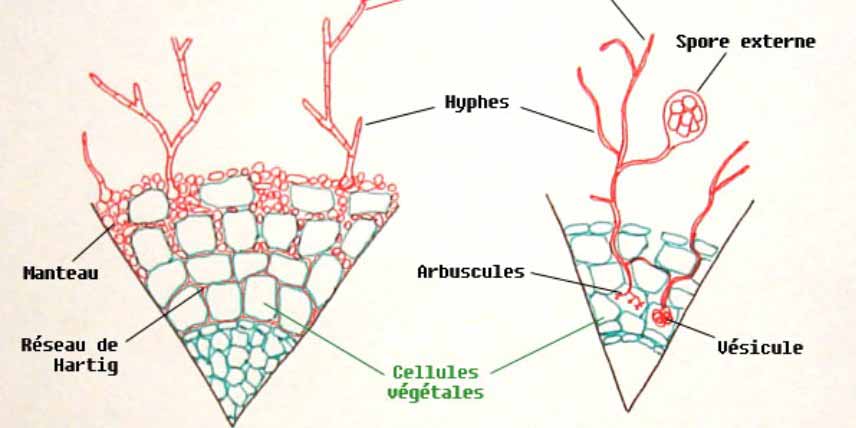
Ectomycorrhizas (left) surround the plant cells, forming a sheath around the root, whereas endomycorrhizas (right) penetrate the cell wall
Why are they important for bare-rooted plantings?
As their name suggests, trees and shrubs sold as bare roots come without a pot or substrate. They are planted in autumn or at the end of winter, when they are dormant. These young plants sold as bare roots have undergone trauma during lifting at the nursery and their roots may have been damaged during transport. They will greatly benefit from an application of mycorrhizas to restart their growth and thrive. The roots are visible at planting time, so you can apply the mycorrhizas directly onto them, particularly on the most active areas, notably the lower part of the roots. This will improve their effectiveness.
Providing plants with minerals and water, mycorrhizas can help these plants restart their growth under the best conditions and withstand various stresses caused by cold, drought or pests. They act a bit like fertilisers, but with a more lasting effect. The mycorrhizal young plants will require a little less maintenance and care. The fungus also provides information to the plant in the form of chemical signals, notably in the event of drought, so that it can react and close its stomata. The mycorrhiza can also protect the plant against pathogenic bacteria (for example Pseudomonas) and it can boost the plants’ defences.
The benefits of mycorrhizas :
- They increase root surface area and improve nutrient uptake
- They allow plants to grow faster (growth rate could be multiplied by 10)
- They protect plants against drought, because the fungi can absorb water even when present in small amounts, and they also warn the plant in case of drought so that it closes its stomata
- They help the plant defend itself against diseases, notably bacteria, providing the plant with antibiotic substances
- They promote good anchorage in the soil
All of this makes plants more resilient. In general mycorrhizas form naturally in the soil, but adding them speeds up and improves the process. Mycorrhizas will therefore help your bare-root plants establish more quickly and more easily in your garden.
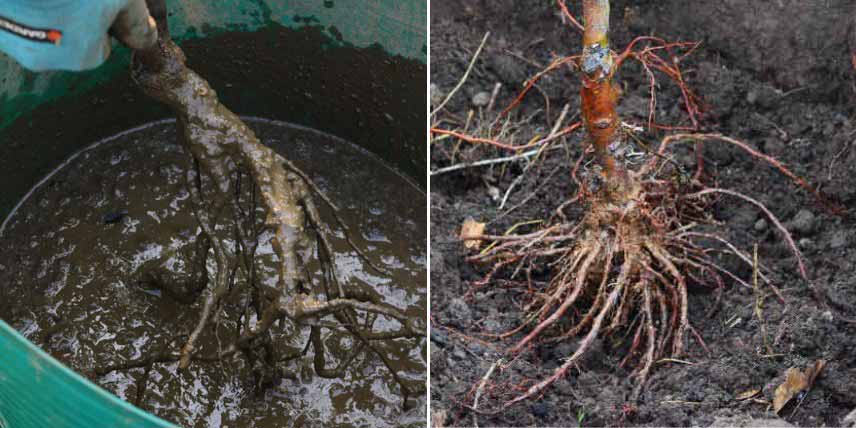
Before planting a bare-root tree or shrub, mix the mycorrhizas into the root dip, then dip the roots into this mixture
How can the formation of mycorrhizae be encouraged?
In principle, mycorrhizas need only be applied once in a plant’s life, because the fungus persists once it is established. The most favourable time is therefore at planting. For bare-root plants, we recommend applying mycorrhizas at the time of the root dip. When preparing the root-dip mixture, we recommend mixing the powder containing the fungal strains into it, then dipping the roots in this mixture and planting. Commercial root dips sometimes already contain mycorrhizas. It is also possible to place mycorrhizas at the bottom of the planting hole.
Some cultivation practices encourage the formation and development of mycorrhizas:
- Add organic matter, for example well-rotted compost or manure, to the base of your plants each year in spring… A soil rich in organic matter is more likely to favour the formation of mycorrhizas, whereas degraded soils poor in humus are unfavourable to mycorrhizas.
- Mulch the soil: use dead leaves, straw, RCW (ramial chipped wood)… Besides limiting weed growth, this helps keep the soil cooler for longer, protects it from erosion, and helps maintain a living soil conducive to the development of mycorrhizas.
By contrast, it’s better to avoid certain practices:
- Avoid using mineral fertilisers, especially those rich in phosphorus. An excess of chemical fertilisers can disrupt the mycorrhizal symbiosis. Replace them with additions of organic matter and natural phytostimulant products (nettle or comfrey manure, etc.)
- Avoid using fungicides, which could kill mycorrhizal fungi. Where possible, also avoid the use of Bordeaux mixture, sulphur…
- Avoid deep cultivation of the soil. This could destroy mycorrhizal networks. Rather than turning the soil over, favour the use of a broadfork and apply organic matter to the surface, optionally incorporating it into the soil with a light raking.
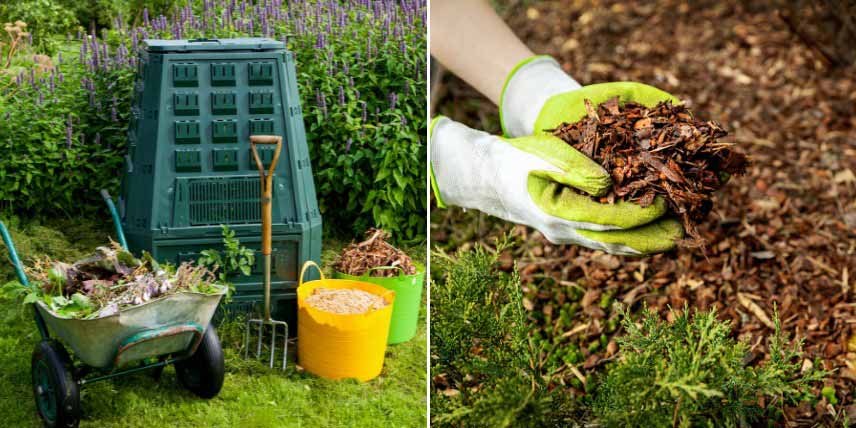
To encourage the development of mycorrhizas, don’t hesitate to add compost and mulch the soil
- Subscribe!
- Contents
Comments