





























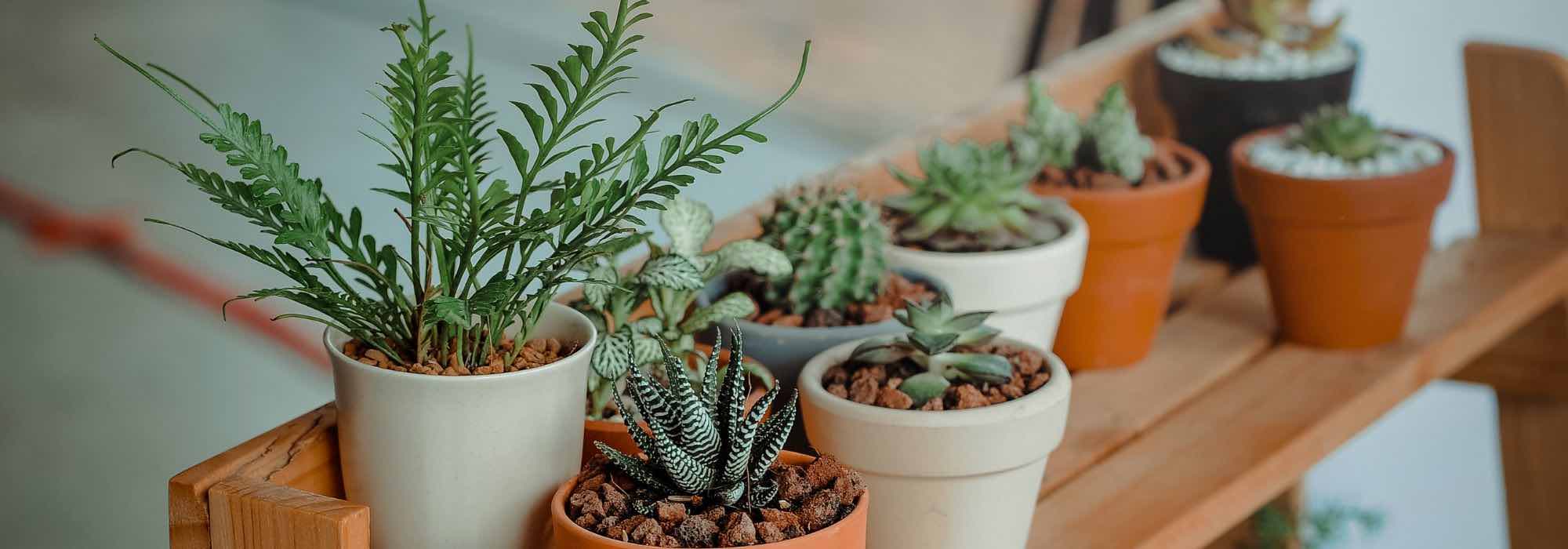
Small houseplants for small spaces
Plants that remain compact
Contents
Indoor plants bring freshness, greenery and a sense of calm to our living spaces. With growing urbanisation and increasingly compact living spaces, the popularity of indoor plants, and especially the smaller ones, has exploded in recent years. Some adapt very well to confined spaces and maintain modest growth; they are easy to look after and add a touch of nature to the tiniest corners of our homes and flats. In this article, we look at which compact, space-saving plants are best suited for small spaces, as well as practical tips for their care and their aesthetic display.
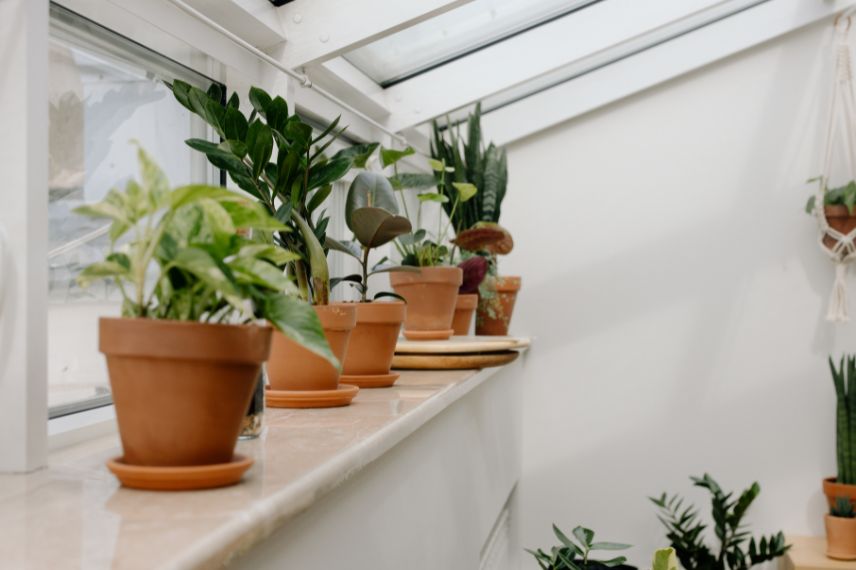
A windowsill? And there you have it — plenty of plants…

Houseplants that grow slowly
Small indoor plants have gained popularity for a variety of reasons. First, their compact size makes them perfect for adding greenery to apartments and other small living spaces. They fit easily on small shelves, narrow window sills and forgotten corners of rooms, bringing a touch of nature wherever space is tight. They can thrive longer in small pots without feeling cramped. In urban apartments and homes with limited space, they let you enjoy the benefits of nature without cluttering rooms. Their small size makes them ideal for window sills, shelves, desks and even hanging displays, creating a green and calming décor.
Small plants are a good option if you want several plants at home. Do note there’s another option, very interesting decor-wise, provided you don’t have a passion for plants or a desire to curate a collection: choose a single large plant to place on the floor and draw all eyes.
Which indoor plants to choose for a small space?
- Succulents
Succulents are fleshy small plants that store water in their fleshy leaves. They are drought-tolerant and enjoy bright light, even direct sunlight. They are well suited to very bright rooms and, conversely, not a good choice for a room with medium light, where they may become leggy. These succulents are not only aesthetically pleasing with their geometric shapes, but also very hardy, and require only modest watering and a very well-drained substrate. They are typically sold in small pots and grow slowly, gradually creeping to the pot’s edge. They like to grow in tight spaces and do not often require repotting. They have a relatively shallow root system. Some may nevertheless form fairly large specimens over time, such as Crassula or Aloe vera, for example. Among smaller succulent species, include: Echeveria, Haworthia, Sedum, Kalanchoe, Lithops, Portulacaria, among others.
- Cacti
Cacti form part of the large succulent family, they have similar cultivation conditions. Their appearance, however, differs from other succulents: they have swollen stems and spines. They grow slowly—very slowly—in height and width. They are often visually fascinating and, like other succulents, display sometimes striking flowering when provided with cool winter temperatures in an unheated room.
→ Read Alexandra’s indoor cactus and succulents family sheet on indoor cacti and succulents.
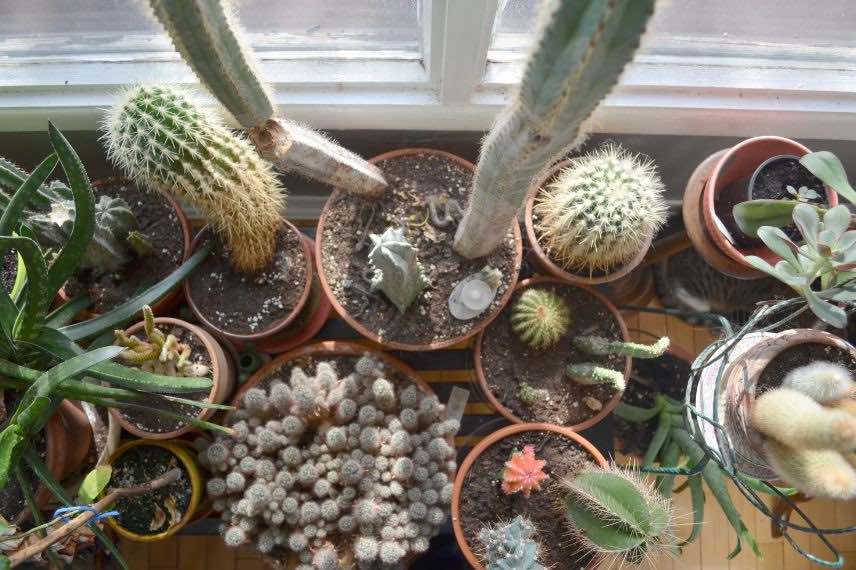
Group your succulents as close as possible to daylight
- Epiphytic plants
Epiphytic plants grow without needing substrate. They can be attached to other plants or to supports such as branches. Orchids are a well-known example of epiphytic plants popular for interiors. They grow in the wild on tree bark. We recreate this principle indoors by providing a bark-based potting mix.
- Some epiphytic plants such as Tillandsias only need misting; they simply grow mounted on a support. They are true space-saving champions.
- Others, such as Phalaenopsis (orchids) and Hoyas, grow in small quantities of very light bark-based substrate. Containers are small and they are not often repotted. That said, this does not prevent a Hoya like the Hoya bella from quickly forming a fairly voluminous trailing plant.
- Platycerium are epiphytic ferns grown on wooden boards or bark with sphagnum moss. They are hung vertically on a wall like a frame. It’s a good way to green your space without taking up floor space and without cluttering storage surfaces.
À noter que certaines de nos plantes d’intérieur bien connues sont des plantes épiphytes, mais on les cultive de manière plus classique comme des plantes en pot avec du terreau.
- Compact-growing plants
Some plants naturally stay compact, making them ideal for small spaces. Among them is Pilea peperomioides, which features charming round leaves. Other Pilea, such as plants in the Peperomia family, grow modestly. Also consider ferns and Asparagus ferns which often stay small.
- Hanging plants
Hanging plants are perfect for adding greenery vertically, from the ceiling or a support. Pothos, Chlorophytum, Ceropegia, Philodendrons, to name a few, are popular choices for hanging pots.
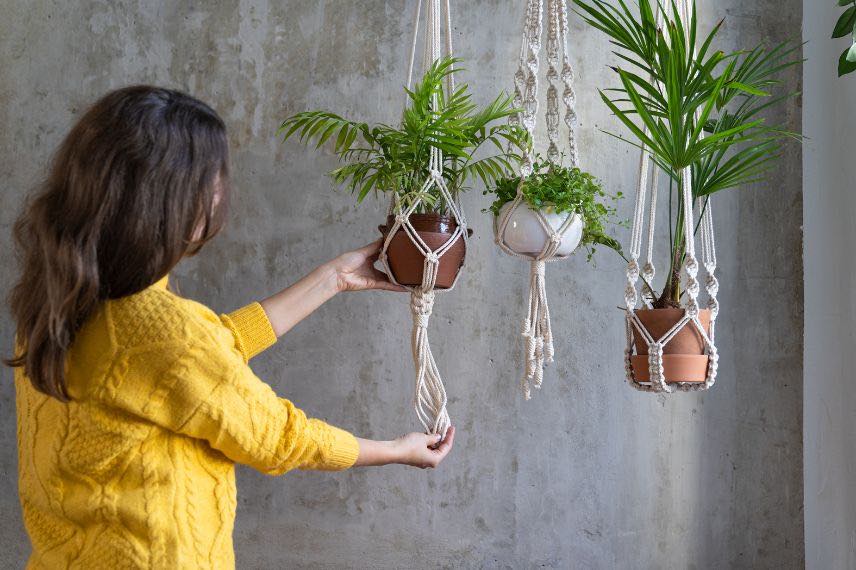
Use the ceiling and vertical space to add plants
- Mini terrarium plants
One good way to bring nature indoors is to create a terrarium. Very rewarding, but not always easy to maintain in the medium to long term, the terrarium recreates a small ecosystem of a natural habitat. A miniature forest, a cactus desert: the terrarium is inspiring, conjuring a landscape of its own and taking up little space in a room. It needs bright light with no direct sun.
- Miniature aromatic herbs
Choose small plants of parsley, coriander and tarragon for example, which are not only aesthetically pleasing but also useful in cooking. You can create a compact window box with aromatic herbs, harvesting leaves as you need.
- Sansevieria
If you want a larger plant, the Sansevieria has the big advantage of growing very upright. If it can grow quite tall, around 1 m to 1.5 m in time, its footprint on the ground remains limited and the size of its pot as well.
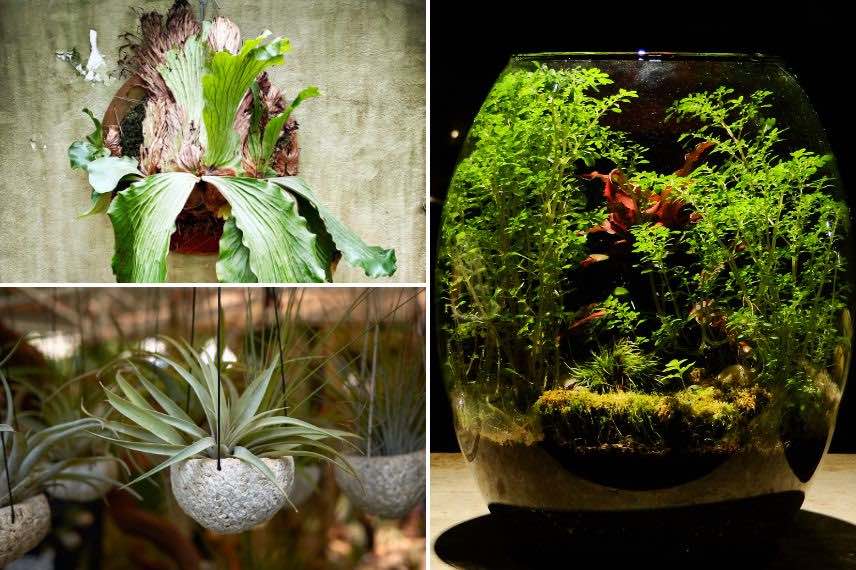
On the left: Platycerium and Tillandsia, two epiphytic plants. On the right, a terrarium
Care
Here are some basic tips for looking after your small plants, which differ little from the care of larger plants, apart from watering.
- Watering: in general, small indoor plants require less water than larger plants, as they are in smaller pots with less potting mix and have weaker root development. Let the soil dry out partially to completely (depending on species) between waterings to prevent root rot. Watering once a week is often sufficient.
- Light: place your mini-plants near a bright window, but not in direct, intense sunlight that could scorch their delicate leaves, except for succulents and cacti, which prefer more direct sun.
- Substrate: use a well-draining potting mix to prevent the roots from staying too wet. This advice is fairly universal, though there are a few exceptions.
- Pests and diseases: regularly inspect your plants for signs of pests or diseases. Use natural solutions such as insecticidal soap for pests. Keep diseased plants away from others to prevent the spread of problems. If you notice signs of disease or pests, treat them promptly to prevent spread.
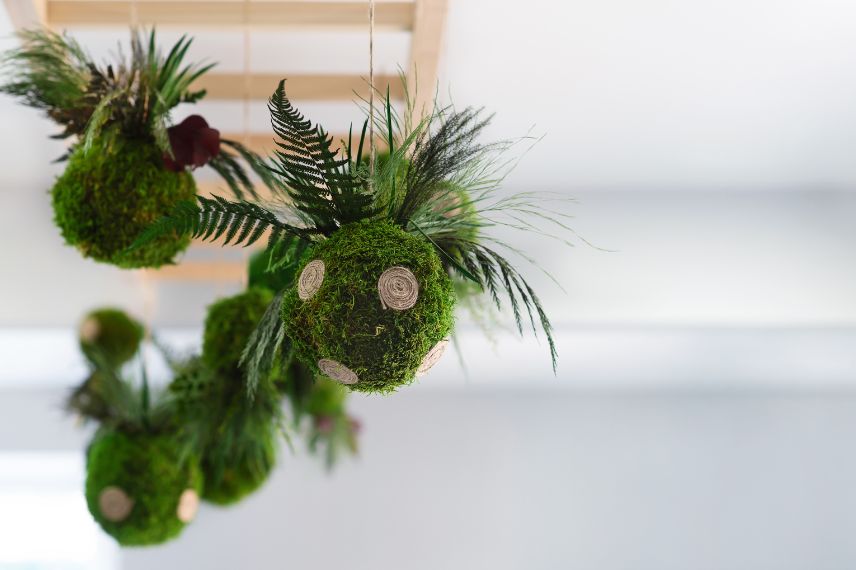
Double greenery with kokedamas: a plant surrounded by moss, a lovely evocation of nature
Tips for arranging indoor plants in a small space
In a small space, layout and aesthetics, showcasing your plants is all the more crucial as space is tight. Here are some suggestions for installing your plants creatively in your living space:
- Create a floating shelf dedicated to your mini plants, arranging them artfully to add a touch of greenery to the wall.
- Use mini plants to create an attractive centrepiece, playing with different varieties and heights.
- Opt for a small terrarium to group several mini plants in a closed environment, thereby creating a miniature garden scene.
- Hang your plants in pots with macramé or cords to create an airy effect.
- Group your plants rather than dispersing them around the space: the aesthetic impact is greater and the greenery feels stronger, and it is more practical for watering and, in general, the right light conditions are fairly localised.
- Install a shelf dedicated entirely to plants: it’s the best way to create space for many small plants.
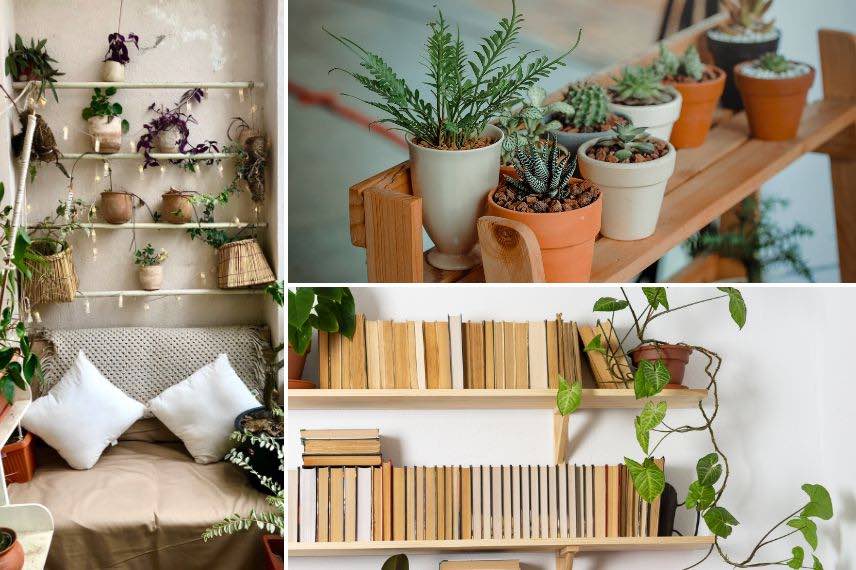
Make the most of every surface to place plants and group them
- Subscribe!
- Contents
Comments