






























Sea buckthorn: an edible fruit with numerous benefits
Discover this superfruit with a host of benefits.
Contents
Sea buckthorn or Hippophae rhamnoides, is a bush that produces a fruit known as Sea buckthorn, with many facets, valued for its nutritional value and health benefits. Originating in Central Asia, this thorny bush has conquered the world thanks to its reputation as a superfruit. It is particularly renowned for its vitamin C content. In this article, we explore the sea buckthorn fruit and its benefits, as well as possible preparations for consuming it.
Note: do not confuse Sea buckthorn with the strawberry tree, Arbutus unedo. Their only commonality is the similarity of their names in everyday language.

Sea buckthorn and its varieties
Sea buckthorn is a deciduous-leaved bush that bears small orange berries, similar to berries. There are several species of sea buckthorn, but the most commonly cultivated is the common sea buckthorn, or Hippophae rhamnoides. This species is found in many regions of the world, notably Europe, Asia and North America.
Other sea buckthorn species include black sea buckthorn or Hippophae tibetana, the Siberian sea buckthorn or Hippophae salicifolia and the Indian sea buckthorn or Hippophae rhamnoides subsp. turkestanica. They produce different fruits with unique characteristics in terms of flavour, size and nutritional composition, but all share certain medicinal properties.
To grow the fruit of Hippophae rhamnoides, the most commonly found in your garden, you need to plant a female variety such as ‘Leikora’ or ‘Orange Energy’ and a male variety such as ‘Pollmix’.
Alternatively, you can also plant a self-fertile variety such as ‘Friesdorfer Orange’.
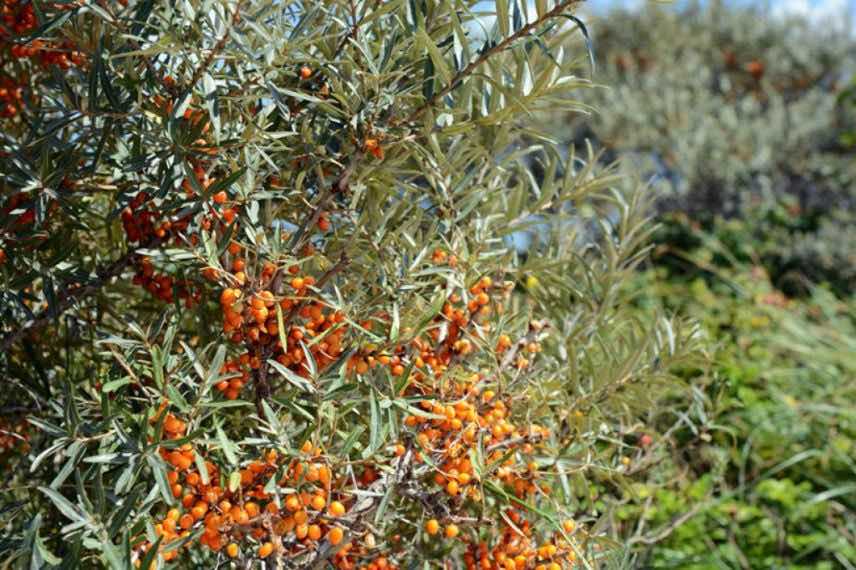
Sea buckthorn in the wild
Sea buckthorn toxicity: a myth to dispel
One of the common questions about sea buckthorn concerns its toxicity. There are occasional claims that sea buckthorn is toxic, but in reality, this assertion is often misinterpreted. The leaves and bark of sea buckthorn do contain toxic compounds, but the fruits are perfectly edible and even beneficial to health.
However, it is important to note that excessive consumption of sea buckthorn fruits can cause side effects, such as gastrointestinal upset, due to their high content of organic acids. It is therefore advisable to consume fruits in moderation.
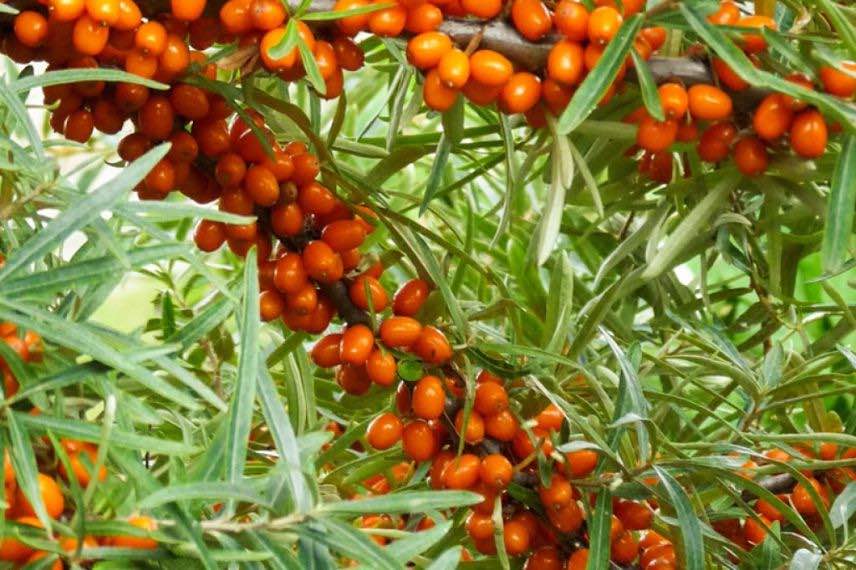
Fruits should be prepared and eaten in moderation
The flavour of sea buckthorn
Sea buckthorn flavour is unique and difficult to describe in a nutshell. The berries are small, round, and range in colour from pale yellow to bright orange. Sea buckthorn is both tart and slightly sweet, with a hint of bitterness. The combination of these flavours makes for an intriguing fruit, often likened to the sensation of a burst of vitamins on the palate.
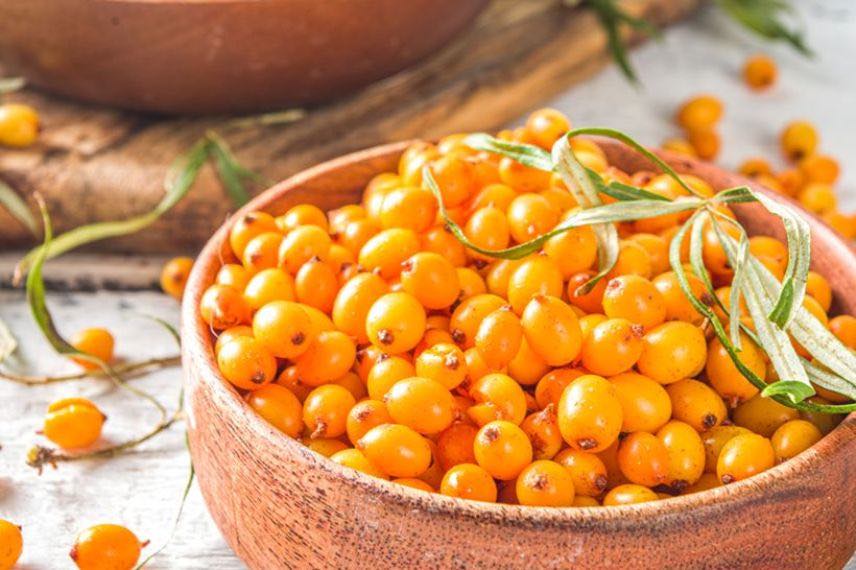
Sea buckthorn berries are tart and slightly sweet
Read also
Diseases and Pests of Sea BuckthornHow to eat sea buckthorn berries?
First of all, sea buckthorn berries are picked between October and November with gloves.
Sea buckthorn berries can be consumed in several ways. They are not eaten raw on the plant and are always prepared. They can be incorporated into many recipes. Here are some of the most common uses for enjoying sea buckthorn fruits:
- Sea buckthorn juice is the primary way to consume this fruit. It is rich in vitamin C, antioxidants and essential fatty acids. To prepare it, simply press the berries and mix with water or other juices to attenuate their acidity. This yields orange juice that is slightly thick and delicious.
- Sea buckthorn jelly is prepared by cooking the fruit juice with sugar and lemon juice. It can be spread on bread, crepes, or used as a filling for pastries.
- Sea buckthorn jam is similar to jelly, but it retains the fruit pulp, giving it a different texture. It is perfect for those who prefer thicker jam.
- Sea buckthorn syrup can be used to sweeten drinks, cocktails, or even poured over crepes and waffles. To make it, simply mix sea buckthorn juice with sugar until a thick syrup forms.
- Sea buckthorn oil is extracted from the seeds of the berries. It is rich in essential fatty acids, vitamin E and beta-carotene. It is used in cosmetics for its skin benefits.
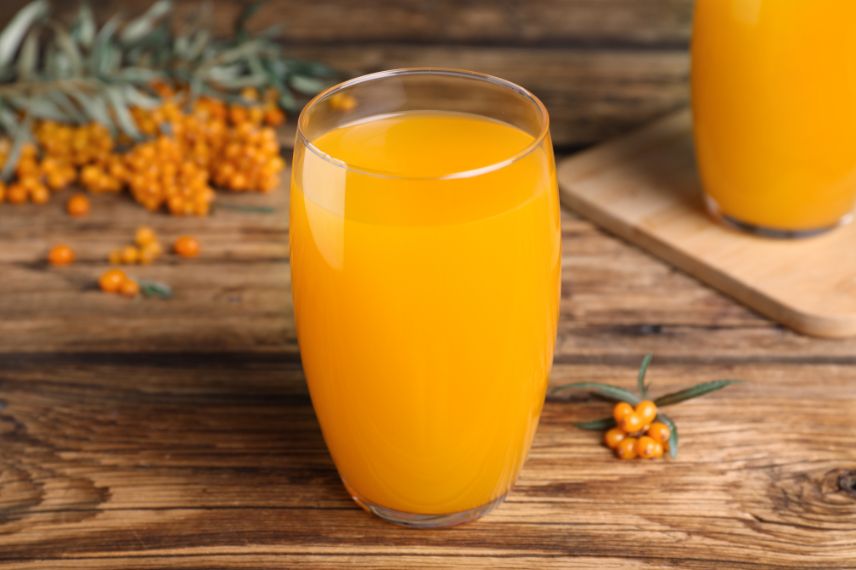
The rich, delicious sea buckthorn juice, a concentrate of vitamins
Properties of sea buckthorn berries
Sea buckthorn is renowned for its numerous health benefits. Here are some of its most interesting properties:
- It is rich in vitamins and minerals: Sea buckthorn berries are an excellent source of vitamin C, vitamin E, vitamin A, vitamin K, iron, calcium and potassium, making it a superfruit with exceptional nutritional properties.
- Sea buckthorn is packed with antioxidants, such as carotenoids and flavonoids, which help protect the body’s cells from oxidative damage and strengthen the immune system.
- It strengthens the skin: Sea buckthorn oil is used in cosmetics for its moisturising and regenerative properties. It can help soothe irritated skin and reduce signs of ageing.
- It supports cardiovascular health: essential fatty acids present in sea buckthorn, such as omega-3s, are said to help lower blood pressure, reduce cholesterol and support cardiovascular health.
- Finally, it also supports vision, thanks to the vitamin A present in the fruit. Essential for eye health, it can help prevent vision problems.
Sea buckthorn offers a wide range of health benefits. It is an interesting superfruit to incorporate into your diet. However, remember to consume it in moderation to avoid any adverse effects due to its natural acidity.
- Subscribe!
- Contents

Comments