






























Plants with running roots: how and where to plant them?
for a well-planned planting
Contents
In the vast plant world, plants with running roots hold a distinctive place. Characterised by their ability to spread horizontally, often at shallow depths, they can transform a garden into a lush haven in no time at all. However, this vigour hides a double-edged sword: without the necessary precautions, these plants can quickly prove invasive, even causing damage to infrastructures. The key to using them successfully therefore lies in a thorough understanding of their needs and behaviour.
Follow our tips for planting, with no further concerns, for trees, bushes or perennials with running roots.

A running root: what is it?
A running root designates a type of root system found in certain plants that extends horizontally at shallow depth in the soil, often in search of water or nutrients. These roots can span long distances from the parent plant, sometimes giving rise to new individuals.
They therefore allow the plant to colonise an area quickly, which can pose problems in a domestic garden, as they can invade unwanted areas, competing with other plants or even damaging structures, such as building foundations or pipes, for example. For this reason, it is essential to plan the planting of these species carefully and to take precautions to limit their spread.
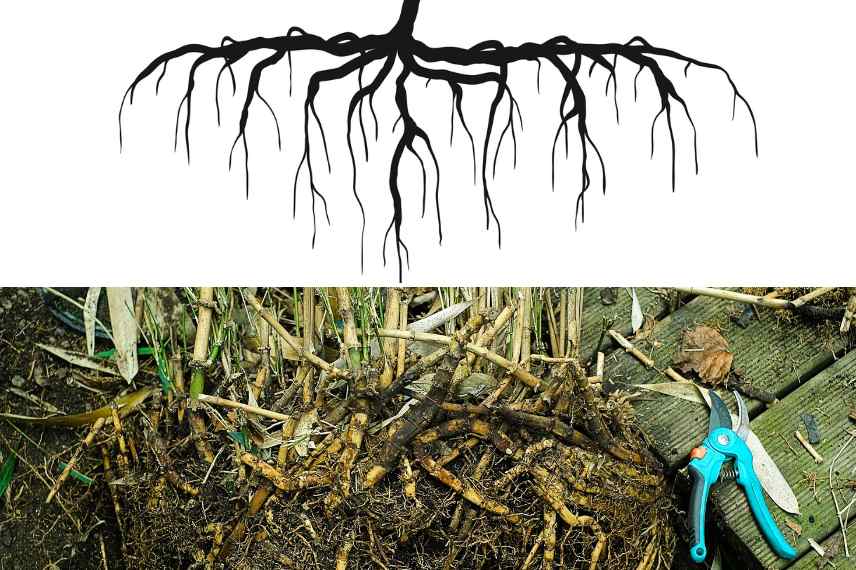
Type of running root system, bamboo shown below, one of its classic representatives
Read also
The different types of root systemsSome examples of young plants with running roots
Trees and shrubs
- Poplars (Populus spp.)
- Willows
- Black locust
- Beech
- Ash
- Sorbaria sorbifolia
- Some running bamboo species
- Raspberries
Perennials and annuals
- Fabaceae (beans, broad beans, peas…)
- Mints
- Meadowsweet
- Comfreys
- Lysimachia punctata
- Japanese knotweed
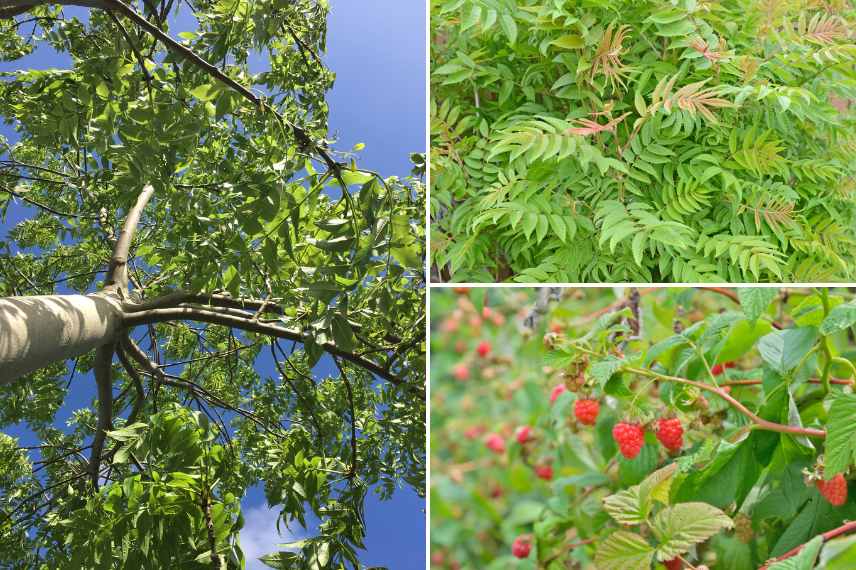
Among trees and shrubs with running roots: ash, Sorbaria sorbifolia and the raspberry
What are the advantages and disadvantages of such a root system?
Advantages
- Rapid colonisation : Trailing roots enable plants to rapidly colonise an area, which is advantageous for pioneer plants in disturbed soils. But it is also through this means that certain exotic species become invasive within our ecosystems.
- Resistance to disturbance : These plants can recover quickly after a disturbance, such as trampling or mowing, thanks to their ability to grow new individuals from the roots.
- Erosion control : Trailing roots can help prevent soil erosion, particularly on slopes or banks, as they form a dense root system that holds the soil in place.
- Better uptake of nutrients and water thanks to an extensive surface distribution of the roots.
- Finally, some plants use their running roots as a means of vegetative reproduction, called suckers, which allows them to rapidly produce new individuals.
Disadvantages
- Invasiveness potential : In gardens and natural ecosystems, these plants can become invasive, even highly invasive, displacing other less competitive, often native plants. The loss of these native plants could in turn cause declines in wildlife dependent on these plants.
- Damage to structures : In our gardens, running roots can damage building foundations, paths, pipes and other infrastructure. It is therefore essential to always know the root system of plants to be planted near homes. Sadly, this information is rarely indicated in literature…
- Difficult maintenance : Controlling these plants in our gardens may require extra effort to prevent them from spreading beyond the desired area. This is particularly the case with running bamboos, which can quickly become unmanageable if precautions are not taken.
- Drought sensitivity : Paradoxically, since the majority of their root system is near the surface, these plants can be more sensitive to drought than plants with deeper roots. In an era where water conservation is a major concern, this should be taken into account when selecting plants to plant in your garden.
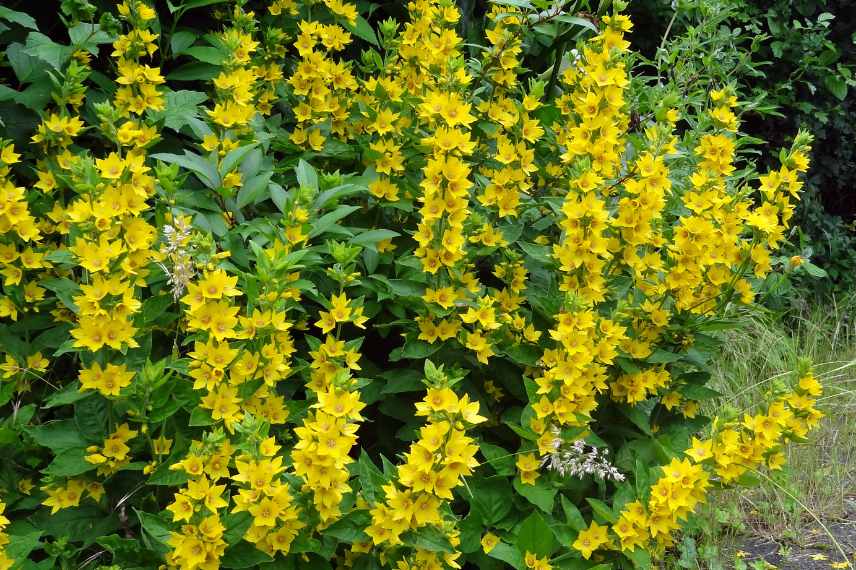 Lysimachias have a running root system that makes them grow beyond our expectations!
Read also
Root-related bunWhere and how to plant this type of plant?
Where to plant them?
- Areas away from built structures: Avoid planting near foundations, paths, irrigation systems or pipes to prevent any damage.
- Defined spaces: They can be ideal for areas where you want rapid groundcover, for example to combat erosion.
- Wild-style gardens: In spaces where natural, less controlled growth is appreciated.
- Distant borders: At the edge of the garden, away from other delicate plantings.
How to plant them?
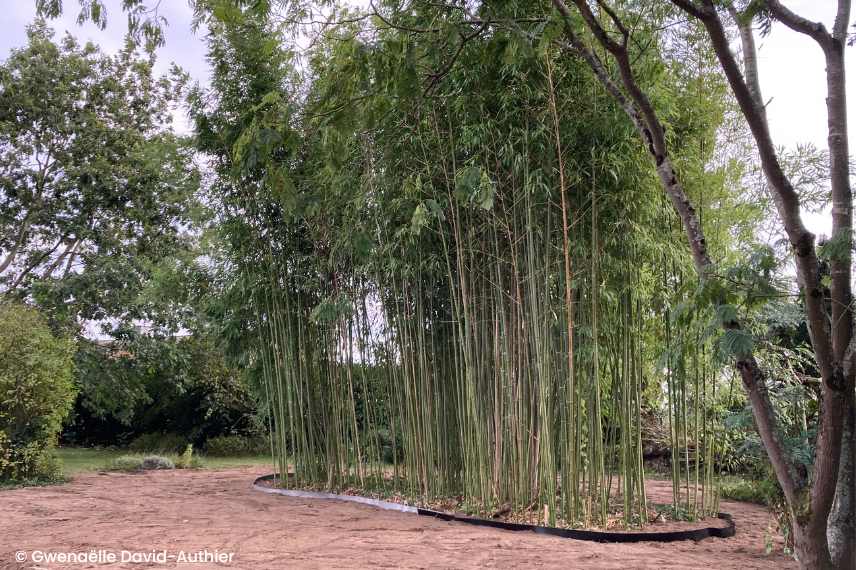
- Underground barriers: Install plastic or metal barriers — rhizome barriers — into the soil to contain root growth. Ensure the barrier is deep enough (at least 60 cm) and protrudes slightly above ground to stop roots from passing over it.
- Planting in pots: To control growth, plant them in large pots or containers. You can then bury the pot in the ground, ensuring the top edge protrudes to prevent the plant from spreading over the top. This can be done, for example, with mint.
- Mulching: A thick mulch can slow the spread of some running roots, but it is not always foolproof.
- Regular monitoring: Prune and monitor new shoots regularly to prevent unwanted spread. Remove any new growth outside the desired area.
- Spacing between plantings: If you plant several plants with running roots, ensure you leave enough space between them to avoid excessive competition and allow easy access for maintenance.
- Soil preparation: Although these plants are often undemanding, well-loosened soil will facilitate horizontal root growth rather than vertical growth, where they could potentially cause damage.
Finally, it is important to inform and educate neighbours and amateur gardeners if they are seeking cuttings or divisions of your plants with running roots. They should be aware of their invasive potential and the care required for these plants.
- Subscribe!
- Contents

Comments