





























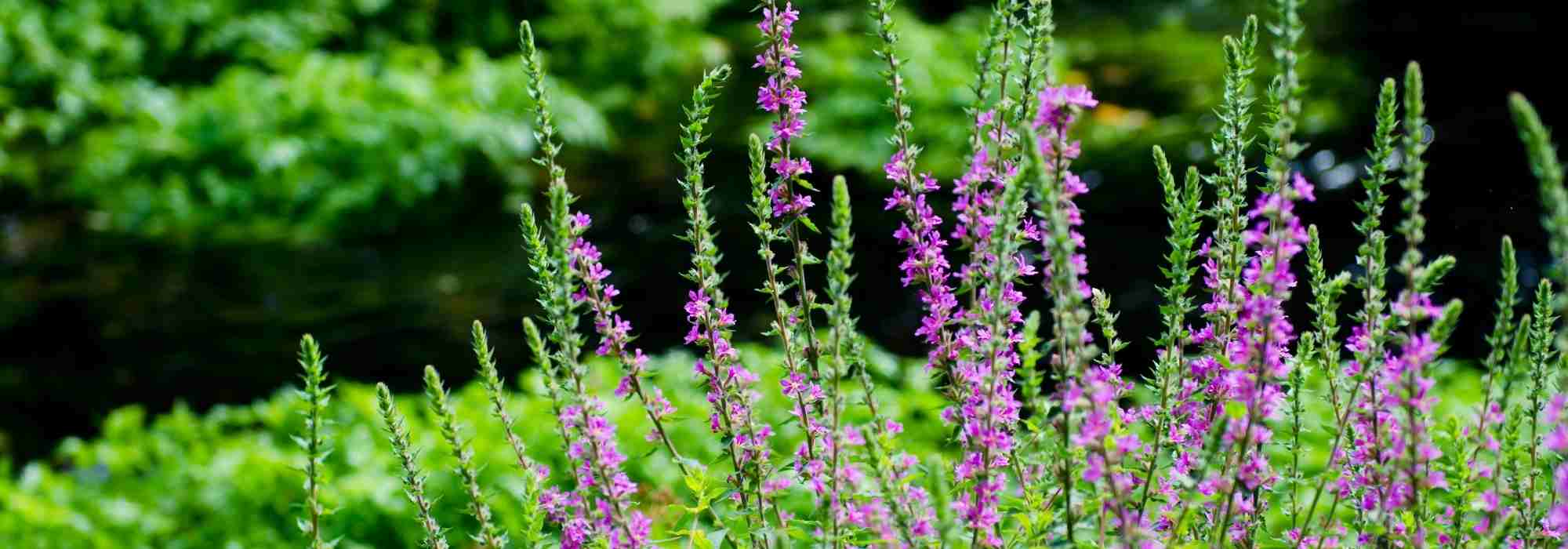
Planting in wet areas: a challenge to overcome
The secrets to a flowering and productive garden in a damp soil
Contents
Stifling and hard to work, the soil clings to the spade (the old-timers call it ‘earth that loves you’). Gardening on damp ground can become a real challenge for the gardener! However, it is perfectly possible to create a verdant corner of rare beauty with well-suited plants. Discover how to plant in marshy wetlands.
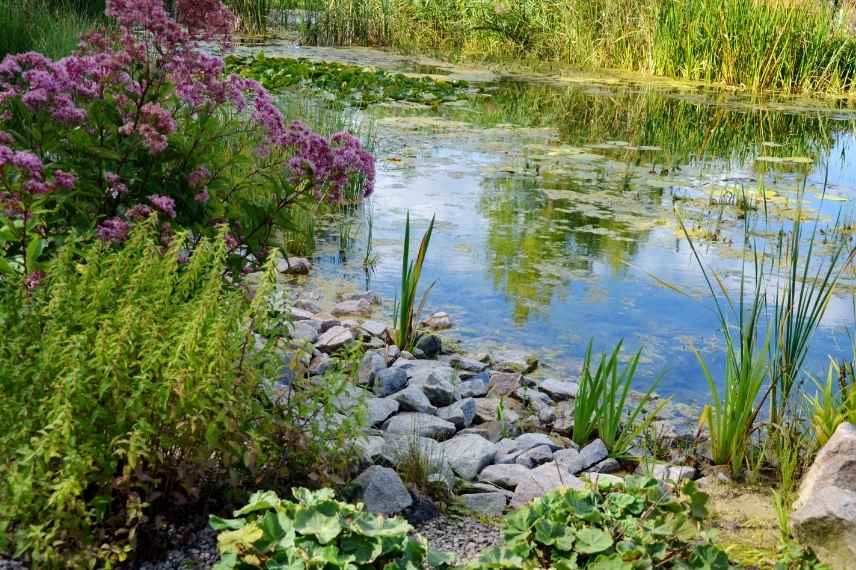
Some very ornamental plants are well suited to wet ground: bonesets, rushes, irises…

Understanding and recognising wet ground
Wetlands are areas that are typically flooded or saturated with water, permanently or temporarily. Some will only be so during winter, or will merely contain a sheet of water a few tens of centimetres below the soil surface. They may be natural in origin (water-retentive soils, the low-water zone of a watercourse, springs…) or artificial (old industrial quarries, soil modifications…).
Vegetation, where present, is dominated there by hygrophilous plants (water-loving) for at least part of the year.
In our regions you will most often encounter: iris (Iris pseudacorus), Carex (Carex riparia), common reeds (Phragmites australis), purple loosestrife (Lythrum salicaria), comfrey (Symphytum officinale), nettles (Urtica dioica), celery-leaved thistles (Cirsium oleraceum) or paludal species, cattails (Typha latifolia), bur-reeds (Sparganium erectum), greater burdock (Arctium lappa), etc.
These places shelter a wide diversity of animals and plants, and are therefore of paramount importance for biodiversity.
Did you know? Wetlands play a crucial ecological role, often underestimated, in maintaining biodiversity and the health of ecosystems. These habitats are true reservoirs of biodiversity: they host a wide variety of animal and plant species, some endemic and often rare. Hygrophilous plants, adapted to these wet environments, form unique habitats for many insects, waterbirds and amphibians. Moreover, wetlands play a key role in regulating the water cycle, acting as natural sponges that absorb and slowly release water, thus contributing to flood prevention and water purification. They are also important carbon sinks, helping to moderate climate change. By understanding and protecting these ecosystems, we not only support biodiversity, but also contribute to the overall health of our environment.
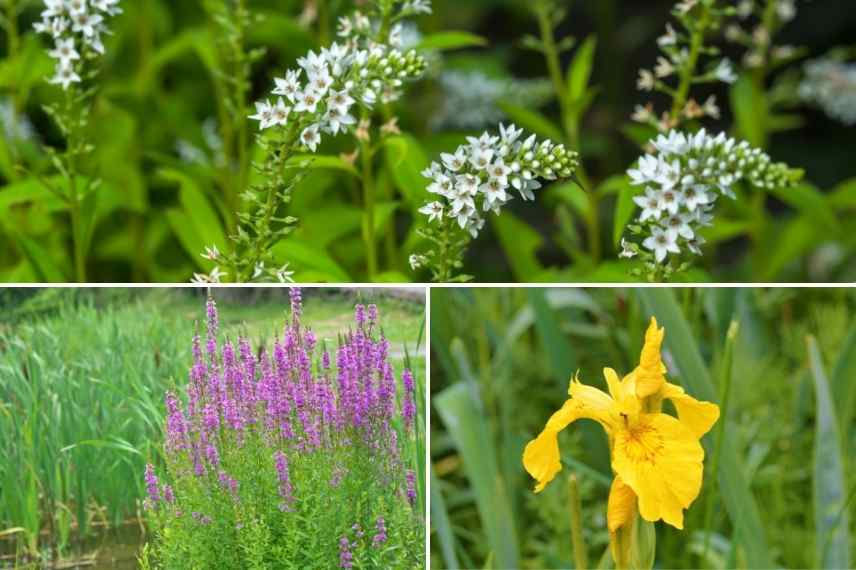
Lysimachias, purple loosestrife, reeds, Iris pseudacorus are among the lovely plants that thrive in wet soil
For further reading, see our article: Gardening in heavy wet soil.
Adapt your techniques and plants
Treat water, this precious resource, as a boon! A large number of plants adapt beautifully to these humid conditions. The gardener should be able to select and plant them correctly to avoid failures.
Remember that wetland plants do not all favour the same water depths! Shoreline plants such as rushes (Juncus sp.), Lycopus europaeus, purple loosestrife, comfrey… do not have the same requirements as submerged plants (Elodea, water lilies).
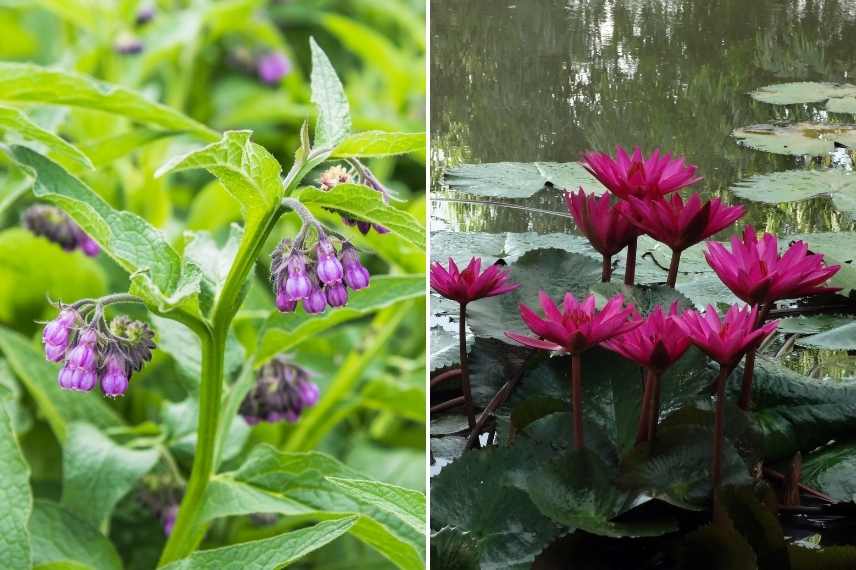 Shoreline plants such as comfrey will not be planted at the same depth as submerged plants such as water lilies.
How to plant in damp soil?
1. Water beneath the soil
Use a dibber and prepare your planting hole in the damp area a few days before planting. It is essential to add organic matter (compost or potting soil) to lighten the soil and ease plant establishment. This will give you an idea of the depth to the groundwater table and will drain any excess water from the hole. You will also have fewer difficulties backfilling the hole with soil that has had time to dry (water evaporates at the surface).
It is possible to slightly drain the bottom of the hole with a little gravel and pozzolana while loosening it beforehand with your spade, but that will still not allow you to plant anything other than hygrophilous plants.* Hygrophilous: this term refers to a plant that prefers moist environments.
2. Surface water
If you are wading through a swamp more than 10 cm of water, use a pot or mesh basket designed for aquatic plants in which you will place your plants with a few stones to weigh the whole thing down and retain the substrate.
If you wish to establish trees in a completely flooded environment, you can opt for propagation by cuttings of willows or poplars. For this, take a stem and plant it in the mud—guaranteed success! Finally, an auger can help you with this operation.
When to plant in damp areas?
Apart from bare-root plants which will need to be planted between late October and late February, the other plants will preferably be planted during the dry and hot months.
Do not hesitate to hasten planting of these trees or bushes in autumn (September and October) to avoid waterlogged soils from winter rains!
Wet soils tend to warm up much more slowly in spring. As you know, plants hate being planted in cold soil. Most perennials will therefore be planted in their final position around May, or a little earlier, depending on spring conditions.
Planting during the dry and hot season is, of course, easier for the gardener: your soil will be less sticky, lighter and easier to work. Given that your garden is in a damp location, you should be less concerned about the summer heat for your perennials.
Latest tips
Whichever period or method you choose, Never forget to pick plants that thrive in or tolerate excess water! This rule will save you a lot of hassle, disappointment and money…
Before planting your plants in damp ground, observe the area for at least a full year to note fluctuations in water level, so you don’t misjudge when planting!
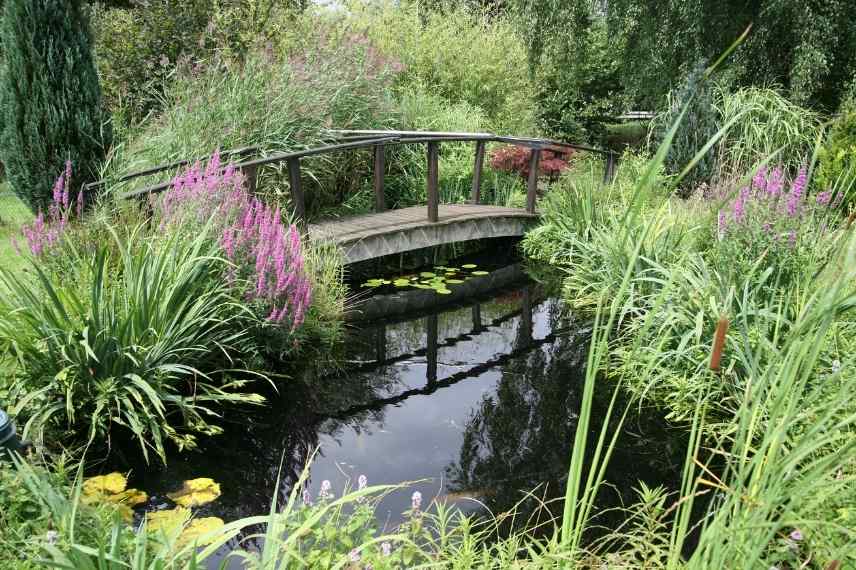
Take the time to observe your garden… you will be able to create beautiful scenes in damp ground!
- Subscribe!
- Contents
Comments