





























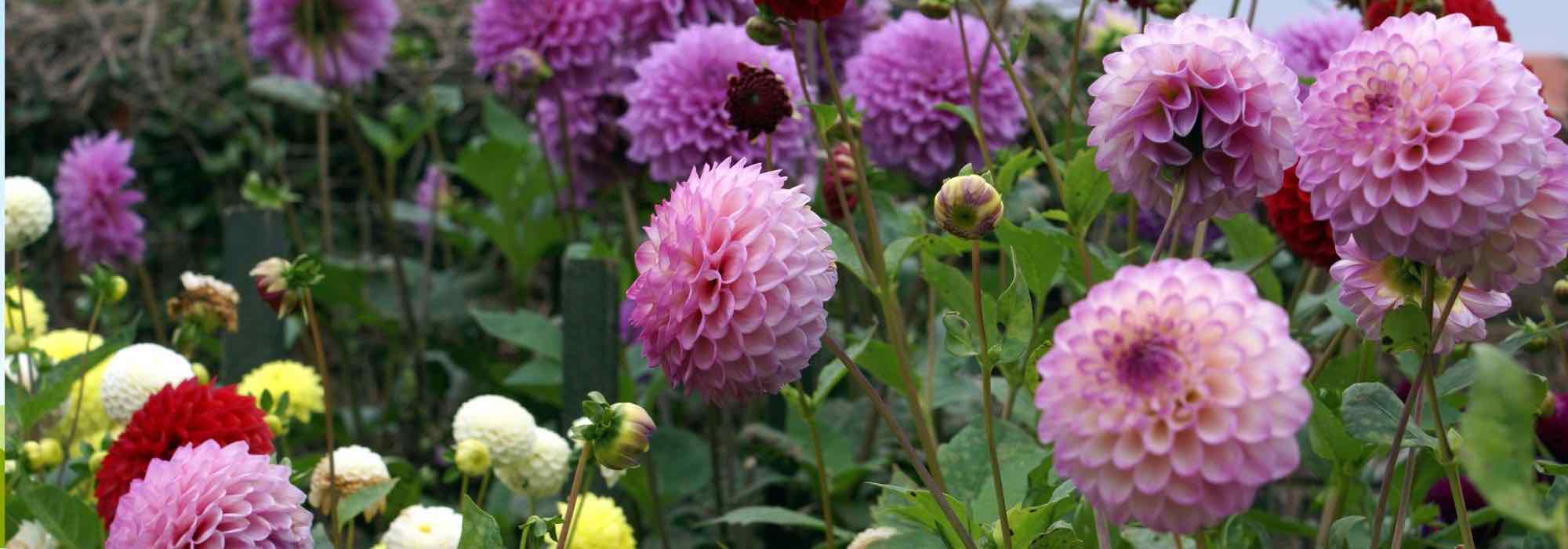
Planting dahlias: 8 common mistakes to avoid
What to avoid and common growing problems that can prevent you from succeeding with your dahlias
Contents
We love the dahlias for their generous flowering, as well as for the diversity of shapes, sizes, textures and colours they offer. They delight both gardeners who enjoy simplicity and those who prefer exuberant plants, which do not leave anyone indifferent.
If these summer-flowering bulbs do not present much difficulty in cultivation, they have certain needs to bloom well and develop. Some simple care ensures abundant flowering and keeps dahlias in good health.
We have summarised the most common pitfalls and share our tips for easily growing your dahlias, whether in the garden or in pots!

Choosing the wrong planting season
Planting time for dahlias affects their future development. If you plant your tubers too early, their foliage may suffer damage from gastropods. Moreover, you’re not immune to an early frost, which could kill the plant.
To plant your dahlias, wait until spring, between March and May(after the Ice Saints) depending on region. The soil should be warmed to around 12–15°C.
If you’re lucky enough to have a greenhouse, a conservatory, a frame, or any other sunlit place protected from frost, you can gain a few weeks by hastening the growth of your dahlias. To do this, place the tubers in a tray filled with potting compost. Keep them moist until transplanting.
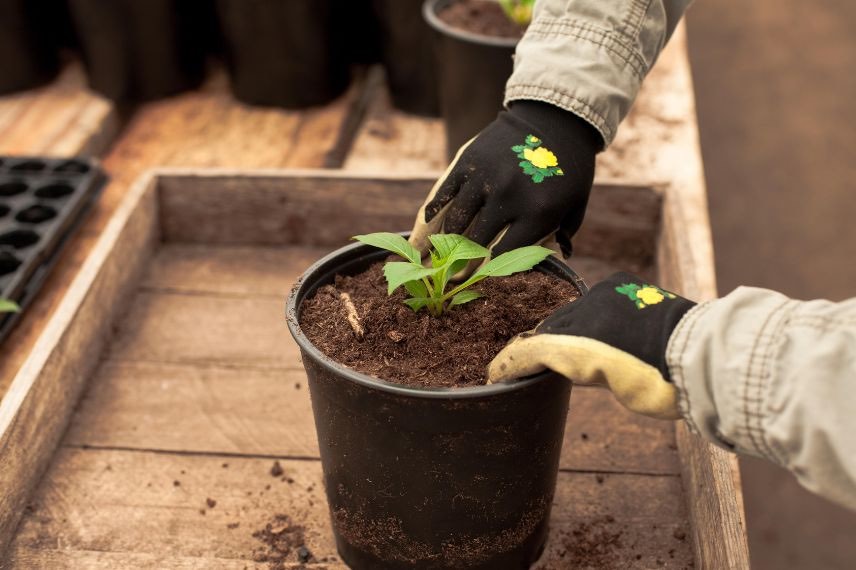
You can hasten the growth of dahlias in a greenhouse, conservatory or frame, but do not plant them too early in open ground
Read also
Dahlia: planting, care, and growing tipsNeglecting tthe planting
The planting location
Dahlias grow well in most regions across France. They fit equally well in a border, in the kitchen garden, in a mixed border, or in a pot. They can therefore be planted in many places in the garden, but also on the terrace or balcony.
However, be sure to choose a location:
- sunny (several hours per day), but protected from the harshest rays of the sun;
- protected from prevailing winds.
A lack of sun or too intense sun would limit flowering, while inclement weather weakens the plant and damages the flowers.
The growing medium
The growing medium must be well-drained (water drains away easily and does not stagnate), so it should be fairly light. It should also be fertile, amended with a slow-release fertiliser. Most dahlias prefer soils with a neutral pH, neither too acidic nor too calcareous.
In overly heavy soil, dahlias may rot. In soil that is too poor, they will be weak and their growth will be limited.
Ahead of planting, think about working the soil deeply to loosen it: remove any adventives (weeds), take out stones or pieces of wood and break up the clumps. Heavy soils will be lightened with sand or gravel, while light soils will be enriched with organic matter.
For container cultivation, choose a high-quality horticultural potting mix, lightened with a handful of sand, gravel or a few clay pebbles.
Planting distance
Dahlias planted too close together will have their growth affected.
Distances that are too short will hinder their proper development and make access to the plants for routine care (amendment, deadheading and pinching, over-wintering) difficult.
Too close a proximity also increases the risk of cryptogamic diseases (fungi), by reducing natural aeration and promoting humidity.
Large dahlias should be spaced 80 to 100 cm apart, while the smaller or dwarf varieties will require about 30 to 50 cm.
The planting method
Tubers planted too deeply in the soil will not develop properly: the plant may fail to resume growth. At planting time, ensure the tubercle is positioned so that the neck is 5 cm below the soil surface. Then cover with about ten centimetres of growing medium.
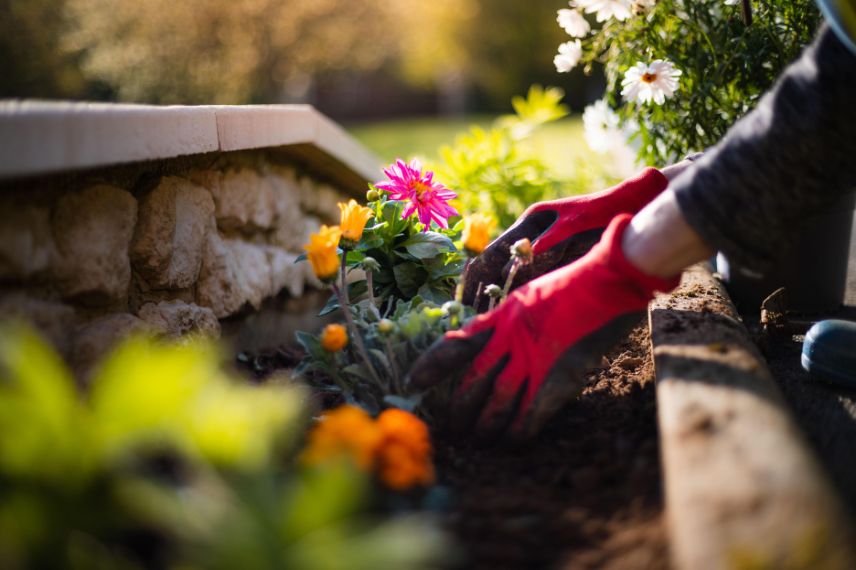
Take care of your planting to ensure successful dahlias (exposure, growing medium, planting distance and depth)
Growing dahlias in a soil that is too poor
Good growing conditions allow dahlias to develop properly, ensure a good flowering display, but also make the plants less susceptible to pests and diseases. Taking these plants’ requirements into account therefore helps avoid many common cultivation problems.
Dahlias are hungry plants! They need organic matter and nutrients throughout their growing season. A substrate that is too poor will limit flower production, or even render it nonexistent.
Other signs of deficiency may indicate problems:
- the stems are thin;
- the plant’s overall growth is slow;
- the dahlia remains small.
Be sure to regularly amend your plants during the growing season. To do this, you can:
- in spring and autumn, add a handful of well-decomposed household compost, which you should lightly fork into the soil;
- opt for organic fertilisers such as horn meal or dried blood;
- use a fertiliser for bulbous plants or flowering plants, rich in potash.
If you grow dahlias in pots, fertilisation should be even more meticulous and regular: the substrate is more limited, nutrients are consumed more quickly than in open ground. Choose a fertiliser for window boxes and pots or for flowering plants, which will promote growth and flowering.
Avoid excessive nitrogen: it encourages foliage growth at the expense of flower bud production. In addition, it makes dahlias more susceptible to pests and diseases.
Read also
How to choose dahlias?Poor watering practices
If the dahlias are nutrient-hungry, they also appreciate moist soils, that is to say damp, but not excessive. A lack of water can lead to early senescence and the foliage becoming stunted. Conversely, an excess of water can lead to the rotting of flower buds or flowers.
Watering management should therefore be balanced. Water generously during the first two months after planting to encourage rooting. Then, favour thorough watering every week or every two weeks, rather than several small, frequent waterings.
In case of drought, increase watering (twice a week), especially during flowering. To know when to water, test the soil with your fingers and proceed as soon as it feels dry on the surface.
For container culture, watering should be more regular, as water evaporates more quickly. Water as soon as the substrate feels dry on the surface. Empty any saucers after about twenty minutes.
Once the dahlias have begun to produce their foliage, do not hesitate to install a organic mulch at their base (straw, plant husks, dead leaves…). This helps limit evaporation and keep soil moist for longer. In summer, prefer watering early in the morning or late in the day.
Avoid watering the foliage to prevent the development of fungal diseases.
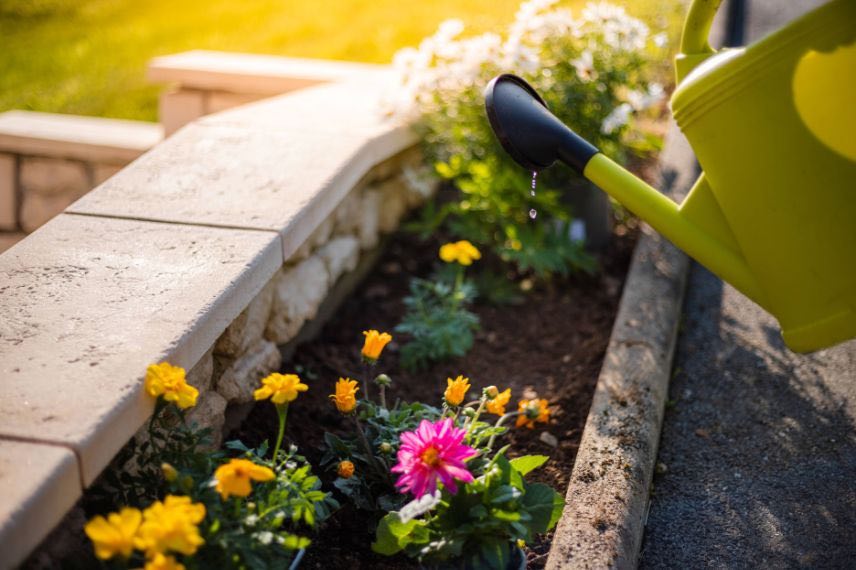
Water your dahlias carefully
Not staking tall dahlias
The giant dahlias and other large dahlias can reach up to 1.5 m, and up to 3 m for the impressive Dahlia imperialis! This growth habit does not cope well with strong winds and heavy rain, which can dry out the foliage, break the stems, flatten the clump and damage the flowers.
Provide them with a sheltered location and consider installing stakes at planting time, so as not to risk damaging the tubers once the plant has developed. This staking is essential when dahlias are planted in isolation. In a border, you can place your tall dahlias alongside other tall plants and shrubs, on which they can lean for support without sagging.
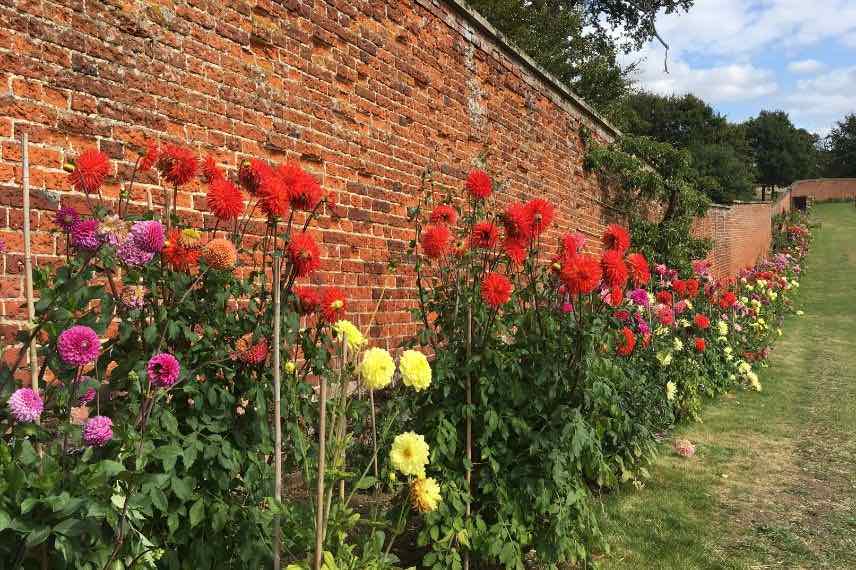
The tallest dahlias must be staked
Forgetting to pinch and prune dahlia flowers
If your dahlia isn’t producing many flowers, it may be because it hasn’t been encouraged to bloom. However, bud production can be easily stimulated to obtain more dahlia flowers or larger blooms.
For this:
- About a month after planting, pinch the tip of the main stem to encourage it to ramify (develop new shoots);
- Remove spent flowers as they appear with a pruning shear;
- Remove lateral flower buds or those in the leaf axils to obtain larger flowers (deadheading);
For more information: How to pinch dahlias to get more flowers?
Don't worry about overwintering
Dahlias are not very hardy: they cannot tolerate frosts above about -5°C. As a precaution, they should therefore be sheltered over winter. If you leave them in the ground, their tubercles would be at risk of rotting.
Dahlias can stay in place in regions with mild, dry winters. They will then be protected by a thick mulch.
Elsewhere, before the first frosts, dig up the tubercles, brush them gently to remove the soil and let them dry. Then place them under cover, in a dry, dark, well-ventilated place. You can arrange them side by side (never stacked) in a crate covered with straw, sand or newspaper.
For more information: Wintering dahlias: should you dig them up?
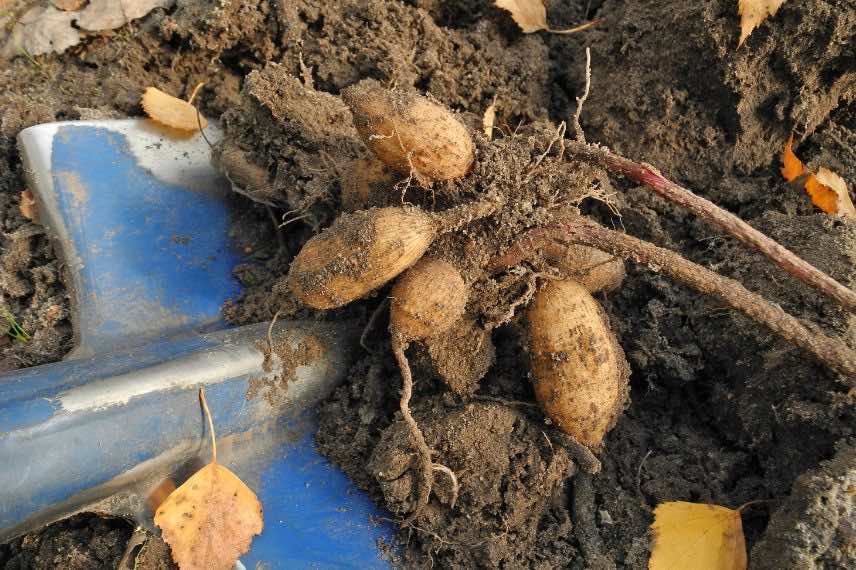
Dig up dahlia tubercles in autumn in cold regions
Parasites and diseases take hold
Regular monitoring will help you easily spot the first signs of pests and diseases as they appear at the outset.
In spring, protect the young dahlia shoots from slugs and snails, which are likely to affect the plant’s growth. For this, there are almost as many techniques as there are gardeners: ranging from organic granules to beer traps, including natural barriers made from ash or eggshells… A planting started under cover generally helps protect the young plants, which will then be transplanted only when they are less fragile.
Leaves and petals perforated, or even eaten, may also be the work of the earwig. Encourage the insect to move to a different feeding area by offering shelters further away in the garden (stone piles, wood piles…).
Good growing conditions (needs met, proper spacing) will limit the development of fungal diseases, which can stain the foliage. In case of severe infection, they can also cause the dahlias to wither. As a preventive against powdery mildew and charcoal disease, avoid wetting the foliage during watering and, if necessary, apply nettles manure or horsetail manure, reputed to boost natural defences.
For more information: How to care for a dahlia: main diseases and pests
- Subscribe!
- Contents
Comments