





























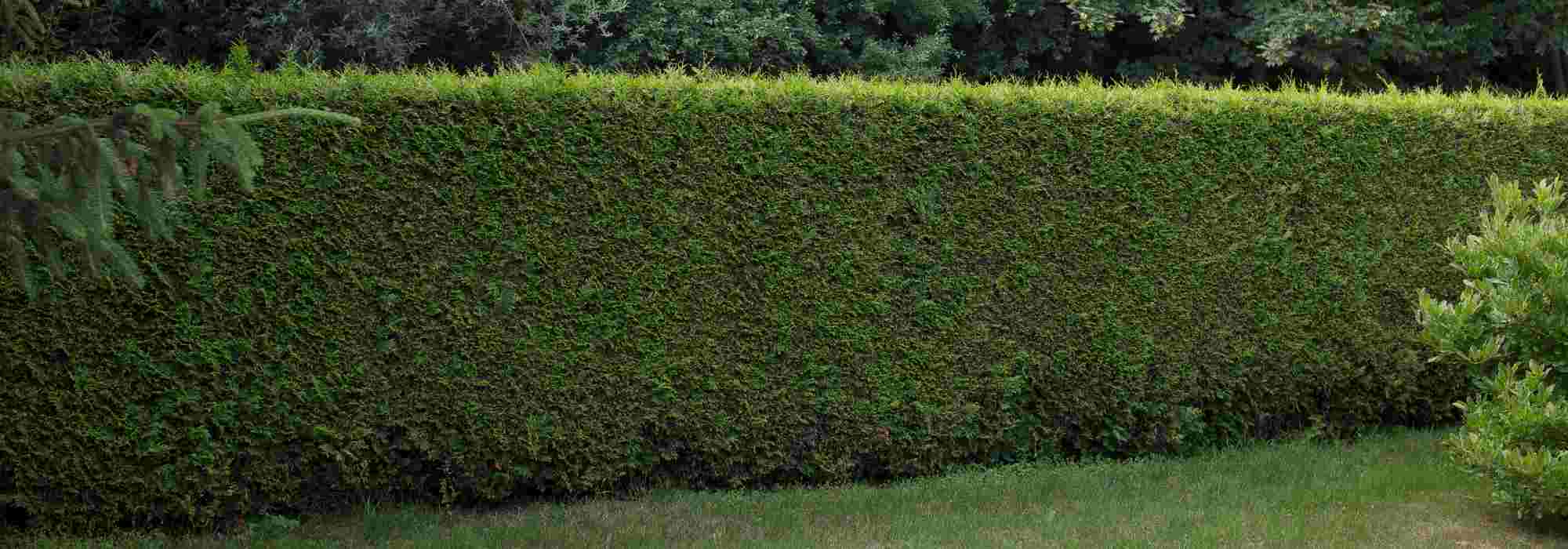
Planting a noise-reducing hedge
To isolate oneself as much as possible.
Contents
Bing! Bang! Whaf! Vroom Vroom! Iiiiiiih! As you will have guessed, these days noise is so prevalent that it is more than a nuisance; it has become almost pollution, on a par with odours or light, for example. So farewell, then, to our dreams of lazy days in the garden. And hello to Quuies earplugs, day and night. Unless, of course, you follow our tips to minimise noise as much as possible in your garden, which was intended to be a haven of peace. Let’s discover which type of hedge could save our ears… and our nerves.

City dwellers suffer most from street noise… but not only…
Noise: a real nuisance
Noise can indeed become a significant nuisance in your garden and inside your home, whether it is road traffic noise, nearby construction sounds, a noisy neighbour’s pets, or even the noise from household appliances. In addition to being bothersome, long-term exposure to high levels of noise can lead to health issues such as stress, sleep disturbances and hearing loss.
To reduce noise in your garden, you could consider using natural noise barriers such as hedges, living walls and trees. These plantings can help absorb and block noise, in addition to improving the aesthetics of your outdoor space. Water features and water walls can also help mask noise with soothing sounds.
It is also useful to be aware of the source of the noise and to see if there are steps you can take to attenuate it directly. For example, if the noise comes from a neighbour, a friendly chat can be a first step towards a resolution.

Fostering dialogue with neighbours is the first thing to do before proceeding
What does the law say?
In France: noise legislation is defined by the Public Health Code, the Environmental Code and the Penal Code. Noise nuisances can be considered as daytime or nocturnal nuisance, the latter being regarded as more serious. Article R1334-31 of the Public Health Code states that “no particular noise shall, by its duration, repetition or intensity, infringe upon the tranquillity of the neighbourhood or the health of a person, in a public or private place, whether the person is the source or responsible for it”.
In Belgium: noise regulation varies depending on the region (Flanders, Wallonia, Brussels) and may also vary from one municipality to another. Noise nuisances are generally regulated by general police orders issued by local authorities. These orders can cover a variety of noise sources, including road traffic, machinery, music, etc.
For neighbourhood noise, there is no precise decibel threshold; it is the repetitive, intensive or long duration of the noise that is taken into account to determine whether the noise constitutes a nuisance. For guidance, for workplace noise, the legislation in both countries states that exposure to noise should not exceed an average of 85 decibels over an eight-hour period.
What options could be considered to reduce noise in the garden?
Here are a few strategies you might consider to create a calmer outdoor space:
- Plant hedges and trees: Plants are wonderful sound absorbers. Trees, bushes and hedges can act as natural barriers to attenuate noise from traffic or neighbours.
- Install a noise barrier: If noise is significant, you may consider installing a noise barrier, which can be made from wood, stone or other materials. Be sure to comply with local regulations on the height and positioning of fences.
- Create white noise: Water features, wind chimes and plants that rustle in the wind can create a soothing background sound that masks unwanted noises.
- Opt for strategic landscaping: Decking and patios can be placed away from noise sources, and structures such as pergolas and gazebos can help block the sound.
- Choose noise-absorbing outdoor furniture: Soft materials absorb more sound than hard surfaces, so opting for padded outdoor furniture can help reduce noise.
- Create a terraced garden: If your garden slopes, terracing can help dissipate the noise before it reaches your home.
→ For further reading: Each garden is unique, so what works for one garden may not work for another. It may be helpful to consult a landscape architect or an acoustics expert for personalised advice on reducing noise in your own garden.
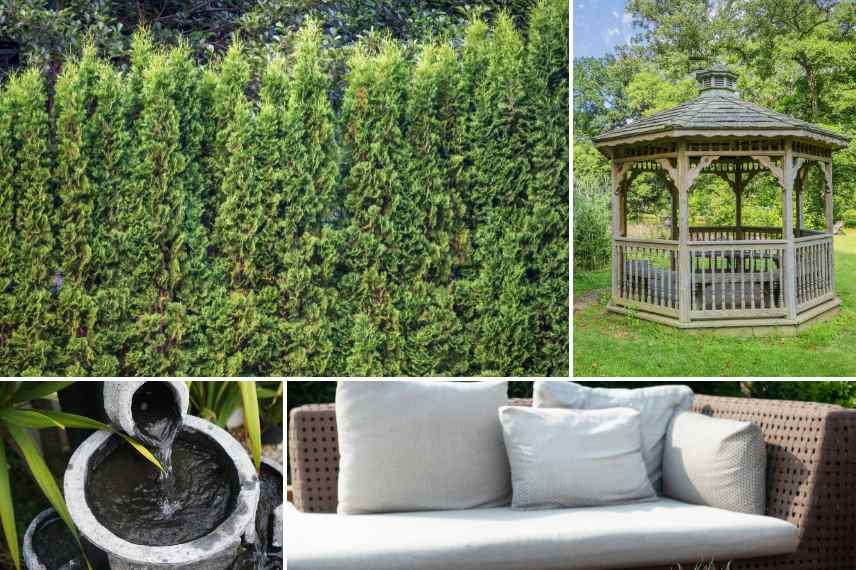
Planting hedges is essential for vegetation. Also consider the placement of relaxation zones, the addition of sounds such as a fountain, and suitable outdoor furniture.
Which plants should you choose for this type of hedge?
Creating a noise-reducing hedge can significantly help reduce noise in your garden. For optimum effectiveness, it is recommended to choose plants with dense and evergreen foliage, which will absorb noise throughout the year. Here are a few examples of plants commonly used to create noise-reducing hedges:
- Thuja (Thuja spp.) : These fast-growing conifers have dense foliage that can absorb noise effectively. Thuja ‘Smaragd’ is a particularly popular variety for hedging.
- Cherry laurel (Prunus laurocerasus) : Cherry laurel is a fast-growing shrub with large glossy leaves that effectively block noise.
- Yew (Taxus baccata) : Yew is a slow-growing conifer commonly used to form formal hedges. Its dense foliage is excellent for blocking sound.
- Holly (Ilex aquifolium) : Holly is an evergreen shrub with thick, dentate leaves that help to absorb sound.
- Hornbeam (Carpinus betulus) : the leaves of the hornbeam are said to be marcescent, meaning that even after death, the leaves stay on the trees until spring, which makes it a good option for a noise hedge.
- Leyland cypress (Cupressocyparis leylandii) : This is a very fast-growing conifer that can reach great height and provides a good noise screen.
- Bamboo (Phyllostachys, Fargesia, etc.) : Bamboo is excellent for reducing noise, as it grows quickly and can reach substantial heights. However, some types of bamboo can become invasive, so it is preferable to choose non-running varieties such as Fargesia.
Each plant has its own requirements in terms of soil, light and water, so it is important to choose plants that will suit your site specifically. In addition, for maximum effectiveness, the hedge should be of a sufficient height and thickness, typically at least 2 metres high and 1 metre wide.
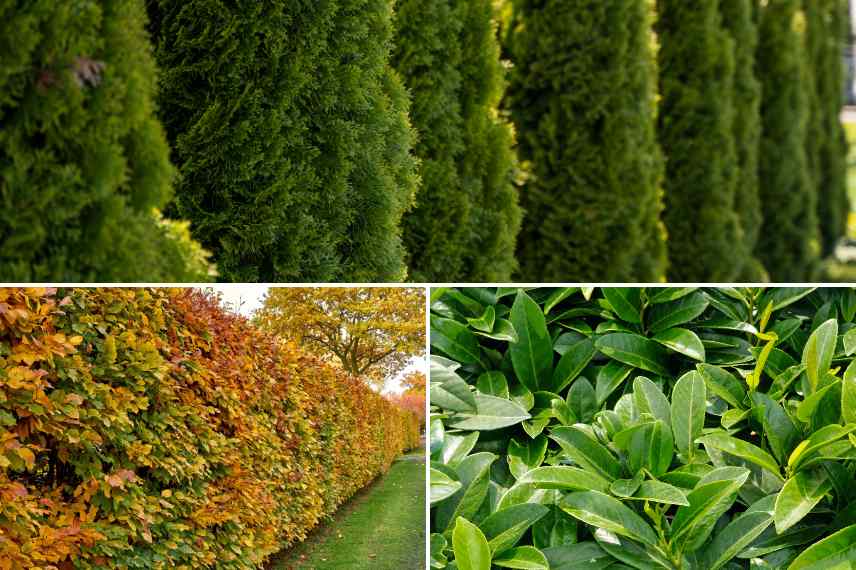
Thuja, hornbeam and palm-leaved laurel
Read also
The eco-anxiety of the gardenerHow and where to plant a noise-reducing hedge?
Planting a noise-reducing hedge requires some planning and preparation. Here are a few steps to help you get started:
- Determine the location of the hedge : The hedge should be placed, of course, between the noise source (for example, a road) and the area you want to protect. If possible, plant the hedge as close as possible to the noise source, as this will be more effective at reducing noise than planting it near the area to be protected.
- Choose the right plants : As mentioned above, opt for plants with dense, evergreen foliage for year-round noise protection. Also ensure you choose plants suited to the climate and soil type of your garden.
- Prepare the soil : Before planting, prepare the soil by weeding and forking to aerate it. You can also add compost or other amendments to improve soil fertility.
- Plant the hedge : Dig planting holes twice as wide and slightly deeper than the roots of the plants. Place each plant in its hole, ensuring the top of the roots is level with the soil surface. Backfill the holes with the soil you removed, firm gently and water thoroughly.
- Plant spacing : Spacing between plants depends on the variety you have chosen. Some shrubs, such as cherry laurel, can be planted about 80 cm apart, while conifers, such as arborvitae, may require 60 cm spacing.
- Maintenance : Water the hedge regularly during the first year after planting. Prune the hedge once a year to keep it dense and compact, which will help to block noise more effectively.
- Height and thickness : For effectiveness, a hedge must be tall enough and thick enough. A hedge about 2 metres high can help reduce road noise, but for louder noises, a taller hedge may be required. A thickness of at least 1 metre is generally recommended.
Bear in mind that patience is required. It will take time for your hedge to grow and reach a size that effectively blocks noise. In the meantime, you may consider other solutions to reduce noise, such as installing a sound barrier or creating white noise with a fountain or pond.
- Subscribe!
- Contents

Comments