





























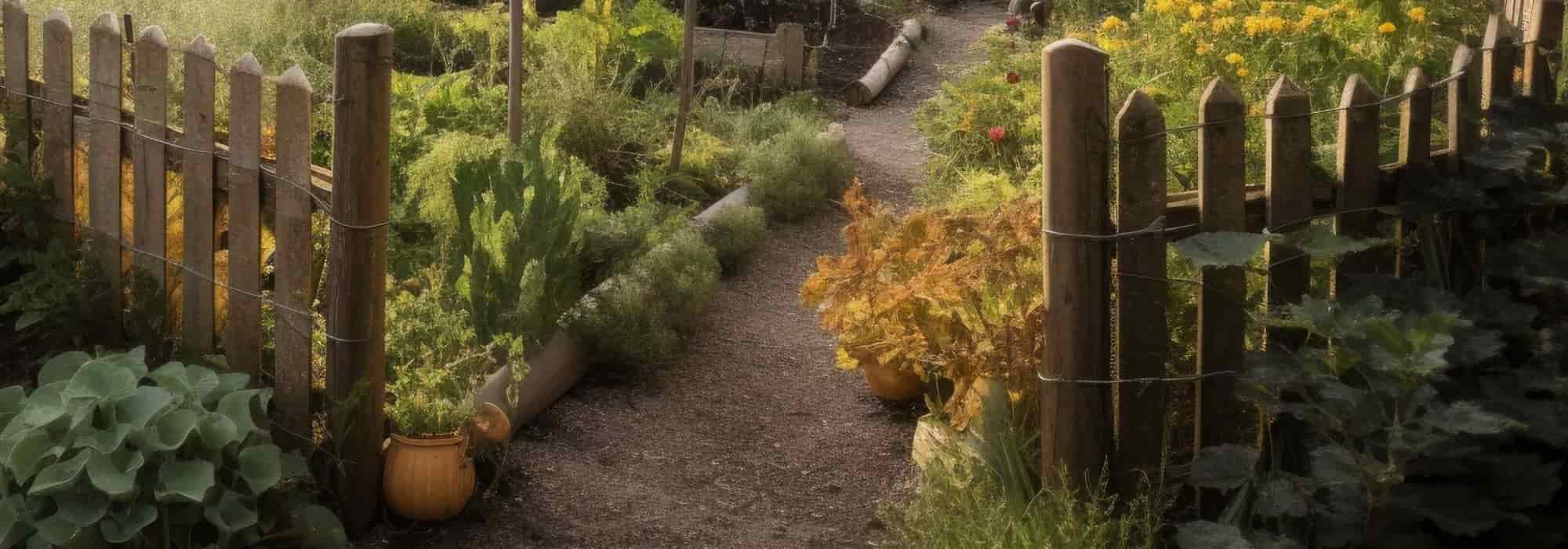
Permaculture in the kitchen garden: our season-by-season guide
Our tips for a thriving and productive permaculture kitchen garden all year round
Contents
Permaculture isn’t simply a method of gardening; it’s a philosophy that encourages working in harmony with nature. However, Maintaining a flourishing and productive permaculture vegetable garden year-round requires attention to seasonal changes. Each season brings its own characteristics, whether it’s temperatures, rainfall or plant growth cycles. In this article, discover our practical tips and advice to keep your vegetable garden at its best at every stage of the year. From planning your crops to soil rotation, and tips for water conservation, we’ll cover seasonal guidance to help you navigate the seasons successfully.

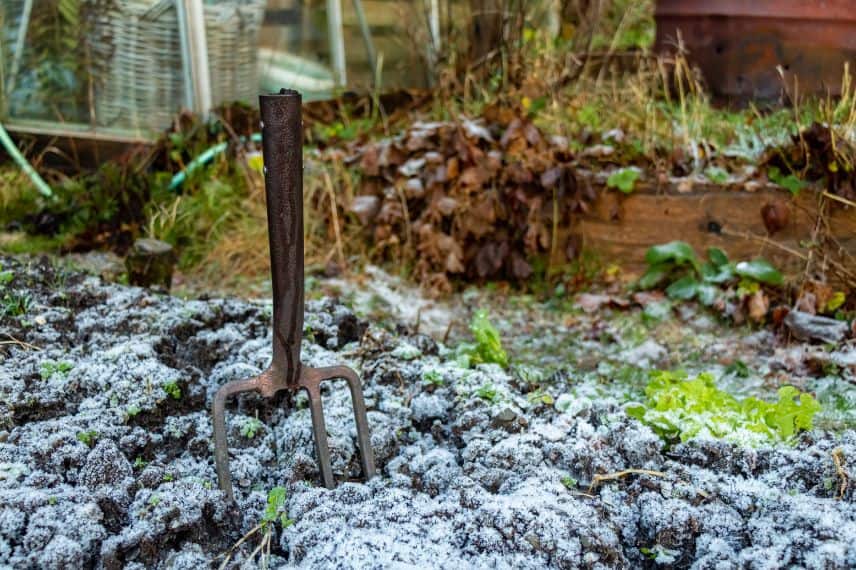
Winter in the permaculture kitchen garden
Winter is often seen as a time of rest for the garden, but for a permaculture vegetable garden it is more a phase of preparation and crucial maintenance. It’s the ideal time to evaluate the past season and plan the coming months.
1- Enrich the soil and prepare the cultivation zones
- This is the prime time to rethink the layout of your garden and the vegetable garden. Cutting back vegetation gives you a clear view, ideal for preparing new planting areas and rethinking the layout of the spaces.
- Take advantage of this open space if you want to build structures to create a vertical vegetable garden and to grow climbing beans, cucumbers, squashes, a grapevine, kiwi vines and other edible climbers.
- After a season of intense cultivation, the soil can be compacted and less aerated. Aerate the soil using tools such as the biofork or grelinette to loosen the cultivation zones without disturbing the living soil layers, in keeping with permaculture principles.
- Enrich the soil by incorporating compost and, if possible, green manures, such as clover or mustard, which can be dug in at the end of winter, typically before spring to feed the soil.
- Mulch the cultivation areas and the bases of trees and fruit bushes to protect their root system from the cold.
2- Prepare your sowings
- Plan your sowings and plantings, while also considering crop rotation and good plant associations. In permaculture, monoculture is avoided and the mixing of families is preferred to prevent soil depletion and limit disease transmission.
- To prepare your spring crops, start as soon as possible (usually from February) with sowings indoors (spring lettuce leaves, spring salad leaves, tomatoes…), but also in heated or unheated greenhouses (cauliflower, leeks…) and start sprouting the seed potatoes.
Ingrid’s tip: Don’t hesitate to redraw your vegetable garden plan each year to know what was planted and where. Also take notes on the fruits and vegetables that performed well, and which companion combinations worked or not to improve your yield.
3- Planting in the garden
- Plant fruit trees and bare-root perennials in mild climates. In regions with harsh winters, favour planting when no frost is forecast for the next 2–3 days and mulch the soil around these new plantings.
- Take advantage of the dormancy of the vegetation to divide the raspberries, the herbs such as mint, lemon balm and some perennials.
- Protect cold-sensitive vegetable plants with a tunnel or a winter protective fleece.
4- Caring for wildlife
- Birds and beneficial insects also need to survive the winter, as food becomes scarce in the garden. To help them, install bird feeders and ensure you have water sources that do not freeze (for more information, read our article on the subject: How to provide water for birds in summer and winter?).
- Install insect hotels, a hedgehog shelter, a bat box and nest box cleaning for birds.
Spring in the permaculture vegetable garden
Spring is the season that awakens the gardener and their vegetable garden. Longer days and rising temperatures create the ideal conditions for growth. Here’s what you should pay attention to:
1- Revive the soil and assess your watering needs
- Loosen compacted soil in new cropping areas or if you couldn’t do it in winter due to weather conditions. And for this job, nothing beats using a biofork or grelinette to avoid turning the soil and thus preserve soil life.
- To anticipate your garden’s water needs during the hotter months, consider (and install) now solutions such as a rainwater-harvesting system or an irrigation system. This will help you reduce water consumption while caring for your vegetable garden. Also think of Ollas: these terracotta pots buried near plants provide a slow, steady diffusion of water, reducing watering needs while preserving soil moisture. Discover our article on ollas and our tutorial for making a homemade olla to water the garden.
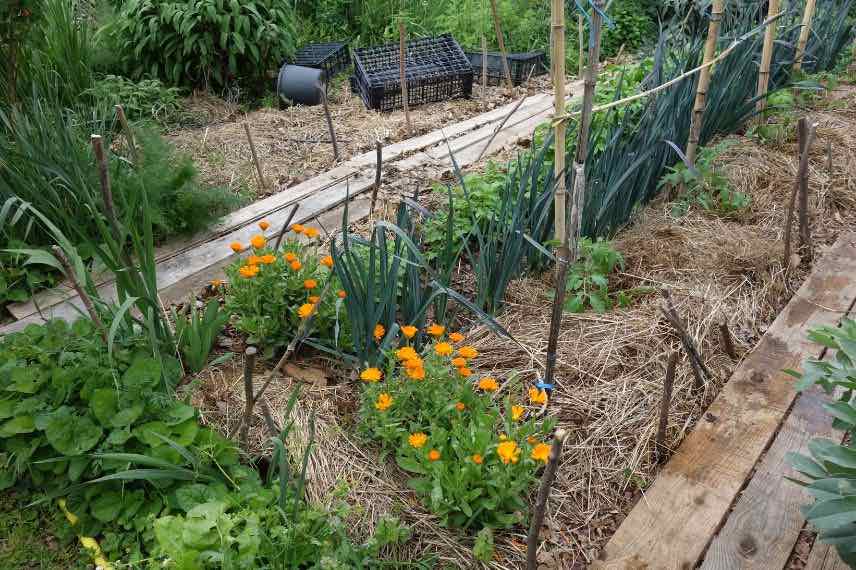
- Renew or add mulch at the base of plants and on your cropping beds to keep soil well moist for the coming summer.
2- Enrich the soil and green manures
- If you haven’t yet enriched your soil during winter, now is the time to do so! Use well-decomposed compost and, if needed, carry out a pH test to adjust the soil’s acidity or alkalinity.
- At the end of winter, early spring, it’s also time to bury in the soil the green manures (comfrey, clover, mustard or other) that you sowed in autumn.
3- Time for the first plantings and sowings
Before mid-May :
- Always sheltered from the cold and while waiting for the risk of late frosts to be completely gone, sow in the greenhouse the squash, courgettes, melon, aubergine and other frost-tender plants.
- Depending on your region and climate, you can start sowing in open ground the vegetables that do not fear (too much) the cold, such as the radishes, the spinach, the beans, the peas and the carrots. Annuals such as the nasturtiums are also featured. If late frosts occur, don’t hesitate to install a frost protection veil, a forcing tunnel or simply an old sheet to protect your young plants.
After mid-May :
- Once the frost risk is gone, seedlings started indoors or in a greenhouse during winter can now be transplanted. Do so carefully to avoid transplant shock, and harden them off by gradually exposing them to outdoor conditions. You can now sow the vegetable seeds directly in the open ground.
- The potatoes that have been pre-sprouted can be planted, they too, in the vegetable garden, under a nice layer of mulch.
Ingrid’s tip: In permaculture, it’s essential to “tighten” crops to prevent bare soil. Also rotate plant families to avoid monoculture and soil depletion, as well as to limit disease transmission. Think of companion plants, such as the “Three Sisters” pairing: corn, climbing beans and squashes.
4- Take care of biodiversity
- Beneficial insects such as bees and ladybirds are making an appearance. Think of melliferous plants (borage, dandelion, nasturtiums, lavender, etc.) and insect hotels if not already in place.
- Gradually reduce the food provided to birds, but only once there are enough insects in the garden for them to feed themselves.
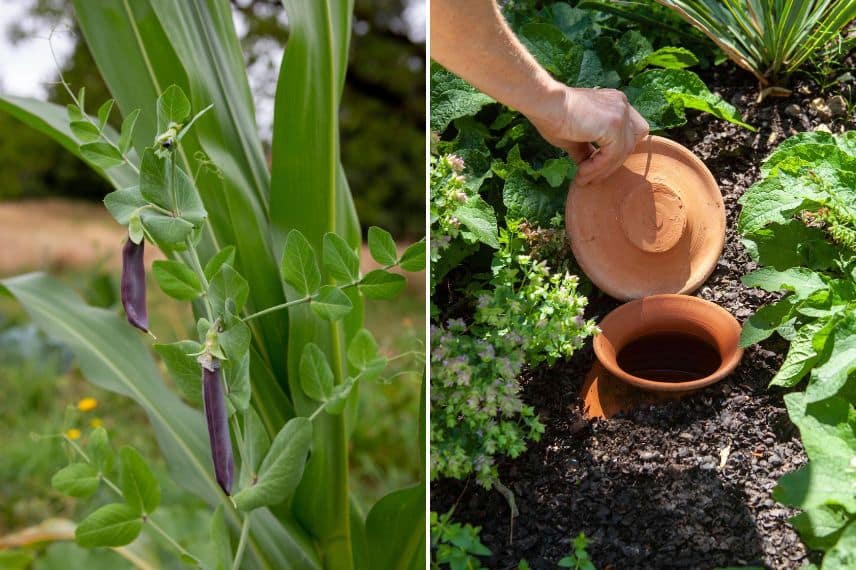
Left: companion planting of climbing beans and corn. Right: ollas
Summer, between generosity and water shortage
Summer is the peak harvest season in the garden. Colours and flavours are on display, but it’s also a crucial time to keep an eye on water (and not just that in your glass!). In the permaculture garden, here is what you should watch for:
1- Water management and microclimates
- This season, water management becomes a major concern for your dear and tender vegetable plants. And nothing beats using techniques such as drip irrigation or Oyas (which we looked at in spring) for efficient water use.
- If you need to water the garden, prefer to water from your watering cans late in the evening.
- Also remember to mulch your plants well to limit water evaporation under the scorching sun.
- You can also create microclimates by using tall plants to shade the smaller ones and thus reduce evaporation.
2- Harvest and crop succession
- It’s time to harvest the fruits of your labour. The summer vegetables such as the tomatoes, the courgettes and the aubergines are ready to be picked.
- Take the opportunity to harvest your own vegetable seeds, dry them and store them for next year.
- After a harvest, consider replanting or sowing vegetables for winter or fast-growing varieties for a crop succession.
- Don’t forget to sow green manures (Phacelia, Vetch, clover, White mustard, etc.) to enrich the soil while keeping it from lying bare. For more, read our article: “Green manures: why, how?“.
- Late August and early September is also the time to take cuttings of aromatic herbs and fruiting shrubs.
3- Preserving biodiversity
- It isn’t because it’s summer that we should forget beneficial insects! Melliferous flowers, such as lavender, or calendula, can attract pollinators and natural predators of pests, helping to maintain a balanced garden ecosystem. They can also be used in cooking or infusions.
Ingrid’s tip: Summer is also the ideal time to start thinking about preserving your harvests. Drying (herbs as well as vegetables), canning or freezing are methods to consider to enjoy your vegetables and fruits all year round.
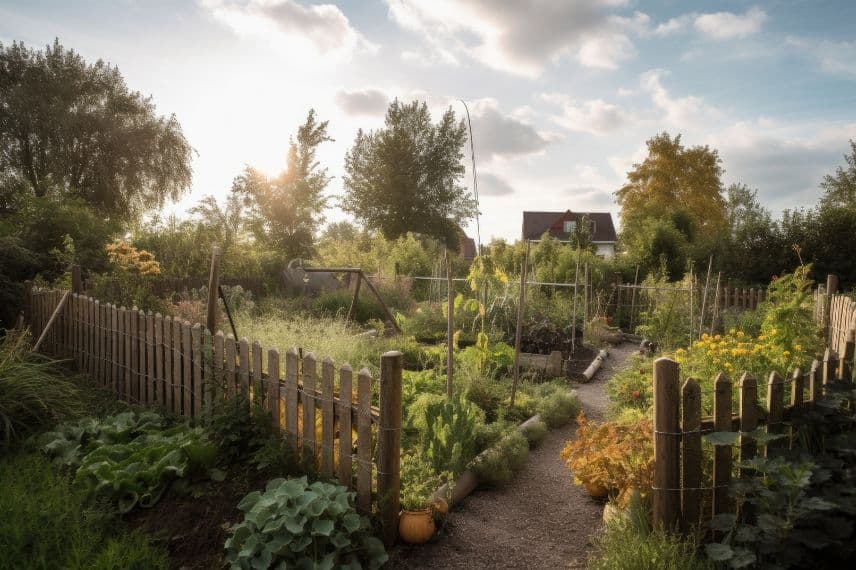
Autumn in the permaculture kitchen garden
Autumn is often seen as the end of the growing cycle in the vegetable garden, but in permaculture it is also a new beginning. Here are key tips for this transitional season:
1- Harvests, sowing and planting
- Autumn is the season for harvesting many late-season fruits and vegetables, such as the apples, the grapes, the last tomatoes, the pumpkins and many more.
- Certain crops, such as garlic, the winter lettuces, the leeks, the onions and the spinach, can be sown or planted in autumn for a spring harvest.
- You can still sow green manures to prevent weeds from taking over the cultivation areas left fallow for winter.
- It is also the right season to plant fruit trees and fruiting shrubs, in pots or bare roots, the perennial vegetables and the herbs in the garden.
- Mulching (yes, indeed) helps protect the roots from the cold that is starting to rear its head. Do not hesitate to use your lawn clippings and late-season pruning.
- Think about protecting frost-tender plants or those in pots with winter covers, a tunnel or simply by moving them into a greenhouse.
2- Take stock
- Take the time to take stock of the past season. Which vegetables performed well? Which combinations worked? It’s also the time to plan your crop rotations for the coming year.
3- Soil preparation and lasagne bed building
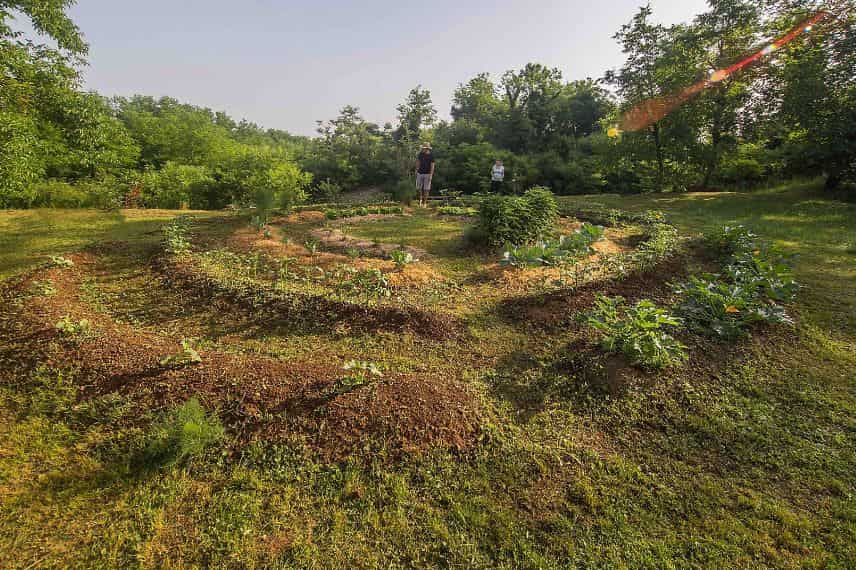
- Autumn is the perfect time to prepare your soil for the year ahead, especially if you want to try raised-bed cultivation. Lasagne bed building, achieved by layering different organic materials, such as dead leaves, compost and manure, enriches the soil and improves its structure. It will have time to decompose well over winter to provide fertile soil in spring.
4- Wildlife support
- Continue to provide water sources and food for birds and other beneficial animals. They will be of service by helping to control parasite populations.
- If you haven’t already, build insect hotels to shelter these small garden helpers before winter.
- Rather than pulling them up, you can also leave hollow-stemmed deciduous plants in place (for example fennel or large chamomile) which will serve as natural refuges for insects.
Ingrid’s tip: Don’t neglect the abundance of fallen leaves. They make excellent mulch or can be added to your compost as a rich source of organic matter.
Season-by-season observation
With each season we’ve just reviewed, there’s one essential point not to forget: observation! Over the months, observe the sun’s arc and the shadows cast on your vegetable garden, discover the ballet of insects you encounter, study native plants or those that come up spontaneously in the garden, enjoy your vegetables and take time to marvel at them. And that is one of the principles of permaculture.
- Subscribe!
- Contents

Comments