





























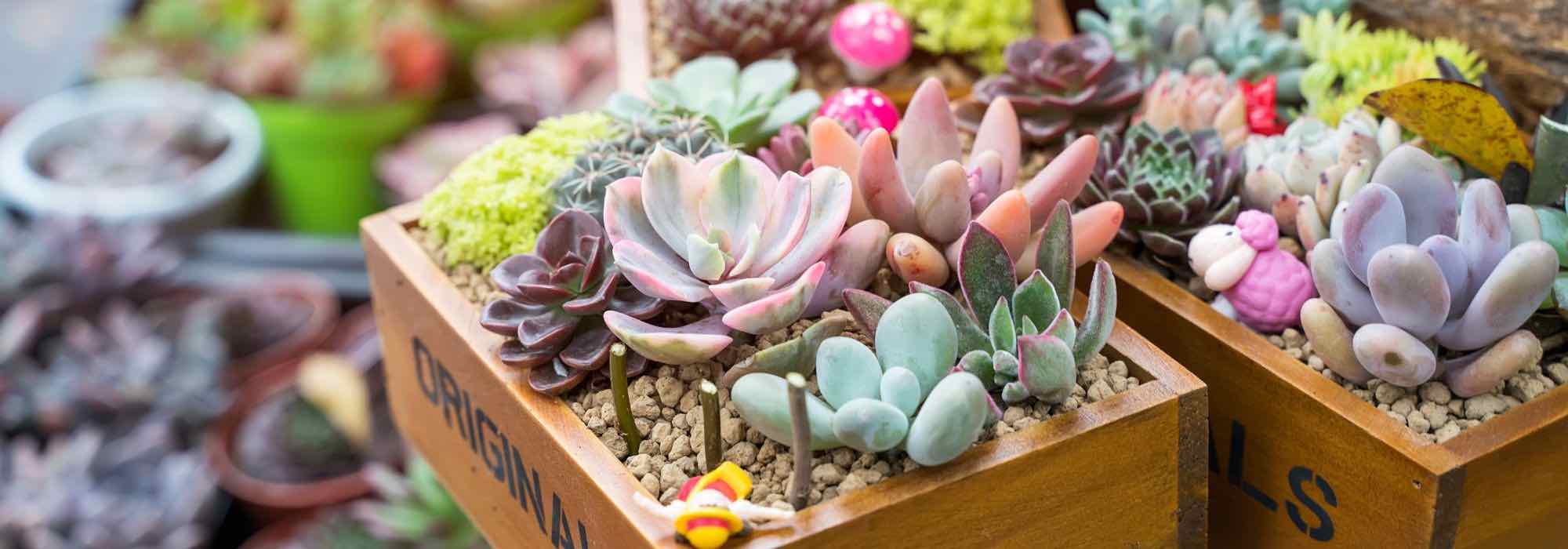
Perfect indoor plants to give as gifts
Give a personal and lasting gift
Contents
Giving an indoor plant as a gift is a delightful way to celebrate a special occasion (or not) while bringing a touch of lasting nature into our living spaces. Indoor plants are far more than mere decorative objects, they are living gifts that bring serenity to our living spaces. Indoor plants create a calming ambience and add a natural aesthetic to our homes or offices. For beginner gardeners or those who don’t have much time to devote to plant care, it is essential to choose robust and low-maintenance plants. Some indoor plants also carry symbolic meanings that add an extra dimension to their gift. In this article, we explore a selection of indoor plants ideal for giving as gifts, with their key characteristics and care requirements.
Whether for a beginner gardener, someone with limited or ample space, or a room with more or less light, these plants are an excellent choice for adding a touch of greenery and beauty to any interior.

Ceropegia woodii, or Chain of Hearts: a symbol of attachment or simply a lovely plant
Ceropegia woodii, also known as Chain of Hearts, is a popular houseplant often appreciated, very cute and graceful. Its heart-shaped leaves and its trailing stems, sometimes adorned with small lantern-shaped purple flowers, give it a unique appeal. The shape of its leaves symbolises love and attachment, making it a romantic gift or a sincere gesture for a close friend.
The Chain of Hearts prefers bright indirect light or even direct light, with watering from moderate to light. It is fairly pest-resistant and easy to look after. It is usually grown in hanging baskets to showcase its elegant trailing habit. Presenting it in a pretty hanging pot is a lovely way to add even more value to your gift.
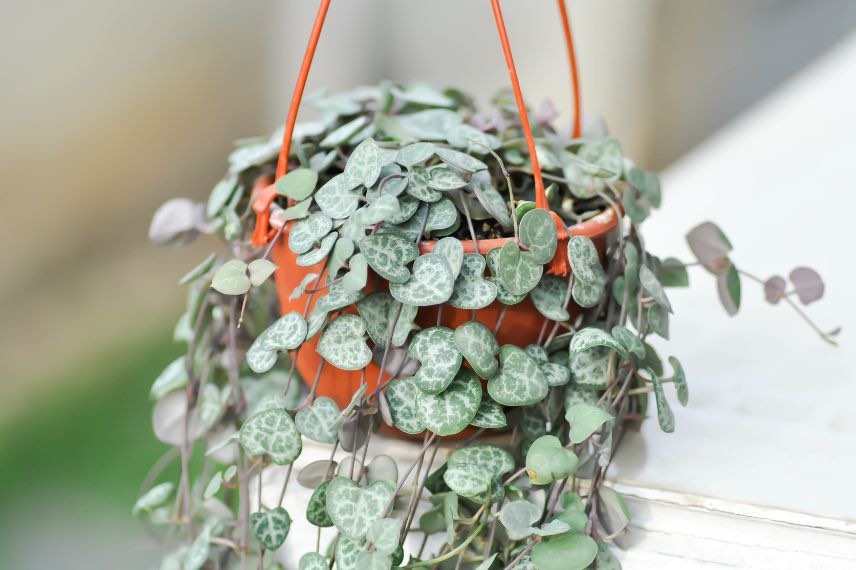
The heart-shaped leaves of Ceropegia, a resilient and endearing plant
Pachira aquatica: a large, handsome plant
The Pachira aquatica, commonly called “Money Tree” in English-speaking regions, is a popular indoor plant associated with prosperity and good fortune in Asian tradition. This plant features lush green leaves with a beautifully dissected shape, and slender, twisted trunks (often five), which give it a distinctive character. The foliage starts above the twisted trunks, and depending on the size of the plant, the overall look resembles a small indoor tree.
Pachira aquatica is a handsome gift. It is frequently sold in large sizes. It prefers bright locations, but away from direct sunlight. It requires regular watering, but it is essential to let the soil dry out between waterings to avoid excess moisture. It is relatively easy to grow.
→ Learn more about Pachira in our comprehensive guide.
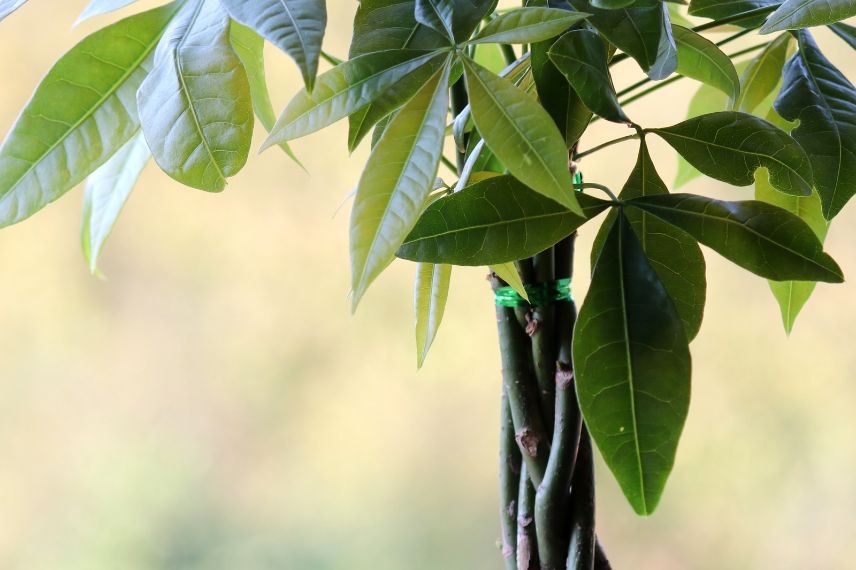
The braided trunk and the lush, luxuriant leaves of Pachira aquatica
Hoya bella: a very easy-care plant with delicate, fragrant flowering
Hoya bella is something of a miracle plant. Even though its foliage isn’t the most attractive, it flowers for long periods, with blossoms like tiny jewels, and they are fragrant!
The Hoya bella, or Porcelain Flower, is a trailing indoor plant with very pretty small star-shaped flowers in shades of white and pink. They are, by their texture, like wax or porcelain flowers, real jewels. Hoya bella is a prolific indoor plant that can bloom several times a year and grows fairly quickly.
The Porcelain Flower is very easy to grow if you meet its needs, which are somewhat specific. It is an epiphytic plant, like Phalaenopsis orchids that are commonly found in shops. In this regard, it requires a very well-drained, airy substrate, perhaps the same as for orchids, and it is not always sold in this adapted substrate. Once in its preferred conditions, it is the least demanding plant there is: it requires little watering and prefers fairly bright indirect or direct light. It thrives in small pots and seldom needs to be repotted. It is very resistant to pests and diseases.
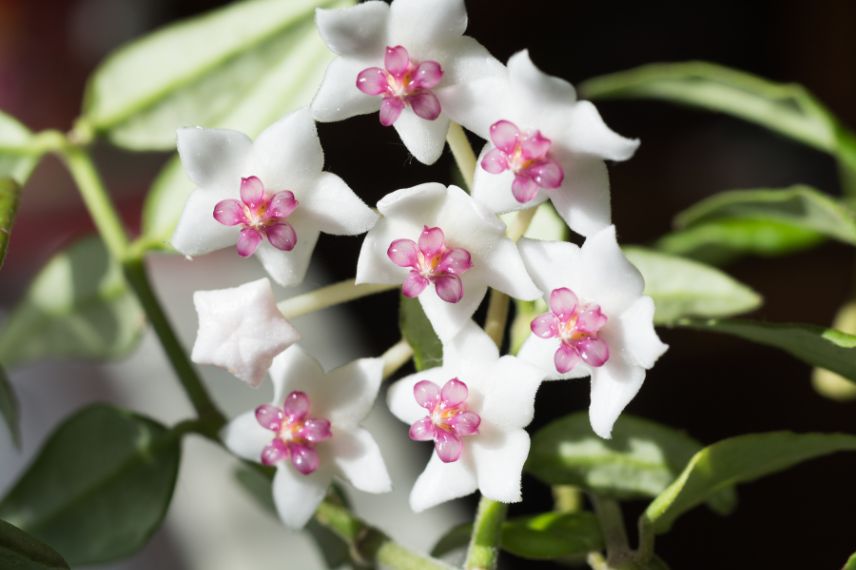
The stunning and sublime fragrant flower of Hoya bella, otherwise so undemanding
Read also
The easiest indoor plants to growFicus elastica as a tall, imposing plant
Ficus elastica, also known as the Rubber Plant, is an attractive houseplant with large glossy leaves. It comes in several varieties, including some with variegated patterns. The Ficus elastica makes an ideal gift for someone looking to add a touch of lush greenery to a fairly large space. It can also be a good choice as a single plant in a small space. A very fashionable plant in the 1970s and 1980s, it has made a strong comeback in recent years thanks to its numerous qualities.
The Ficus prefers indirect light and moderate watering. It is important to regularly wipe its leaves to prevent dust build-up and keep its appearance. For the rest, it is a very easy-care plant. Rewarding, it grows fairly quickly and can form a very handsome, large specimen.
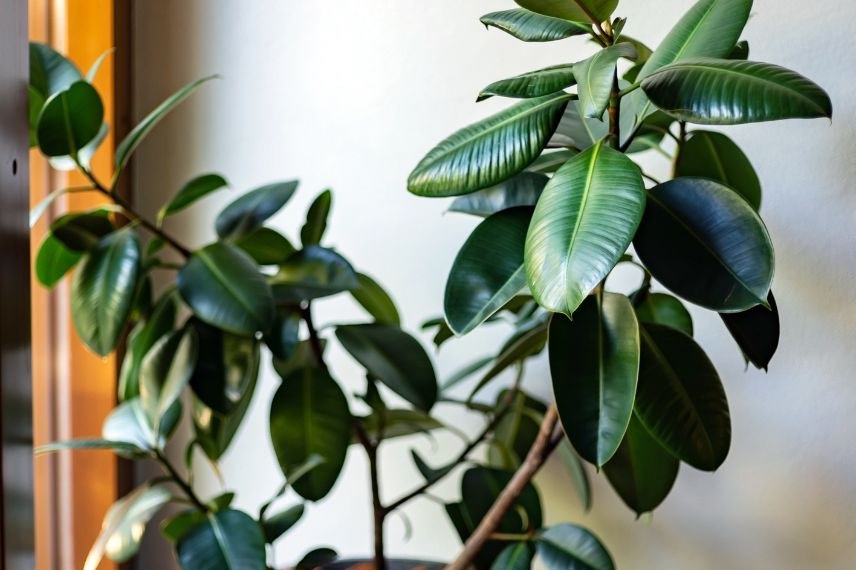
The Ficus elastica will eventually form a beautiful, large specimen
Ferns for natural and lush ambiences
Indoor ferns are timeless plants that bring a lush ambience to our living spaces. Their green, delicate foliage adds a touch of elegance to any room and a very natural look. Ferns make a versatile and appreciated gift, suitable for a range of occasions.
Ferns prefer moderately bright to bright locations, always away from direct sunlight. They need the soil to be kept lightly moist, but it’s important not to let it become waterlogged. They can be a little finicky to grow, but once you get them established, they’re actually fairly hardy.
The easiest ferns to grow are Nephrolepis, Asplenium, Polypodium and Humata tyermannii.
While they are relatively easy to grow, refer to each species to understand their slightly different requirements.
Also consider Asparagus, which resemble ferns but are not, and are easy and resilient.
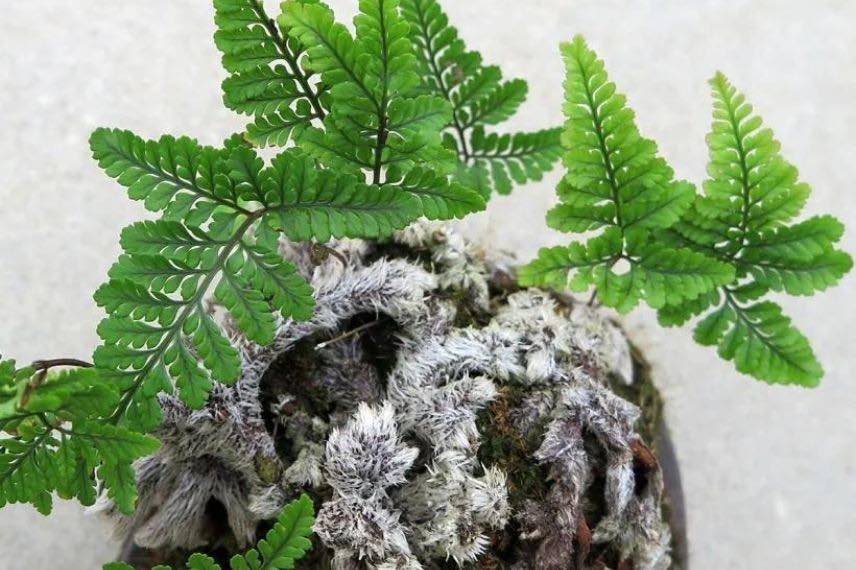 Humata tyermannii, a fern often sold as an indoor plant, is fairly easy to grow
Succulents and cacti, for sunlit interiors
For someone living in a very sunny indoor space, it is wise to offer an indoor cactus or succulent plant, as most other houseplants do not tolerate being placed behind a sunlit window in full sun. Succulent plants have fleshy leaves in a variety of colours and add a modern, graphic or exotic touch to any space. They are often seen as a symbol of resilience and perseverance, as they endure in conditions considered challenging and require little, making them a meaningful gift to encourage a friend or relative.
Succulent plants prefer bright light, from direct sun to bright indirect light. They require moderate watering and well-drained soil to avoid waterlogging. It’s best to plant them in a porous terracotta pot, so that the water from watering is quickly absorbed or evaporated. If you keep to their low water needs, they are very easy to grow.
→ Read Alexandra’s guide on indoor cacti and succulents.

The stunning diversity of shapes and colours of succulents
Oxalis: an original plant
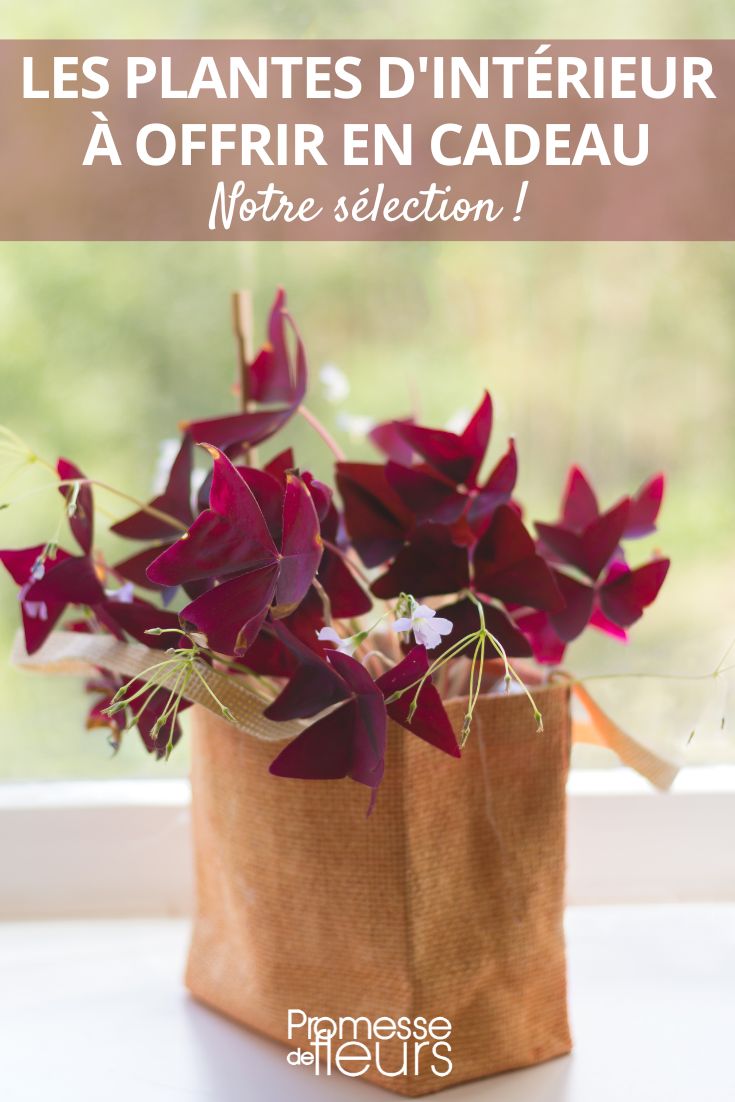
TheOxalis triangularis, commonly known as Purple Shamrock, is a charming and unusual houseplant. It is distinguished by its purple, triangular-clover-shaped leaves. Oxalis grows its stems from small tuberous rootstocks. It requires a winter dormancy period: its foliage disappears, and watering stops. Watering is resumed in spring to restart its growth cycle. It flowers in summer. It is often known in its purple-leaved form, but there are other ornamental forms. Its very pretty, delicate leaves close in the evening and open again each morning.
Oxalis thrives in bright or slightly shaded spots. It requires regular watering, but it is essential not to overwater to prevent root rot.
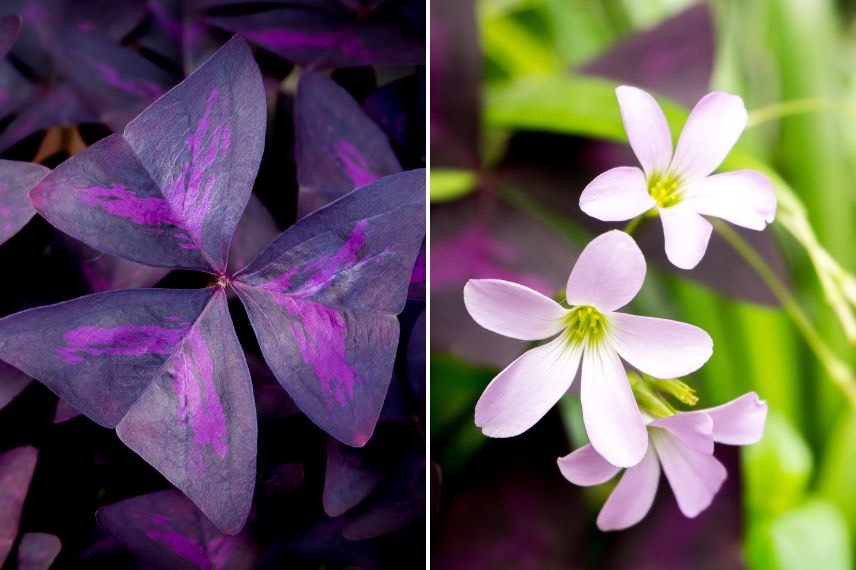
The purple leaves of Oxalis close in the evening. It also flowers for several weeks in early summer, but dies back in winter
For the novice gardener in particular, and for the plant collector
For a novice gardener, there are a few plants so easy and resilient that they withstand all mistakes and forgetfulness, at least in the first few months, while their new owner gets used to their presence. Choose a plant such as the Pothos. This plant is ideal for beginners and will help them develop a love for indoor gardening without discouraging them.
The Pothos is a versatile and easy-to-care-for houseplant. With its nicely formed leaves and varied patterns, it adds a decorative touch to any space. It climbs or cascades from its pot. Pothos thrives in low to bright light conditions and requires moderate watering.
It’s harder to find a plant to give to someone who already has plenty, collects them, and knows them very well. In that case, it might be best to ask which plant they dream of welcoming (there’s always one).
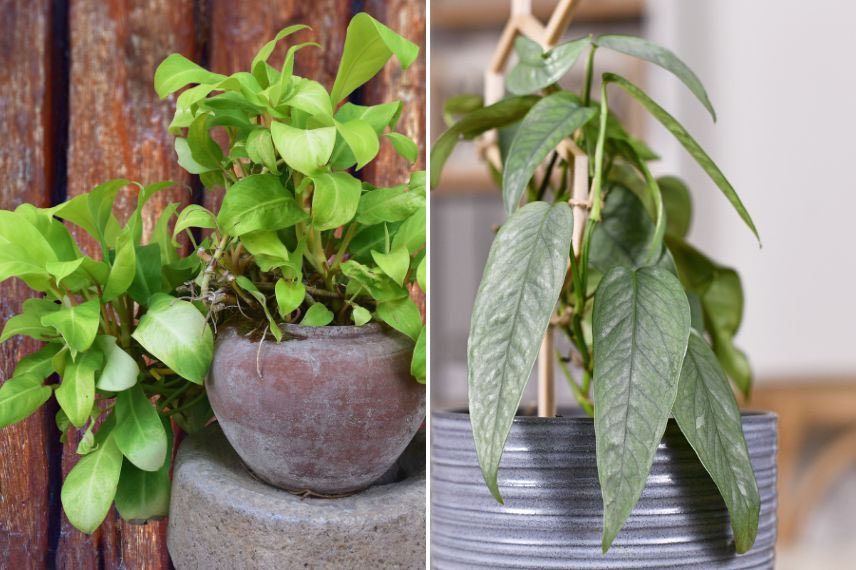
A beginner will appreciate a Pothos, on the left. The collector will be more interested in a nearby plant, but much rarer: Epipremnum pinnatum ‘Cebu Blue’
Wrap and present an indoor plant as a gift
Wrapping and presenting an indoor plant as a gift is just as important as the choice of the plant itself. Here are some tips to maximise the impact of your gift:
- Choose a pretty pot: opt for a decorative pot to match the recipient’s décor style. Ceramic or terracotta pots are classic, elegant choices.
- Add a tag with the plant’s exact name and basic care: include a small label with basic care instructions to help the recipient look after their new plant.
- Add a personal touch: personalise the gift by adding a small handwritten note or a greeting card.
- Present it in a basket or an open gift box: for a tidy presentation, place the plant in a pretty basket or a gift box, accompanied by coloured tissue paper.
- Subscribe!
- Contents
Comments