





























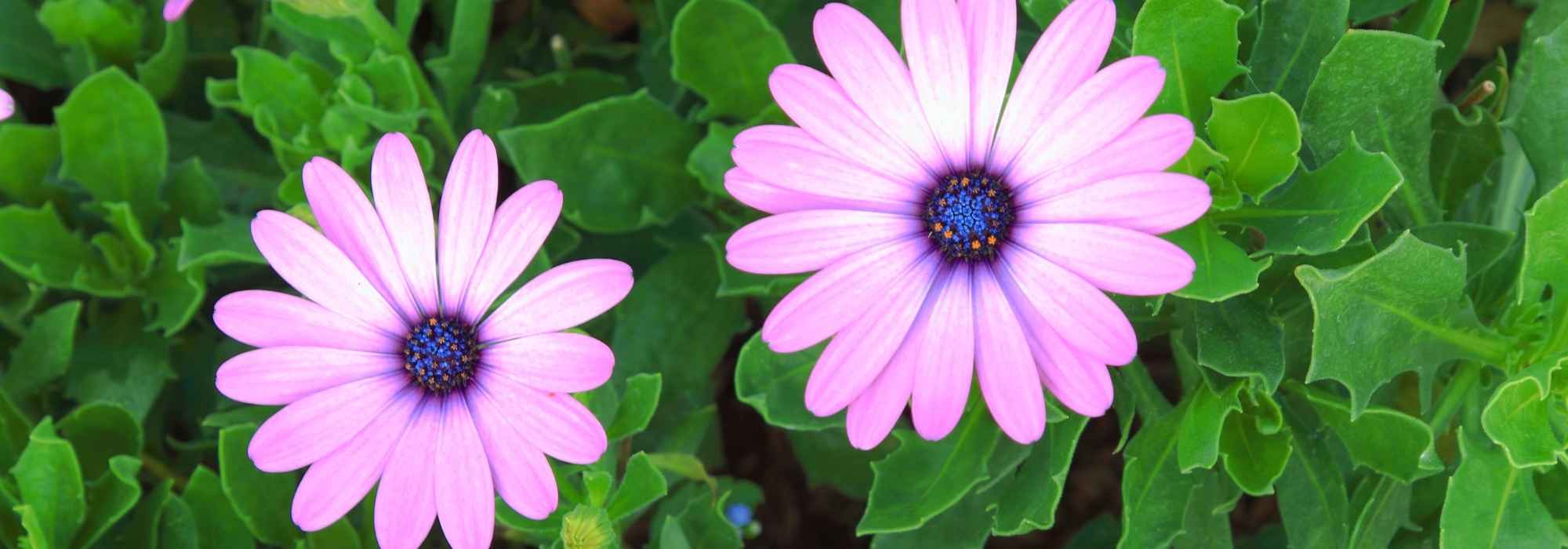
Osteospermum or Cape Daisy: Successfully Growing It in Pots
An ideal flower for pots or window boxes
Contents
The Osteospermum or Cape daisies are perennials typically grown as annuals, as they do not withstand temperatures below -5 °C. Cape daisies have entire, narrow, lobed leaves, and colourful head flowers resembling daisies, in shades of white, pink, mauve, or orange.
Osteospermum flower from May to October. Their heights vary between 10 to 60 cm depending on the species. Also known as “rain marigold”, these perennials, grown as annuals, prefer light, well-drained soils that are not too rich and a sunny position. If the plant lacks light, the flowers tend to close up. Cape daisies are used in borders, in beds, within rockeries, as well as in pots or window boxes.
→ How to grow an Osteospermum or Cape daisy in pots and window boxes? We cover everything in our advice sheet.
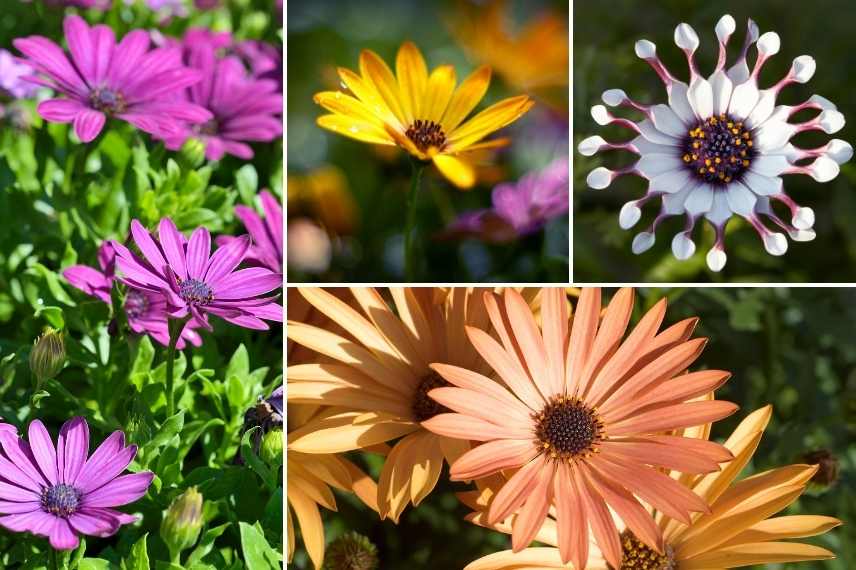
Osteospermum, a lovely plant with varied colours, blooms for a long time

A plant to (re)discover
Osteospermum are available as plug plants that are easy to transplant or in seed packets to grow as annuals or perennials depending on your region. The genus Osteospermum comprises around 70 species, but most horticultural varieties are derived from various cross-breeding between wild species such as Osteospermum ecklonis or Osteospermum fruticosum. Cape daisies come in dozens of varieties and cultivars, varying in height and colour.
Attention! : plug plants are professional products reserved for experienced gardeners. Upon receipt, transplant and store them in a sheltered location (veranda, greenhouse, cold frame…) at a temperature above 14 °C for a few weeks before being placed outdoors once the risk of frost has completely passed. To learn more, read “Annuals and vegetables as plug plants”.
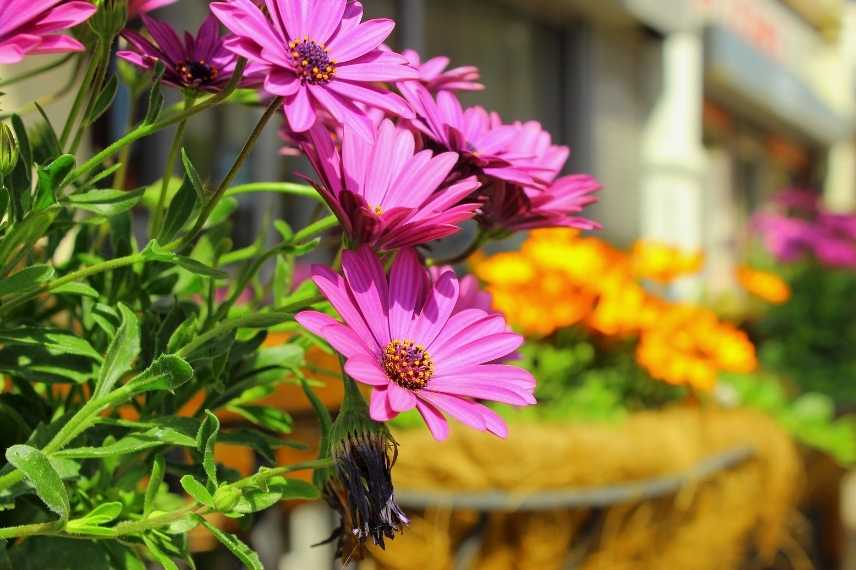 Osteospermum are also very well suited for balcony cultivation
Choosing the Pot and Substrate
The Pot
Terracotta pots are preferable, but it is more complicated in the case of window boxes, which are more commonly found in plastic. In any case, pots and window boxes must have drainage holes in the bottom. For an Osteospermum young plant, the minimum pot size is 25 cm in diameter, which is a volume of about ten litres.
The Substrate
Osteospermum prefers a moderately rich substrate. If the compost is too rich, the plant will produce foliage at the expense of flowers.
For an ideal substrate: mix 1/3 of geranium compost with 1/3 of not too heavy garden soil and 1/3 of sand.
The right location for your Osteospermum
This African daisy requires full sun to bloom well and a sheltered position from cold winds.
It finds its place in pots or rustic planters, on a terrace or balcony facing full south.
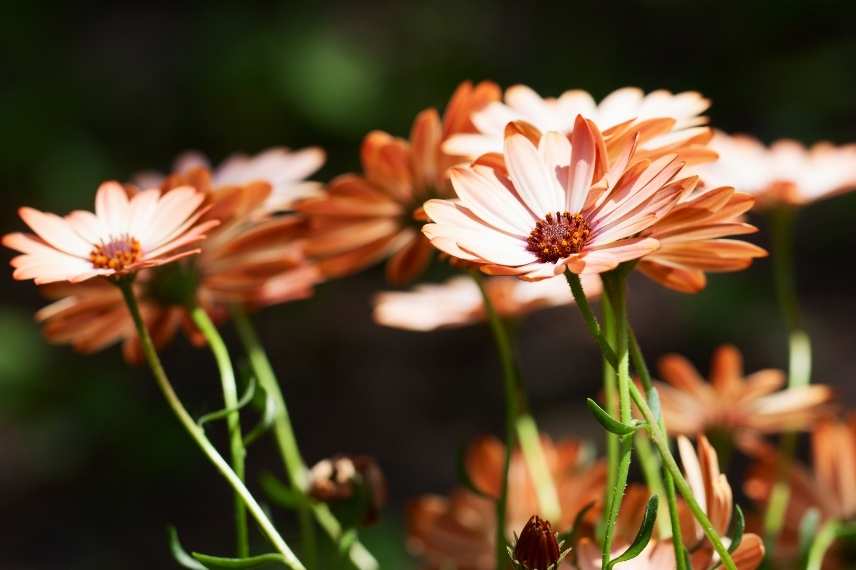
Full sun for Cape daisies!
When and how to plant a Cape daisy in a pot?
Planting Cape Daisies is done in spring, in April-May, outside of frost periods.
Plan for 2 or a maximum of 3 plug plants for a large pot or window box (spacing at least 25 cm), compared to just one for a pot with a diameter of 25 cm.
- Moisten the plug plants before replanting;
- Spread a good layer of drainage material at the bottom of the pot such as gravel or clay balls;
- Fill the pot or window box with substrate;
- Plant your plug plants in the compost and gently firm with your fingers;
- Water generously to ensure there are no “air pockets” between the roots and the compost.
Please note: you can produce your osteospermum by sowing in a special sowing compost. Sowing takes place from March to April in trays or pots. It is important to keep the substrate moist without excess and at a temperature between 15 and 18 °C. Germination occurs after 10 to 15 days. After 3 weeks, you can transplant the young shoots into individual pots. Then, when the seedlings have strengthened, transplant them again into the final pot or window box.
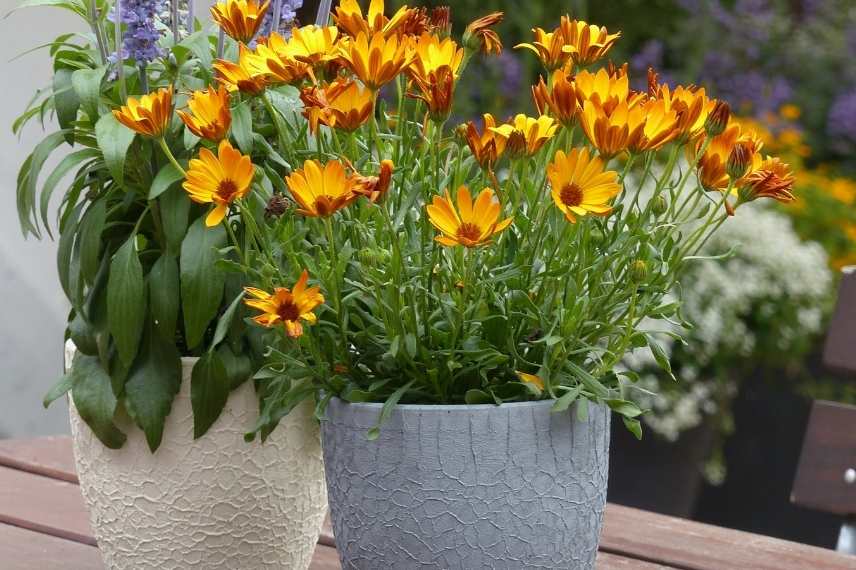
Osteospermum ‘Summer Smile Orange’
Maintenance and possible care
Winter Protection from Frost
Not very hardy, the Osteospermum can only withstand light frosts (-5 °C). This is why it is most often grown as an annual in temperate climates. However, you can keep it in a pot by bringing it indoors to protect it from frost in winter, under a veranda or in a cold greenhouse. You can take the pot outside again in May when the weather warms up. In areas with very mild winters, the Cape daisy can be tried in the ground.
Watering
Particularly drought-resistant, it is important to monitor watering if grown in a pot. Only water when the heat persists and when the flower stems begin to droop. Water without wetting the foliage and place a mulch at the base (such as linseed flakes) to limit water requirements. Significantly reduce water during winter protection.
Fertiliser Application
Throughout the growth period and to support the flowering of osteospermum grown in pots: apply a liquid organic fertiliser such as “geranium fertiliser” once or twice a month. Stop fertiliser applications during winter protection.
Pruning Osteospermum
To ensure your Osteospermum plants become bushy, pinch (i.e., “cut the tips with your fingers”) from planting in spring any stems that seem too long. This will encourage branching.
Do not hesitate to remove the first flowers: the plant will produce an even more generous flowering later on. You can also regularly remove faded flowers to encourage the plant to bloom more.
Finally, cut back the clump in autumn before storing the pots away from frost.
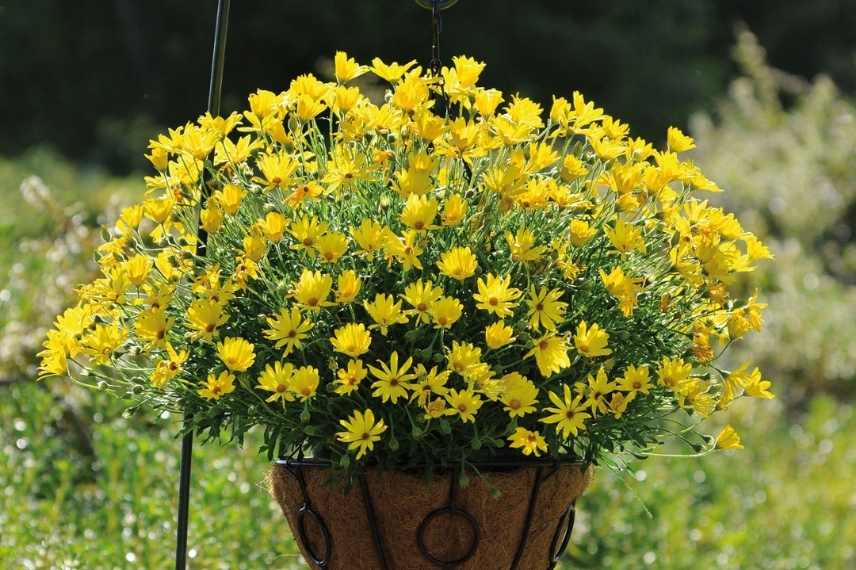
Osteospermum ‘Voltage Yellow’
Diseases and Pests
Osteospermum can be susceptible to powdery mildew, a white fluff on the leaves, or downy mildew, and leaf spots. To prevent this, space your plants sufficiently and water at the base without wetting the leaves. You can also spray a decoction of horsetail or nettle manure as a preventive measure.
If fungal diseases occur despite your precautions: promptly remove any affected parts or plants.
Cape Daisy can also be infested with aphids. A simple spray of water mixed with black soap will quickly resolve the issue. Otherwise, trust in the natural predators of aphids: ladybirds, hoverfly larvae, lacewing larvae…
- Subscribe!
- Contents
Comments