





























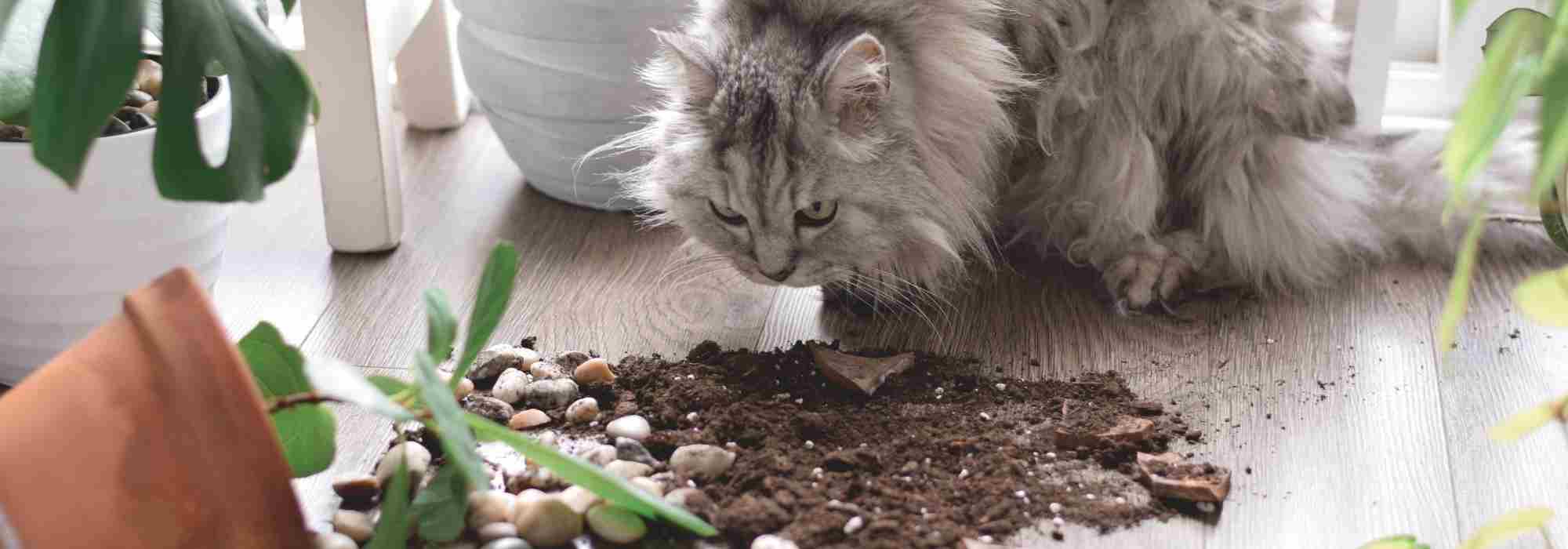
Non-toxic houseplants: which ones should you choose to keep your pet safe?
Our tips for selecting pet-friendly plants that are safe for your cat or dog
Contents
Which owner of a (young) cat or dog hasn’t come home to find a houseplant overturned or foliage chewed to bits? It’s no mystery to anyone—the cats and dogs, and in particular the aments and the puppies, have a real fondness for our pretty houseplants. But behind the lush foliage of some of these plants lie substances incompatible with the appetite and curiosity of our four‑legged friends. In fact, some of the most common houseplants are toxic and can affect the health of your companions. So, before you succumb to the latest Monstera craze on Instagram, it’s best to choose with your eyes open.
Discover which pet-friendly plants to adopt for the well-being of the animal that shares your life.

Why are some plants considered toxic to animals?
Not all plants make good housemates when you share your home with a dog or a cat. Behind decorative foliage or spectacular flowering may lie substances that are dangerous to animals. Some plants are indeed toxic through their leaves, flowers, fruits, roots or sap.
For example, calcium oxalates, present in many tropical plants such as the Araceae, cause skin irritations, but also irritate the mouth and throat upon chewing. Digestive and respiratory problems may follow. Some species also produce saponins, responsible for digestive disturbances that can be severe, ranging from repeated vomiting to persistent diarrhoea. Others, rich in alkaloids, can act directly on the nervous system and cause tremors or worrying lethargy.
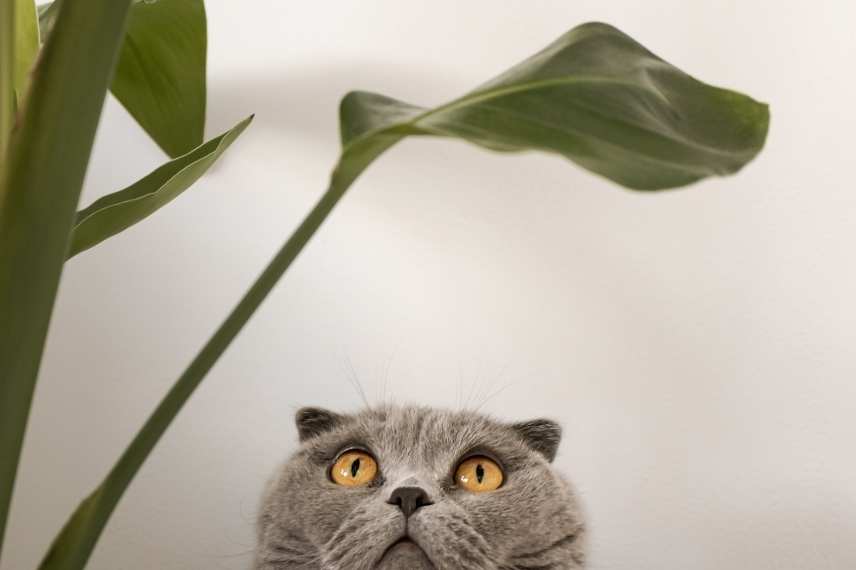
Cats and dogs take a mischievous pleasure in nibbling the foliage of our houseplants
By definition, cats and dogs, especially when they are young, are playful and curious. They have little awareness of how dangerous these pretty leaves can be. Moreover, a cat or dog left alone all day can quickly become bored. And nibbling at the plants becomes a popular pastime. Finally, a cat needs to purge regularly to eliminate hairballs. In the garden, it knows which herbs suit it, but in a house or flat, it may take a fancy to indoor plants.
That’s why vigilance is essential. Even the tiniest amount ingested can sometimes trigger symptoms, from skin irritations to vomiting, and diarrhoea to more serious respiratory, neurological or cardiac problems. Even life-threatening risks in the most serious cases. Knowing which plants are toxic and avoiding them helps minimise accidents.
What are the main indoor plants that are toxic to dogs and cats?
If you know your cat or dog nibbles on anything that comes within reach, it’s best to avoid toxic plants. Some are very popular and especially ideal for turning your home into a jungle. But caution is essential for your dog’s or cat’s health. If ingested, seek veterinary advice promptly, indicating the suspected plant, as time is crucial to management.
In the Araceae family
These tropical plants, highly valued, contain calcium oxalates in the form of microscopic needle-shaped crystals. As soon as an animal nibbles a leaf, these crystals penetrate the mucous membranes and cause intense irritation.
Toxic plants : Monstera, Dieffenbachia, Philodendron, Alocasia, Spathiphyllum (peace lily), Pothos (Epipremnum), Zamioculcas zamiifolia (ZZ plant)
Symptoms : excessive drooling, swelling of the tongue, difficulty swallowing, vomiting, breathing difficulties in cases of significant ingestion.

Among the Araceae, Monstera, Dieffenbachia, Philodendron, Alocasia, Spathiphyllum and the ZZ plant are toxic
In the Moraceae family
The white latex produced by Ficus is toxic to animals. It contains irritating compounds (furocoumarins, proteolytic enzymes) that trigger digestive and skin reactions.
Incriminated plants : the Ficus
Symptoms : vomiting, diarrhoea, oral irritation.
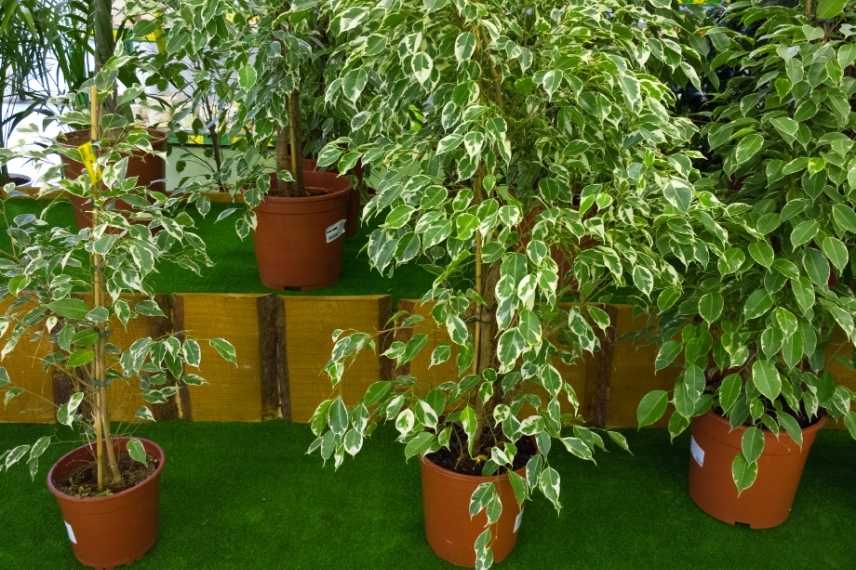
Ficus are toxic to animals
In the Asparagaceae family
Hardy and popular plants, they contain saponins, foaming substances that irritate the animals’ digestive tract.
Incriminated plants : Sansevieria (mother-in-law’s tongue), Dracaena, Yucca.
Symptoms : vomiting, diarrhoea, lethargy, loss of appetite, hypersalivation.
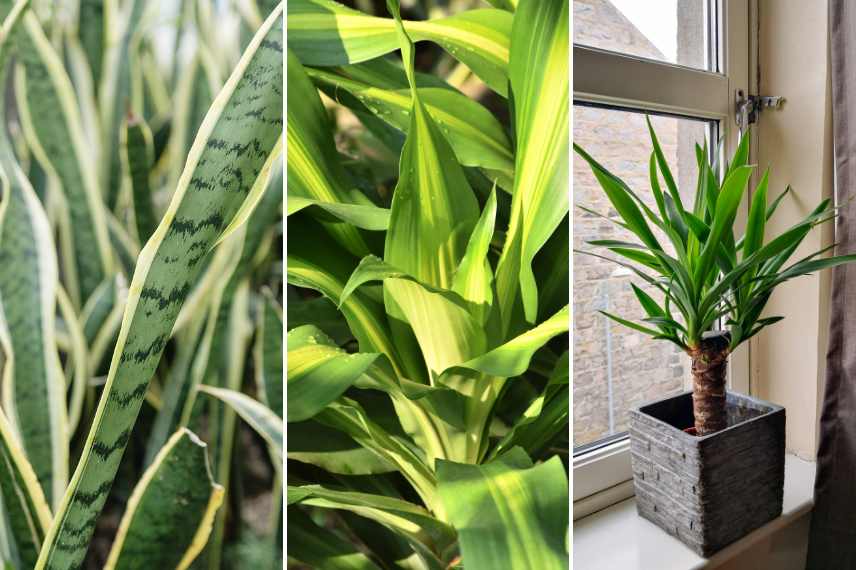
The toxic Asparagaceae: Sansevieria, Dracaena and Yucca
In the Cycadaceae family
Like a small palm, Cycas revoluta is a dangerous species because it contains cycasin, a glycoside. All parts of the plant are toxic, but the seeds are particularly concentrated.
Incriminated plant : Cycas revoluta
Symptoms : severe vomiting, neurological disturbances, liver damage that can be fatal.
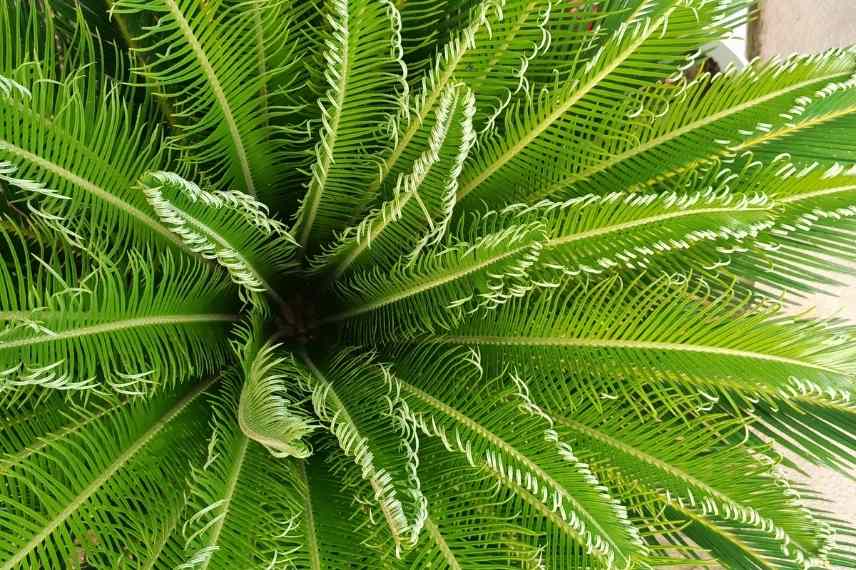
Cycas revoluta is toxic to animals
In the Euphorbiaceae family
Widely used in decoration, these Euphorbias produce an irritant and caustic latex, containing diterpenes and irritant esters.
Incriminated plants : Poinsettia (Euphorbia pulchemina) or Christmas star, Euphorbia trigona
Symptoms : hypersalivation, vomiting, diarrhoea, skin or eye irritation in case of latex contact.

Poinsettia and Euphorbia trigona can be dangerous to animals
In the Liliaceae family
Lilies are dangerous for cats. Ingesting even a tiny amount of leaves, flowers, or vase water can be enough to cause severe poisoning.
Incriminated plants : the lilies (Lilium)
Symptoms : vomiting, loss of appetite, lethargy, acute kidney failure within 24 to 72 hours.
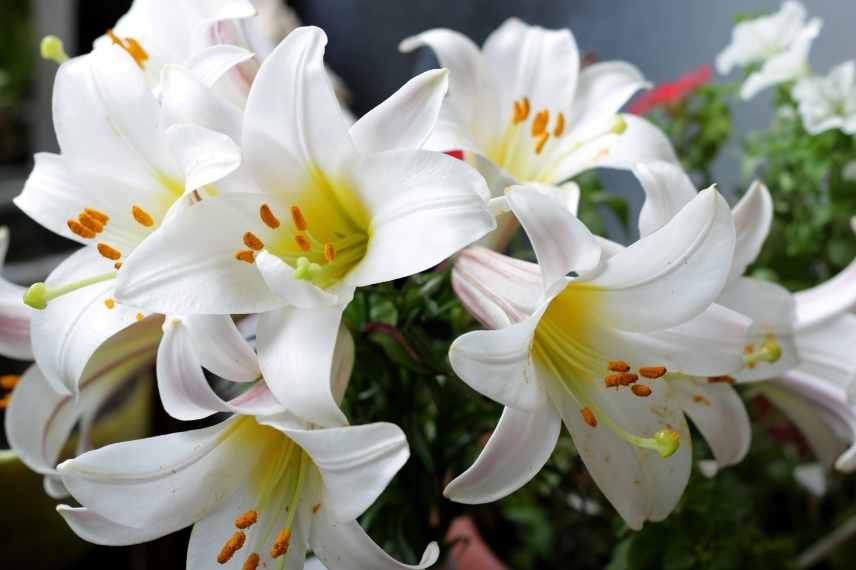
Lilies are dangerous for cats and dogs
Which pet-friendly plants are best to keep indoors?
Some green plants, very ornamental and easy to grow for most, are non-toxic to cats and dogs. You can bring a touch of greenery into your home while safeguarding their health… and your peace of mind. Some are even air-purifying for indoors.
Chlorophytum or spider plant
A plant known for its long, narrow green leaves variegated with creamy white, and its long white, stiff, arched stolons bearing small star-shaped flowers. Easy to care for, Chlorophytum, also known as the spider plant, prefers bright light but not direct sun, a temperature around 18°C in summer, and generous watering in summer, more moderate in winter. It is one of the most common and well-loved houseplants, and it is very easy to propagate.
Nephrolepis or Boston fern
Originating from humid tropical zones, Nephrolepis or Boston fern requires air humidity of at least 60%. Foliar misting is therefore essential year-round. This fern comprises a tuft of finely cut and undulating fronds that give it a slightly wild look. It prefers rooms with medium light, such as a bathroom or a north-facing bedroom, and needs very regular watering in spring and summer.
It is an air-purifying plant that filters formaldehyde.
Pilea peperomioides or Chinese money plant
Very distinctive with its graphic, round, flat leaves borne on rigid petioles, the Pilea peperomioides is a very on-trend plant. It enjoys very bright spaces, but not direct sunlight. Pilea peperomioides needs two waterings per week during the growing season and once a week in winter. It is a plant that can take off and is very easy to propagate.
Calathea
Calathea are very popular for their striking and colourful foliage. Leaves can be striped, variegated or blotched in shades from white to pink, including purple and grey-pink. They like humid atmospheres and settings with diffused light. Their leaves also have the peculiarity of rising and folding back at night.
Peperomia
Peperomia is also a genus of houseplants that includes many varieties known for their very decorative foliage and ease of culture. These are succulent plants with thick, waxy and glossy leaves ranging from dark green to purple. They display a very compact, upright, creeping or trailing habit depending on the variety. Originating from tropical regions of South America, they tolerate soft light and moderate watering. Peperomia is an ideal plant for beginners.
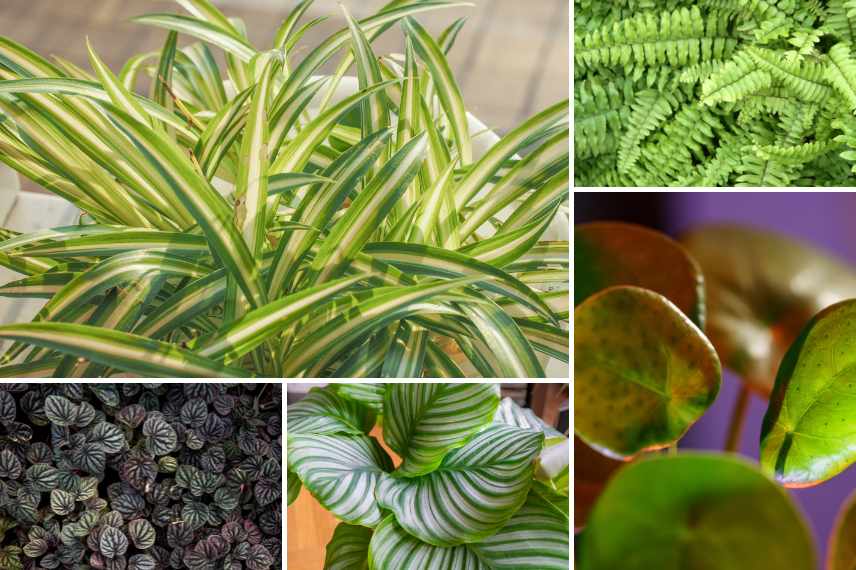
Clockwise from the top left: Chlorophytum, Nephrolepis, Pilea peperomioides, Calathea and Peperomia
Hoya or porcelain flower
Hoyas are succulent plants with a climbing or trailing habit depending on the variety. Their leaves are fairly thick and their flowers have a waxy appearance. For healthy growth, they need bright but indirect light, and moderate watering. They are full of charm, flowering easily and for long periods. They bring a genuine exotic touch to homes.
Hypoestes or polka-dot plant
Hypoestes are small plants that stand out with leaves spotted and speckled with colourful patches and patterns. Depending on the varieties, leaves can be green, white, or various shades of pink, red, and purple. They thrive in a room with bright but indirect light, with an ideal temperature of 15°C. Watering should be moderate, allowing the substrate to dry between waterings.
Tradescantia or wandering Jew
Tradescantia, also called wandering Jew, are very easy to care for, perfect for those who don’t have a green thumb. They are creeping or trailing plants, ideal for hanging baskets, with foliage showing metallic sheens. Depending on the varieties, leaves can be green, purple, violet or cream. They enjoy rapid growth and are considered virtually indestructible. They tolerate bright or softer light and need moderate watering.
Ceropegia
Ceropegia is a plant with trailing, very fine stems. They form small vines bearing heart-shaped leaves. These plants flower in tiny inflorescences. Of tropical origin, they enjoy bright light and require only very modest watering.
Ctenanthe
Ctenanthe is an indoor plant valued for its striking, highly graphic foliage. Often veined, leaves offer impressive dimensions. This exotically looking plant thrives in a room with subdued light and a humid atmosphere. It is ideal to place in a bright bathroom. The substrate must remain constantly moist, and regular misting is essential.
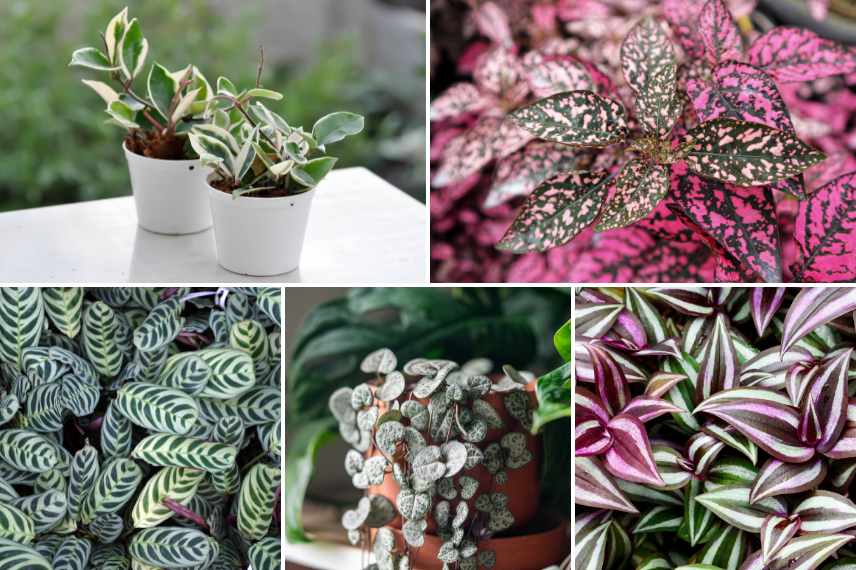
Clockwise from the top left: Hoya, Hypoestes, Tradescantia, Ceropegia and Ctenanthe
Read also
Toxic plants in NatureOur practical tips
To help your plants coexist with your pets, here are a few simple tips:
- Place sensitive plants out of reach of animals using hanging planters, high shelves or dedicated furniture to prevent chewing or scratching
- Regularly monitor your animals’ behaviour and intervene quickly if any of them shows unusual interest in a plant
- Train puppies and kittens by teaching them not to touch the flower pots and redirect their curiosity with suitable toys
- Choose heavy, stable cache pots or use decorative beads on the surface of the potting compost to deter scratching
- Avoid chemical fertilisers and cleaning products on indoor plants, which can also be toxic if touched or ingested
- Provide cat grass for your moggy if it doesn’t have access to the garden
- Know the emergency steps: remove any part of the plant from the mouth, keep a sample of the plant and consult a vet immediately if ingestion is suspected.
- Subscribe!
- Contents
Comments