





























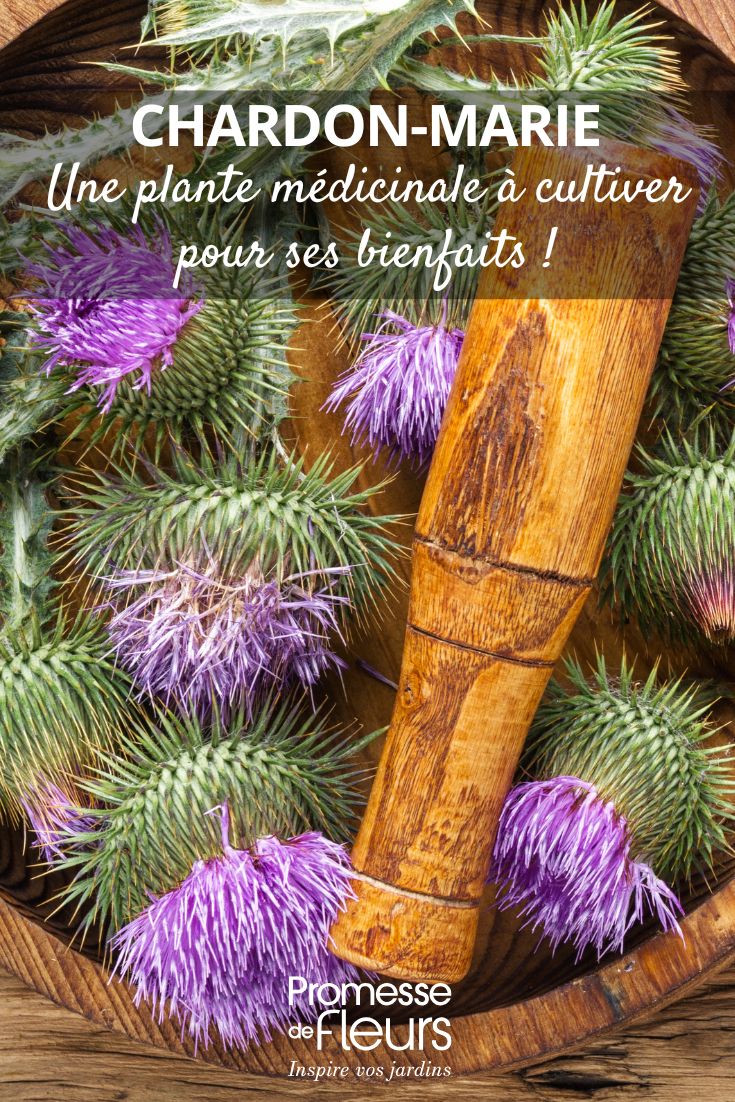
Milk thistle: a medicinal plant to grow for its benefits
All the benefits of the fruits and leaves of this biennial plant
Contents
Milk thistle, it’s prickly! It’s a fact, but the generic term “thistle” refers to several plants belonging to different genera. Among these spiny herbaceous plants, milk thistle (Silybum marianum) holds a place of prominence. It is indeed a medicinal plant, known since Antiquity and recognised by science, for its protective action and its benefits in helping to support liver health. Thanks to silymarin, it would help regenerate liver cells, protect the liver and combat toxins. It would also possess antioxidant and anti-inflammatory properties. This makes milk thistle a formidable ally for our body.
Discover the properties and benefits of milk thistle for our wellbeing, its various uses and any potential contraindications.

Introduction to milk thistle
There are thistles of all kinds! Beneath their spiky appearance, from the leaves to the inflorescences, the thistle actually refers to several herbaceous plants, belonging to different genera, most of which are included in the large family Asteraceae. Thus, we find true thistles (Carduus), ornamental thistles (Echinops), thistles (Cirsium), carline thistles (Carlina), and then Eryngium and cardoons. Among these spiny plants, milk thistle (Sylibum marianum) holds a special place. It is, in fact, the only representative of the genus Sylibum! But on its own, it contains many advantages, both ornamental and medicinal.
To enjoy the benefits of milk thistle, one must know it well.
A herbaceous plant in the Asteraceae family
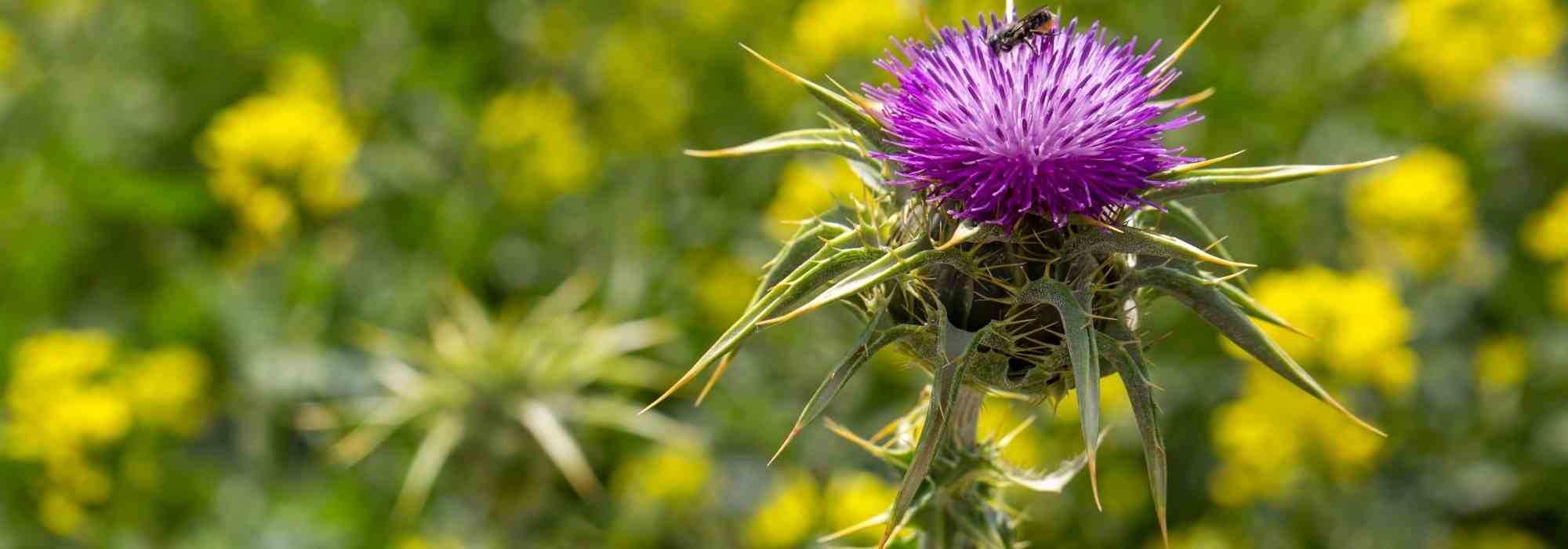
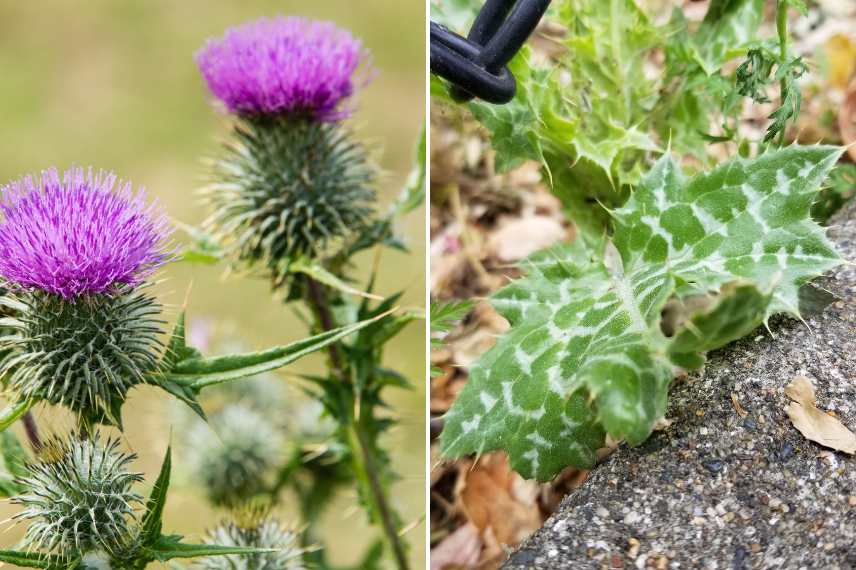
Originating from the Mediterranean regions and from parts of Asia, milk thistle is a fairly robust herbaceous plant, as it possesses a thick, spherical and ramified root. As a biennial plant, it produces in the first year a rosette of oval, tough leaves, edged with irregular dentate teeth and spines, of a bright green colour, marbled with white along the veins. In the second year, milk thistle develops a straight stem, leafy at the base, tomentose on the upper part. In summer, from June–July to August–September, solitary heads unfold at the tops of the stems. The purplish flowers, surrounded by bracts, dentate and spiny, produce fruits in the form of achenes, brown and speckled, topped by a white and glossy egret.
If, as is often the case, you encounter milk thistle in the wild, along roadsides, in rubble and fallow land, and on rocky slopes, you can also sow it and grow it in a cottage garden or urban garden. It can reach a height of 1.50 to 2 m.
Sowing and growing milk thistle
Milk thistle is available in seed form for sowing. The sowing takes place in February under cover, or in April in the open ground. The February seedlings should be pricked out into pots in March, before being transplanted in place in April. In open ground, the seeds are sown in rows 50 to 60 cm apart, then the plants will be thinned every 60 cm.
Milk thistle adapts very well to dry, calcareous and poor soils by its origins, but will prosper more in rich soil. The essential thing is that this soil is perfectly well-drained, possibly lightened with sand. It also needs full sun.
Read also
How to get rid of thistles?How to use milk thistle?
If all the tender parts of milk thistle (young leaves and stems, heads, roots) are edible, it is the leaves and the achene that are used in phytotherapy, because they contain the active constituents. These fruits would indeed be very rich in flavonoids, and in particular silybin, which would have hepatoprotective effects. This medicinal property is officially recognised by the WHO (World Health Organization).
How to harvest milk thistle?
It is during the flowering period of milk thistle, which runs from June to September, depending on the region, that the leaves are harvested. They are the small rosettes of leaves that develop on the flowering stems, to be harvested when young, before they become tough and spiny. They should then be dried in a dark and well-ventilated room, away from any moisture. If you do not have a suitable space, it is possible to dry the leaves in an oven at 50 °C, with the door ajar.
The seeds are harvested from the withered, dried heads that have turned brown. Often the seeds escape on their own from the pappi that crown the achenes. It is enough to cut the dry inflorescences and lay them on an old sheet or in a large sack to continue drying for a month. The white bristles are clearly visible and can be allergenic. With a pair of gloves, remove these bristles to recover the seeds. A hair dryer can be used to get rid of the bristles.
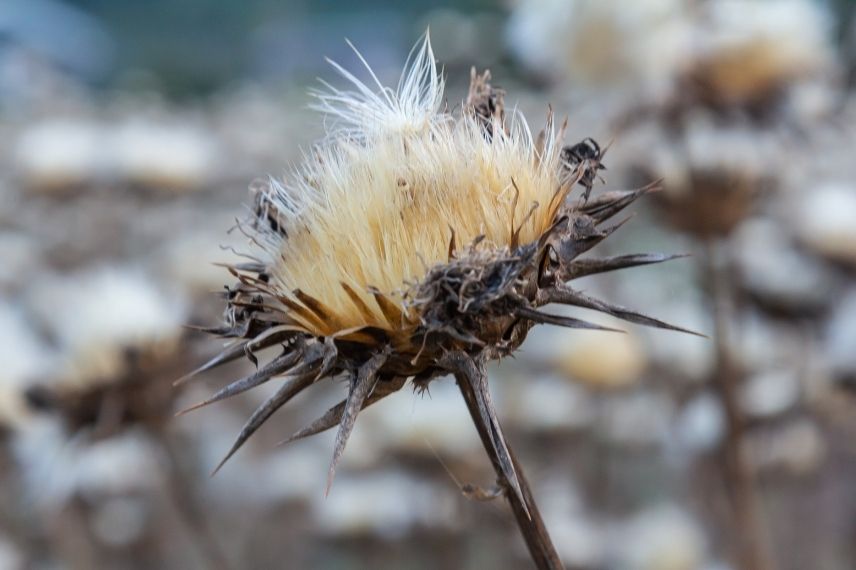
Dried milk thistle flowers
How to use milk thistle seeds and leaves?
- The dried leaves are consumed as an infusion at a rate of one teaspoon per 250 ml of boiling water. Leave to infuse for 10 minutes and strain before drinking. Three cups per day, half an hour before meals.
- Whole seeds are prepared as a decoction with one teaspoon in 150 ml of cold water. Bring to the boil for 5 minutes, strain and drink. Three cups per day, 30 minutes before meals.
- The seeds can be ground and reduced to a powder which is consumed as an infusion. Use two teaspoons of powder per day.
It is advisable not to consume it continuously for long periods. A course of 3 to 6 weeks is generally advised, followed by a pause of several weeks before restarting if necessary. This pause helps prevent the body from becoming accustomed to the active constituents and maintains the plant’s efficacy.
What are the health benefits of milk thistle for the body?
Consumed since ancient times by the Greeks, Romans, or within Ayurvedic medicine, milk thistle has a reputation as an essential plant for helping protect the liver. It benefits from a traditional use in treating liver diseases. However, the benefits of milk thistle are not limited to this sphere.
The liver’s protective action
Silymarin, the major active constituent believed to be present in milk thistle, would act on liver cells. It would play a role in hepatic regeneration and detoxification, repairing liver cells by removing toxins. And this, in particular, after heavy alcohol or medicines intake, or hepatic intoxication. These flavonoids would contribute to the formation of new liver cells.
Milk thistle is logically a powerful ally in the treatment of liver diseases, such as hepatitis, cirrhosis, or indeed liver conditions related to gallstones…
The WHO formally recognises its liver-protective virtues in chemotherapy protocols for cancer to reduce side effects.
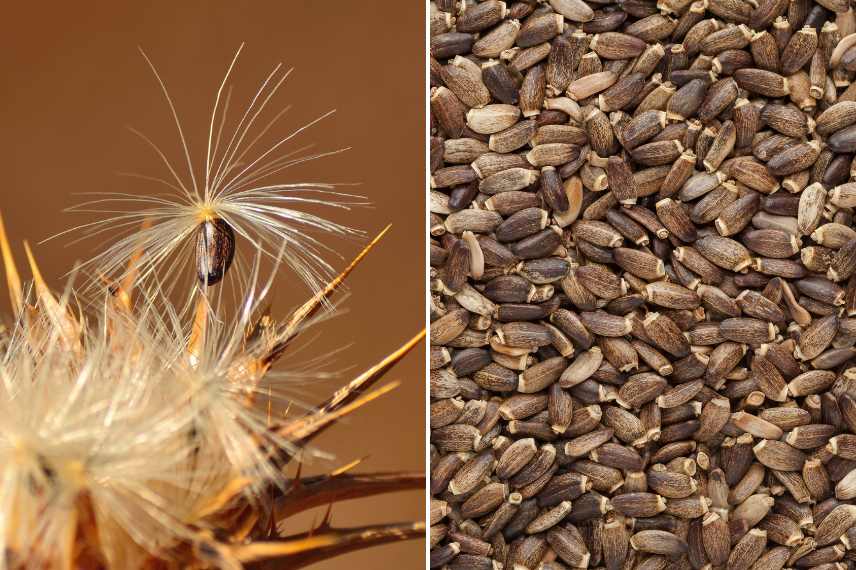
Milk thistle seeds would contain silymarin, the major active constituent
Aids to digestion
Milk thistle is also reputed to help improve digestion and the smooth functioning of intestinal transit. Indeed, milk thistle would have a function of stimulating bile production by the liver. By increasing bile secretion, digestion of fats and the absorption of fat-soluble nutrients are more efficient. Milk thistle would therefore have a choleretic action, comparable to artichoke leaves in a tisane.
Milk thistle is also known to help relieve digestive discomfort in cases of transit disorders, difficult digestion or inflammatory digestive conditions. It is also a natural support for the gut microbiota.
The antioxidant and anti-inflammatory properties
When the body accumulates too many free radicals, generated by pollution, an unbalanced diet, tobacco… the body undergoes oxidative stress. Thanks to its richness in antioxidants, milk thistle would help neutralise free radicals and support the immune system.
Also thanks to silymarin, milk thistle would have anti-inflammatory properties, combined with its antioxidant properties, which would confer beneficial effects in protecting against chronic diseases such as cardiovascular diseases, diabetes or neurodegenerative diseases.
Read also
How to dry blue thistle flowers?What are the side effects and contraindications of milk thistle?
Although milk thistle is well tolerated, a few precautions must be taken into account.
Possible side effects
Minor digestive disturbances may occur, such as bloating, mild diarrhea, or nausea. These effects are usually temporary and disappear after a few days.
Contraindications
- People allergic to Asteraceae.
- Pregnant or breastfeeding women.
- People with hormone-dependent cancer.
- Interactions with certain medications (anticoagulants, antidiabetic medications, hepatotoxic medications).
In these cases, it is strongly advised to consult a healthcare professional for medical advice before consuming milk thistle.
Did you know?
Also known as silver thistle, blessed thistle, thistle or Our Lady’s milk, or Mary’s sylibe, milk thistle is said to derive its name from a legend: as the Virgin Mary, while hastily fleeing from Egypt to Palestine, wished to nurse Jesus. Drops of milk are said to have fallen onto a bush of thistles behind which she hid. This legend also explains the white marbling speckling the foliage of milk thistle.
- Subscribe!
- Contents
Comments