





























Maintaining a garden pond in autumn
Our tips and advice for a healthy aquatic space
Contents
Ah, autumn! The season when leaves fall, pumpkins are out in force and your garden pond… well, let’s say it shouldn’t be overlooked during this period of change. Whether you have a small aquatic haven or a pond worthy of a stately estate, autumn maintenance is crucial to keep this ecosystem in peak condition. You may be wondering about the best practices for cleaning, filtration and feeding your plants and fish during this period. Look no further! In this article, we dive in headfirst (not literally, of course) into proven methods for preserving the health and beauty of your garden pond during autumn. So, grab your leaf rake and your wellies, because we’ve got some work to do!
Why is autumn crucial for pond maintenance?
Autumn is to your garden pond what pre-season is to an athlete: a decisive moment to prepare for the big game, in this case, winter. Temperature changes create a fluctuating environment that can stress your fish and aquatic plants. Add to that the ceaseless ballet of fallen leaves and other debris that threaten to turn your oasis into a swamp. Moreover, these seasonal changes, such as the drop in temperatures, can affect the pH of the water and the amount of oxygen available, which can impact aquatic life. It’s the season when good maintenance can make the difference between a healthy pond and a pond in distress, preparing the ground for the entire ecosystem to survive the rigours of the cold season.
Read also
10 aquatic plants, submerged or floatingPond cleaning
Cleaning is an inevitable task, and let’s face it, it can feel daunting. But remember that your garden pond needs you.
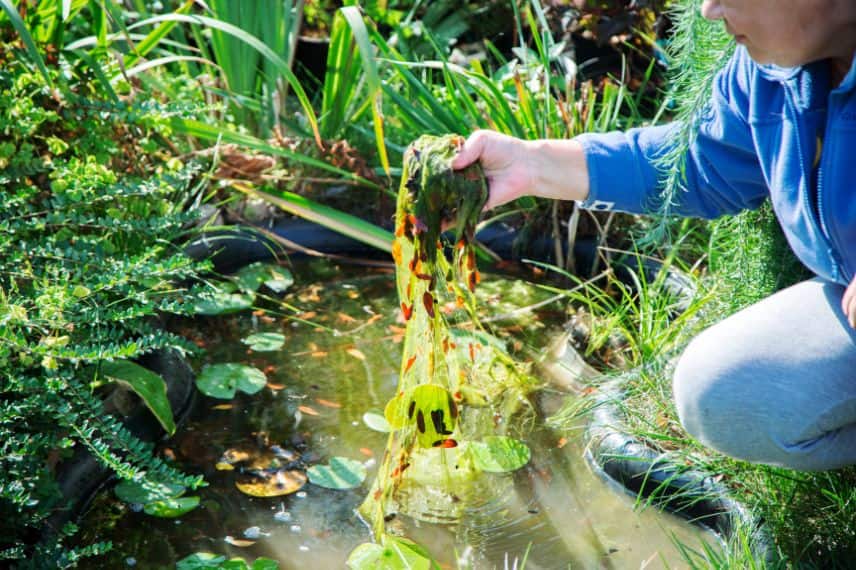
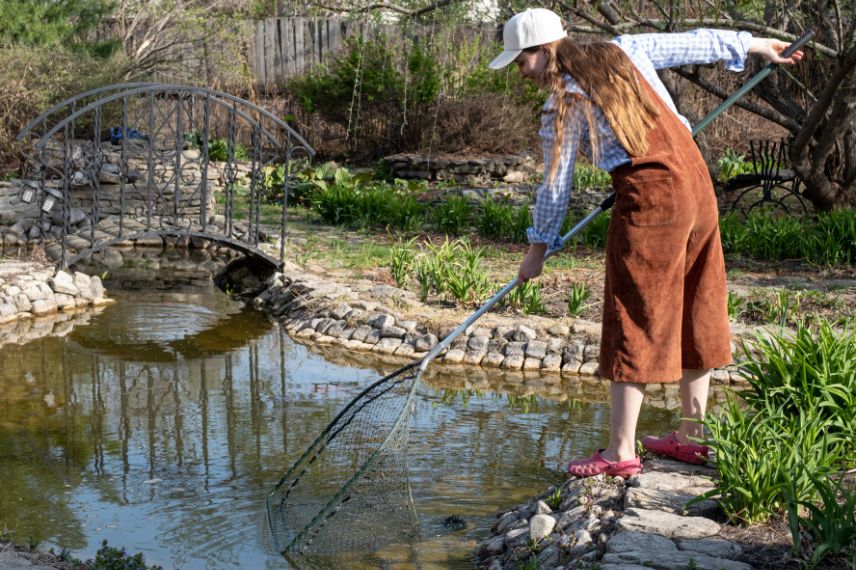
- Autumn is the season when dead leaves decide to dive — not always elegant — into your pond. This botanical ballet, as picturesque as it may be, can lead to problems with the accumulation of organic waste. Regularly fish out the leaves with the net and transfer them to the compost before they decompose.
- Your filter also needs a little boost. Dismantle and clean the filter elements. If your filtration system uses foams or bio-balls, ensure you rinse them with pond water to preserve beneficial bacteria.
- Use a pond vacuum to remove sediment and debris from the bottom. This helps prevent the accumulation of organic matter that could decompose and affect water quality.
- Take this moment to inspect the pumps and pipes. Check that they are in good working order and free from any potential blockages.
- Do a quick check of all electrical equipment to ensure they are in good condition and safe.
- If you have statues, rocks or other decorative features in your pond, consider removing them if necessary and cleaning them before winter.
Water quality
In autumn, several factors can influence the quality of your garden pond water, making regular tests and adjustments essential.
The water pH
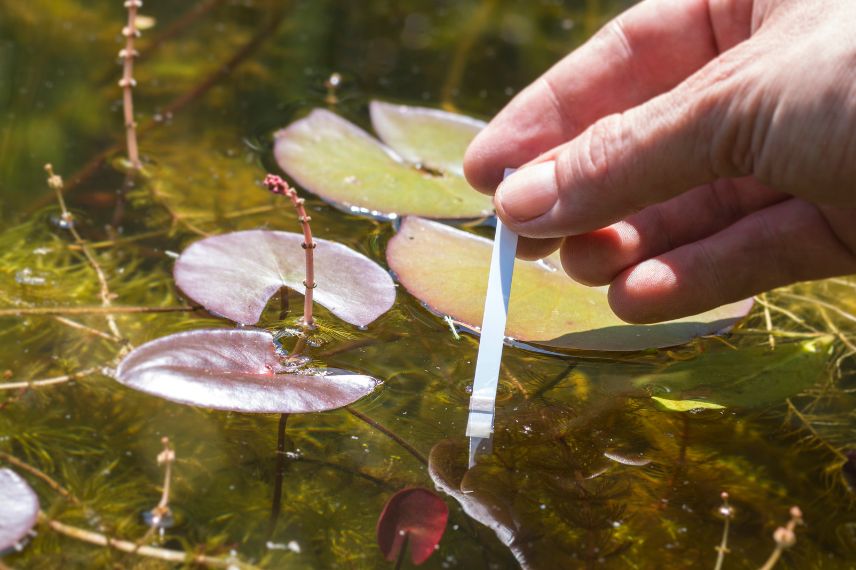
Start by using a water test kit to measure pH, hardness and nitrate levels. A neutral pH around 7 is generally ideal for most fish and plants. Feel free to adjust your pH according to the result. For this, you have several options:
- Using products suitable for your pond, which you can obtain from professionals in the trade.
- There are also pH stabilising buffers. They are especially useful if you have frequent fluctuations.
- Replacing a portion of the pond water with clean water can also help restore the pH. However, make sure to test the new water before adding it to the pond to avoid making the problem worse.
- Some filtration systems are equipped with media that can help regulate the pH.
There are also natural solutions to modify the pH:
- To increase the pH: You can use crushed oyster shells or crushed limestone.
- To decrease the pH: Oak leaves, peat or pine needles can naturally acidify the water.
The temperature of the water
The water temperature also deserves your attention. Use a water thermometer to monitor fluctuations and, if necessary, install a pond heater to stabilise the temperature or gradually reduce it. A stable temperature reduces fish stress and promotes the health of aquatic plants.
The oxygenation of the water
The oxygenation of the water is another aspect not to be neglected. The decomposition of leaves and organic debris can deplete oxygen levels. Use an aerator to maintain good water circulation and optimise oxygen content.
Fish and plants
Autumn doesn’t just affect water quality; it also impacts the fauna and flora of your garden pond. Here are some specific recommendations:
For fish
- As temperatures fall, your fish’s metabolism slows. Choose an autumn-specific feed that’s easier to digest for your finned friends, and gradually reduce feeding frequency.
- In colder regions, consider installing a pond heater or a de-icing device to prevent the water surface from freezing, which will improve oxygen circulation.
- Autumn is a good time to observe your fish closely. Any sign of illness or abnormal behaviour should be noted and, if necessary, consult a veterinary aquaculture specialist.
For other pond wildlife
- To protect other aquatic animals in your pond, such as frogs, newts or aquatic insects, make sure the pond does not freeze completely. To do this, you can (again) install a small pond heater or install an air pump.
- Submerged shelters, such as stones, logs or dense plants, can also offer shelter from cold temperatures and predators. Install similar shelters around the pond as well to allow them to hibernate.
- Also avoid disturbing the pond during winter. Sudden movements or changes in the environment can stress the animals, which is particularly dangerous in cold weather.
For the plants
- Remove dead or rotting parts of aquatic plants to prevent decomposition.
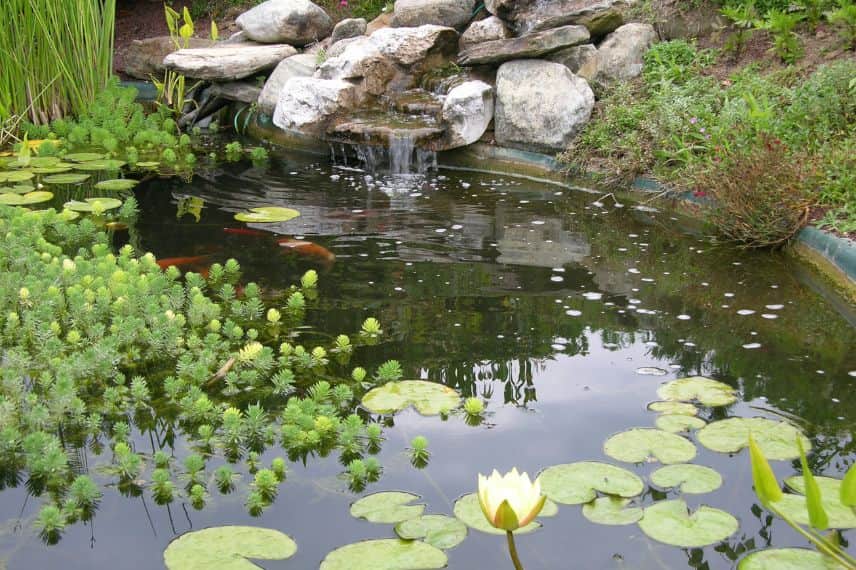
- Some plants, such as water lilies, must be pruned to about 10–15 cm above the plant’s collar.
- Non-hardy plants must be removed from the pond before the first frosts. Place them in a sheltered location, in water-filled containers, where they can overwinter until temperatures rise.
- To protect frost-tolerant aquatic plants, you can move them to deeper parts of the pond where the water temperature is less likely to freeze. If your pond isn’t very deep, you can cover the surface with an insulating material such as a tarpaulin (watch out for plants that need light!). Another option is to use a pond heater to maintain a constant water temperature during the coldest months.
- The drop in temperature and light can affect algae growth. Use a specific algaecide if necessary, but ensure it is compatible with the pond’s fauna and favour manual removal.
Frequently Asked Questions
How to clean the walls of my pond?
To clean the walls of your pond, you can use a soft brush with a long handle to remove deposits and algae. Avoid using harsh chemicals that could disrupt the pond’s aquatic ecosystem balance. If you have fish or other aquatic animals, make sure you take steps to minimise stress during cleaning. You can also use a pond vacuum, designed specifically for this type of task.
And what if I partially drain my pond to clean it?
Partially draining your pond should be your last resort after trying our tips, as this greatly disrupts the organic balance. If you have no other option, monitor the pH levels and other water quality indicators after cleaning to ensure everything has returned to normal.
- Subscribe!
- Contents
Comments